 Popular
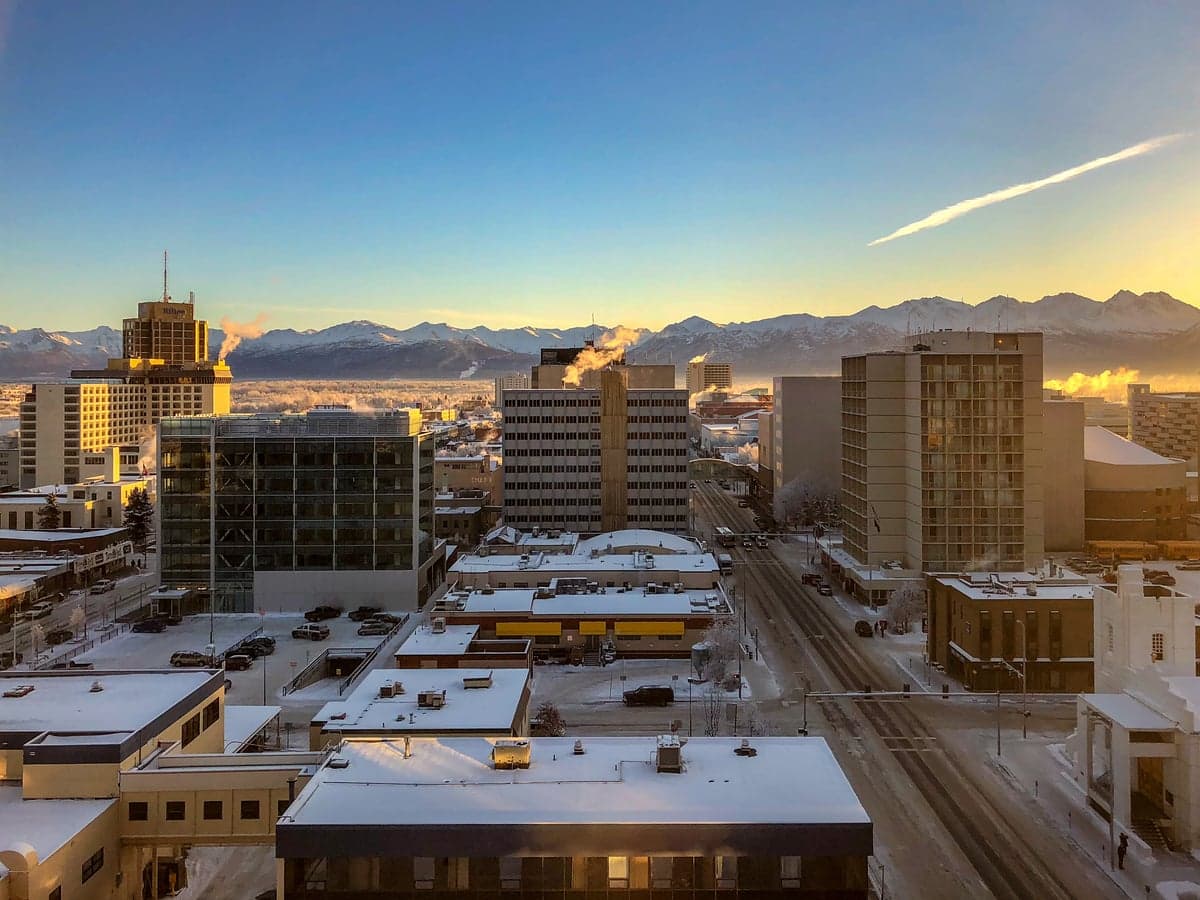
Photo: Wikipedia
Quality of Life in Anchorage, AK
Above-average quality of iife. The area offers a reasonable cost of living, decent mobility, and a mix of neighborhood amenities.
What does Quality of Life tell us?
Quality of Life blends cost of living, nearby amenities, socioeconomic signals, and neighborhood character. City-level scores represent the whole municipality; individual neighborhoods can differ.
What does this tell us?
Quality of Life blends cost of living, nearby amenities, socioeconomic signals, and neighborhood character. City-level scores represent the whole municipality; individual neighborhoods can differ.
Cost of Living
28% above national average
The Real Cost of Living in Anchorage, AK for 2026
| Tier | Individual | Family (4) |
|---|---|---|
| Survival | $23k | $44k |
| Comfortable | $73k | $107k |
| Luxury | $165k+ | $256k+ |
| Elite (Top 5%) | $195k+ | $302k+ |
91%
The Area Signal
A metric tracking the socioeconomic signals of the area.


Hobbies
Explore the areaGroceries
5 within 10 miles
Gas
0 within 10 miles
Hospital
3 within 20 miles
Airport
Merrill Field Airport
Post Office
USPS — Anchorage, AK
Critical Amenities
Quality-of-Life Analysis
Anchorage presents a distinctive quality-of-life profile shaped by its remote northern location, natural surroundings, and a cost of living that is notably higher than the national average. With a cost-of-living index of 128 (where 100 equals the U.S. average), the city attracts a mix of outdoor professionals, government and healthcare workers, and military families who prioritize access to wilderness over urban convenience. The median household income in Anchorage tends to be higher than the national median, reflecting the premium paid for labor in Alaska, but this is offset by elevated prices for housing, goods, and services.
Cost of living, housing affordability, and how Anchorage compares to the Mat-Su Valley
Housing in Anchorage is the primary driver of its above-average cost of living. The median home value sits at $375,900, which is roughly 30% higher than the national median, while the median rent of $1,453 per month is also elevated compared to many mainland cities. For context, nearby communities in the Matanuska-Susitna Borough—such as Wasilla and Palmer—offer median home values closer to $340,000, making them more affordable options for commuters willing to drive. However, Anchorage’s average commute time of just 19 minutes is significantly shorter than the national average of 26 minutes, a rare advantage that reduces transportation costs and daily stress. Utility costs in Anchorage are moderate by Alaska standards but still higher than the U.S. average, particularly for heating oil and electricity during winter months. Property taxes are relatively low compared to the Lower 48, as Alaska has no state sales tax and no state income tax, which partially offsets the higher housing prices.
What daily life is like: amenities, schools, and outdoor access
Daily life in Anchorage revolves around a balance of urban services and immediate access to world-class outdoor recreation. The Anchorage School District serves roughly 42,000 students and includes several well-regarded high schools such as West Anchorage High School and South Anchorage High School, though performance varies significantly by neighborhood. The city offers a robust network of parks, including the 1,500-acre Far North Bicentennial Park and the Tony Knowles Coastal Trail, which runs 11 miles along Cook Inlet. For groceries and essentials, residents rely on chains like Fred Meyer and Carrs Safeway, with prices roughly 15-20% higher than in Seattle due to shipping costs. Cultural amenities include the Anchorage Museum, the Alaska Center for the Performing Arts, and the Anchorage Symphony Orchestra, providing a level of arts programming unusual for a city of its size (pop. ~290,000). The rhythm of life is heavily seasonal: long summer daylight (up to 19 hours in June) fuels outdoor activity, while winter’s short days and snow require adaptation, with many residents embracing skiing, fat-tire biking, or ice skating at local rinks like the Ben Boeke Ice Arena.
Anchorage is best suited for individuals and families who value outdoor recreation, can tolerate long, dark winters, and have stable employment in sectors like healthcare, oil and gas, government, or transportation. The city’s relatively short commute, absence of state income tax, and proximity to wilderness—including Chugach State Park, the largest state park in the U.S.—are strong draws for those who prioritize lifestyle over low housing costs. However, the high cost of living, limited retail competition, and isolation from the contiguous United States mean that Anchorage is not a fit for everyone. Those who thrive here tend to be self-reliant, community-oriented, and willing to pay a premium for a life defined by mountains, glaciers, and wildlife rather than urban convenience.

Crime in Anchorage, AK
Significantly higher crime rates than 83% of comparable U.S. locations.
Violent CrimeViolent Crime Analysis
Property CrimeProperty Crime Analysis
Crime Analysis
Anchorage, Alaska, faces a severe public safety crisis, with violent and property crime rates that far exceed national averages and place it among the most dangerous cities in the United States. The city's overall safety picture is deeply concerning, driven by a combination of high recidivism, substance abuse, and a justice system that many residents and local officials argue prioritizes offender rehabilitation over public protection. For anyone considering relocation, understanding Anchorage's crime dynamics is essential, as the risks are not evenly distributed and are heavily influenced by systemic policy choices.
Crime in context
Anchorage's crime statistics are stark. The city reports a violent crime rate of 1,026.8 per 100,000 residents, which is more than double the national average and significantly higher than the Alaska state average. Property crime is equally alarming, with a rate of 3,334.6 per 100,000, far exceeding both state and national benchmarks. These numbers place Anchorage in the bottom percentile for safety among U.S. cities of comparable size. A major contributing factor is the progressive judicial philosophy prevalent in Anchorage's courts. Liberal judges and district attorneys, sympathetic to offenders, frequently impose lenient sentences and favor diversion programs over incarceration. This approach, while well-intentioned, has resulted in a revolving door for repeat offenders, directly undermining public safety and leaving victims with little recourse. The state's high rates of drug addiction and homelessness compound the issue, as property crimes like theft and burglary are often committed to support substance abuse habits.
What residents experience
For those living in Anchorage, the high crime rates translate into tangible daily risks. Violent crime, including aggravated assault, robbery, and sexual assault, is a persistent threat, particularly in downtown areas and neighborhoods near major transit corridors. Property crime is even more pervasive: vehicle theft, break-ins, and mail theft are routine occurrences. Residents report that leaving a car unlocked or a package on a porch for even a short time invites theft. The justice system's leniency is a frequent topic of local frustration. Stories of repeat offenders being arrested and released within hours are common, eroding trust in law enforcement and the courts. This environment forces many residents to adopt defensive measures—installing security cameras, forming neighborhood watch groups, and avoiding certain areas after dark—that would be unnecessary in safer communities.
Neighborhood-level variation is significant, though no area is immune. The most dangerous parts of Anchorage include the Mountain View, Fairview, and Spenard neighborhoods, which experience the highest concentrations of violent crime and property offenses. In contrast, areas like South Addition, Turnagain, and parts of Hillside have lower crime rates, though property crime remains a concern even in these enclaves. Girdwood, a small community within the municipality, offers a quieter, safer alternative but comes with a longer commute. Ultimately, Anchorage's crime problem is not a simple matter of geography—it is a systemic issue rooted in a justice philosophy that, by prioritizing the rights of offenders over the safety of the public, has created an environment where crime is both common and inadequately punished.
* Values derived from national, state, county, city and local statistics and may differ in a specific area. Last updated: 2026-04-19T19:14:18.000Z
Narrative content on this page is AI-generated and may contain mistakes. Verify any details that matter before acting on them.
ReloMaps may earn a commission from affiliate links at no extra cost to you.

