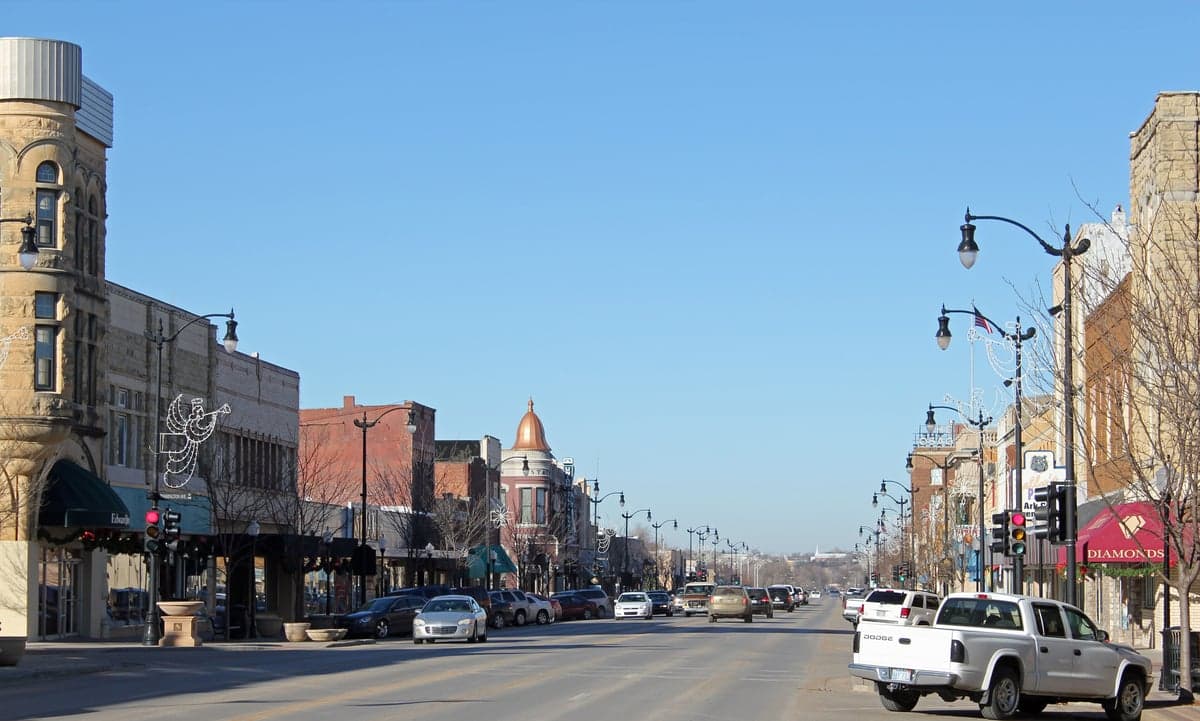
Photo: Wikipedia
Strategic Assessment of Arkansas City, KS
Workable tactical position. Some exposure to population density or targets, but generally defensible in a crisis.
What does the Strategic Assessment tell us?
Our Strategic Assessment grades tactical survivability of an area. Major population centers, military targets, fallout zones, natural disasters, and border exposure all drive risk — lower exposure means a more defensible position in a crisis.
This is heavily inspired by Joel Skousen's Strategic Relocation book. Highly recommended you checkout the book ($)What does this tell us?
Our Strategic Assessment grades tactical survivability of an area. Major population centers, military targets, fallout zones, natural disasters, and border exposure all drive risk — lower exposure means a more defensible position in a crisis.
This is heavily inspired by Joel Skousen's Strategic Relocation book. Highly recommended you checkout the book ($)Strategic Pillars

Key Distances
Regional Safe Places
Below is our recommended "safe zones" in Kansas and the surrounding area based on our strategic heuristics. For most people, it's unrealistic to live in a “safe zone” full-time due to work, family or other personal reasons. They tend to be more rural. However, many of these areas are perfect for second homes and retreat properties that double as a vacation home or even a short-term rental.
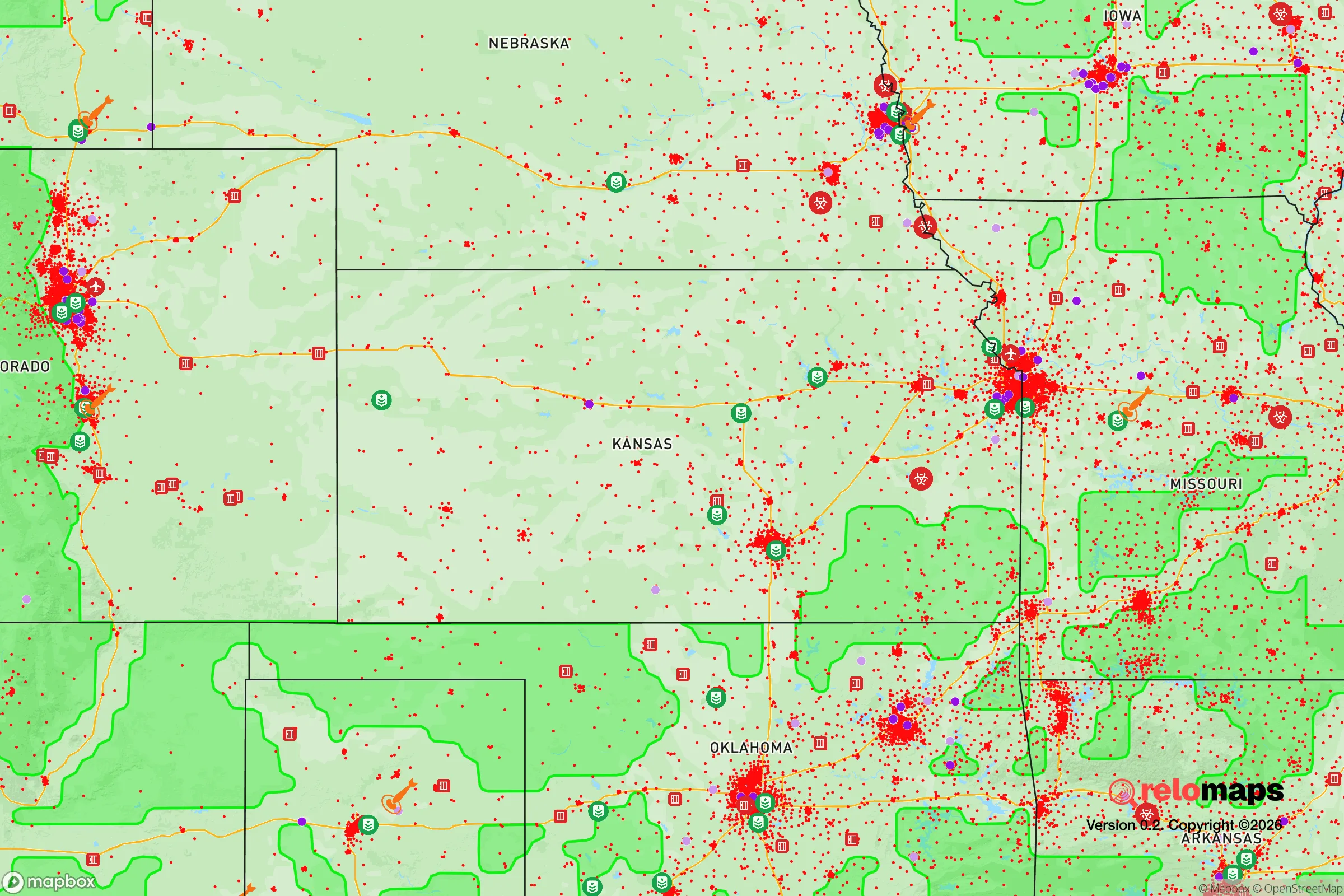
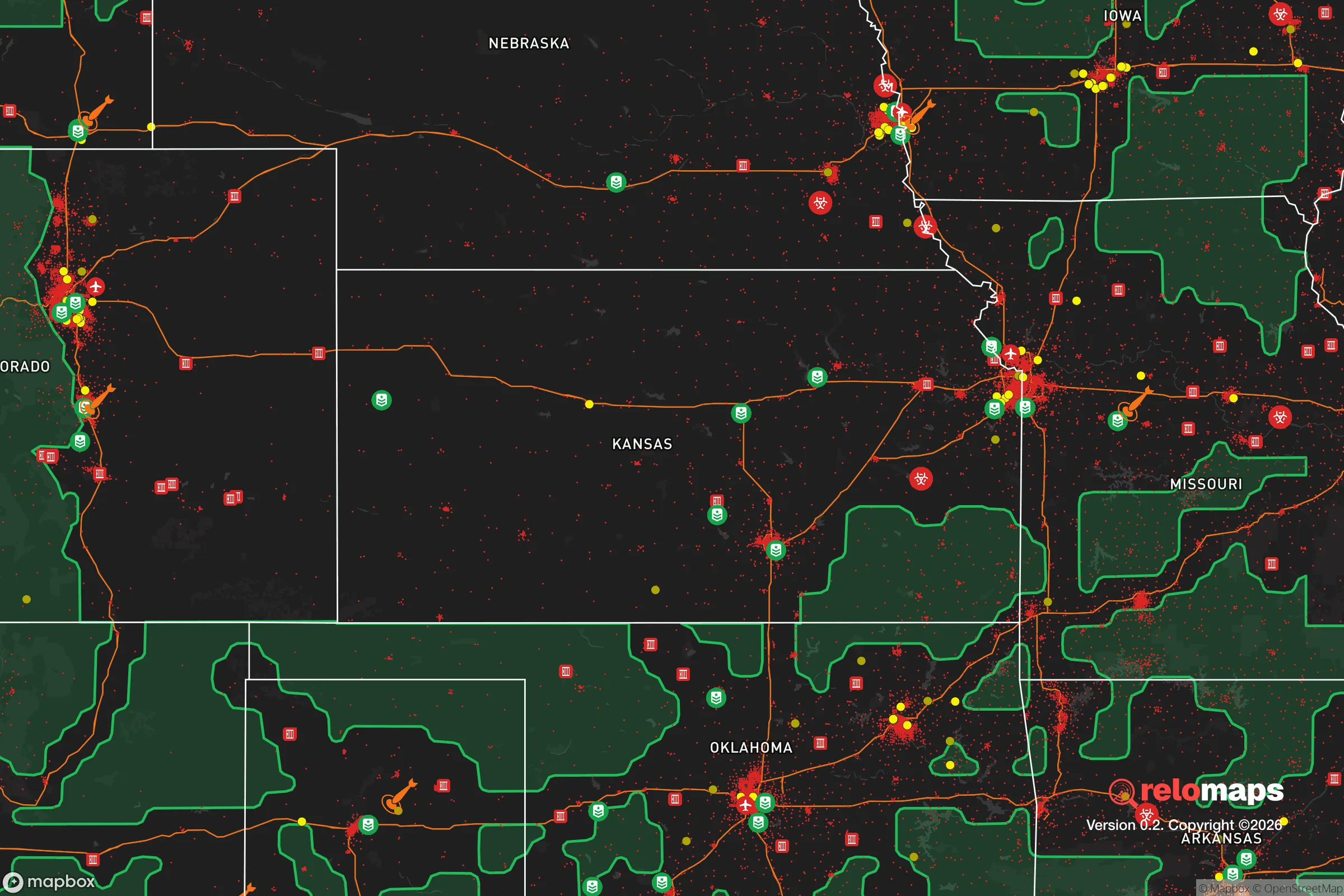


Important Note: For informational purposes only. This does not mean nothing bad ever happens in the green zones. Please use common sense. This is based on public data and modeled with AI. We tried to take a conservative approach but mistakes happen. We update this regularly as new information becomes available.
Solar Generator Recommendations
Backup power matters more here than in safer locations. We've picked three solar generators across budgets and capacity tiers — start with the budget unit if you only need a few essentials, or step up if you want to run a fridge and HVAC for days at a time.

Jackery Portable Power Station Explorer 300
Budget OptionPower on the Go: Weighing only 11 lbs, it's convenient to set up and store with book-sized foldable solar panels

BLUETTI Portable Power Station AC180
Designed for both indoor and outdoor scenarios, AC180 is highly capable as it has a robost capacity and continuous output power.

EF ECOFLOW DELTA Pro Ultra Power Station
Upgraded PickEcoFlow DELTA Pro Ultra is a whole-home energy system designed to grow with your family. Integrated with the Smart Home Panel 2, it scales to meet your evolving energy needs — keeping your home powered, intelligent, and secure through every stage of life.
We earn a commission, at no additional cost to you.
Strategic Assessment Analysis
Arkansas City, Kansas, sits as a quiet, overlooked node in the American heartland, offering a strategic blend of isolation and access that appeals to those thinking seriously about long-term resilience. Located in Cowley County, roughly 50 miles southeast of Wichita and just north of the Oklahoma border, this town of roughly 11,000 people benefits from being far enough from major metropolitan blast zones while still maintaining critical infrastructure links. For a relocator with a prepper mindset, Arkansas City presents a defensible position with agricultural self-sufficiency, a stable water supply, and a community that hasn't yet been hollowed out by coastal migration patterns.
Geographic position and natural advantages for long-term security
Arkansas City's location is its primary strategic asset. It sits at the confluence of the Arkansas and Walnut Rivers, providing a dual water source that is rare in the Plains. This isn't just a convenience—it's a survival-grade resource for irrigation, livestock, and household use in a grid-down scenario. The surrounding terrain is flat to gently rolling, which limits natural cover but offers excellent line-of-sight for perimeter awareness. The area is part of the Flint Hills ecoregion, known for deep, rocky soils that resisted the plow—meaning much of the land remains in native prairie, which supports grazing and reduces the risk of catastrophic topsoil loss. Winters are cold but manageable, summers hot, but the region rarely sees the extreme weather events that plague the Gulf Coast or Tornado Alley's core. The town's elevation around 1,100 feet keeps it above most flood risks from the rivers, though low-lying areas near the confluence can flood during heavy rains. For a relocator, the key takeaway is that Arkansas City offers a defensible position with abundant surface water, fertile bottomland for food production, and a climate that supports year-round outdoor activity without the extremes that break infrastructure.
Risks, exposures, and proximity to fallout-relevant landmarks
No location is without vulnerabilities, and Arkansas City has several that a strategic relocator must weigh. The most immediate concern is the Kansas Gas Service underground natural gas storage facility near the town, which stores pressurized gas in depleted salt caverns. While not a nuclear target, a catastrophic failure or sabotage event could produce a blast radius and toxic cloud that would threaten the immediate area. More broadly, Arkansas City lies within 100 miles of McConnell Air Force Base in Wichita, which houses KC-135 tankers and is a potential target in a major conflict. The prevailing winds from the south-southwest would carry fallout from a strike on McConnell away from Arkansas City, but a ground burst could still deposit particulate matter depending on weather patterns. The town is also within 150 miles of the Kansas City metropolitan area (population 2.2 million) and the Oklahoma City metro (1.4 million), both of which are likely targets for economic or infrastructure disruption. In a civil unrest scenario, Arkansas City's location on U.S. Route 77 and near the Kansas Turnpike (I-35) means it could see refugee traffic from Wichita or Oklahoma City, though the town's small size and limited through-access make it easier to secure than a larger hub. The primary risk is not direct attack but secondary effects: refugees, supply chain disruption, and potential contamination from distant fallout. A relocator should plan for at least two weeks of self-sufficiency and have a filtration system capable of handling light radioactive particulates.
Practical resilience for a relocator: food, water, energy, and defensibility
Arkansas City's practical resilience is where it shines for the prepper-minded relocator. The town sits in the heart of Kansas's wheat and cattle country, with direct access to local grain elevators, livestock auctions, and small-scale farms within a 20-mile radius. The Cowley County Extension Office and local co-ops provide seed, fertilizer, and veterinary supplies that are not dependent on just-in-time logistics from coastal warehouses. Water is the critical resource, and Arkansas City has it in spades: the Arkansas River flows year-round (though heavily diverted upstream), and the Walnut River is a reliable secondary source. The city's municipal water system draws from wells in the Equus Beds aquifer, which is one of the most productive in Kansas. For off-grid setups, shallow wells in the river valleys typically hit water at 30-50 feet, and the area's groundwater quality is generally good, with moderate hardness but low contamination. Energy is a mixed bag: the town is served by Evergy (formerly Westar), which has a relatively stable grid, but the flat terrain makes wind and solar viable for backup. The average wind speed is 12-14 mph, sufficient for small turbines, and solar insolation is in the top third of the U.S. For defensibility, Arkansas City's layout is a plus. The town is compact, with a historic downtown grid that can be barricaded at key intersections, and the surrounding farmland provides a natural buffer zone. The local population is predominantly conservative, rural, and self-reliant, with a strong hunting and firearms culture—meaning you're not going to be the only one prepared. The Cowley County Sheriff's Office is professional but small, so community watch and mutual aid networks are the real security backbone. For a single individual or family, the practical takeaway is that Arkansas City offers a low-cost entry point for building a resilient homestead, with land prices under $3,000 per acre for raw farmland and existing homes under $150,000.
The overall strategic picture for Arkansas City is one of quiet viability. It is not a glamorous relocation destination, and that is precisely its strength. It lacks the cachet of mountain redoubts or coastal retreats, but it offers something more valuable for the long haul: a sustainable, defensible position in a region that produces food, stores water, and is far enough from primary targets to survive the first wave of any major disruption. The risks are real—proximity to a gas storage facility, potential fallout from Wichita, and refugee pressure from larger cities—but they are manageable with basic preparation. For the conservative relocator who values self-sufficiency, community alignment, and a low profile, Arkansas City, Kansas, deserves a serious look. It won't make headlines, but it might just keep you alive when they do.

* Values derived from national, state, county, city and local statistics and may differ in a specific area. Last updated: 2026-04-24T20:20:44.000Z
Narrative content on this page is AI-generated and may contain mistakes. Verify any details that matter before acting on them.
ReloMaps may earn a commission from affiliate links at no extra cost to you.

