Photo: Wikipedia
Political ClimatePolitical Climate in Arkansas City, KS
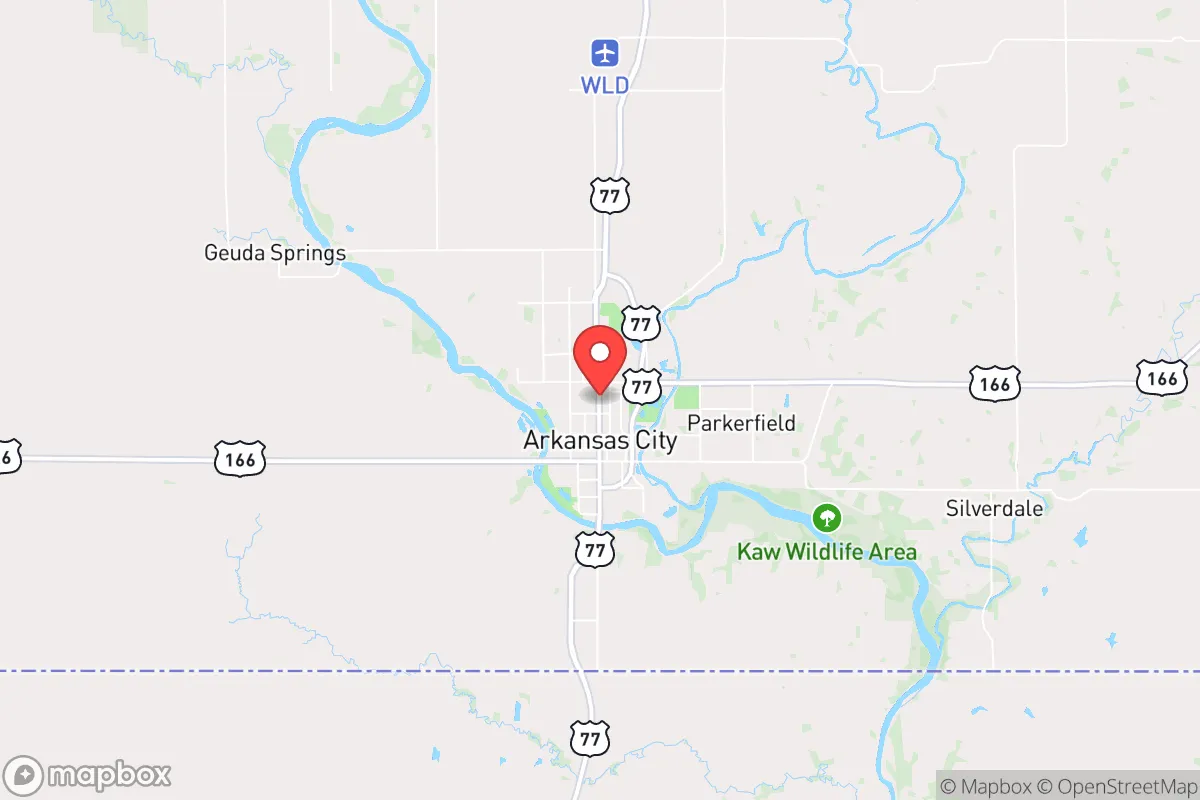
District shown is the primary district for this city’s centroid. Cities may span multiple districts.
Local Political AnalysisPolitical Analysis of Arkansas City, KS
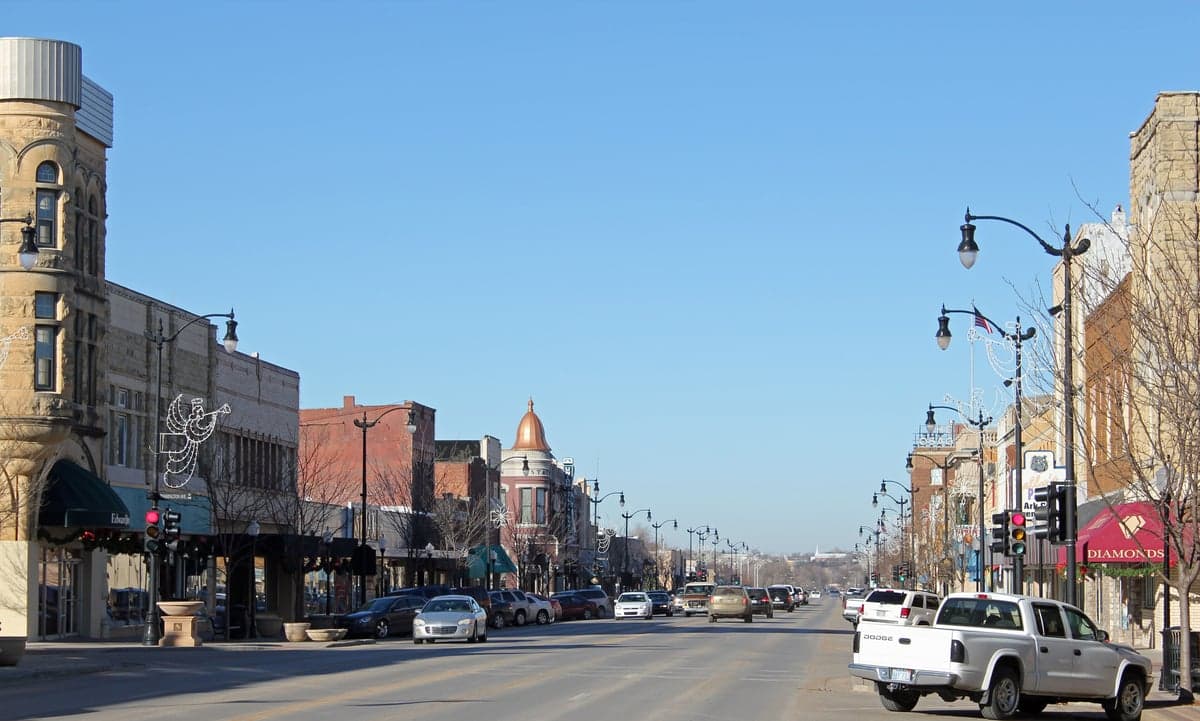
Arkansas City, Kansas, sits firmly in conservative territory, with a Cook PVI of R+12 that reflects a deep-rooted preference for limited government and personal responsibility. This isn’t a recent shift—the area has long voted reliably Republican, and the 2024 presidential election saw Cowley County go +30 for the GOP, reinforcing a trajectory that shows no signs of swinging left. If you’ve lived here a while, you know the political climate is less about flashy debates and more about a quiet, steady commitment to keeping government out of your backyard and your paycheck.
How it compares
Arkansas City’s politics stand in stark contrast to nearby college towns like Winfield, just 10 miles north, which hosts Southwestern College and tends to lean more moderate, especially among younger faculty and students. Drive 50 miles east to the Wichita metro area, and you’ll find a mixed bag—Sedgwick County votes R+10 overall, but pockets like College Hill and Delano are noticeably more progressive. Head west toward Ponca City, Oklahoma, and the conservatism deepens, with Kay County voting R+35 in 2024. Arkansas City sits right in the middle of this spectrum: conservative enough to feel familiar, but not so isolated that you’re cut off from different viewpoints. The real contrast, though, is with the state’s urban corridors—Lawrence and Kansas City—where progressive policies on taxes, zoning, and education are more common. Here, that kind of government overreach into personal freedoms is seen as a red flag, not a welcome change.
What this means for residents
For folks living here, the political climate translates into tangible daily life. Property taxes remain relatively low compared to the state average, and there’s little appetite for new local ordinances that would restrict gun rights, land use, or small business operations. The city council and county commission are dominated by conservatives who prioritize fiscal restraint—the 2025 county budget saw a 2% cut in general fund spending, a move that drew praise from locals wary of bloated government. On the flip side, this means fewer public services: the local bus system runs limited routes, and there’s no city-funded preschool program. Most residents see this as a fair trade-off—you keep more of your money and make your own choices. The school board, too, leans traditional, with a focus on core academics and parental oversight rather than progressive curriculum shifts. Any push toward DEI initiatives or critical race theory in the classroom has been met with swift pushback, and that’s unlikely to change as long as the voting base stays steady.
Culturally, Arkansas City holds onto distinctions that set it apart from more progressive enclaves. The annual Arkalalah festival is a community staple that hasn’t been politicized—it’s still about parades, food, and family, not identity politics. Gun ownership is widespread, and you’ll see “Come and Take It” flags on trucks without anyone batting an eye. The local newspaper, the Arkansas City Traveler, covers city council meetings and high school sports, not culture war debates. That said, there’s a quiet concern among long-time residents about the long-term trajectory: as younger generations move to Wichita or out of state for jobs, the population has dipped slightly, and with it, the tax base. If that trend continues, the area might face pressure to adopt more progressive policies to attract new residents—something many here view as a slippery slope toward the very government overreach they’ve always resisted. For now, though, Arkansas City remains a place where personal freedom and local control still mean something, and that’s not likely to change overnight.

State Political ClimatePolitical Climate in Kansas
State Political AnalysisPolitical Environment in the State
Kansas has long been a reliably red state in presidential elections, voting Republican in every contest since 1968, but its internal politics are far more nuanced than that streak suggests. The state’s dominant coalition is a mix of rural conservatives, suburban moderates, and a growing libertarian-leaning wing, but over the past 10-20 years, the GOP has shifted rightward, driven by a Tea Party wave in the early 2010s and a subsequent consolidation of conservative control in Topeka. While the state legislature and governor’s office have been firmly Republican for most of that period, the 2022 election of Democratic Governor Laura Kelly (who won a second term) shows that a moderate, pro-business Democrat can still win statewide, especially when the GOP nominates candidates perceived as too extreme. The overall trajectory is one of a state that is culturally conservative but fiscally cautious, with a growing tension between the rural base and the increasingly diverse suburbs of Johnson County.
Urban vs. rural divide
The political map of Kansas is a textbook example of the urban-rural split that defines American politics. The state’s two major population centers—Wichita (Sedgwick County) and the Kansas City metro area (Johnson and Wyandotte counties)—drive the Democratic vote, though with very different intensities. Johnson County, the wealthiest and most educated county in the state, has been trending blue for years; it voted for Joe Biden in 2020 by a narrow margin, and its state legislative seats are now a mix of moderate Republicans and Democrats. Wyandotte County (Kansas City, KS) is a deep blue stronghold, reliably delivering 70%+ Democratic margins. Wichita itself is more purple, with Sedgwick County often deciding statewide races—it went for Trump in 2020 but by a much smaller margin than rural areas. Meanwhile, the rest of the state is overwhelmingly red. Counties like Thomas (Colby), Sherman (Goodland), and Grant (Ulysses) routinely vote 80%+ Republican. The rural-urban divide is stark: the eastern third of the state, from the Kansas City suburbs down to the Flint Hills, is where elections are won or lost, while the western two-thirds are a Republican fortress. A notable exception is Lawrence (Douglas County), home to the University of Kansas, which is a liberal island in a sea of red, consistently voting 70%+ Democratic.
Policy environment
Kansas’s policy environment has been shaped by a long-running experiment in conservative governance, most famously the “Kansas Experiment” of massive income tax cuts under Governor Sam Brownback (2011-2018). That experiment ultimately failed—the cuts led to chronic budget shortfalls, school funding crises, and a bipartisan backlash that resulted in tax increases in 2017. Today, the state has a flat income tax rate of 5.7% (down from a top rate of 6.45% before Brownback), and the sales tax is 6.5% at the state level, with local options pushing it higher. Property taxes are a major concern for homeowners, especially in Johnson County, where they are among the highest in the state. On education, Kansas has a long history of school funding lawsuits, and the state Supreme Court has repeatedly ordered the legislature to increase funding for K-12 schools, which it has done, albeit grudgingly. The state is a “right-to-work” state, has no state-level minimum wage above the federal $7.25, and has a strong regulatory posture favoring business. On social issues, Kansas is conservative: it has a near-total abortion ban (the “Value Them Both” amendment was rejected by voters in 2022, but the legislature passed a ban that is currently blocked by courts), and it has a voter ID law and a ban on same-sex marriage (though unenforceable after Obergefell). Election laws are moderately restrictive: no-excuse absentee voting was expanded during COVID but later rolled back, and the state requires a photo ID to vote in person.
Trajectory & freedom
On the freedom front, Kansas is a mixed bag. On the positive side for conservatives, the state has strong Second Amendment protections: it is a “constitutional carry” state (permitless carry for adults 21+), has no state-level assault weapons ban, and has a “Stand Your Ground” law. In 2023, the legislature passed a bill prohibiting the enforcement of federal gun laws that violate the Second Amendment (the “Second Amendment Preservation Act”), though it was vetoed by Governor Kelly. Parental rights have been a major focus: in 2023, the legislature passed a bill requiring schools to notify parents of any “sexuality content” in curricula and to allow parents to opt their children out, and it banned transgender girls from participating in girls’ sports (the “Fairness in Women’s Sports Act”). On medical autonomy, Kansas has a broad religious exemption for vaccine mandates, and the state does not have a mask mandate or vaccine passport requirement. However, on taxation and economic freedom, the state has room for improvement: the flat income tax is still relatively high compared to neighboring states like Texas (no income tax) and Missouri (lower rates), and property taxes are a persistent complaint. The state also has a high corporate income tax rate (7%), which some argue discourages business investment. Overall, Kansas is trending toward more cultural conservatism (parental rights, gun rights) but is fiscally more moderate than its reputation suggests.
Civil unrest & political movements
Kansas has not seen the level of civil unrest seen in coastal states, but there have been notable flashpoints. The most significant was the 2022 abortion referendum, where voters in a deeply red state rejected a constitutional amendment that would have removed abortion protections—a result that shocked many and showed the power of suburban women voters, especially in Johnson County. That vote was a major defeat for the anti-abortion movement and has energized progressive activism in the suburbs. On the right, the “Free State” movement (a libertarian-leaning group advocating for limited government) has a presence, particularly in rural areas, and there have been occasional calls for secession from the Kansas City metro area (the “State of Sequoyah” proposal, though it never gained traction). Immigration politics are relatively quiet, as Kansas is not a border state, but there have been local controversies over sanctuary city policies: in 2019, the city of Lawrence declared itself a “sanctuary city” for immigrants, prompting a legislative backlash that ultimately failed to pass a statewide ban. Election integrity has been a hot topic since 2020: the Kansas GOP has pushed for stricter voter ID laws and has investigated alleged irregularities, though no widespread fraud has been found. The most visible political movement in recent years has been the rise of the “Moms for Liberty” chapter in Johnson County, which has been active in school board races and curriculum debates.
Projection
Over the next 5-10 years, Kansas is likely to remain a red state, but the margin of Republican dominance will continue to shrink as the suburbs of Johnson County become more Democratic and as rural populations decline. The state’s population is growing slowly (about 0.3% annually), and the growth is concentrated in the Kansas City suburbs and the Wichita area, while rural counties are losing people. This demographic shift will make statewide races more competitive—a Republican who can hold Johnson County by a few points will win easily, but one who loses it by 10 points will struggle. The state legislature will remain Republican-controlled, but the GOP majority may become more moderate as suburban Republicans push back against hardline social policies. On policy, expect continued battles over school funding, property taxes, and abortion. The state’s fiscal situation is stable but not booming, and the flat tax is unlikely to be lowered further given the budget constraints. For a new resident, the key takeaway is that Kansas offers a relatively stable, conservative-leaning environment with good schools in the suburbs and low crime in rural areas, but the political climate is not static—the suburbs are becoming more purple, and the culture wars are intensifying. If you’re moving for a lower cost of living and a slower pace of life, Kansas delivers, but don’t expect the same level of ideological purity you’d find in Texas or Florida.
For a new resident, the bottom line is that Kansas is a solidly conservative state with a strong rural identity, but the growing influence of the Kansas City suburbs is slowly shifting the political center of gravity. If you value low taxes, gun rights, and parental control in education, you’ll find a welcoming environment, especially in the smaller towns and rural areas. But if you’re looking for a state where the culture wars are settled, Kansas is still very much in the middle of them—the 2022 abortion vote showed that even in a red state, voters can surprise you. The best advice is to pick your county carefully: Johnson County is becoming more moderate, Sedgwick County is a swing area, and the rural counties are deeply red. Your experience will vary dramatically depending on where you land.
* Values derived from national, state, county, city and local statistics and may differ in a specific area. Last updated: 2026-04-24T20:20:44.000Z
Narrative content on this page is AI-generated and may contain mistakes. Verify any details that matter before acting on them.
ReloMaps may earn a commission from affiliate links at no extra cost to you.

