Photo: Wikipedia
Quality of Life in Hot Spring County
A livable area that tracks near national norms for affordability, walkability, and neighborhood health.
What does Quality of Life tell us?
Quality of Life measures an area by evaluating factors like cost of living, nearby amenities, country club access, airport proximity, socioeconomic signals and neighborhood character. For large states, this is a general average — quality of life can vary dramatically between metro areas, suburbs, and rural communities within the same state.
What does this tell us?
Quality of Life measures an area by evaluating factors like cost of living, nearby amenities, country club access, airport proximity, socioeconomic signals and neighborhood character. For large states, this is a general average — quality of life can vary dramatically between metro areas, suburbs, and rural communities within the same state.
Cost of Living
42% below national average
144%
The Real Cost of Living in Hot Spring County for 2026
| Tier | Individual | Family (4) |
|---|---|---|
| Survival | $12k | $23k |
| Comfortable | $25k | $37k |
| Luxury | $85k+ | $132k+ |
| Elite (Top 5%) | $100k+ | $155k+ |
Quality-of-Life Analysis
Hot Spring County, Arkansas, offers a broad quality-of-life spectrum that stretches from the modest conveniences of its largest town, Malvern, to the quiet solitude of its unincorporated pockets and rural homesteads. With a cost-of-living index of 58 (well below the national average of 100), the county attracts a mix of families seeking affordable homeownership, retirees stretching fixed incomes, and outdoor enthusiasts drawn to the Ouachita foothills. The character of daily life shifts noticeably between Malvern’s grid of schools and shopping, the close-knit hamlets like Magnet Cove and Donaldson, and the acre-lot properties scattered near Bismarck or Lono.
Largest town(s) & population centers
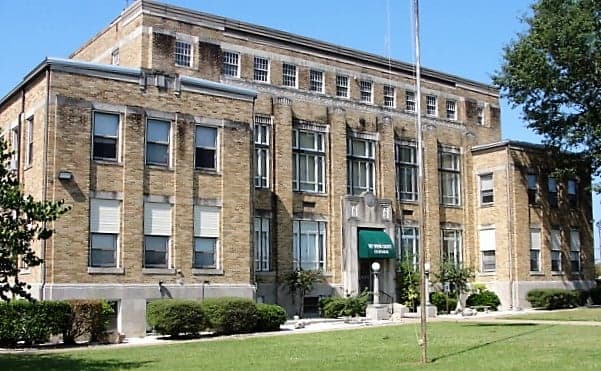
Malvern is the county seat and by far the dominant population center, home to roughly 10,000 of the county’s 33,000 residents. Daily life here centers on the downtown courthouse square, a handful of grocery and hardware stores, and manufacturing employers such as Reynolds Metals (aluminum processing) and Steel Technologies. Housing is notably affordable: the countywide median home value is $127,900 and median rent $763, and Malvern’s prices sit at the high end of that range. Residents drive an average of 28.3 minutes to work, often commuting to jobs in Hot Springs (20 minutes north) or along the Interstate 30 corridor toward Little Rock. The town has a hospital (CHI St. Vincent), a community college satellite campus, and a walkable core, but the lifestyle remains decidedly small-city—quiet evenings and locally owned diners rather than nightlife or cultural venues. The adjacent community of Rockport, just south of Malvern along the Ouachita River, functions as a bedroom extension with a similar feel but slightly lower home prices.
Smaller towns & rural pockets
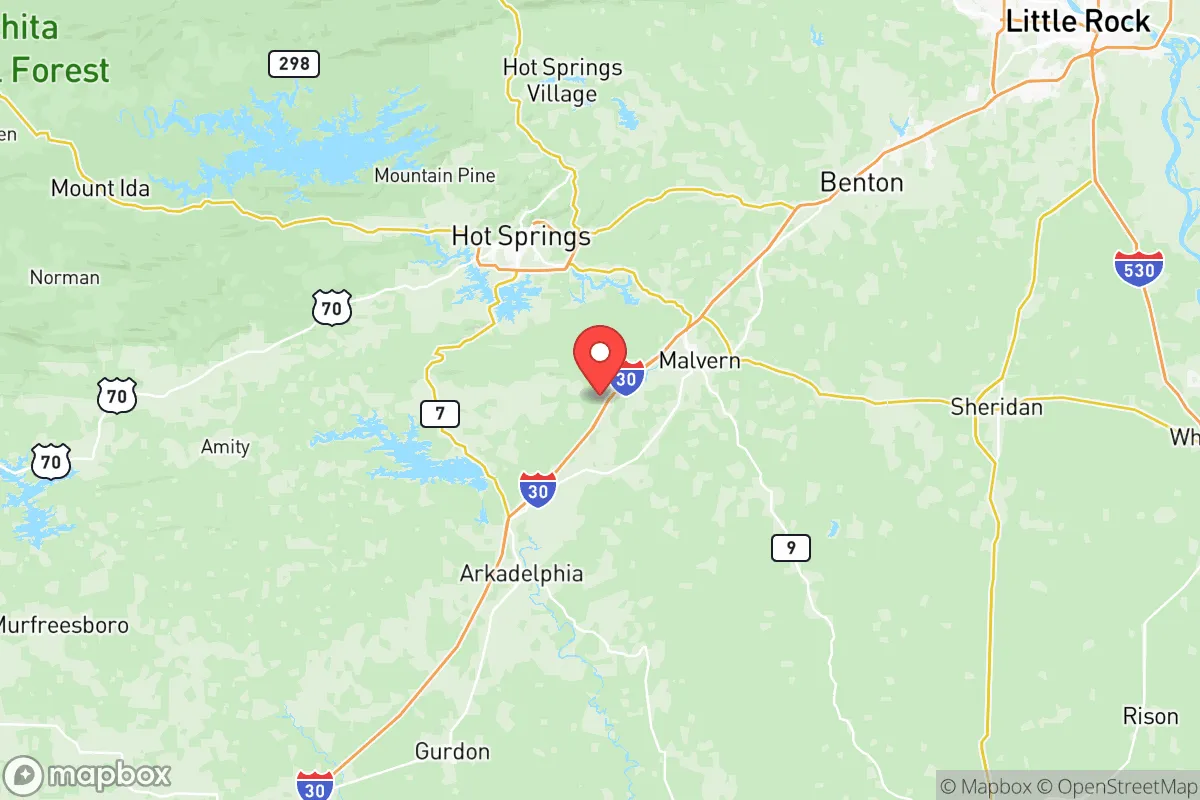
Beyond Malvern, Hot Spring County contains a series of hamlets and unincorporated communities that define the rural end of the spectrum. Donaldson, on Highway 67 near the Saline County line, is a classic crossroad settlement with a post office, a few churches, and a volunteer fire department—ideal for anyone seeking a long-lot spread with space for livestock. Magnet Cove, named for its magnetic mineral deposits, sits northeast of Malvern and holds a small store, a K-12 school, and a strong sense of local identity rooted in periodic gem-hunting events. Bismarck (a census-designated place) and Lono (unincorporated) are similar: few commercial services, low traffic, and homes set back from two-lane roads. Perla, southwest of Malvern, and Friendship, near the Montgomery County line, are even sparser. Residents in these pockets typically rely on Malvern or Hot Springs for errands and employment. The Ouachita National Forest covers the county’s western fringe, offering hunting, fishing, and off-grid cabins on forest-service roads.
Cost & lifestyle range
The cost of living varies more by location type than by town name. In Malvern proper, a three-bedroom house might run $130,000–$150,000, while a comparable home in Donaldson or Magnet Cove can be found for $90,000–$110,000—with larger lots. Rural properties with acreage along gravel roads near Bismarck or Lono can fall below $80,000 for a fixer-upper. Utilities (electric, propane, well water) add expense in off-grid areas, but property taxes remain among the lowest in Arkansas. The trade-off is access: Malvern offers chain grocery stores, a Walmart Supercenter, and medical clinics; rural residents drive 20–35 minutes for the same. High-speed fiber internet reaches most of Malvern and Rockport, but coverage thins considerably in the western forest tracts—a critical consideration for remote workers. Renters find tight inventory; the countywide median rent of $763 mostly reflects units in Malvern and Rockport, with few rental options in the smaller communities.
Hot Spring County suits people who value space and affordability over urban amenities. Families working in manufacturing or commuting to Hot Springs can buy a home outright at a price unheard of in most metros; retirees can stretch Social Security payments while living near Lake DeGray or the Ouachita forest; and homesteaders or hunters find cheap land and low regulation. Those seeking walkable density, vibrant dining, or job diversity outside industrial sectors will feel constrained, but for anyone whose priority is land and low cost, the county delivers a clear spectrum of choices.

Crime in Hot Spring County
Crime rates similar to the national median for U.S. locations.
Violent CrimeViolent Crime Analysis
Property CrimeProperty Crime Analysis
Crime Analysis
Hot Spring County, Arkansas, reports a violent crime rate of 523.1 incidents per 100,000 residents—lower than the Arkansas state average of approximately 643 per 100,000 but higher than the national rate of roughly 380 per 100,000. The property crime rate of 1,634.7 per 100,000 falls below both the state (about 2,785) and national (about 1,950) benchmarks. These figures paint a mixed safety picture that varies sharply between the county's commercial center of Malvern and its smaller, more rural towns such as Magnet Cove, Bismarck, and Leola. Residents' day-to-day security is also shaped by the judicial philosophy of the 7th Judicial District, which covers Hot Spring and Grant counties.
Crime in context
Hot Spring County's violent crime rate exceeds the national average by roughly 38%, driven largely by incidents in and around Malvern, the county seat and largest municipality. However, the county performs better than the statewide average, where cities like Little Rock and Pine Bluff pull up the Arkansas mean. Property crime in Hot Spring County is notably lower than both state and national rates, suggesting less frequent burglaries and thefts in the rural stretches. The 523.1 per 100,000 violent crime figure includes aggravated assault, robbery, and a small number of homicides; the 1,634.7 property crime rate encompasses larceny, motor vehicle theft, and burglary. Comparatively, neighboring Garland County (Hot Springs) posts higher violent crime rates, while Grant County to the east typically reports lower numbers.
What residents experience
For residents in Malvern, property crime—especially vehicle break-ins and vandalism—represents the most common safety concern. The downtown corridor and areas near U.S. Highway 70 see higher incident density. In contrast, families in Magnet Cove or Bismarck report far less frequent crime, though isolated drug-related offenses occur. The county sheriff's office and Malvern Police Department maintain visible patrols, but response times can stretch in outlying hamlets like Donaldson and Perla. A significant factor influencing local safety is the philosophy of the elected district attorney for the 7th Judicial District. Progressive prosecutorial approaches that prioritize diversion and reduced sentencing for repeat offenders—while intended to reduce incarceration—often result in quicker return of criminals to the streets. This directly undermines victim justice and public safety, as seen in similarly rural counties where lenient plea deals correlate with rising recidivism. Residents should closely monitor the DA's stance on violent crime and property offenses, particularly as Malvern's population grows.
Neighborhood-level variation is pronounced. Malvern's older subdivisions near Oaklawn Street and the industrial zone experience more property crime, while the lakeside developments around Lake Catherine (partly in the county) and the quiet crossroads of Leola report minimal incidents. Gated communities and homes with visible security systems in areas like Jones Mill enjoy lower victimization rates. Anyone considering relocation to Hot Spring County should prioritize properties outside Malvern's core and verify the current policies of the district attorney's office, as these directly affect how quickly crime patterns change. The county's overall risk is manageable for those who choose the right town and stay informed about judicial trends.
* Values derived from national, state, county, city and local statistics and may differ in a specific area. Last updated: 2026-05-21T06:00:56.000Z
Narrative content on this page is AI-generated and may contain mistakes. Verify any details that matter before acting on them.
ReloMaps may earn a commission from affiliate links at no extra cost to you.

