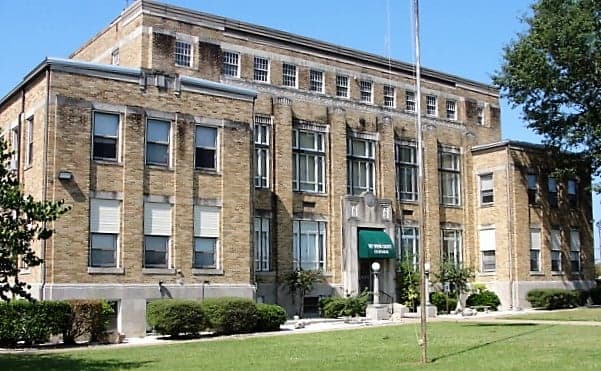
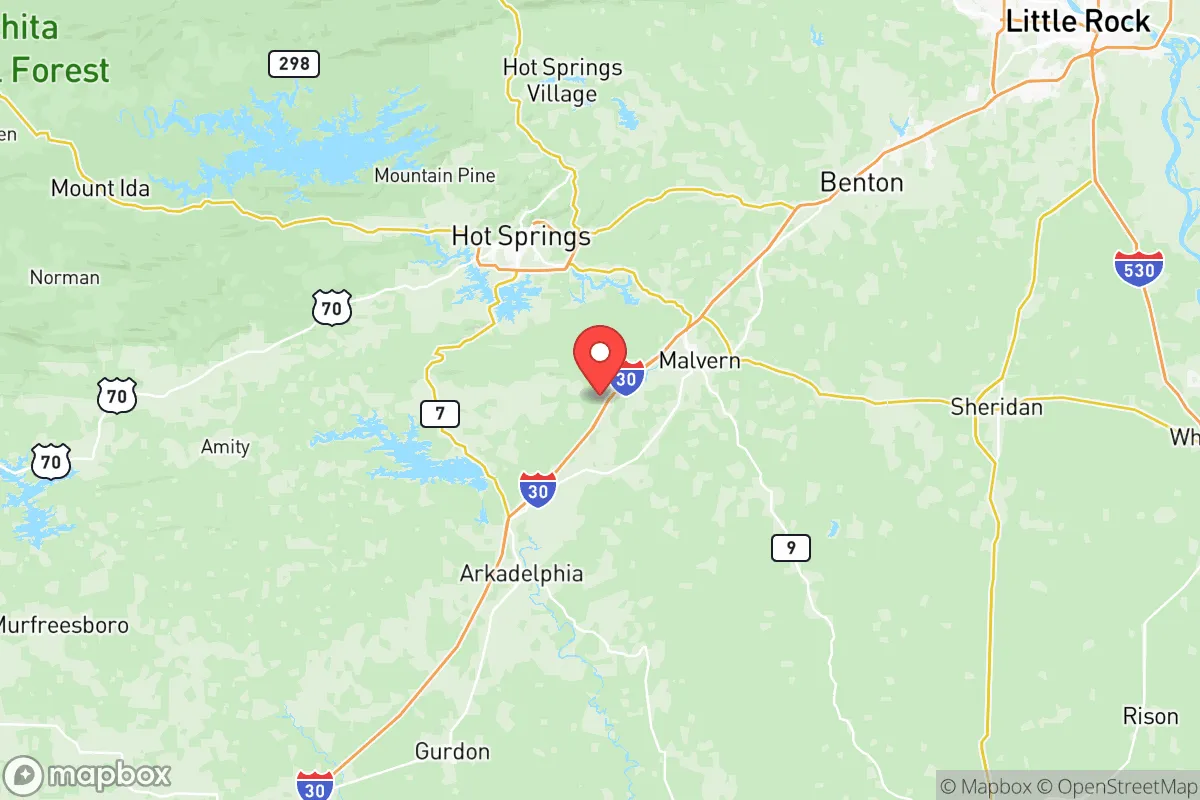
Photo: Wikipedia
Political ClimatePolitical Climate in Hot Spring County
Showing district-level results — no local-only data available.
Local Political AnalysisPolitical Analysis of Hot Spring County
Hot Spring County has been reliably Republican for as long as most of us can remember, with a Cook PVI of R+20 that puts it four points redder than Arkansas as a whole (R+16). You won’t see that gap narrowing anytime soon either—Malvern, the county seat, has trended further right over the last couple cycles, and even the smaller communities like Rockport and Bismarck are solidly conservative. The only real exception I’d point to is maybe a handful of precincts around the outskirts of Malvern and down toward Donaldson, where a few independent-leaning voters have started to pop up, but they’re not enough to tilt anything. If anything, the shift I’ve noticed is that people here have gotten more vocal about pushing back against what they see as government overreach, especially coming out of Little Rock and D.C.
How it compares
Compared to the rest of Arkansas, Hot Spring County is a little stouter in its resistance to progressive ideas. Take the state’s PVI of R+16—that’s still deep red territory, sure, but we’re a notch above it. What that means on the ground is that you see fewer of those “trendy” blue pockets that have cropped up in places like Fayetteville or even parts of central Arkansas. Our local school board meetings and county quorum court sessions are still dominated by folks who prioritize personal freedoms—Second Amendment rights, low property taxes, and minimal zoning. There’s no real competition from the left; the last serious Democratic candidate for a county-wide seat was probably a decade ago. Even within the county, you’ll find variation: Malvern itself leans a bit more moderate on fiscal issues (some residents there are OK with modest tax increases for infrastructure), whereas Rockport and Friendship are as hardline as they come. Swing precincts are rare, but if you’re watching, the small townships around the Ouachita River tend to be the ones that sometimes go 60-40 instead of 75-25.
What this means for residents
For anyone who values not being told how to live their life, Hot Spring County is a breath of fresh air. If you’re worried about government overreach—mandates, overbearing health regulations, or gun restrictions—this is one of those places where the county sheriff and local officials will straight-up say they won’t enforce what they see as unconstitutional laws. We’ve had a couple instances in the past few years where the state tried to push something through (like the short-lived mask mandates) and the county just ignored it. That attitude isn’t changing; if anything, the national push toward more progressive ideology is making folks here dig in even harder. You won’t find many people clamoring for new social programs or higher taxes. Instead, it’s “leave us alone” and we’ll keep running our farms, small businesses, and churches the way we always have. The big worry I hear these days is that if the state or federal government keeps tightening the screws, we might see some of our younger families move out—but for now, the culture holds strong.
The cultural and policy distinctions here are pretty straightforward: we’re a rural, God-fearing county that believes the Second Amendment isn’t up for debate, and we expect our local government to stay out of our business. The big policy fights you hear about in other parts of the country—like housing density mandates or “equity” initiatives—have basically zero traction in Hot Spring County. Our biggest battles are about whether to allow more gravel mining or how to handle stray dogs. It’s a place where your personal liberty is still the default, and that’s not likely to change unless the federal government really starts cracking down. But I’d bet a lot of folks here would rather push back than give an inch.

State Political ClimatePolitical Climate in Arkansas
State Political AnalysisPolitical Environment in the State
Arkansas is a rock-ribbed red state with a Cook PVI of R+16, meaning it votes about 16 points more Republican than the nation as a whole. Donald Trump carried it by 27 points in 2024, and the GOP holds supermajorities in both houses of the legislature and all constitutional offices. Over the last 20 years, the state has steadily shifted right as the old Democratic establishment — a legacy of the Clinton era — withered in rural areas and was replaced by a decisively conservative populism. The real story today is less about whether Arkansas is red and more about which shade of red, and where the growing pains are showing up.
Urban vs. rural divide
The political map is stark. Northwest Arkansas — the corridor anchored by Bentonville, Rogers, Springdale, and Fayetteville — is the engine of population and economic growth. Benton and Washington Counties together now drive the state's tax base and its cultural center of gravity. The region votes Republican, but not uniformly: Fayetteville, home to the University of Arkansas, is a purplish pocket where you'll find more libertarian-leaning independents and a small but visible progressive presence. Nearby Eureka Springs is an outright blue dot, known for its arts scene and LGBTQ-friendly community. Drive out of those towns into the surrounding rural stretches, though, and you're back in deep-red territory. Little Rock and its inner-ring suburb of North Little Rock form the state's only reliably Democratic metro area, with Pulaski County trending blue over the past decade — but that blue is encircled by a sea of red in central Arkansas. Places like Conway (home to three universities) lean Republican but have a mild, suburban character. The Arkansas Delta — Jonesboro, Pine Bluff, West Memphis — is the most economically challenged region; it was historically Democratic but has tracked rightward on cultural and gun issues, while retaining some old-school Southern Democratic voters on local races. Everywhere else — the Ozarks, the Ouachitas, the river valleys — is solidly Republican, often by 40+ point margins.
Policy environment
On policy, Arkansas walks the walk. The state has a right-to-work law, a flat income tax that's being phased down (the top rate is currently 4.4%, with further cuts scheduled), and no estate or inheritance tax. The LEARNS Act, passed in 2023, created universal school choice via Education Freedom Accounts and raised teacher minimum salaries to $50,000 — a big deal for families moving from locked-down districts elsewhere. The state has a trigger law banning nearly all abortions, and a voter-passed medical marijuana program (2016) that survives but remains tightly regulated. Election integrity: Arkansas requires photo ID to vote, bans ballot harvesting, and in 2021 passed Act 249 to clean up absentee ballot chains — measures that frustrated progressive activists but are broadly popular with the conservative base. Law enforcement cooperates fully with ICE; there are zero sanctuary jurisdictions in the state. Property rights are generally strong, though some landowners have gripes about county-level zoning reaching into unincorporated areas — an ongoing debate between libertarians and local-control conservatives.
Trajectory & freedom
On the freedom front, Arkansas has moved in a decidedly freer direction over the past decade, with some caveats. The state passed constitutional carry in 2021, allowing permitless concealed carry for adults 18 and older — no state permission slip needed to exercise a right. The LEARNS Act expanded parental rights in education, including the right to opt out of curricula and review all instructional materials. Medical freedom was a flashpoint during COVID: the legislature met in special session to ban vaccine mandates by state and local governments, though they didn't go as far as some in banning private employer mandates. On the concerning side, there have been moves toward government overreach in the name of "protecting children" — a 2023 law criminalizing drag performances on public property was blocked in court, and the state has pushed hard on obscenity standards for public libraries, which some conservatives support but which libertarians worry sets a precedent for content policing. The marijuana program remains overly restrictive: it's medical-only, no home grow, and the dispensary system is a limited oligopoly. That regulatory drag is a real mark against freedom. Overall, the trajectory is more liberty-friendly than most states, but the impulse to paternalize still shows up in surprising places.
Civil unrest & political movements
Arkansas is not a hotbed of street-level unrest. The 2020 George Floyd protests in Little Rock saw some property damage and a handful of arrests, but the state didn't experience the sustained rioting seen in larger cities. The organized activist scene is modest: Moms for Liberty has active chapters in Northwest Arkansas and central Arkansas, and school board meetings in places like Bentonville and Conway saw heated debates over library content and curriculum during the pandemic. On the left, Indivisible groups and local Democratic clubs operate in Fayetteville and Little Rock, but they lack the numbers to mount serious statewide challenges. Immigration politics are a non-issue in the daily life of most Arkansas communities — the foreign-born population is small — though the legislature has passed symbolic resolutions opposing refugee resettlement. There's no real secession or nullification movement to speak of; the state's populist tradition is more about resisting federal overreach through the courts and legislation, notably in the lawsuit against the EPA's "WOTUS" rule. Election integrity concerns flared post-2020, leading to the tighter laws mentioned earlier, but there have been no significant irregularities alleged in subsequent elections. A newcomer would find the political temperature warm but not scalding — people argue, but they do it with a certain Southern politeness.
Projection
Looking five to ten years out, Arkansas is likely to stay reliably red but with growing internal friction as Northwest Arkansas booms. The corridor from Bentonville to Fayetteville is absorbing tens of thousands of newcomers from California, Texas, and the Midwest — many of them conservative or libertarian, but also a cohort of tech-adjacent progressives who could slowly shift local elections in Washington and Benton Counties. The legislature's Republican supermajority will likely hold, but the coalition may split between the older rural populists and the newer free-market/libertarian types. Expect continued tax cuts, school choice expansion, and medical freedom bills — but also more fights over land use, library standards
* Values derived from national, state, county, city and local statistics and may differ in a specific area. Last updated: 2026-05-21T06:00:56.000Z
Narrative content on this page is AI-generated and may contain mistakes. Verify any details that matter before acting on them.
ReloMaps may earn a commission from affiliate links at no extra cost to you.

