 Popular
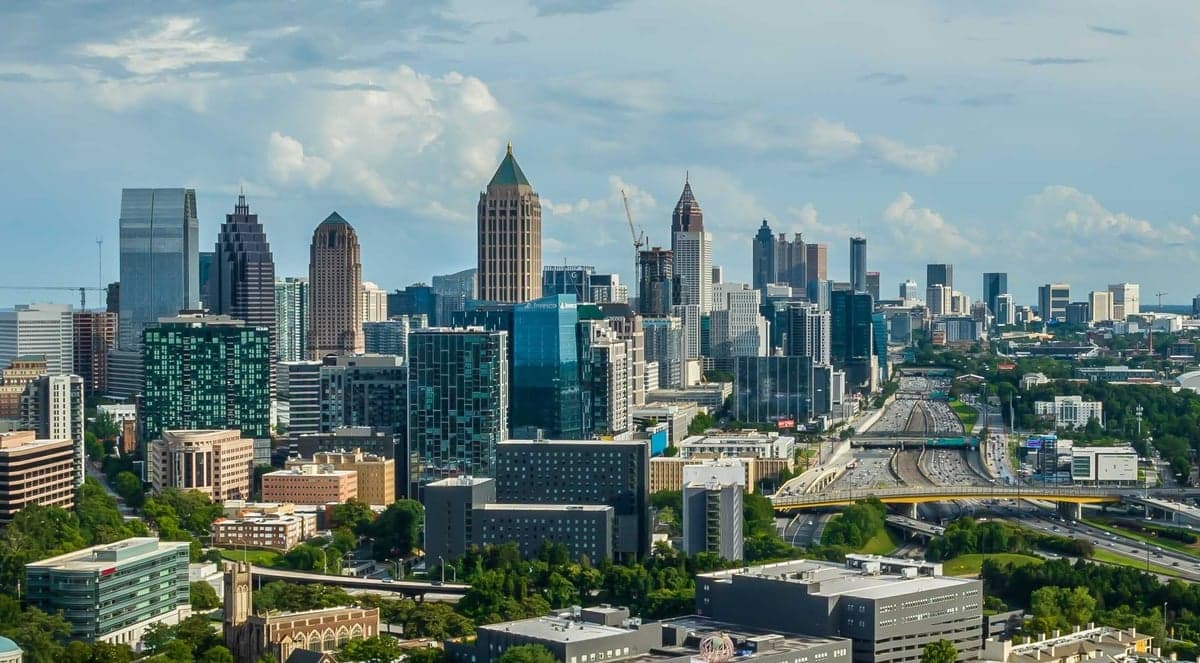
Photo: Wikipedia
Quality of Life in Atlanta, GA
Above-average quality of iife. The area offers a reasonable cost of living, decent mobility, and a mix of neighborhood amenities.
What does Quality of Life tell us?
Quality of Life blends cost of living, nearby amenities, socioeconomic signals, and neighborhood character. City-level scores represent the whole municipality; individual neighborhoods can differ.
What does this tell us?
Quality of Life blends cost of living, nearby amenities, socioeconomic signals, and neighborhood character. City-level scores represent the whole municipality; individual neighborhoods can differ.
Cost of Living
43% above national average
The Real Cost of Living in Atlanta, GA for 2026
| Tier | Individual | Family (4) |
|---|---|---|
| Survival | $26k | $49k |
| Comfortable | $82k | $120k |
| Luxury | $148k+ | $229k+ |
| Elite (Top 5%) | $260k+ | $402k+ |
68%
The Area Signal
A metric tracking the socioeconomic signals of the area.


Hobbies
Explore the areaGroceries
2 within 10 miles
Gas
0 within 10 miles
Hospital
3 within 20 miles
Airport
ATL — Hartsfield-Jackson Atlanta International
Post Office
USPS — Atlanta, GA
Critical Amenities
Quality-of-Life Analysis
Atlanta, Georgia, presents a quality of life defined by a dynamic mix of affluence, cultural energy, and urban-suburban tension, drawing a population of young professionals, established families, and creative-class workers. The city’s cost of living index of 143 (100 = U.S. average) signals a notably expensive market, yet it remains a magnet for those seeking career opportunities in Fortune 500 headquarters, film production, and tech startups. Residents range from long-time Southern families to transplants drawn by the Hartsfield-Jackson airport hub and a thriving music and food scene, creating a diverse but economically stratified social fabric.
Cost of living, housing affordability, and how Atlanta compares to nearby suburbs
Atlanta’s cost of living is 43% above the national average, driven primarily by housing. The median home value sits at $420,600, while median rent is $1,617—both significantly higher than in surrounding metro areas like Marietta (median home value ~$380,000) or Decatur (~$450,000). However, compared to peer cities like Charlotte (COL index 96) or Nashville (index 105), Atlanta is markedly pricier, though still cheaper than coastal hubs like San Francisco or New York. The average commute of 26.8 minutes is slightly above the national average (26.4 minutes), reflecting the city’s notorious traffic congestion on interstates like I-85 and I-75. For renters, the $1,617 median rent is manageable for dual-income households but strains single earners, especially in intown neighborhoods like Midtown or Buckhead where rents often exceed $2,000. Homebuyers face a competitive market, with many turning to suburbs like Smyrna or Brookhaven for more space at lower prices.
Amenities, schools, and what daily life is like for families and professionals
Daily life in Atlanta revolves around a mix of urban amenities and green spaces, with the BeltLine trail, Piedmont Park, and the Atlanta Botanical Garden providing recreation. The city’s public school system, Atlanta Public Schools, is uneven—some schools like Grady High School and North Atlanta High School rank well, but many others struggle with funding and performance, prompting families to consider private options or move to top-rated districts in Cobb or Gwinnett counties. For professionals, the city offers a robust job market anchored by Delta Air Lines, Coca-Cola, and the Centers for Disease Control and Prevention (CDC), plus a growing film industry (Tyler Perry Studios, Pinewood Atlanta). Cultural life is dense: the High Museum of Art, Fox Theatre, and a live music scene spanning from the Tabernacle to small clubs in East Atlanta Village. Traffic remains the biggest daily friction, with the 26.8-minute average commute masking longer trips for those crossing the perimeter (I-285). Walkability is limited to a few core neighborhoods—Midtown, Old Fourth Ward, and Virginia-Highland—while most residents rely on cars or MARTA rail for longer trips.
Atlanta is best suited for career-driven individuals and families who can absorb its high housing costs and traffic frustrations in exchange for economic opportunity, cultural depth, and a temperate climate. Young professionals thrive in intown neighborhoods with access to nightlife and networking, while families often settle in suburbs like Alpharetta or Sandy Springs for better schools and lower crime. Retirees may find the pace too fast and the cost too high, but empty-nesters drawn to the BeltLine and arts scene can adapt. Ultimately, Atlanta rewards those who prioritize career growth and urban energy over affordability and quiet living.

Crime in Atlanta, GA
Significantly higher crime rates than 81% of comparable U.S. locations.
Violent CrimeViolent Crime Analysis
Property CrimeProperty Crime Analysis
Crime Analysis
Atlanta’s overall safety picture is defined by crime rates that significantly exceed both state and national averages, a reality shaped in part by the city’s progressive criminal justice policies. With a violent crime rate of 722.7 incidents per 100,000 residents and a property crime rate of 3,074.9 per 100,000, Atlanta presents a risk profile that demands careful consideration from potential residents. These figures place the city among the higher-crime large metro areas in the United States, where liberal prosecutorial approaches have been linked to reduced incarceration and, critics argue, increased recidivism.
Crime in context
Atlanta’s violent crime rate is roughly double the national average of approximately 380 per 100,000, while its property crime rate is about 50% higher than the U.S. median. Compared to Georgia’s statewide violent crime rate of roughly 400 per 100,000, Atlanta’s figure is 80% higher. The city’s progressive district attorneys and judges have implemented policies such as cash bail reform, reduced prosecution of low-level offenses, and diversion programs. While these measures aim to address systemic inequities, they have also been associated with a perception—and in some cases, a statistical reality—of more criminals returning to the streets quickly, undermining public safety and victim justice.
What residents experience
For daily life, the high property crime rate is the most tangible concern. Car break-ins, package thefts, and residential burglaries are common complaints across many neighborhoods, particularly near downtown, Midtown, and Buckhead commercial corridors. Violent crime, while less frequent in daily experience, is concentrated in specific areas—especially along the I-20 and I-285 corridors and in neighborhoods like Vine City, English Avenue, and parts of Bankhead. Residents often report feeling safe in their immediate blocks but wary of venturing into unfamiliar areas after dark. The presence of homeless encampments and open-air drug markets in certain zones adds to a sense of diminished public order, a pattern critics attribute to lenient enforcement policies.
Neighborhood-level variation is stark. Intown neighborhoods like Virginia-Highland, Decatur, and Ansley Park generally experience lower violent crime but still contend with property crime. Suburban areas within the metro—such as Sandy Springs, Roswell, and Alpharetta—offer significantly lower crime rates, often 50-70% below Atlanta’s citywide figures. However, even these suburbs are not immune to spillover effects from the city’s broader criminal justice environment. For those considering relocation, a zip-code-level analysis of recent crime maps is essential, as the difference between a safe block and a high-risk one can be just a few streets. Ultimately, Atlanta’s safety profile requires proactive awareness, robust home security, and a clear-eyed understanding that progressive justice policies may prioritize offender rehabilitation over immediate public protection.
* Values derived from national, state, county, city and local statistics and may differ in a specific area. Last updated: 2026-04-15T23:38:18.000Z
Narrative content on this page is AI-generated and may contain mistakes. Verify any details that matter before acting on them.
ReloMaps may earn a commission from affiliate links at no extra cost to you.

