 Popular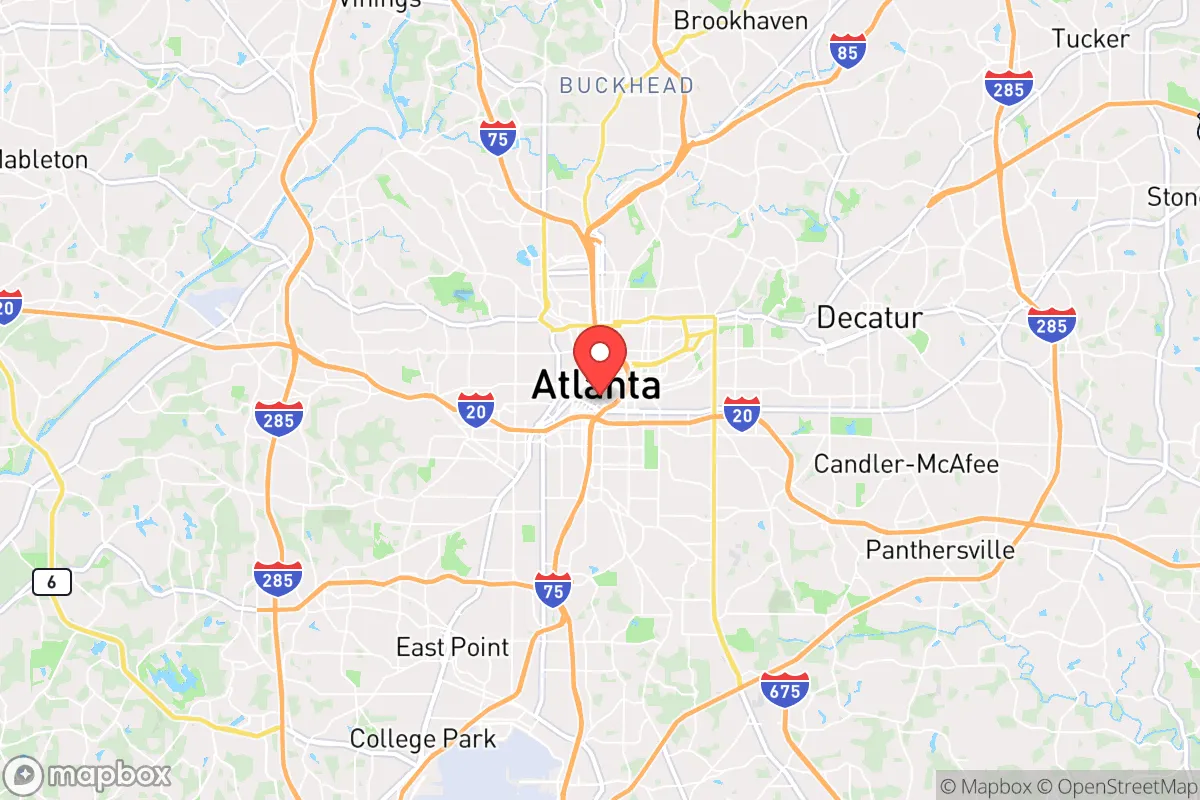
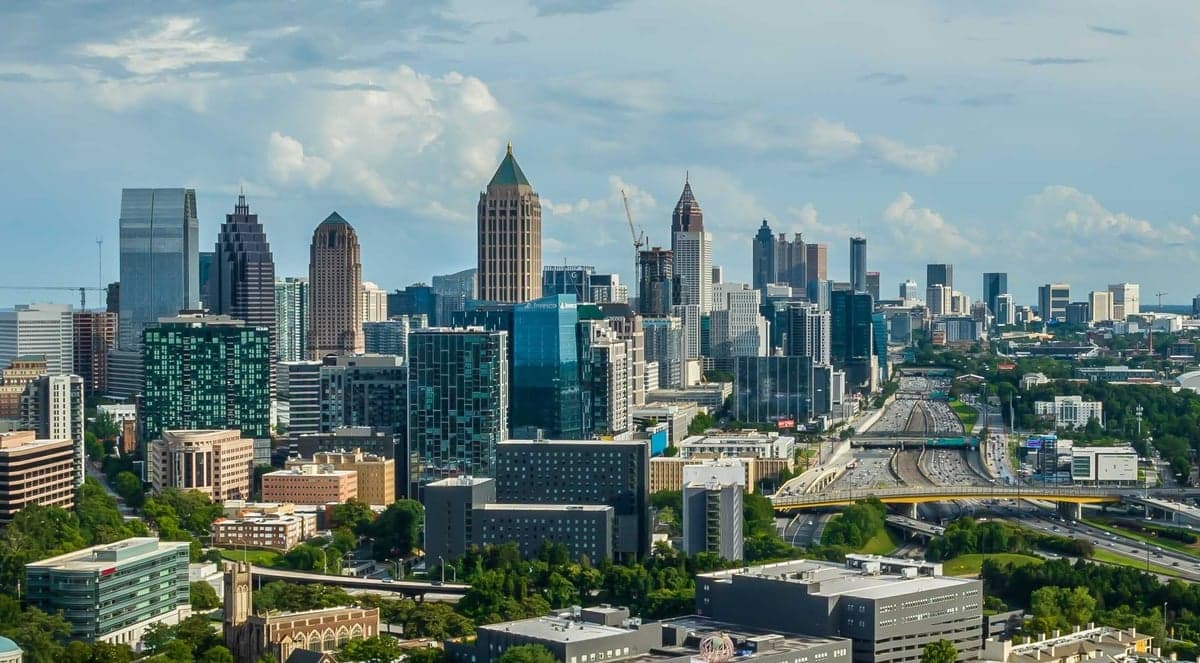
Photo: Wikipedia
Political ClimatePolitical Climate in Atlanta, GA
District shown is the primary district for this city’s centroid. Cities may span multiple districts.
Local Political AnalysisPolitical Analysis of Atlanta, GA
Look, I’ve lived in and around Atlanta my whole life, and I’ve watched this city shift from a place where you could mind your own business into a one-party stronghold that’s hard to recognize. The Cook PVI rating of D+36 tells you everything you need to know: Atlanta is about as deep blue as it gets in the South. That means the local government, from the mayor’s office to the city council, is overwhelmingly controlled by progressive Democrats. The trajectory here isn’t subtle—it’s been a steady march leftward for the last two decades, and the pace has only accelerated since 2020. If you value personal freedoms, limited government, and the right to live without a dozen new regulations every year, this is a place that will test your patience.
How it compares
Atlanta is an island of deep blue in a sea of purple and red. Drive 30 minutes north to Alpharetta or Milton, and you’ll find communities that still lean conservative, with lower taxes and a more hands-off approach to local governance. Head west to Douglasville or south to Peachtree City, and the political vibe shifts noticeably—people there are more likely to wave a Gadsden flag than a Pride flag. Even Marietta, just 20 minutes away, has a more balanced political mix, with a Republican-leaning county commission that pushes back on some of the overreach you see inside the Perimeter. The contrast is stark: inside Atlanta, you’ve got a city council that’s all-in on zoning restrictions, business mandates, and social engineering. Outside, folks are still fighting to keep their property rights and school boards sane.
What this means for residents
For the average person, living in Atlanta means dealing with a government that feels like it’s in your business constantly. Property taxes have skyrocketed—up over 30% in some neighborhoods since 2020—because the city keeps spending on pet projects and DEI initiatives rather than fixing potholes or keeping the lights on. You’ve got mask mandates that lasted longer than anywhere else in the state, vaccine passport talk that never fully died, and a mayor who’s more focused on renaming streets than on public safety. The police department is understaffed and demoralized, thanks to defund-the-police rhetoric from city council members, and crime in certain parts of town has gotten bad enough that even lifelong residents are looking at moving to the suburbs. If you’re a small business owner, brace yourself for new paid leave mandates and minimum wage hikes that the city council pushes through without much thought for how they’ll hit mom-and-pop shops. It’s not all doom and gloom—there are still plenty of good people here—but you have to be willing to fight for your rights at the ballot box and in public meetings.
The cultural and policy distinctions here are hard to ignore. Atlanta’s government has fully embraced the progressive playbook: sanctuary city policies that limit cooperation with federal immigration enforcement, a push for “equity” in everything from tree canopy to transit fares, and a school board that’s more interested in critical race theory than reading scores. The city’s also been aggressive with environmental regulations that drive up building costs and make it harder to develop property. On the plus side, the economy is still strong—Hartsfield-Jackson Airport keeps things humming, and there’s a ton of corporate headquarters here—but the cost of that prosperity is a government that sees itself as your nanny, not your servant. If you’re thinking of moving here, my advice is to look closely at the neighborhoods and the local elections. The city council races matter more than you think, and a few good conservatives can make a difference in slowing down the overreach. But don’t expect Atlanta to swing back anytime soon—this train is headed left, and it’s picking up speed.

State Political ClimatePolitical Climate in Georgia
State Political AnalysisPolitical Environment in the State
Georgia has transformed from a reliably conservative stronghold into a true battleground state over the past two decades, shifting from a +8-point Republican lean in 2004 to a razor-thin +0.2-point margin in 2020 and a +2-point Republican lean in 2024. The state’s political coalition is now a volatile mix of rapidly diversifying metro Atlanta suburbs, deeply conservative rural and exurban counties, and a growing population of out-of-state transplants, many from blue states. The long-term trajectory is a slow but steady drift toward competitiveness, with Republicans still holding the legislature and governor’s mansion but facing a serious demographic headwind that could flip the state in a single election cycle.
Urban vs. rural divide
The political map of Georgia is a story of two Georgias. Metro Atlanta’s core counties—Fulton, DeKalb, and Clayton—are overwhelmingly Democratic, with Fulton County delivering 73% of its vote to Joe Biden in 2020. The suburban ring, however, is where the real action is. Cobb and Gwinnett counties, once Republican strongholds, flipped to Biden in 2020 and have stayed blue-leaning, driven by an influx of diverse, college-educated professionals. Meanwhile, the exurban counties like Forsyth, Cherokee, and Paulding remain deeply red, with Forsyth County giving Trump 65% of the vote in 2024. Outside the Atlanta metro, the state is solidly Republican: counties like Murray, Gilmer, and Union in the north Georgia mountains routinely vote 80%+ Republican, while the rural southwest, including Colquitt and Thomas counties, is also deeply conservative but with a significant African American minority that votes Democratic. The only other blue pockets are the smaller cities: Athens (Clarke County) is a liberal college town, Savannah (Chatham County) leans Democratic, and Augusta (Richmond County) is a blue island in a red sea. The political divide is not just urban vs. rural—it’s metro Atlanta vs. everywhere else, with the metro area’s growth driving the state’s leftward shift.
Policy environment
Georgia’s policy environment is a mixed bag for conservatives. On the positive side, the state has a flat income tax rate of 5.49% (down from 5.75% in 2024), a relatively low property tax burden, and a Republican-controlled legislature that has passed permitless carry (2022), a six-week abortion ban (2019, upheld in 2024), and a parental rights bill (2022) that allows parents to challenge school library materials. The state also has a right-to-work law and is a “business-friendly” state with low regulations. However, there are concerning trends. The state expanded Medicaid under the Affordable Care Act in 2023, a move many conservatives opposed as a federal overreach. The Georgia Election Integrity Act (SB 202) of 2021 tightened voter ID requirements and limited drop boxes, but it also expanded early voting hours—a compromise that pleased few on either side. On education, the state has a school choice program (the Georgia Promise Scholarship Act of 2024) that provides $6,500 for private school tuition, but it’s limited to students in low-performing schools. The biggest red flag for conservatives is the growing influence of the Atlanta city government, which has passed sanctuary city policies (2023) and defunded the police by 5% in 2024—though state law preempts local sanctuary policies, the conflict is ongoing.
Trajectory & freedom
Georgia is becoming less free in several key areas, particularly regarding personal liberty and government overreach. The most alarming trend is the expansion of state power over local decisions. In 2024, the legislature passed SB 63, which allows the state to take over failing school districts—a move that sounds good but gives the state government unprecedented control over local education. On gun rights, the 2022 permitless carry law was a win, but the state also passed a “red flag” law in 2023 (HB 218) that allows temporary confiscation of firearms from individuals deemed a threat—a clear violation of due process. On medical freedom, Georgia has not passed any COVID-19 vaccine mandate bans, and the state’s health department still pushes vaccine mandates for healthcare workers. On parental rights, the 2022 law is weak compared to states like Florida; it allows parents to challenge materials but doesn’t ban classroom instruction on sexual orientation or gender identity. The biggest loss of freedom is in property rights: the state has seen a surge in eminent domain cases for private development, particularly in the Atlanta suburbs, where local governments have used “blight” designations to seize land for luxury apartments. The 2024 passage of HB 514, which limits local zoning authority to block high-density housing, is a double-edged sword—it promotes development but strips local control.
Civil unrest & political movements
Georgia has been a flashpoint for political movements on both sides. The 2020 election aftermath saw massive protests in Atlanta, including the “Stop the Steal” rally at the state capitol on January 6, 2021, and the ongoing “Cop City” protests against the Atlanta Public Safety Training Center, which have turned violent with arson and vandalism. The “Cop City” conflict is a major flashpoint: activists have occupied the site since 2021, and the state has responded with a heavy-handed crackdown, including the passage of SB 44 in 2023, which makes it a felony to participate in a “riot” and allows for civil liability against protesters. On the right, the Georgia Republican Party has fractured between establishment figures like Governor Brian Kemp and the Trump-aligned faction led by former Senator David Perdue. The 2022 primary saw Kemp defeat Perdue decisively, but the party remains divided. Immigration politics are also hot: the state passed HB 1105 in 2024, which requires local law enforcement to cooperate with ICE, but Atlanta’s sanctuary policy has led to a standoff. The election integrity debate remains raw: the 2020 audit and recount confirmed Biden’s win, but many conservatives still distrust the system, and the 2024 election saw a record number of poll watcher challenges in Cobb and Gwinnett counties. A new resident would notice the constant political tension, especially in the Atlanta suburbs, where yard signs and bumper stickers are a daily reminder of the divide.
Projection
Over the next 5-10 years, Georgia will likely become more competitive but not necessarily blue. The key demographic driver is the continued growth of the Atlanta metro, which is attracting young, diverse, and college-educated transplants from California, New York, and Illinois. These newcomers tend to vote Democratic, but they also bring a libertarian streak that could push the state toward more moderate policies. The rural and exurban areas are not shrinking, but they are aging, and their political power is waning as the metro area gains legislative seats. The 2024 census estimates show that 60% of Georgia’s population growth since 2020 has been in the five core Atlanta counties, which are all trending blue. However, the Republican-controlled legislature is likely to continue passing election laws that make it harder for Democrats to turn out, such as stricter voter ID and limits on early voting. The biggest wildcard is the state’s growing Hispanic population, which is concentrated in the Atlanta suburbs and rural south Georgia. If Republicans can make inroads with this group, they could hold the state; if not, Georgia will likely flip blue by 2032. A new resident moving in now should expect a state that is politically divided, with a Republican legislature that is increasingly aggressive in preempting local control, and a Democratic governor’s race that will be a toss-up in 2026.
Bottom line for a new resident: Georgia offers low taxes, a business-friendly environment, and a strong gun rights culture, but the political climate is increasingly contentious. If you’re moving to the Atlanta suburbs, expect a blue-leaning local government that may clash with state law on issues like policing and immigration. If you’re moving to the exurbs or rural areas, you’ll find a conservative community that feels under siege from the metro area. The state is still a good bet for conservatives, but the window is closing—the next decade will determine whether Georgia remains a red state or becomes a blue one.
* Values derived from national, state, county, city and local statistics and may differ in a specific area. Last updated: 2026-04-15T23:38:18.000Z
Narrative content on this page is AI-generated and may contain mistakes. Verify any details that matter before acting on them.
ReloMaps may earn a commission from affiliate links at no extra cost to you.

