
Photo: Wikipedia
Personal Sovereignty in Augusta, GA
Viable for self-reliance. Generally workable, though some barriers may limit total independence.
What does Personal Sovereignty tell us?
Personal Sovereignty measures your capacity for self-reliance and independence with minimal government friction. Higher scores mean fewer barriers between you and the way you want to live... but it assumes you have the space you need and good neighbors.
What does this tell us?
Personal Sovereignty measures your capacity for self-reliance and independence with minimal government friction. Higher scores mean fewer barriers between you and the way you want to live... but it assumes you have the space you need and good neighbors.
State Policy
Energy independence: Importer (12% of energy produced in-state)
Personal Liberty
Homesteading

Personal Liberty Analysis
Augusta, Georgia, offers a notably high degree of personal sovereignty compared to many urban centers on the East Coast, functioning as a practical stronghold for those prioritizing autonomy over government convenience. While it is not a libertarian utopia—no city is—its legal and cultural framework provides significant breathing room for individuals and families who wish to minimize state interference in their daily lives. The combination of Georgia’s relatively light regulatory touch, strong property rights, and a deeply ingrained culture of self-reliance makes Augusta a serious consideration for anyone evaluating relocation from a survivalist or prepper perspective. The key is understanding where the city’s local ordinances intersect with state law, and where you can carve out the maximum personal latitude.
Tax burden and regulatory posture: how much the state takes and controls
Georgia’s overall tax climate is favorable for those seeking to keep more of their earnings and reduce dependency on government services. The state levies a flat income tax rate of 5.49%, which is moderate but not the lowest in the region; however, there is no state-level estate or inheritance tax, a critical factor for long-term wealth preservation. Augusta’s local sales tax rate is 8% (state + local options), which is standard for the area but worth noting for major purchases. The real property tax burden in Richmond County is approximately 1.2% of assessed value, which is reasonable for a county with a major city. More importantly, Georgia is a “right-to-work” state, meaning you cannot be forced to join a union as a condition of employment—a direct check on collective power that aligns with individual autonomy. The regulatory environment for small businesses and home-based enterprises is permissive; Augusta does not impose the kind of onerous licensing or zoning hurdles found in places like Atlanta or Charleston. For a prepper, this means you can legally operate a side business, keep livestock in certain zones, and generally avoid the kind of bureaucratic harassment that drains time and resources. The state’s posture is one of “leave us alone unless there’s a clear problem,” which is a significant advantage over jurisdictions that regulate out of principle.
Self-defense and gun law specifics: what you can carry and where
Georgia is a “constitutional carry” state, meaning that as of 2022, any legal resident 21 or older can carry a handgun openly or concealed without a permit. This is the gold standard for personal sovereignty in self-defense. Augusta, being in Richmond County, does not have any local ordinances that override this state preemption—meaning city officials cannot ban carry in parks, streets, or most public buildings (though federal buildings and schools remain restricted). The state also has a strong “stand your ground” law, with no duty to retreat in any place you are lawfully present. For a survivalist mindset, this is non-negotiable: you are legally empowered to defend your home, vehicle, and person with lethal force if you reasonably believe it is necessary to prevent death or great bodily harm. Magazine capacity is not restricted, and there is no state-level registry for firearms. The only notable limitation is that you cannot carry in a courthouse, jail, or mental health facility, and private property owners can still ban firearms on their premises. But compared to states like New York or California, where even owning certain rifles requires a permission slip, Augusta offers near-total freedom in this domain. The local sheriff’s office is generally pro-Second Amendment, and the culture in the surrounding counties is heavily armed and self-reliant.
Self-reliance and homesteading viability: lot sizes, zoning, and off-grid feasibility
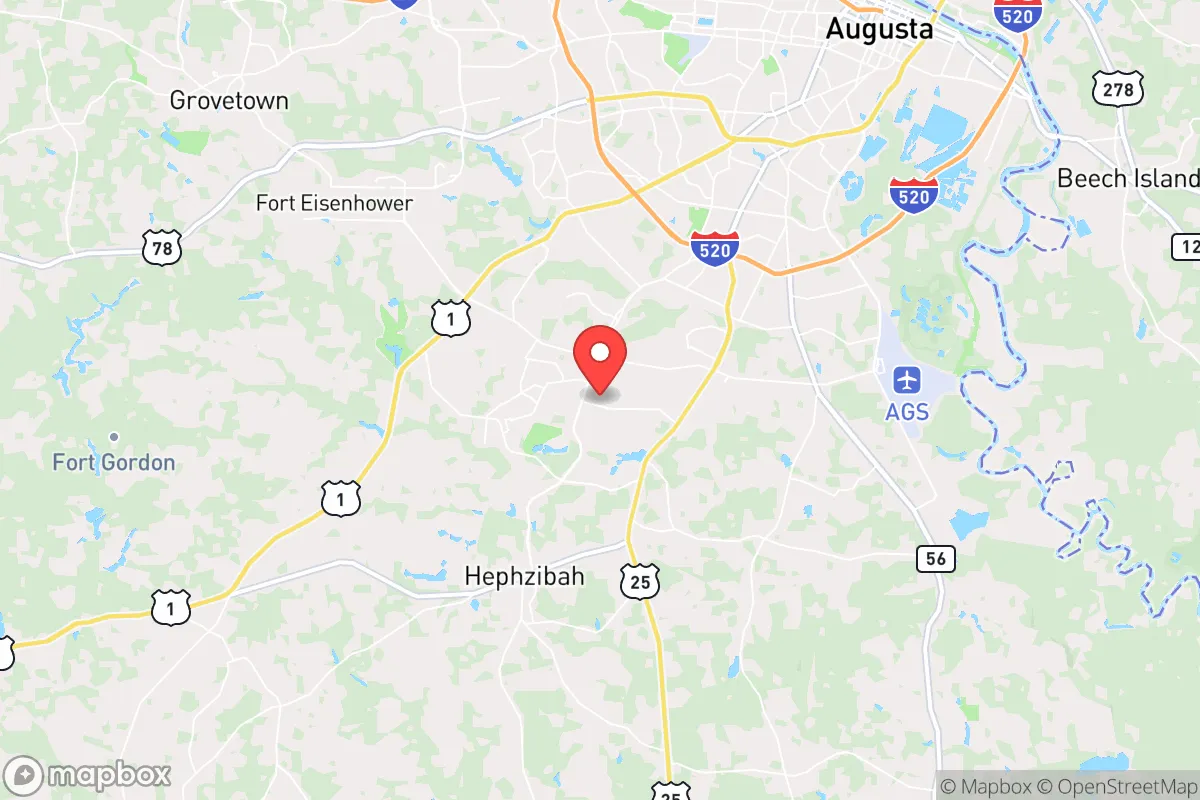
Augusta’s zoning is a mixed bag depending on whether you are inside the city limits or in the unincorporated areas of Richmond County. Inside the city, standard residential lots are typically 0.25 to 0.5 acres, which limits large-scale homesteading but still allows for substantial vegetable gardens, small orchards, and a few chickens (hens only, no roosters, per local ordinance). The real opportunity lies in the county’s more rural fringes—areas like Hephzibah, Blythe, or the southern parts of Columbia County just across the river. Here, you can find 1- to 5-acre parcels at reasonable prices (often under $10,000 per acre), with far fewer restrictions. Off-grid feasibility is moderate: Georgia has no state law prohibiting rainwater collection, and Augusta’s water table is high enough that a well is a practical option on larger lots. Solar panels are legal and common, though the city’s building codes may require permits for grid-tied systems. The biggest hurdle for a serious prepper is the lack of abundant public land for hunting or foraging within Richmond County itself; you will need to drive 30-45 minutes to the Ogeechee River basin or the Sumter National Forest in South Carolina for true wilderness access. However, for a family wanting to raise goats, keep bees, and grow most of their own vegetables, Augusta’s outskirts are entirely viable. The local extension office (UGA Cooperative Extension) is surprisingly helpful for soil testing and pest management, which is a small but real government service that actually aids self-reliance rather than hindering it.
Personal liberties: parental rights, medical autonomy, speech, and property
Georgia has strong legal protections for parental rights, including a “Parental Bill of Rights” that affirms parents’ authority to direct the upbringing, education, and healthcare of their children. This means no mandatory vaccine requirements for school attendance (though some private schools may require them), and parents can opt their children out of sex education or other controversial curricula. Medical autonomy is more nuanced: Georgia does not have a state-level “right to try” law for experimental treatments, but it does allow for broad use of alternative medicine practitioners, and there is no state mandate for COVID-19 vaccines. The state’s emergency powers were a flashpoint during the pandemic, with the legislature moving to limit the governor’s ability to issue long-term emergency orders without legislative approval—a direct response to perceived overreach. Free speech is protected under the Georgia Constitution, which is actually broader than the First Amendment in some respects, and Augusta has no local “hate speech” ordinances that chill political expression. Property rights are robust: Georgia is a “lien theory” state, meaning you hold title to your home even with a mortgage, and eminent domain is tightly constrained compared to other states. The only real friction point is that Augusta’s city government has a history of aggressive code enforcement in certain neighborhoods, particularly regarding unregistered vehicles or “junk” on properties—so if you plan to stockpile supplies or keep multiple vehicles, you are better off in unincorporated county land where enforcement is laxer.
Overall, Augusta ranks as a strong contender for personal sovereignty relative to other mid-sized Southern cities. It is not as free as rural Texas or Idaho, but it offers a better balance of access to medical infrastructure, employment, and supply chains than those remote areas. The biggest trade-off is that you are still in a county with a significant urban population, which means occasional friction with local government over property maintenance or noise complaints. But for a conservative-leaning individual or family who wants to live largely unbothered, with the legal right to defend themselves, keep their earnings, and raise their children according to their own values, Augusta provides a solid foundation. The key is to choose your exact location carefully—inside the city limits trades convenience for more oversight, while the rural fringes give you the breathing room that true sovereignty requires.

* Values derived from national, state, county, city and local statistics and may differ in a specific area. Last updated: 2026-04-22T01:38:06.000Z
Narrative content on this page is AI-generated and may contain mistakes. Verify any details that matter before acting on them.
ReloMaps may earn a commission from affiliate links at no extra cost to you.

