Photo: Wikipedia
Political ClimatePolitical Climate in Augusta, GA
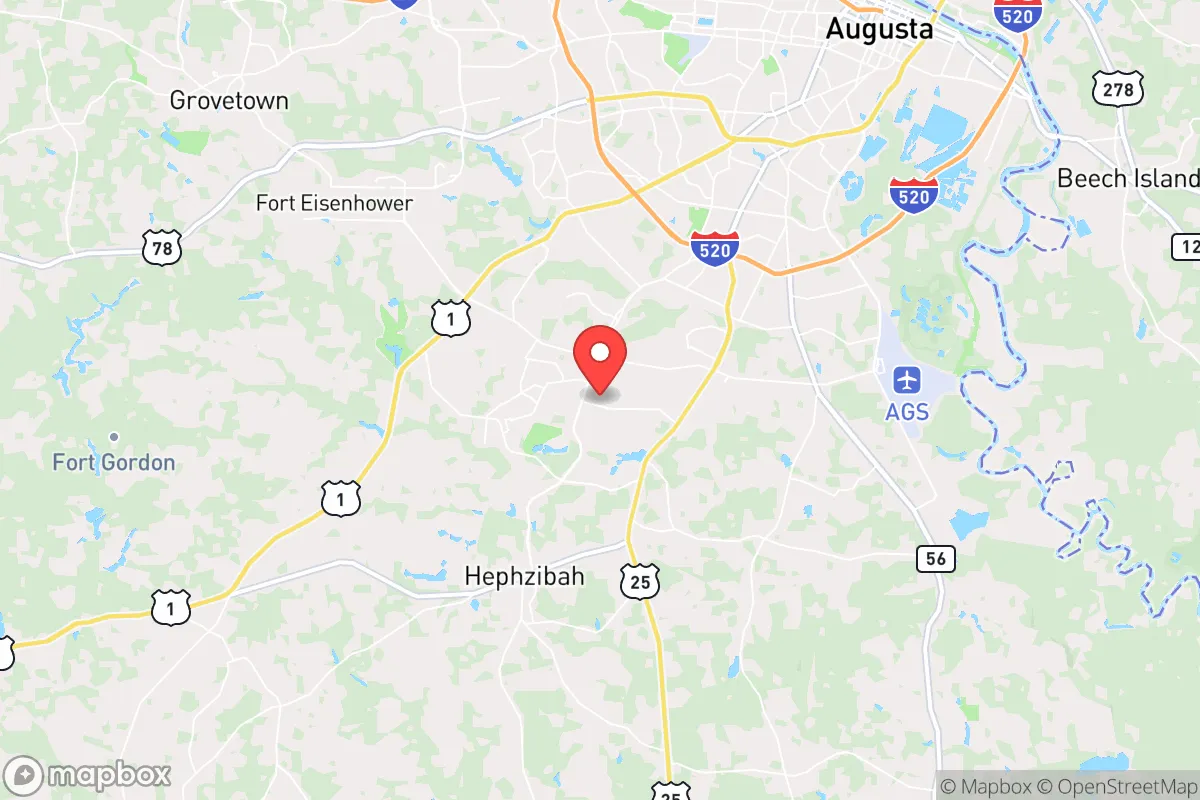
District shown is the primary district for this city’s centroid. Cities may span multiple districts.
Local Political AnalysisPolitical Analysis of Augusta, GA
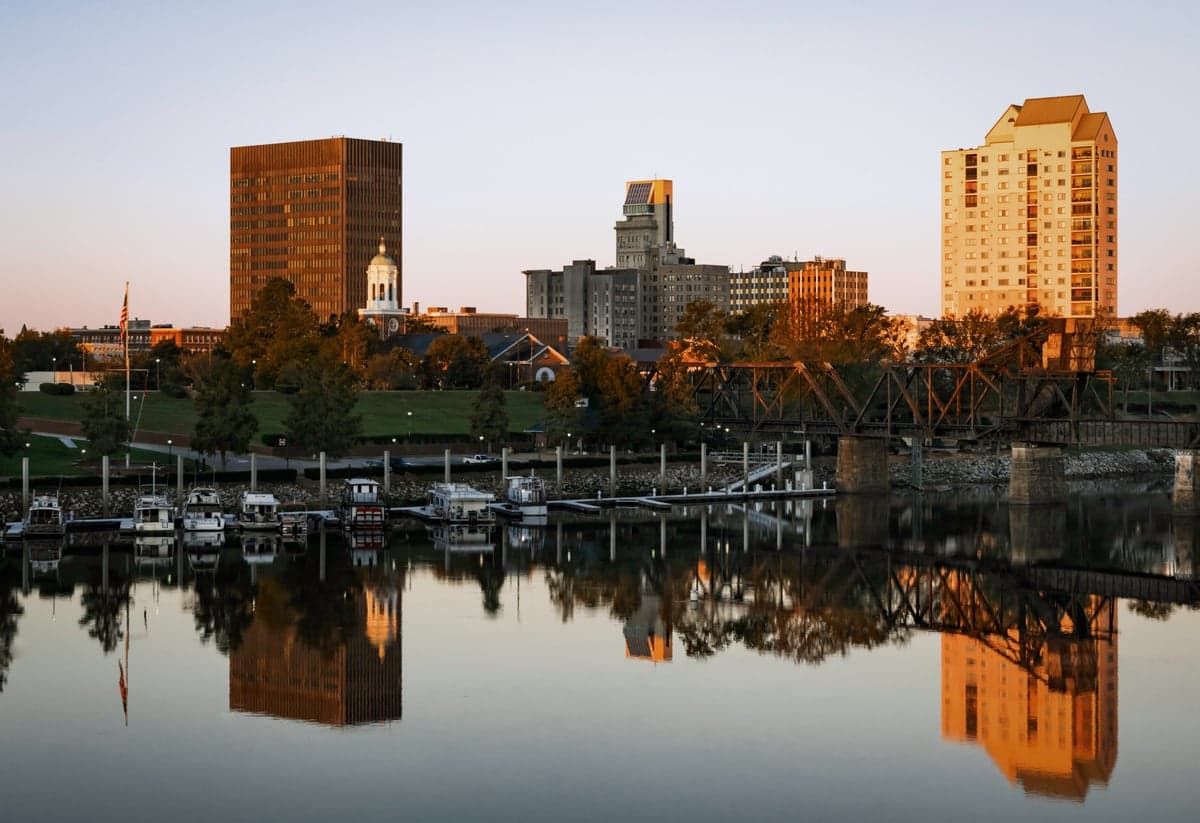
Augusta’s political climate has long been a conservative stronghold, but it’s not the monolith some outsiders assume. The city itself leans reliably Republican, with a Cook PVI of R+7, meaning it votes about seven points more conservative than the national average. That’s a solid red number, but you’ll feel the difference if you drive ten miles in any direction. Head west into Columbia County, and you’re in deep-red territory where folks don’t just vote Republican—they live it. Go east into Aiken, South Carolina, and you get a similar vibe. But inside Augusta’s city limits, especially around the medical district and downtown, you’ll find a growing progressive undercurrent that’s been slowly shifting the local conversation. It’s not a blue wave, but it’s a noticeable change from twenty years ago, when the area was almost uniformly conservative.
How it compares
Compared to other Georgia cities, Augusta sits in a unique middle ground. Atlanta is a deep-blue metro, Savannah is trending purple, and Macon is a toss-up. Augusta, by contrast, has held its conservative ground better than most, but the cracks are showing. The surrounding counties—Columbia, Richmond (where Augusta is the county seat), and McDuffie—are all reliably red, but Richmond County itself has become more competitive in recent cycles. In 2020, Donald Trump won Richmond County by just under 2,000 votes, a far cry from the double-digit margins of the 2000s. That shift is driven largely by younger professionals moving into the downtown area and a growing African American electorate that votes reliably Democratic. If you’re looking for a place where conservative values still dominate the local government and school board, you’re better off in Evans or Grovetown. But if you want to live inside the city, you’ll need to keep an eye on the city council—some of those new members are pushing for policies that feel a lot like what you’d see in Athens or Decatur.
What this means for residents
For a long-time resident, the biggest concern is the slow creep of government overreach into everyday life. Augusta’s city council has debated everything from plastic bag bans to stricter rental inspection ordinances, and while none of these have passed yet, the conversations are happening. The real flashpoint, though, is the school board. Richmond County’s school system has been a battleground for years, with fights over curriculum transparency, mask mandates, and parental rights. In 2021, the board voted to keep mask requirements in place long after the state recommended against them, which rubbed a lot of families the wrong way. If you value local control and minimal interference from the government, you’ll want to pay close attention to school board elections—they’re where the rubber meets the road. On the plus side, property taxes here are still relatively low compared to the rest of the state, and there’s no city income tax. The Second Amendment is still respected, with no local restrictions beyond what state law allows. But the trajectory is concerning: every year, there’s a new proposal to regulate something that used to be left to personal choice.
Culturally, Augusta still holds onto its Southern roots in ways that matter. The Masters Tournament brings a wave of tradition and civility that most cities can’t match. But you’ll also notice a growing number of “Live, Work, Play” initiatives that prioritize bike lanes and public art over things like road maintenance and public safety. The downtown area has seen a revival, which is good for business, but it’s also brought higher rents and a younger crowd that doesn’t always share the same values as the old guard. If you’re moving here, you’ll find a community that’s still mostly conservative, but you’ll need to be engaged to keep it that way. The next five to ten years will be telling—Augusta could either hold the line or slide into the kind of progressive policies that have hurt other Southern cities. It’s up to the people who show up to vote.

State Political ClimatePolitical Climate in Georgia
State Political AnalysisPolitical Environment in the State
Georgia has transformed from a reliably conservative Southern stronghold into a fiercely competitive battleground state, shifting from a +8 Republican margin in 2012 to a razor-thin +0.2 Democratic margin in 2020, before settling back into a near-even split in 2024. The state’s political identity is now defined by a tug-of-war between its rapidly diversifying, high-growth metro Atlanta suburbs and its deeply conservative rural and exurban counties, with both coalitions holding roughly equal power. Over the past 15 years, the dominant trend has been a steady leftward drift in the Atlanta metro core, offset by a hardening of conservative margins in the rest of the state, creating a political environment that feels perpetually unsettled.
Urban vs. rural divide
The political map of Georgia is a story of two Georgias. Metro Atlanta’s core counties—Fulton, DeKalb, Cobb, Gwinnett, and Clayton—now reliably deliver massive Democratic margins, with Fulton and DeKalb alone often producing a net Democratic vote of over 400,000. This is driven by a combination of in-migration from other states, a growing Black professional class, and an influx of younger, college-educated voters. Gwinnett County, once a Republican stronghold, flipped to Democrats in 2016 and has not looked back, while Cobb County followed suit in 2020. Outside the I-285 perimeter, the political landscape flips dramatically. Rural south Georgia counties like Brooks, Colquitt, and Tift routinely vote 70-80% Republican, as do the exurban counties north of Atlanta like Cherokee, Forsyth, and Pickens. The state’s second-largest metro, Augusta, leans Republican but is not a lock, while Columbus and Savannah are competitive swing areas. Macon-Bibb County has trended Democratic, but the surrounding rural counties remain deeply red. The result is a state where the political center of gravity is almost entirely determined by which side turns out its base in the Atlanta suburbs.
Policy environment
Georgia’s policy environment is a mixed bag for a conservative-leaning resident. On the positive side, the state has a flat income tax rate of 5.39% (down from 6% in 2022, with a path to 4.99% by 2029), no estate tax, and a relatively business-friendly regulatory climate. Georgia is a right-to-work state, which has helped attract major corporate investments from companies like Hyundai and Rivian. On education, the state has a robust charter school system and a school choice program (the Georgia Promise Scholarship Act, passed in 2024) that provides $6,500 per student for private school or homeschooling expenses. However, the state’s education bureaucracy remains heavily centralized, and local school boards in metro Atlanta have increasingly adopted progressive curricula. On healthcare, Georgia did not expand Medicaid, but the state’s private option (Georgia Pathways) has low enrollment. Election laws have been a flashpoint: the 2021 Election Integrity Act (SB 202) added voter ID requirements for absentee ballots, limited drop boxes, and restricted third-party ballot collection—measures that conservatives see as necessary safeguards but progressives decry as suppression. The state also has a permitless carry law (HB 218, 2022) and a heartbeat abortion ban (HB 481, 2019, blocked in court but still on the books).
Trajectory & freedom
On the freedom front, Georgia has moved in two directions simultaneously. On the positive side for conservatives, the state has expanded gun rights significantly: permitless carry (HB 218) passed in 2022, and the state preempts local gun ordinances, meaning Atlanta cannot enact its own restrictions. Parental rights were strengthened with the 2022 “Parents’ Bill of Rights” (HB 1178), which requires schools to notify parents of any medical or counseling services provided to their children. Property rights were bolstered by the 2023 law limiting local governments’ ability to impose rent control. On the concerning side, the state has seen a steady expansion of government overreach in the name of public health and equity. Atlanta’s city council has passed a series of progressive ordinances, including a paid sick leave mandate and a “sanctuary city” resolution (though largely symbolic), and the state has had to preempt local efforts to defund the police. The biggest threat to personal liberty in Georgia is the growing influence of corporate ESG (Environmental, Social, and Governance) mandates, which have been pushed by major employers like Delta and Coca-Cola, creating a soft pressure on conservative values in the workplace.
Civil unrest & political movements
Georgia has been a hotbed of political activism on both sides. The 2020 election cycle saw massive protests in Atlanta following the death of George Floyd, with the city experiencing several nights of property damage and arson. The “Stop Cop City” movement, which opposes the construction of a police training facility in DeKalb County, has led to ongoing protests and legal battles, with some activists being charged under the state’s RICO law. On the right, the Georgia Republican Party has been riven by internal factions, with the “Georgia Freedom Caucus” pushing for more aggressive conservative legislation on election integrity and immigration. Immigration politics are a growing flashpoint, particularly in the Atlanta suburbs of Gwinnett and Cobb counties, where the foreign-born population has surged. The state has no sanctuary city policies, and the 2024 “Secure Georgia” bill (SB 110) requires local law enforcement to cooperate with ICE. Election integrity remains a live issue, with ongoing litigation over the state’s new election board rules and the use of Dominion voting machines. A new resident would notice the constant political tension, especially in metro Atlanta, where yard signs and bumper stickers are ubiquitous and political conversations are common.
Projection
Over the next 5-10 years, Georgia is likely to remain a toss-up state, but the trend lines favor a slow, incremental leftward shift. The Atlanta metro area continues to grow at a rapid pace, adding roughly 100,000 new residents per year, many of whom are from blue states like California and New York. If current migration patterns hold, the Democratic base in the Atlanta suburbs will continue to expand, while rural Georgia’s population stagnates or declines. However, the state’s conservative exurbs—places like Forsyth County, which is now the fastest-growing county in the state—are also booming, and they are voting even more Republican than before. The wild card is the state’s growing Hispanic and Asian populations, which are not monolithic but have trended slightly more Democratic in recent cycles. A conservative moving to Georgia today should expect that the state will become more competitive, not less, and that the political battles will intensify. The state’s current Republican trifecta (governor, house, senate) is likely to be challenged in the next few cycles, and the policy environment could shift if Democrats take control of the legislature.
For a new resident, the bottom line is this: Georgia offers a relatively low-tax, business-friendly environment with strong gun rights and school choice, but the political climate is volatile and the cultural trajectory of the Atlanta metro is increasingly progressive. If you are moving to a rural or exurban county like Pickens, Forsyth, or Harris, you will find a deeply conservative community that aligns with traditional values. If you are moving to the Atlanta core or its inner suburbs, you will be in a blue bubble where progressive policies are the norm. The state as a whole is a battleground, and your experience will depend heavily on which Georgia you choose to live in. The freedom to choose your local government is still very real, but the state-level fight is far from settled.
* Values derived from national, state, county, city and local statistics and may differ in a specific area. Last updated: 2026-04-22T01:38:06.000Z
Narrative content on this page is AI-generated and may contain mistakes. Verify any details that matter before acting on them.
ReloMaps may earn a commission from affiliate links at no extra cost to you.

