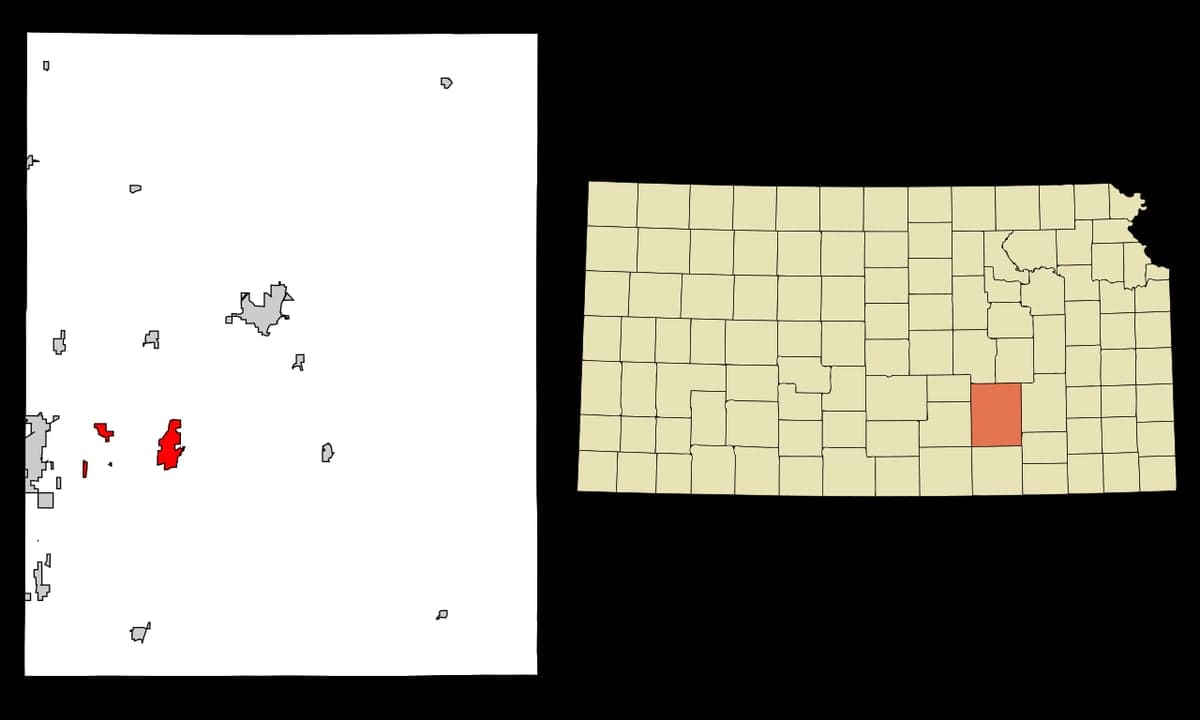
Photo: Wikipedia
Strategic Assessment of Augusta, KS
Meaningful friction. Expect exposure to either population pressure, blast zones, or natural disaster risk. Consider buying a retreat property.
What does the Strategic Assessment tell us?
Our Strategic Assessment grades tactical survivability of an area. Major population centers, military targets, fallout zones, natural disasters, and border exposure all drive risk — lower exposure means a more defensible position in a crisis.
This is heavily inspired by Joel Skousen's Strategic Relocation book. Highly recommended you checkout the book ($)What does this tell us?
Our Strategic Assessment grades tactical survivability of an area. Major population centers, military targets, fallout zones, natural disasters, and border exposure all drive risk — lower exposure means a more defensible position in a crisis.
This is heavily inspired by Joel Skousen's Strategic Relocation book. Highly recommended you checkout the book ($)Strategic Pillars

Key Distances
Regional Safe Places
Below is our recommended "safe zones" in Kansas and the surrounding area based on our strategic heuristics. For most people, it's unrealistic to live in a “safe zone” full-time due to work, family or other personal reasons. They tend to be more rural. However, many of these areas are perfect for second homes and retreat properties that double as a vacation home or even a short-term rental.
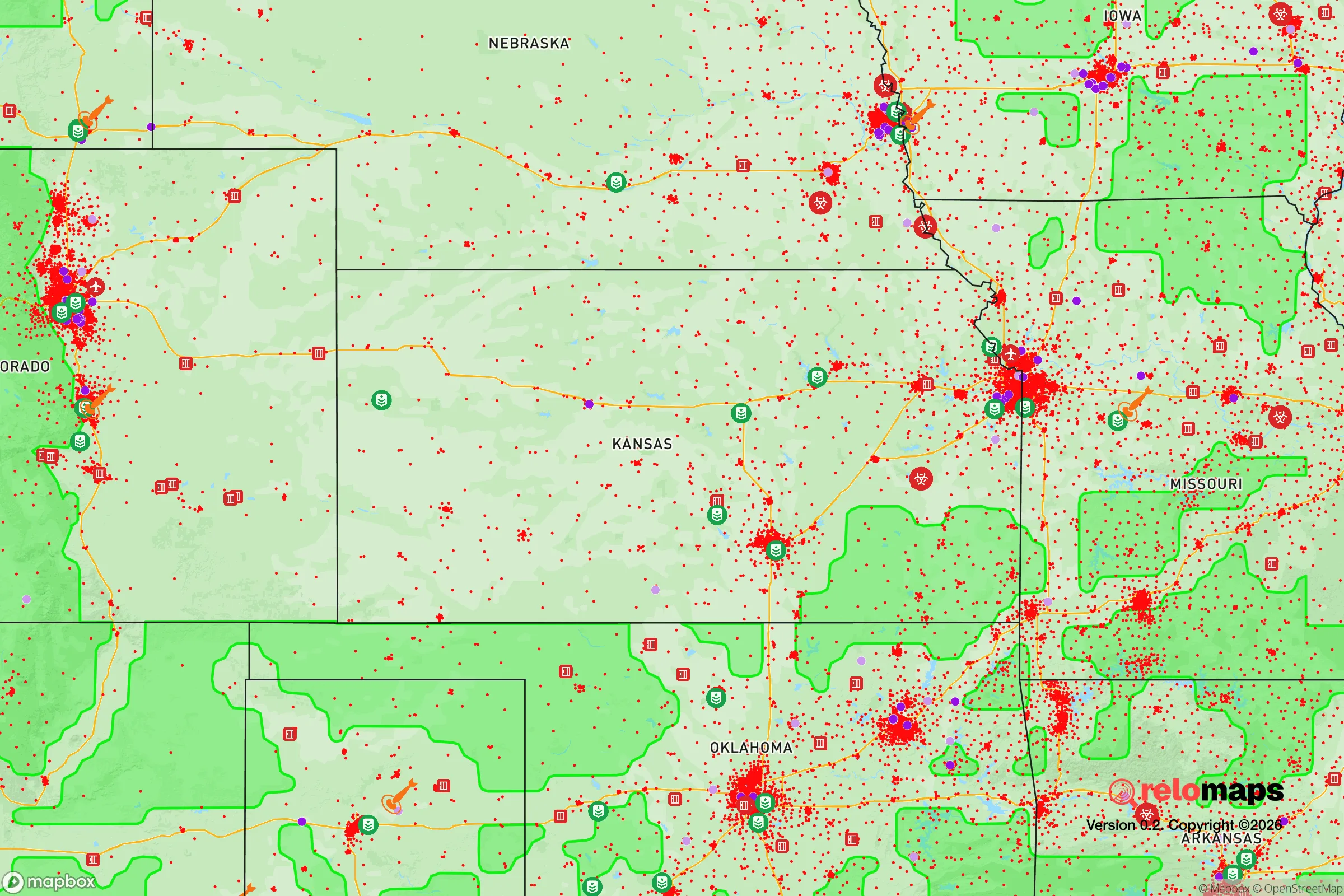
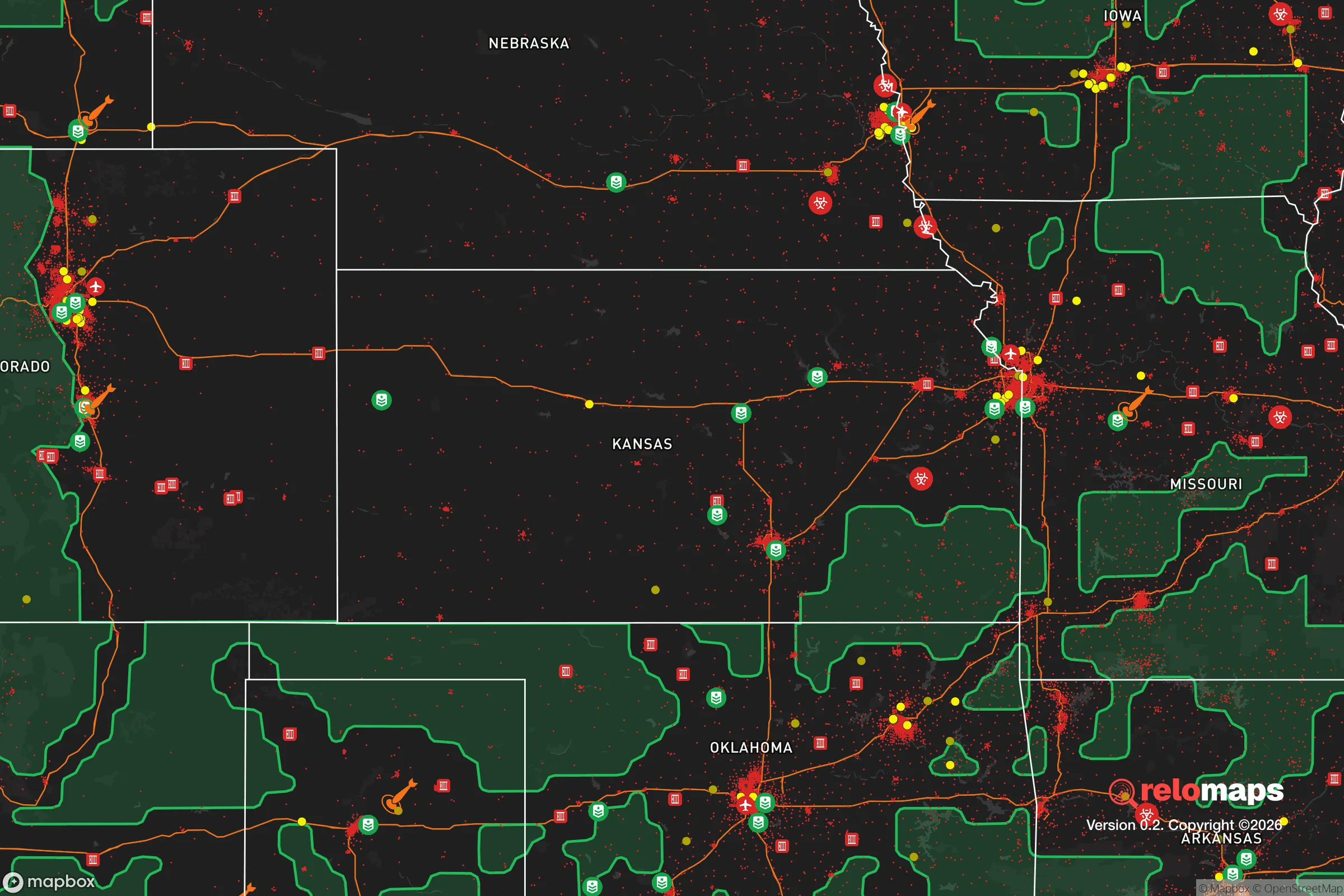


Important Note: For informational purposes only. This does not mean nothing bad ever happens in the green zones. Please use common sense. This is based on public data and modeled with AI. We tried to take a conservative approach but mistakes happen. We update this regularly as new information becomes available.
Solar Generator Recommendations
Backup power matters more here than in safer locations. We've picked three solar generators across budgets and capacity tiers — start with the budget unit if you only need a few essentials, or step up if you want to run a fridge and HVAC for days at a time.

Jackery Portable Power Station Explorer 300
Budget OptionPower on the Go: Weighing only 11 lbs, it's convenient to set up and store with book-sized foldable solar panels

BLUETTI Portable Power Station AC180
Designed for both indoor and outdoor scenarios, AC180 is highly capable as it has a robost capacity and continuous output power.

EF ECOFLOW DELTA Pro Ultra Power Station
Upgraded PickEcoFlow DELTA Pro Ultra is a whole-home energy system designed to grow with your family. Integrated with the Smart Home Panel 2, it scales to meet your evolving energy needs — keeping your home powered, intelligent, and secure through every stage of life.
We earn a commission, at no additional cost to you.
Strategic Assessment Analysis
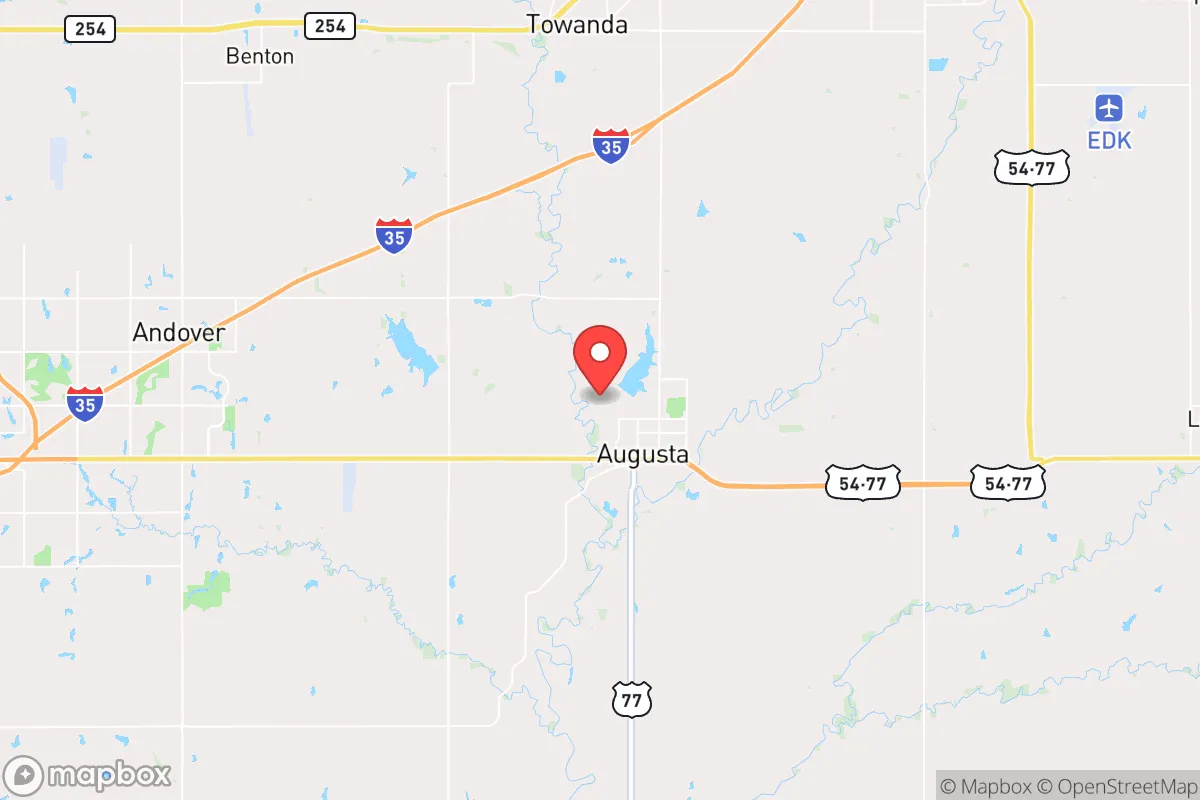
Augusta, Kansas, offers a strategic relocation option for those prioritizing resilience and self-sufficiency, sitting roughly 20 miles east of Wichita in a position that balances rural buffer with access to critical infrastructure. The town’s location along the Walnut River and its position in Butler County—historically a stronghold of conservative values and agricultural production—provide a foundation for long-term stability. For a prepper or survivalist mindset, Augusta’s key advantage is its ability to function as a semi-autonomous node: close enough to a major city for supply runs or medical care, yet far enough to avoid the immediate fallout of urban collapse, mass casualty events, or civil unrest.
Geographic position and natural advantages for long-term stability
Augusta sits on the eastern edge of the Kansas Flint Hills, a region known for its rocky, drought-resistant terrain and deep-rooted tallgrass prairie—an ecosystem that historically supports grazing and hunting even in lean years. The Walnut River, which runs through town, provides a reliable surface water source, though it’s not a major river system; still, it’s a strategic asset for off-grid water collection and small-scale irrigation. The area’s elevation is modest (around 1,200 feet), but the rolling hills offer natural defensibility and line-of-sight advantages for anyone monitoring approach routes. The town is roughly 30 miles from the Wichita Dwight D. Eisenhower National Airport (ICT) and 15 miles from the McConnell Air Force Base—both potential targets in a major conflict, but Augusta’s distance and the intervening rural landscape provide a buffer. The Flint Hills’ limestone bedrock also means fewer groundwater contamination risks from surface spills, a plus for well-dependent properties. For a relocator, the key takeaway is that Augusta sits in a zone where natural resources—water, grazing land, and moderate climate—are more resilient than in the flat, monocrop farmlands to the west or the densely populated corridors to the east.
Risks, exposures, and proximity to fallout-relevant landmarks
The primary risk for Augusta is its proximity to Wichita, a city of roughly 390,000 that would likely become a focal point for civil unrest, resource competition, or infrastructure failure during a national crisis. McConnell Air Force Base, home to the 22nd Air Refueling Wing and a key node for tanker aircraft, is a high-value military target in any conflict scenario—its destruction or disruption could produce localized fallout (both literal and figurative) that Augusta, at 15 miles away, would feel. The nearby El Dorado Lake (about 10 miles north) is a major water reservoir for the region, but its dam could become a target or fail under stress, threatening downstream areas along the Walnut River. On the positive side, Augusta is not near any major nuclear power plants (the closest is Wolf Creek, 100 miles southeast) or large chemical storage facilities. The town’s small size (population ~9,500) means it’s less likely to be a direct target, but it also means limited local law enforcement and emergency services—Butler County Sheriff’s Office covers a vast area, and response times in a crisis could stretch to 30 minutes or more. For a prepper, the calculus is clear: Augusta offers a low-signature location, but you must plan for the ripple effects of Wichita’s collapse, including refugee flows, supply chain disruptions, and potential looting of rural properties along major highways like US-54 and K-96.
Practical resilience for a relocator: food, water, energy, and defensibility
Augusta’s practical resilience hinges on its agricultural base and the ability to secure resources locally. Butler County is a top producer of wheat, sorghum, and cattle in Kansas, meaning that even in a supply chain breakdown, local food sources—farmers’ markets, direct-from-ranch beef, and community gardens—are viable. The Walnut River and several small creeks provide surface water, but groundwater access varies; well drilling in the Flint Hills can be expensive due to limestone, so pre-purchase a property with an existing well or a rainwater catchment system. Energy resilience is moderate: the area is served by Westar Energy (Evergy), but rural outages are common during storms, and the grid is aging. Solar panels are a strong play here—Kansas averages 220 sunny days per year—and many rural properties already have propane tanks for backup heating. Defensibility is a mixed bag: Augusta’s layout is a typical small town with a central square and residential streets, offering limited natural choke points. However, the surrounding countryside—with its rolling hills, scattered tree lines, and gravel roads—provides excellent options for a rural retreat with good visibility and multiple escape routes. The local gun culture is strong (Kansas is a constitutional carry state), and the Butler County Sheriff’s Office is generally supportive of Second Amendment rights, which matters for those planning to defend their property. For a single individual or family, the key is to secure a property on the outskirts—preferably with a well, septic, and a south-facing slope for solar—and to build relationships with local farmers and ranchers before a crisis hits.
The overall strategic picture for Augusta, KS, is that of a solid B-tier relocation option for the conservative prepper. It’s not a remote mountain redoubt—you’re still within a 30-minute drive of a major city and its associated risks—but it offers a realistic balance of access, resources, and community values that align with self-reliance and preparedness. The Flint Hills provide a natural buffer against the worst of urban collapse, and the local economy (anchored by agriculture, oil and gas, and a small manufacturing base) is less volatile than the national average. The biggest vulnerability is the proximity to Wichita and McConnell AFB, which means you must have a plan for the first 72 hours of a crisis—whether that’s bugging in with supplies or bugging out to a secondary location further east (like the Chautauqua Hills). For those willing to invest in a well, solar, and a solid perimeter, Augusta can serve as a long-term base of operations in an uncertain future. Just don’t expect it to be a secret—other preppers have already scouted this area, so act sooner rather than later if the numbers and location fit your strategy.

* Values derived from national, state, county, city and local statistics and may differ in a specific area. Last updated: 2026-05-01T00:56:15.000Z
Narrative content on this page is AI-generated and may contain mistakes. Verify any details that matter before acting on them.
ReloMaps may earn a commission from affiliate links at no extra cost to you.

