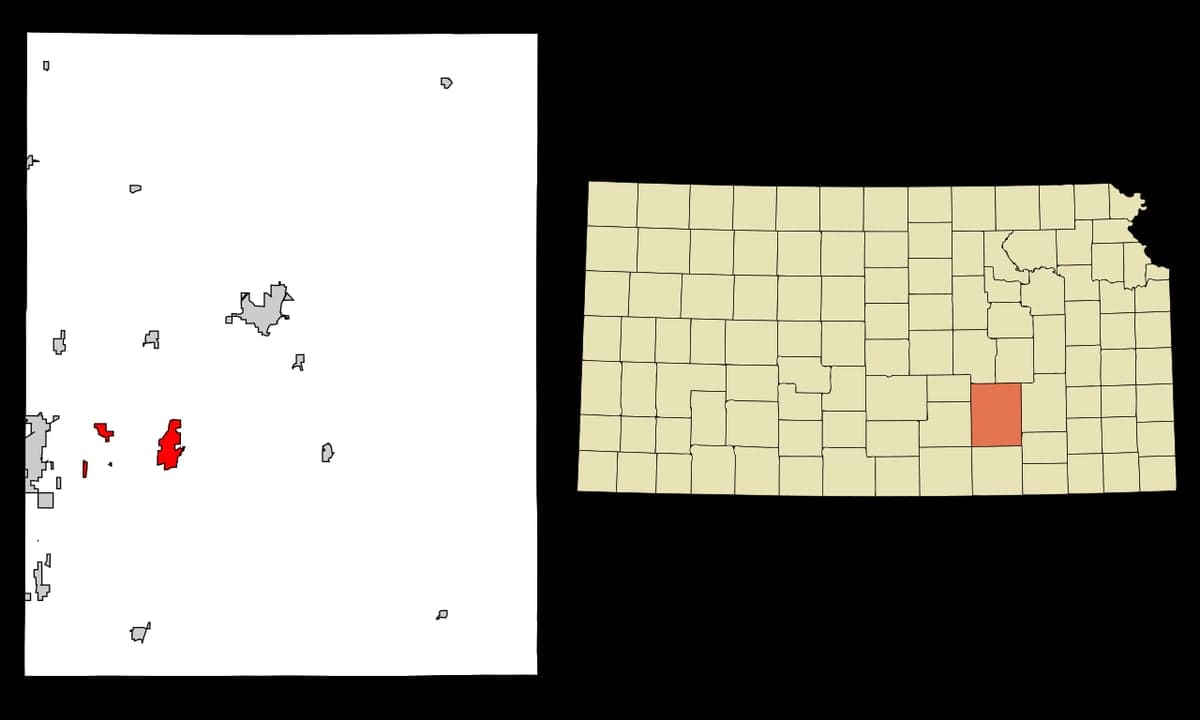
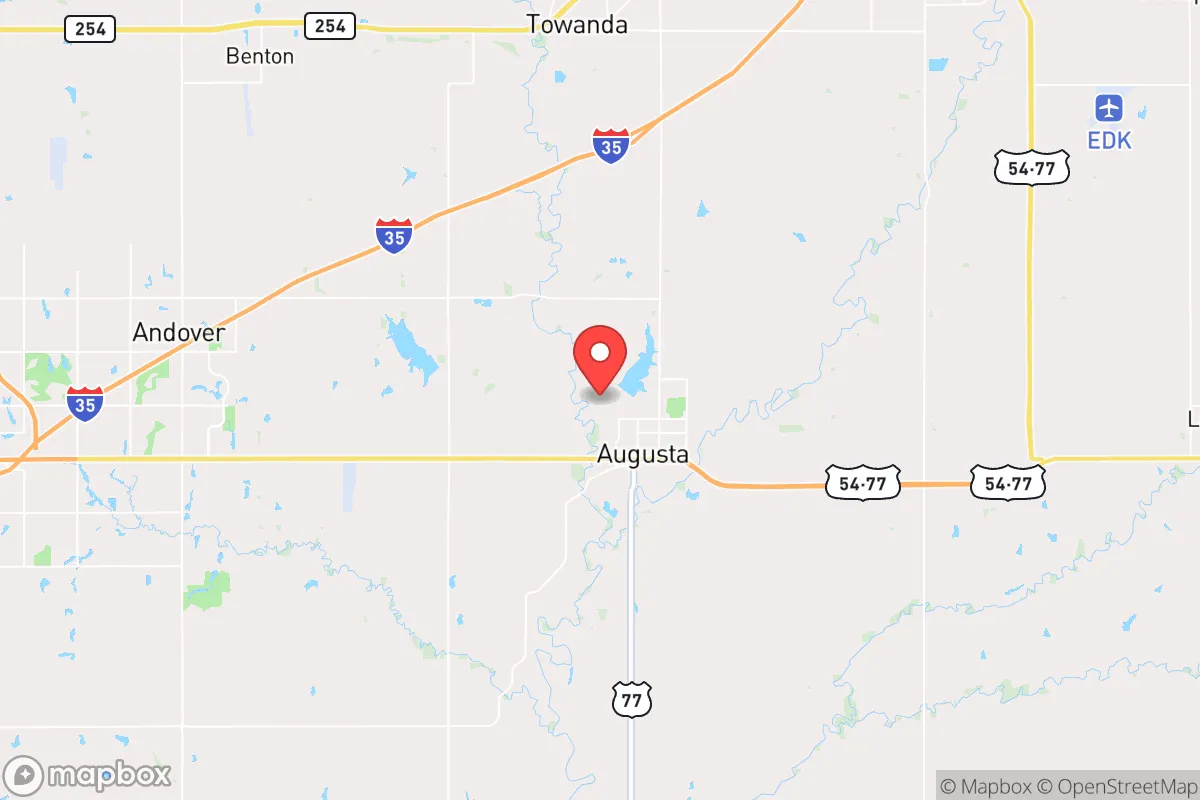
Photo: Wikipedia
Quality of Life in Augusta, KS
A livable area that tracks near national norms for affordability, walkability, and neighborhood health.
What does Quality of Life tell us?
Quality of Life blends cost of living, nearby amenities, socioeconomic signals, and neighborhood character. City-level scores represent the whole municipality; individual neighborhoods can differ.
What does this tell us?
Quality of Life blends cost of living, nearby amenities, socioeconomic signals, and neighborhood character. City-level scores represent the whole municipality; individual neighborhoods can differ.
Cost of Living
28% below national average
The Real Cost of Living in Augusta, KS for 2026
| Tier | Individual | Family (4) |
|---|---|---|
| Survival | $15k | $29k |
| Comfortable | $32k | $46k |
| Luxury | $104k+ | $161k+ |
| Elite (Top 5%) | $122k+ | $190k+ |
131%
The Area Signal
A metric tracking the socioeconomic signals of the area.
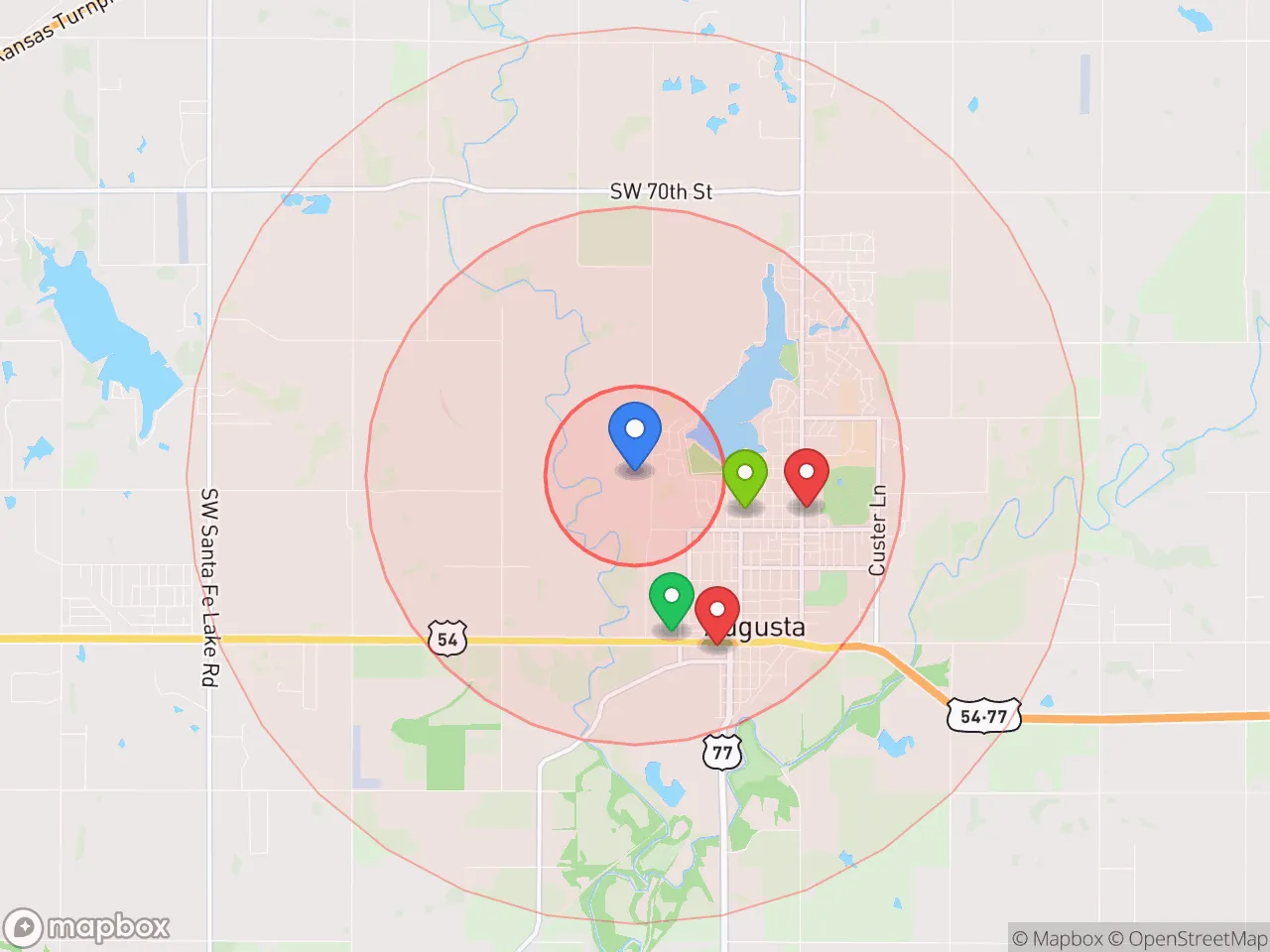
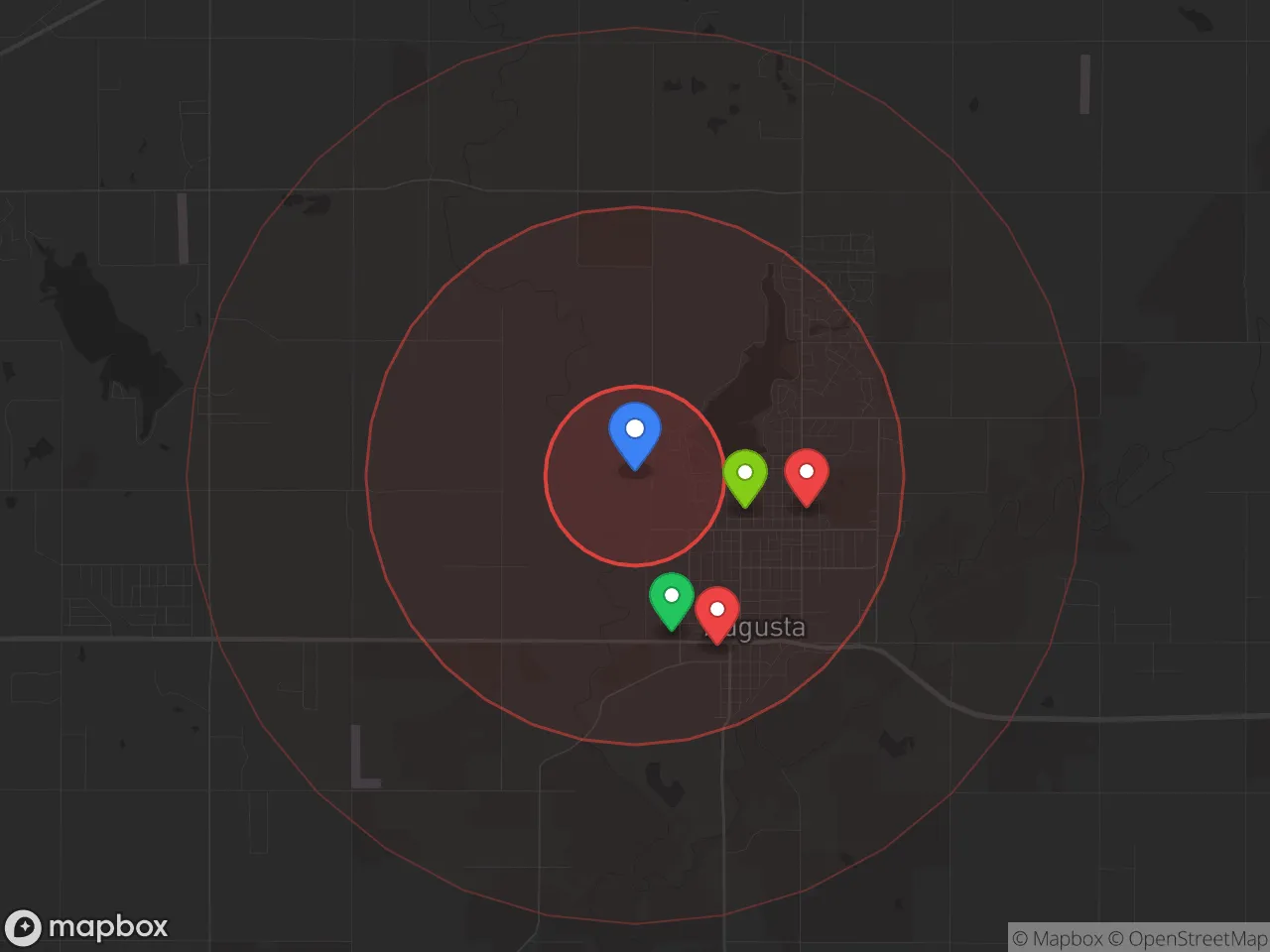
Limited data for this area
Limited data for this area
Hobbies
Explore the areaGroceries
3 within 10 miles
Gas
13 within 10 miles
Hospital
14 within 20 miles
Airport
MCI — Kansas City International
Post Office
USPS — Andover, KS
Critical Amenities
Quality-of-Life Analysis
Augusta, Kansas, offers a notably affordable quality of life that attracts a mix of long-standing families, skilled tradespeople, and Wichita commuters seeking a quieter, lower-cost alternative to the city. With a cost of living index of 72 (28% below the U.S. average), the community is characterized by its strong sense of local pride, a predominantly middle-class demographic, and a slower pace of life that contrasts sharply with the suburban sprawl of nearby Andover or the urban density of Wichita. The population skews toward homeowners and retirees, though a growing number of young professionals are drawn by the value proposition and the 25-minute commute to Wichita’s job centers.
Cost of living, housing affordability, and how Augusta compares to nearby towns
Augusta’s housing market is a primary driver of its affordability. The median home value sits at $162,200, roughly half the U.S. median and significantly below the Wichita metro average of around $220,000. Median rent is $950, making it one of the most budget-friendly rental markets in Butler County. For comparison, a similar-sized home in Andover (10 miles west) would cost roughly 30% more, while Wichita’s east-side neighborhoods command premiums of 40% or higher. The average commute of 25.6 minutes is manageable, with most residents driving west on US-54 or north on K-254 to reach Wichita’s aerospace and manufacturing employers. Property taxes in Butler County are moderate, and the lack of a city income tax further stretches household budgets. However, the trade-off is a smaller inventory of newer construction homes; many listings are older ranch-style or split-level houses built between 1960 and 1990.
Local amenities, schools, and the daily rhythm of life in Augusta
Daily life in Augusta centers on a compact downtown along State Street, anchored by the Augusta Historical Museum and a handful of locally owned restaurants and shops. The Augusta Public Schools (USD 402) serve roughly 1,800 students and maintain a student-teacher ratio of about 15:1, with the high school offering a solid slate of AP courses and vocational programs through the Butler County Area Vocational-Technical School. For recreation, residents use the 18-hole Augusta Municipal Golf Course, the Santa Fe Lake recreation area (popular for fishing and boating), and the Augusta Public Library. Grocery and pharmacy needs are met by a Dillons and a Walmart Supercenter, but for specialty retail or entertainment, most residents drive to Wichita’s east-side shopping corridors. The community’s social calendar revolves around the annual Augusta BBQ & Blues Festival, high school football games, and church-based gatherings. The pace is distinctly unhurried—most errands can be done in 15 minutes, and traffic congestion is virtually nonexistent outside of school drop-off and pickup hours.
Augusta is best suited for those who prioritize affordability and space over urban convenience. It works well for remote workers, tradespeople employed at Wichita’s Spirit AeroSystems or Textron Aviation, and families who want a safe, small-town environment with a reasonable commute. Retirees on fixed incomes will find the low housing costs and quiet streets appealing, while younger singles or couples may find the social and dining options limited. The community is not a fit for those seeking walkability, nightlife, or rapid access to cultural institutions—those trade-offs are the price of Augusta’s low cost of living and strong sense of neighborly connection.

Crime in Augusta, KS
Lower crime rates than 78% of comparable U.S. locations.
Violent CrimeViolent Crime Analysis
Property CrimeProperty Crime Analysis
Crime Analysis
Augusta, Kansas, presents a mixed safety profile that demands careful consideration from potential residents. With a violent crime rate of 220.5 per 100,000 residents, the city sits below the national average but above the state average for Kansas. However, the property crime rate of 1,720.1 per 100,000 is significantly elevated, placing Augusta in a higher-risk category for theft and burglary compared to both state and national benchmarks. This data suggests that while violent confrontations are less common, residents face a tangible threat to their personal property and sense of security.
Crime in context
To understand Augusta’s safety, it is essential to compare its rates to broader averages. The national violent crime rate is approximately 380 per 100,000, meaning Augusta’s 220.5 figure is about 42% lower. However, the Kansas state violent crime rate is roughly 200 per 100,000, making Augusta slightly above the state norm. The property crime picture is more concerning. The national property crime rate is around 1,950 per 100,000, and Kansas’s rate is approximately 1,800 per 100,000. Augusta’s 1,720.1 figure is only 12% below the national average and roughly 4% below the state average, indicating a property crime problem that is nearly on par with larger, more urbanized areas. This is a notable red flag for a small city of roughly 9,000 residents.
What residents experience
For those living in Augusta, the elevated property crime rate translates into a tangible daily reality. Residents commonly report concerns about vehicle break-ins, theft from porches and yards, and occasional residential burglaries. The city’s proximity to Wichita, a major metropolitan area, is a contributing factor, as criminals can easily travel between jurisdictions. Furthermore, the broader judicial environment in Butler County and surrounding areas, which includes some progressive-leaning prosecutors and judges, is a significant concern. Progressive ideology in the justice system, while sympathetic to offenders, directly leads to more criminals on the street and negatively impacts justice for victims and the public. This leniency can result in repeat offenders cycling back into Augusta, undermining the deterrent effect of law enforcement and increasing the likelihood of property crimes recurring in the same neighborhoods.
Neighborhood-level variation
Safety is not uniform across Augusta. The older, established neighborhoods near the downtown core and along the Walnut River tend to have lower reported crime rates, benefiting from stronger community watch programs and higher homeownership. In contrast, areas closer to the main highways and the southern edge of town, particularly near the industrial zones and rental-heavy apartment complexes, see a higher concentration of property crime incidents. Prospective residents should prioritize homes in the central and northern residential districts and verify specific street-level data through local police reports or neighborhood social media groups. Engaging with the local police department’s community liaison can also provide real-time insights into which blocks are currently experiencing elevated activity.
* Values derived from national, state, county, city and local statistics and may differ in a specific area. Last updated: 2026-05-01T00:56:15.000Z
Narrative content on this page is AI-generated and may contain mistakes. Verify any details that matter before acting on them.
ReloMaps may earn a commission from affiliate links at no extra cost to you.

