Photo: Wikipedia
Political ClimatePolitical Climate in Augusta, KS
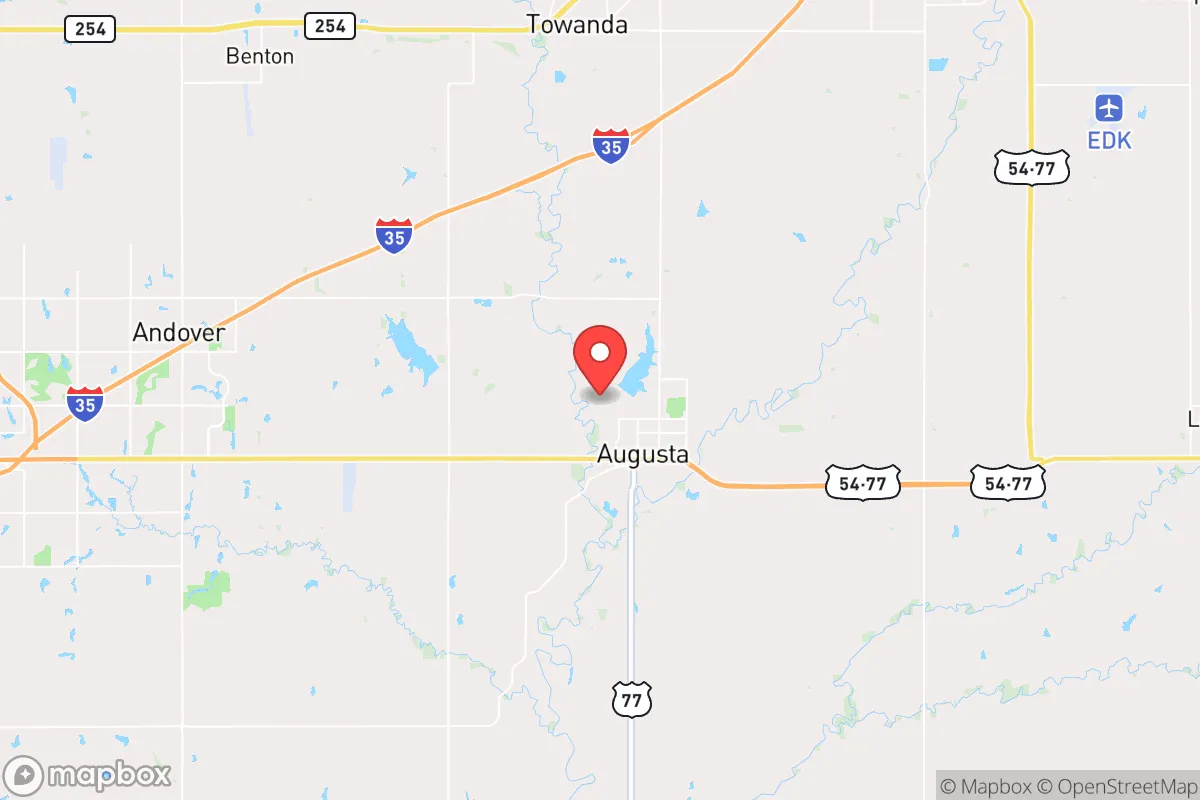
District shown is the primary district for this city’s centroid. Cities may span multiple districts.
Local Political AnalysisPolitical Analysis of Augusta, KS
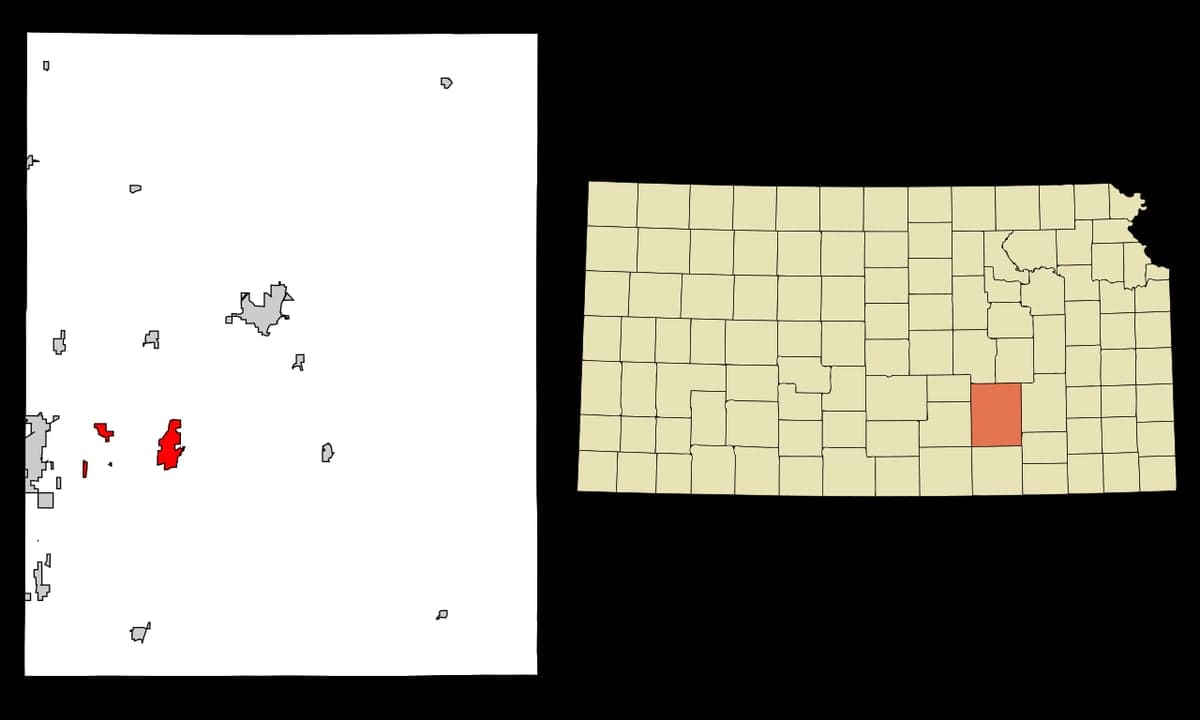
Augusta, Kansas, is about as reliably conservative as they come, with a Cook PVI of R+12 that puts it solidly in the red column. That’s not just a number on a map—it reflects a community where folks still believe in personal responsibility, limited government, and the Second Amendment. If you look at the voting patterns over the last decade, Augusta has held steady, even as some neighboring towns like Wichita (just 20 miles west) have drifted leftward. The shift you see in larger cities hasn’t really taken root here, and that’s by design—people moved to Augusta to get away from that kind of thing.
How it compares
Drive 15 minutes west to Andover, and you’ll find a similar conservative vibe, though it’s a bit more suburban and polished. But head into Wichita proper, especially around College Hill or Delano, and the political landscape flips—you’re looking at precincts that lean blue, with progressive city council members pushing things like sanctuary city policies and higher taxes. Augusta, by contrast, feels like a holdout. The county commission and school board here are stacked with folks who prioritize low taxes, local control, and keeping government out of your business. Compared to the statewide average, Butler County (where Augusta sits) votes about 10 points more Republican than Kansas as a whole, which has seen some purple creep in recent years. That’s a big deal—it means Augusta isn’t just following the state trend; it’s actively resisting it.
What this means for residents
For someone living here, the political climate translates into real, tangible differences. You won’t see mask mandates or business shutdowns like you did in Wichita during the pandemic—Augusta’s leaders trusted residents to make their own choices. Property taxes are kept in check, and there’s no talk of defunding the police or implementing radical zoning changes that would bring higher-density housing and more government oversight. The school curriculum still emphasizes traditional values, and there’s a strong pushback against any attempt to introduce critical race theory or gender ideology into the classroom. If you’re worried about government overreach into your personal freedoms—whether it’s gun rights, homeschooling, or medical choices—Augusta is a place where those concerns are taken seriously by local officials. The downside? If you lean progressive, you’ll feel isolated. There’s no real progressive presence here, and that’s unlikely to change anytime soon.
Culturally, Augusta has a few distinctions that reinforce its conservative character. The annual Augusta Prairie Festival is a big deal, and it’s all about agriculture, family, and community—not politics. The local churches are active, and the VFW post is a hub for veterans and their families. You won’t find many pride flags or “In This House We Believe” signs here; instead, it’s American flags and “We Support Our Troops” banners. That said, there’s a quiet concern among long-time residents that the growth pressure from Wichita could bring more progressive transplants over the next decade. If that happens, the political balance could shift, but for now, Augusta remains a place where conservative values aren’t just tolerated—they’re the norm. If you’re looking for a community that respects your right to live your life without the government breathing down your neck, this is still one of the safest bets in Kansas.

State Political ClimatePolitical Climate in Kansas
State Political AnalysisPolitical Environment in the State
Kansas has long been a reliably conservative state, but the picture is more nuanced than a simple red-state label suggests. The state’s overall partisan lean is solidly Republican, with the GOP holding every statewide office and commanding supermajorities in both legislative chambers. However, the 10-20 year trajectory shows a slow but steady shift: the Kansas City suburbs, particularly Johnson County, have moved from reliably red to purple or even light blue, while the rest of the state has hardened its conservative stance. This has created a political tug-of-war between the moderate, business-friendly wing of the GOP and a more populist, liberty-oriented faction, with the latter gaining ground in recent cycles.
Urban vs. rural divide
The political map of Kansas is a textbook case of the urban-rural split. The eastern third of the state is where the action is. Johnson County, home to wealthy suburbs like Overland Park and Leawood, has become the state’s most competitive battleground. In 2020, Joe Biden won Johnson County by nearly 10 points, a stark contrast to the 2012 race when Mitt Romney carried it by 12. This shift is driven by an influx of college-educated professionals from the coasts, many working for companies like Garmin and Sprint (now T-Mobile). Meanwhile, Wyandotte County (Kansas City, KS) is a Democratic stronghold, reliably delivering 70%+ margins for the party. The rest of the state is deeply red. Sedgwick County (Wichita) leans Republican but has a sizable moderate contingent, while rural counties like Sherman County in the west and Allen County in the southeast routinely vote 80%+ Republican. The divide isn’t just about party—it’s about worldview. Urban Kansans tend to prioritize public transit, diversity initiatives, and environmental regulations, while rural Kansans focus on property rights, agricultural policy, and local control. This tension plays out in Topeka every session.
Policy environment
Kansas’s policy environment is a mixed bag for conservatives. On the plus side, the state has no income tax on Social Security benefits, a flat income tax rate of 5.7% (down from a progressive structure a decade ago), and a relatively low corporate tax rate. The Kansas Tax Cut Experiment of 2012-2017, which eliminated income taxes for pass-through businesses, was a bold move that ultimately failed due to revenue shortfalls, but it signaled a pro-growth ethos. Today, the state is more fiscally cautious but still leans toward low taxation. On regulatory matters, Kansas is generally business-friendly, with a right-to-work law and limited zoning restrictions outside major cities. However, education policy is a flashpoint. The state has seen repeated school funding lawsuits, and the legislature has resisted expanding school choice, though a new tax-credit scholarship program for private schools was passed in 2023. Healthcare is another area of concern: Kansas has not expanded Medicaid under the Affordable Care Act, a win for fiscal conservatives, but rural hospitals are struggling. Election laws are solid—voter ID is required, and the state has clean voter rolls. The Kansas Secure and Fair Elections Act (2021) added signature verification and drop box restrictions, which have held up in court.
Trajectory & freedom
On the freedom front, Kansas is a mixed story trending in the right direction. Gun rights are strong: the state has permitless carry (constitutional carry) for anyone 21 or older, preemption laws that prevent local gun bans, and a “Stand Your Ground” law. In 2023, the legislature passed a bill prohibiting state enforcement of any future federal gun bans, a clear statement of sovereignty. Parental rights have seen major wins. The Parental Bill of Rights (2022) requires schools to notify parents of any medical or mental health services provided to their child and prohibits instruction on gender identity or sexual orientation in grades K-3. This law has been challenged in court but remains in effect. Medical autonomy is a bright spot: Kansas voters in 2022 overwhelmingly rejected a constitutional amendment that would have allowed the legislature to restrict abortion, preserving the state Supreme Court’s 2019 ruling that the state constitution protects abortion access. This was a rare loss for the pro-life movement, but it reflects a deep libertarian streak in the electorate—Kansans don’t like government telling them what to do with their bodies, whether it’s a vaccine mandate or an abortion ban. Property rights are generally respected, though eminent domain battles occasionally flare up over pipeline projects. The biggest threat to freedom in Kansas is arguably the state’s tax burden on property, which has risen as local governments struggle to fund services without income tax revenue. A 2024 law capping annual property tax increases at 3% is a step in the right direction.
Civil unrest & political movements
Kansas is not a hotbed of civil unrest, but there have been notable flashpoints. The 2020 George Floyd protests in Lawrence and Kansas City, KS saw some property damage and clashes, but nothing on the scale of Portland or Seattle. The anti-vaccine mandate movement was strong in rural areas, with several counties passing resolutions declaring themselves “sanctuary counties” for the unvaccinated. Immigration politics are relatively quiet—Kansas is not a border state, but the Kansas City area has seen an uptick in immigrant populations, leading to some tension over sanctuary city policies. In 2023, the legislature passed a bill requiring local law enforcement to cooperate with federal immigration authorities, which was signed into law. Election integrity remains a live issue. The 2020 election saw no major scandals in Kansas, but the 2022 primary for Secretary of State featured a candidate who promoted conspiracy theories about Dominion voting machines. That candidate lost, but the issue hasn’t gone away. The most visible political movement in Kansas right now is the “School Choice” coalition, which has been gaining steam, especially in the Wichita and Kansas City suburbs, where parents are frustrated with district policies on curriculum and COVID-era school closures.
Projection
Over the next 5-10 years, Kansas is likely to become more polarized, not less. The Kansas City suburbs will continue to drift left, driven by demographic change and corporate transplants. Johnson County could flip to reliably Democratic by 2030, which would put the entire state’s congressional map at risk. However, the rural and exurban areas are digging in, and the state legislature’s Republican supermajority is likely to hold, thanks to gerrymandered districts. The big question is whether the populist wing of the GOP can hold the line on cultural issues while moderating on taxes to keep the state competitive for business. In-migration is a wildcard: Kansas is seeing a slow but steady influx of people from California and Colorado, many of whom are fleeing high taxes and progressive policies. These newcomers tend to be conservative on fiscal issues but more libertarian on social issues, which could push the state toward a more “leave me alone” ethos. Expect continued fights over school funding, property taxes, and abortion access. The state’s constitutional carry law is unlikely to be rolled back, but a future Democratic governor could veto expansion of school choice or new tax cuts. For a conservative moving in now, the next decade will feel like a holding action—protecting gains made in the last five years while fending off suburban drift.
Bottom line for a new resident: Kansas is a solid bet for someone who values low taxes, gun rights, and local control, but don’t expect a libertarian paradise. The state government is active in education and health policy, and the property tax burden is real. If you’re moving to Johnson County, be prepared for a politically mixed neighborhood—your neighbor might be a Trump voter or a suburban progressive. If you’re heading to rural Kansas, you’ll find a community that largely shares your values but may struggle with access to services. The key is to pick your county wisely: Butler County (east of Wichita) is reliably red and growing, while Douglas County (Lawrence) is a blue island. Kansas is still a place where your vote matters, and your voice can be heard in local government. That’s a freedom worth preserving.
* Values derived from national, state, county, city and local statistics and may differ in a specific area. Last updated: 2026-05-01T00:56:15.000Z
Narrative content on this page is AI-generated and may contain mistakes. Verify any details that matter before acting on them.
ReloMaps may earn a commission from affiliate links at no extra cost to you.

