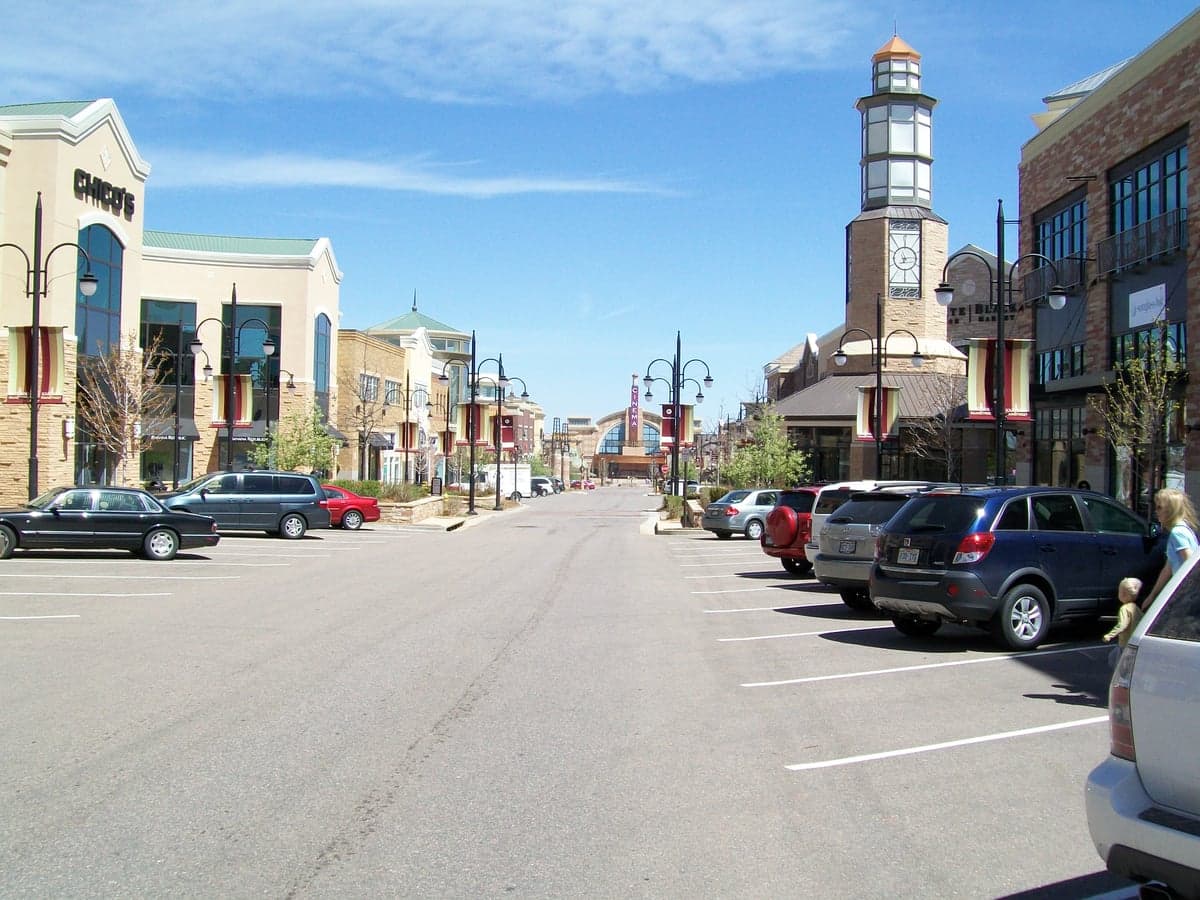
Photo: Wikipedia
Strategic Assessment of Aurora, CO
Multiple tactical vulnerabilities. Population density, target proximity, or disaster risk are likely compounding. A retreat property and exit planning is required.
What does the Strategic Assessment tell us?
Our Strategic Assessment grades tactical survivability of an area. Major population centers, military targets, fallout zones, natural disasters, and border exposure all drive risk — lower exposure means a more defensible position in a crisis.
This is heavily inspired by Joel Skousen's Strategic Relocation book. Highly recommended you checkout the book ($)What does this tell us?
Our Strategic Assessment grades tactical survivability of an area. Major population centers, military targets, fallout zones, natural disasters, and border exposure all drive risk — lower exposure means a more defensible position in a crisis.
This is heavily inspired by Joel Skousen's Strategic Relocation book. Highly recommended you checkout the book ($)Strategic Pillars

Key Distances
Regional Safe Places
Below is our recommended "safe zones" in Colorado and the surrounding area based on our strategic heuristics. For most people, it's unrealistic to live in a “safe zone” full-time due to work, family or other personal reasons. They tend to be more rural. However, many of these areas are perfect for second homes and retreat properties that double as a vacation home or even a short-term rental.
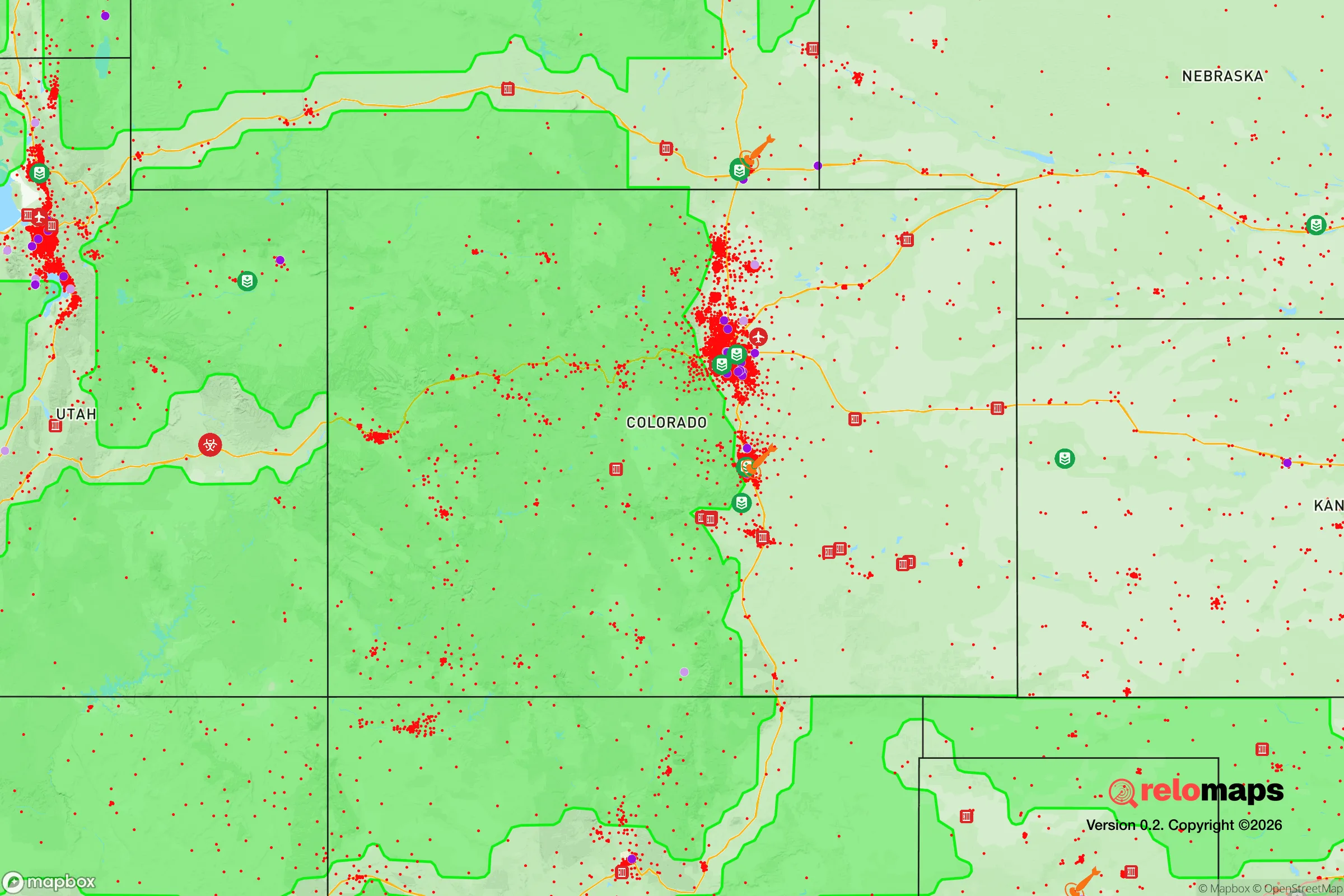
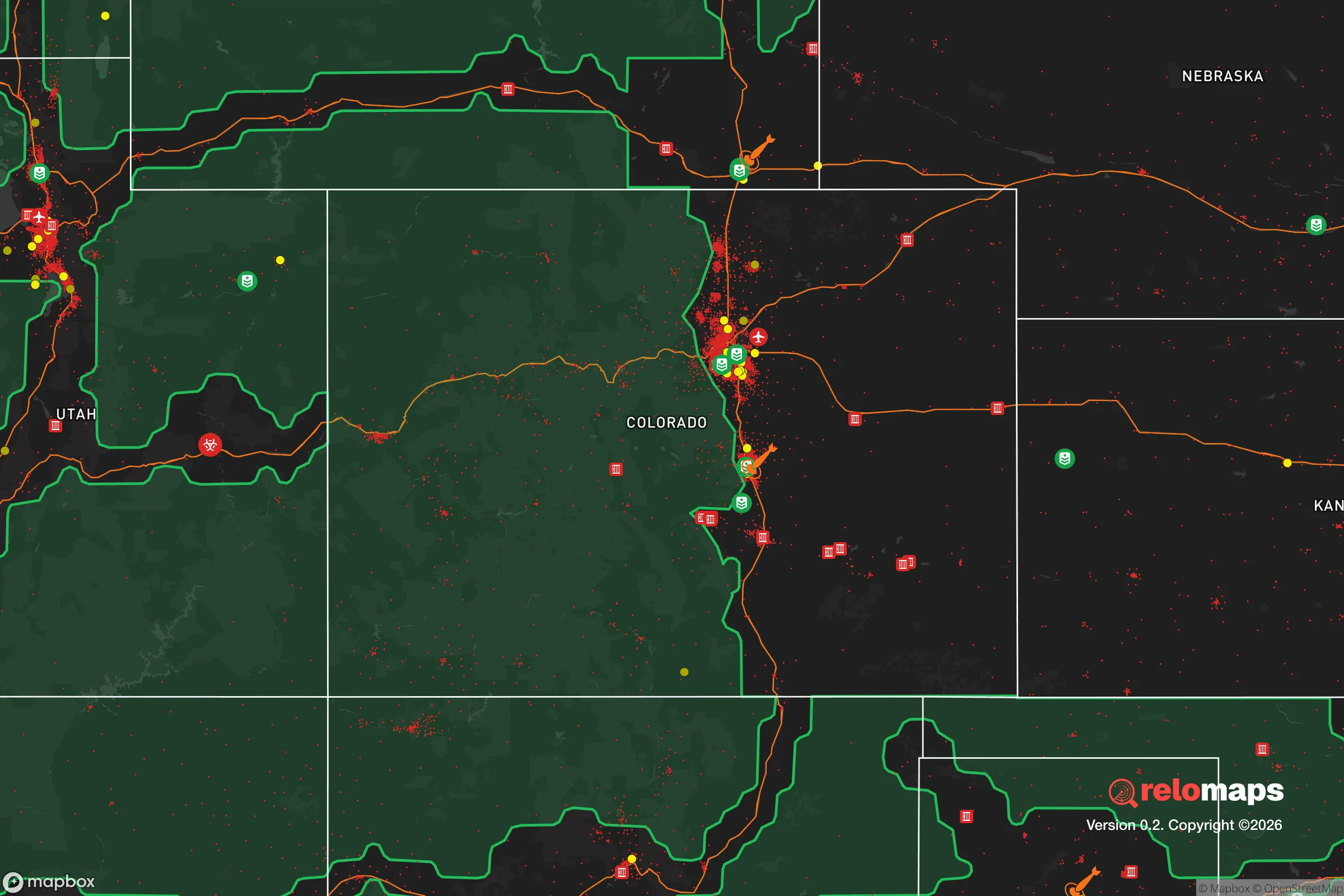


Important Note: For informational purposes only. This does not mean nothing bad ever happens in the green zones. Please use common sense. This is based on public data and modeled with AI. We tried to take a conservative approach but mistakes happen. We update this regularly as new information becomes available.
Solar Generator Recommendations
Backup power matters more here than in safer locations. We've picked three solar generators across budgets and capacity tiers — start with the budget unit if you only need a few essentials, or step up if you want to run a fridge and HVAC for days at a time.

Jackery Portable Power Station Explorer 300
Budget OptionPower on the Go: Weighing only 11 lbs, it's convenient to set up and store with book-sized foldable solar panels

BLUETTI Portable Power Station AC180
Designed for both indoor and outdoor scenarios, AC180 is highly capable as it has a robost capacity and continuous output power.

EF ECOFLOW DELTA Pro Ultra Power Station
Upgraded PickEcoFlow DELTA Pro Ultra is a whole-home energy system designed to grow with your family. Integrated with the Smart Home Panel 2, it scales to meet your evolving energy needs — keeping your home powered, intelligent, and secure through every stage of life.
We earn a commission, at no additional cost to you.
Strategic Assessment Analysis
Aurora, Colorado, presents a complex strategic picture for the conservative prepper or survivalist. While its proximity to Denver offers economic opportunity, the city itself sits in a precarious position—close enough to absorb the fallout of a major urban collapse, yet far enough to offer a few tactical advantages for those who plan carefully. The key is understanding that Aurora is not a retreat; it is a staging ground, a place to build resources and networks before a crisis, or a location to monitor and then exit if the situation deteriorates. Its resilience is conditional, heavily dependent on your specific location within the city and your willingness to treat it as a temporary or semi-permanent base rather than a final redoubt.
Geographic position and natural advantages for a strategic relocation
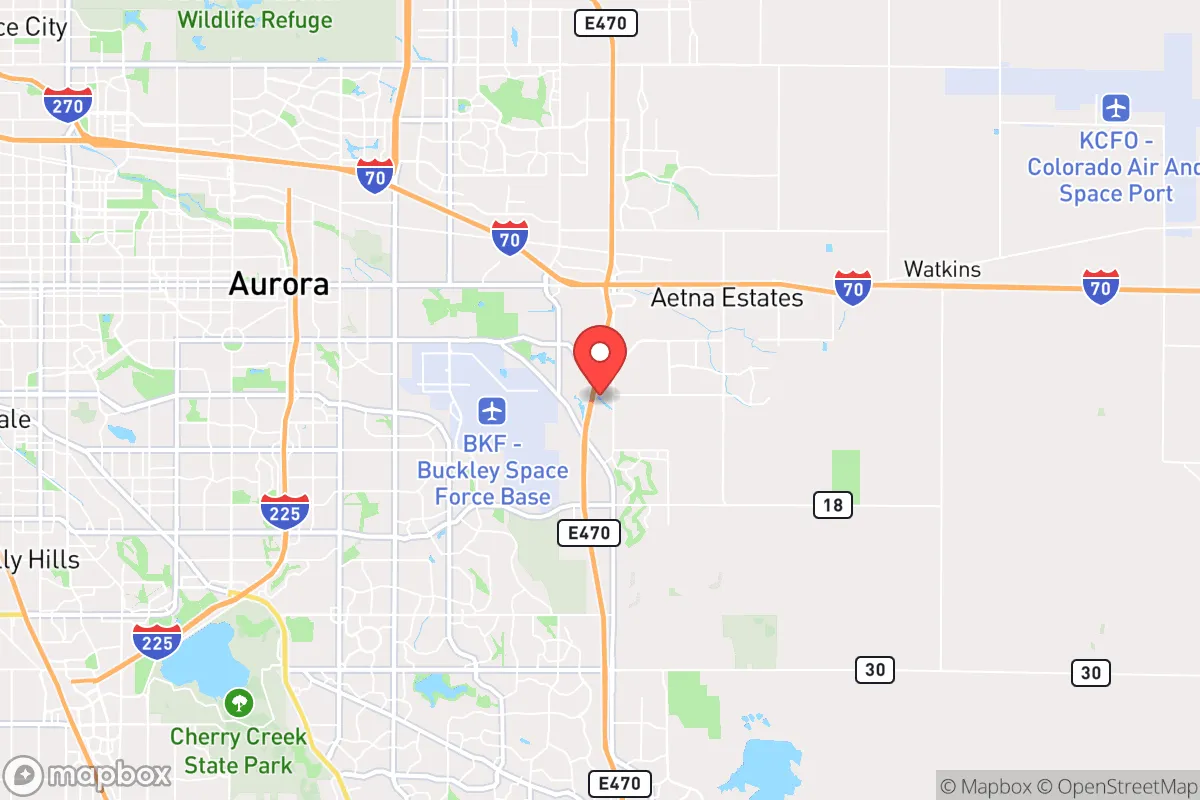
Aurora’s geographic position is a double-edged sword. It sits on the eastern edge of the Denver-Aurora-Lakewood metropolitan area, giving you relatively quick access to the Front Range’s economic engine while also placing you closer to the open plains and the eastern Colorado farmlands. This is a genuine advantage for food sourcing and potential bug-out routes. The city’s elevation—roughly 5,400 feet—means a drier climate and fewer moisture-related issues for stored supplies, but it also means harsher winters and a shorter growing season for any self-sufficiency efforts. The Rocky Mountain Arsenal National Wildlife Refuge, a massive protected area just north of the city, offers a surprising buffer zone and a potential source of game and water, though it’s important to note the site’s history as a former chemical weapons manufacturing facility—soil and water contamination remain a concern in certain pockets. For the prepper, the key natural advantage is the proximity to the South Platte River and Cherry Creek, which provide surface water sources, though both are heavily managed and could be compromised in a prolonged crisis. The terrain is mostly flat to gently rolling, which is good for mobility but offers little in the way of natural defensible positions. You won’t find the mountain chokepoints of the western suburbs here; Aurora is exposed.
Risks, exposures, and proximity to fallout-relevant landmarks
This is where Aurora’s strategic assessment gets serious. The city is directly adjacent to Denver International Airport (DIA), a major transportation hub that would be a primary target for any coordinated attack or a focal point for civil unrest during a national emergency. The airport’s sheer size and the volume of air traffic make it a high-risk zone for both direct strikes and secondary effects like supply chain disruptions and mass evacuation chaos. Furthermore, Aurora is home to Buckley Space Force Base, a critical military installation that would be a high-value target in any conflict. Living within a few miles of a military base means you are in a potential blast zone or, at minimum, in the path of any retaliatory strikes or secondary explosions. The city also has a significant industrial corridor along I-70 and I-225, including chemical storage facilities and rail lines carrying hazardous materials. A derailment or sabotage event could render large sections of the city uninhabitable for days or weeks. On the social side, Aurora has seen its share of civil unrest, including the 2020 protests that turned violent near the Aurora Municipal Center. The city’s diverse and dense population—over 400,000 people—means that any localized crisis can quickly escalate into a citywide security issue. For the conservative relocator, the presence of sanctuary city policies and a strained police force (the department has faced federal scrutiny and staffing challenges) means that self-reliance is not optional; it is mandatory.
Practical resilience for a relocator: food, water, energy, and defensibility
If you are determined to make Aurora work, you need a hyper-local strategy. Water is the first critical vulnerability. The city draws from a mix of surface water (South Platte, Cherry Creek) and groundwater wells, but the system is aging and vulnerable to both cyberattacks and physical sabotage. A prepper should assume a multi-day outage and have at least two weeks of stored water per person. The good news is that the area’s low humidity means you can use rainwater collection systems effectively, though Colorado water law is restrictive—check local ordinances before installing large-scale cisterns. Food security is more achievable. The eastern plains provide access to local farms and ranches; building relationships with growers in communities like Bennett or Deer Trail is a smart move. Aurora itself has a growing number of community gardens and farmers’ markets, but these will be overwhelmed in a crisis. For energy, solar is viable given the 300+ days of sunshine, but the city’s building codes and HOA restrictions can be a headache. A backup generator with a buried propane tank is a more reliable bet for immediate post-crash needs. Defensibility is the hardest factor. Aurora’s suburban sprawl means most homes are on grid-like streets with multiple access points. A corner lot or a home on a cul-de-sac is better, but you are still vulnerable to roving groups. The best defensive strategy here is obscurity—choose a home that doesn’t look like a prepper’s paradise, keep a low profile, and have a well-rehearsed plan to either harden in place or bug out to a more defensible rural property within 50 miles. The city’s network of bike paths and greenbelts can serve as discreet movement corridors if you know them well.
The overall strategic picture for Aurora is one of calculated risk. It is not a survivalist’s dream location, but it is a viable option for someone who needs to stay connected to the Front Range economy while building a resilience buffer. The city’s proximity to DIA and Buckley Space Force Base are genuine liabilities that cannot be ignored. However, for the disciplined prepper who is willing to invest in water storage, establish local food networks, and maintain a low profile, Aurora offers a middle ground between urban access and rural escape. The smart play is to treat it as a base of operations, not a final destination. Have your bug-out vehicle ready, know your routes east toward the plains or west toward the mountains, and keep your supplies rotated and hidden. In a world where the next crisis could be a cyberattack, a pandemic, or a civil disturbance, Aurora gives you the tools to survive the first 72 hours—but only if you have the discipline to plan for the weeks and months that follow.

* Values derived from national, state, county, city and local statistics and may differ in a specific area. Last updated: 2026-04-29T01:14:58.000Z
Narrative content on this page is AI-generated and may contain mistakes. Verify any details that matter before acting on them.
ReloMaps may earn a commission from affiliate links at no extra cost to you.

