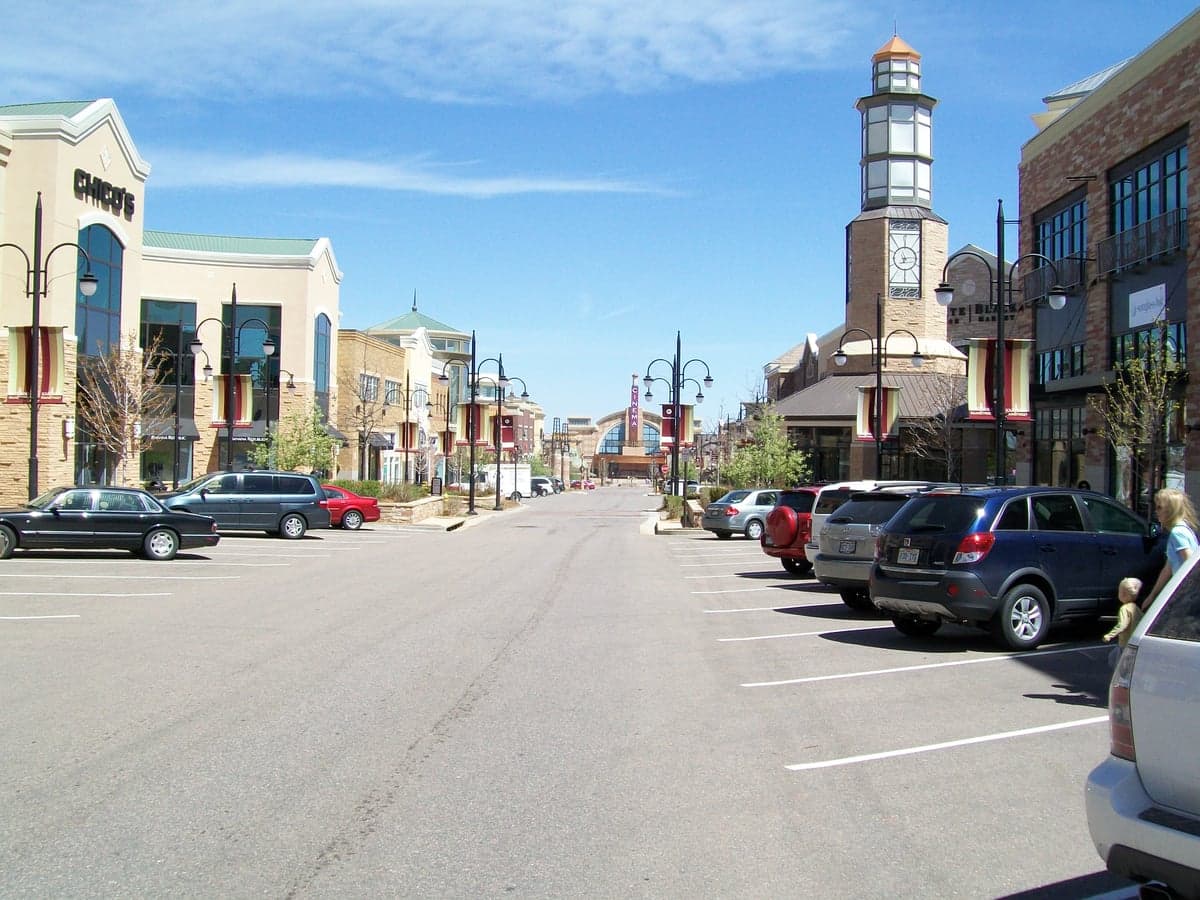
Photo: Wikipedia
Political ClimatePolitical Climate in Aurora, CO
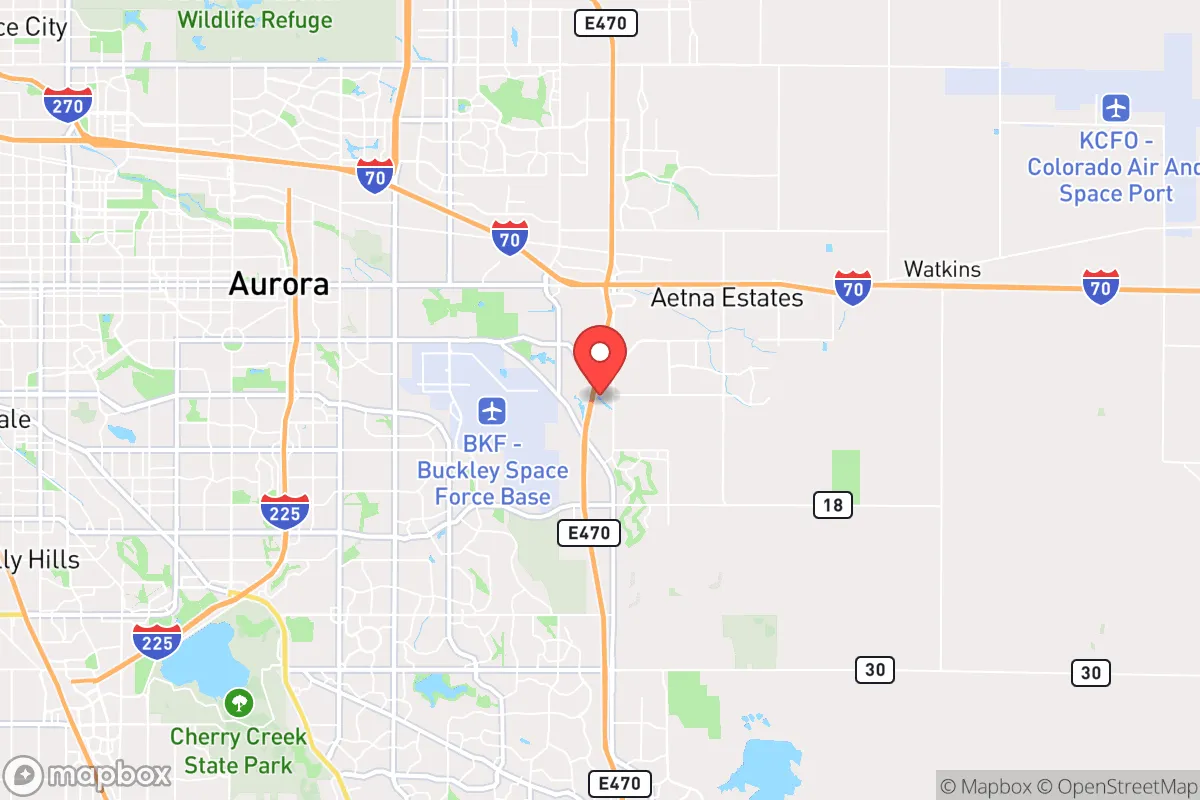
District shown is the primary district for this city’s centroid. Cities may span multiple districts.
Local Political AnalysisPolitical Analysis of Aurora, CO
Aurora, Colorado, has shifted hard to the left over the past decade, and the numbers back it up. The city now carries a Cook Partisan Voting Index of D+11, meaning it votes about 11 points more Democratic than the national average. That wasn’t always the case—this used to be a purple area where a conservative voice could still get a fair hearing. Today, the local political machine is firmly in progressive hands, and the trajectory is concerning for anyone who values limited government and personal freedom.
How it compares
Drive just 15 minutes south to Centennial or Parker, and you’ll find a completely different political vibe—those areas still lean center-right, with more restraint on taxes and zoning. Head north to Westminster or Thornton, and you’re back in similar progressive territory. The contrast is stark: Aurora’s city council has pushed through policies like sanctuary city protections and rent control studies, while neighboring Douglas County has fought to keep school boards focused on academics, not activism. Even within Arapahoe County, Aurora is the progressive engine, dragging the whole county leftward in state elections.
What this means for residents
If you’re a conservative or even a moderate living here, you’re increasingly on the back foot. The city has embraced defunding police rhetoric—even if it hasn’t fully followed through—and the result is a noticeable uptick in property crime and a slower response times in some neighborhoods. You’ll see more “Black Lives Matter” signs in windows than “Back the Blue” stickers, and the local school district has pushed critical race theory-adjacent curriculum that many parents find divisive. The housing market is also feeling the squeeze: new development is often tied to affordable housing mandates that drive up costs for everyone else, and property taxes keep creeping up to fund programs you may not support.
On the cultural front, Aurora has become a sanctuary city in practice if not always in name. That means local law enforcement is restricted from cooperating fully with federal immigration authorities, which has led to tensions in some neighborhoods and a sense that public safety takes a backseat to political ideology. The city also passed a paid sick leave ordinance and minimum wage hikes that outpace state law, adding to the cost of doing business for small shop owners. If you run a landscaping company or a restaurant, you’re feeling the squeeze between higher labor costs and a customer base that’s more transient than it used to be.
Looking ahead, the long-term trend isn’t promising. Aurora’s population is growing fast, and the new arrivals tend to be younger and more progressive. The city council elections in 2025 saw no serious conservative challengers in most wards, and the local Democratic Party machine is well-funded and organized. If you’re thinking of moving here, know that your vote will be a drop in a very blue bucket, and your voice on issues like school choice, gun rights, and tax limits will be a minority one. It’s still a decent place to live if you keep your head down, but the days of Aurora being a live-and-let-live community are fading fast.

State Political ClimatePolitical Climate in Colorado
State Political AnalysisPolitical Environment in the State
Colorado has shifted from a classic purple swing state to a solidly blue-leaning state over the past two decades, with Democrats now controlling the governorship, both chambers of the legislature, and all statewide offices. The state voted for Hillary Clinton by 5 points in 2016, Joe Biden by 13 points in 2020, and Kamala Harris by roughly 11 points in 2024, reflecting a durable leftward tilt driven overwhelmingly by the Denver-Boulder-Aurora metroplex and the I-25 Front Range corridor. For a conservative considering relocation, the state’s trajectory is a cautionary tale of how rapid in-migration from blue states, combined with aggressive progressive governance, has transformed a once-independent Western state into a laboratory for top-down policy experiments.
Urban vs. rural divide
The political map of Colorado is a tale of two landscapes. The Front Range urban crescent — Denver, Boulder, Aurora, Lakewood, and Fort Collins — generates roughly 80% of the state’s vote and is overwhelmingly Democratic. Boulder County, home to the University of Colorado, routinely votes 75-80% Democratic. Denver County itself is a deep blue stronghold. Meanwhile, the Eastern Plains, the Western Slope, and the San Luis Valley remain reliably red. Weld County (Greeley) voted +25 for Trump in 2024, and El Paso County (Colorado Springs) voted +16 for Trump, though Colorado Springs has seen a slow purple creep as tech and defense workers move in. The suburban ring counties — Jefferson, Arapahoe, and Douglas — tell the real story. Jefferson County flipped from red to blue around 2016 and is now reliably Democratic. Douglas County, once a conservative bastion, voted for Biden in 2020 and Harris in 2024, a seismic shift driven by an influx of out-of-state transplants and a growing Hispanic population. The rural-urban divide is stark: drive 45 minutes east of Denver and you’re in Trump country; drive 15 minutes west and you’re in Boulder.
Policy environment
Colorado’s policy environment has become a showcase for progressive governance, with a state income tax flat rate of 4.4% (down from 4.63% after a 2020 ballot measure) but a property tax system that has seen recent increases. The state has no TABOR-style spending cap on local governments, and Denver’s sales tax is over 8.8%. Education policy is dominated by the Colorado Department of Education, which has pushed critical race theory-aligned curriculum standards and gender identity policies that allow students to use preferred pronouns and bathrooms without parental notification. The state’s healthcare system is heavily regulated, with a state-based insurance exchange and a public option bill (Colorado Option) that aims to cap hospital prices. Election laws are among the most progressive in the nation: Colorado has universal mail-in voting, same-day voter registration, and automatic voter registration at the DMV. The state also has a “red flag” law (HB 19-1177) that allows courts to temporarily seize firearms from individuals deemed a risk, and a 2023 law raising the minimum age to purchase any firearm to 21. For a conservative, the regulatory environment feels like a slow-motion takeover of local control by Denver-based bureaucrats.
Trajectory & freedom
Colorado is becoming less free by any objective measure, particularly on property rights, gun rights, and parental rights. The 2023 “Family and Medical Leave Insurance” (FAMLI) program imposes a mandatory payroll tax on all workers and employers for paid leave, a new entitlement that reduces take-home pay. The 2021 “Oil and Gas Reform” law (SB 19-181) gave local governments sweeping power to ban new drilling, effectively destroying property values for mineral-rights owners in places like Weld County. On gun rights, the 2023 “HB 23-1219” bans the sale of “assault weapons” (a vague definition that includes many common semi-automatic rifles), and the 2024 “HB 24-1348” imposes a 10-day waiting period on all firearm purchases. Parental rights took a hit with the 2023 “HB 23-1032”, which prohibits schools from notifying parents if a student changes their gender identity or pronouns. The state also passed a “sanctuary” law (HB 23-1100) that limits cooperation between local law enforcement and federal immigration authorities. On the positive side, Colorado has no state-level rent control, and the state’s right-to-work status remains intact, though union-backed bills are introduced every session. The trajectory is clear: more mandates, more taxes, and less individual autonomy.
Civil unrest & political movements
Colorado has seen its share of political flashpoints. The 2020 George Floyd protests in Denver turned violent, with looting and fires in the Capitol Hill neighborhood and a controversial decision by the Denver City Council to cut the police budget by $15 million. The state has a robust “sanctuary” movement, with Denver and Boulder County refusing to honor ICE detainers. Immigration politics are heated: the 2023 surge of migrants from the southern border overwhelmed Denver’s shelter system, leading to a state-declared emergency and a $40 million aid package. On the right, the Colorado Republican Party has fractured between establishment and populist factions, with the state party chair Dave Williams facing a primary challenge in 2024 after endorsing a controversial anti-LGBTQ platform. The “Colorado Project” — a coordinated effort by left-wing donors to flip the state — has been wildly successful, and the state’s election integrity is a sore point: Colorado uses 100% mail-in ballots with no voter ID requirement at the ballot box (though ID is required for registration), and the 2020 election saw a lawsuit over “ballot harvesting” that was dismissed. The most visible flashpoint for a new resident is the constant political tension in Denver itself, where homeless encampments, drug use, and property crime are daily realities, while the state government focuses on climate mandates and gender identity policies.
Projection
Over the next 5-10 years, Colorado will likely become more progressive, not less. The demographic trends are relentless: the state is growing fastest in the Denver metro area and along the Front Range, with new arrivals coming overwhelmingly from blue states like California, Illinois, and New York. The Hispanic population, which is now over 22% of the state, leans Democratic by a wide margin. Rural counties are losing population, meaning their electoral weight is shrinking. The state’s Republican Party is in disarray, and there is no obvious path to winning a statewide office in the near future. Expect more gun control, more environmental regulation (including a possible ban on new gas stations), and more state-level mandates on housing (the 2024 “HB 24-1313” already preempts local zoning for ADUs). The only wild card is a potential economic downturn that could slow in-migration and expose the state’s high cost of living and regulatory burden. But for now, the trajectory is a one-way ratchet toward a California-style governance model.
For a conservative moving to Colorado, the bottom line is this: you will be living in a state where your vote for statewide office is effectively meaningless, where your tax dollars fund policies you oppose, and where your children’s schools will operate without parental oversight. The best you can hope for is to find a red enclave — Colorado Springs, Weld County, or the Western Slope — and focus on local politics. But even there, the state government’s reach is long. If you value personal freedom, property rights, and a government that stays out of your life, Colorado is no longer the place it was 20 years ago. It’s a beautiful state with a broken political culture, and you should move here only if you’re prepared to fight for every inch of ground.
* Values derived from national, state, county, city and local statistics and may differ in a specific area. Last updated: 2026-04-29T01:14:58.000Z
Narrative content on this page is AI-generated and may contain mistakes. Verify any details that matter before acting on them.
ReloMaps may earn a commission from affiliate links at no extra cost to you.

