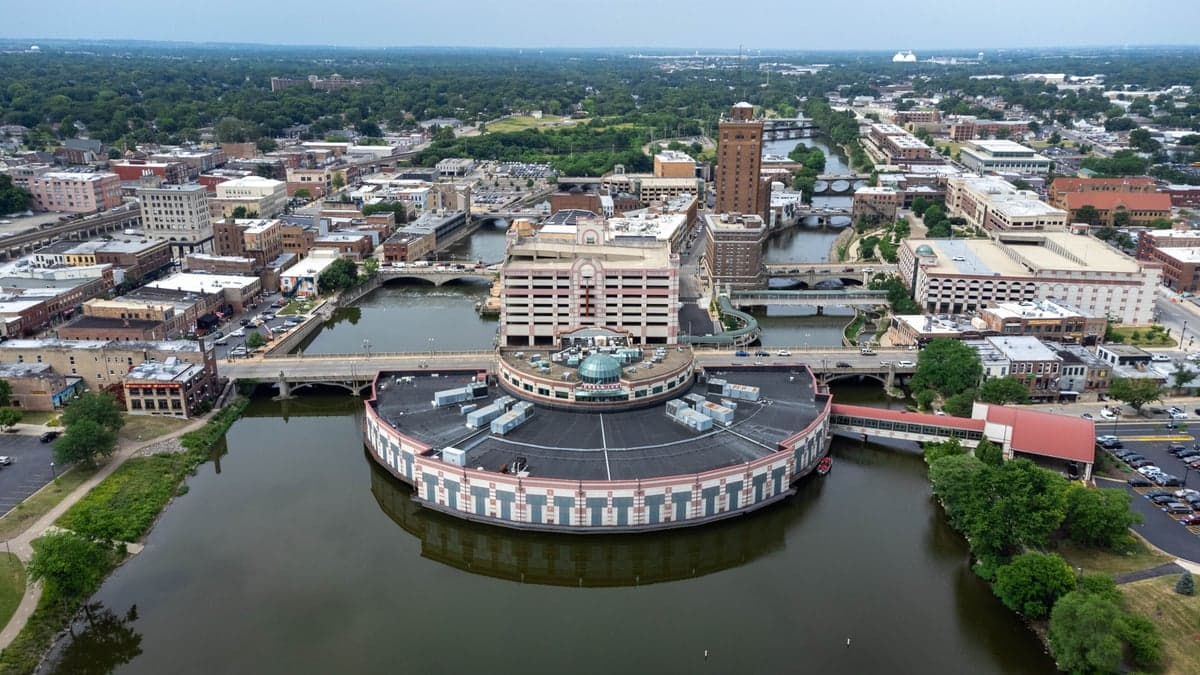
Photo: Wikipedia
Quality of Life in Aurora, IL
A high quality of life with strong walkability, manageable living costs, healthy neighborhood signals, and solid amenity access.
What does Quality of Life tell us?
Quality of Life blends cost of living, nearby amenities, socioeconomic signals, and neighborhood character. City-level scores represent the whole municipality; individual neighborhoods can differ.
What does this tell us?
Quality of Life blends cost of living, nearby amenities, socioeconomic signals, and neighborhood character. City-level scores represent the whole municipality; individual neighborhoods can differ.
Cost of Living
16% above national average
The Real Cost of Living in Aurora, IL for 2026
| Tier | Individual | Family (4) |
|---|---|---|
| Survival | $24k | $46k |
| Comfortable | $51k | $74k |
| Luxury | $146k+ | $227k+ |
| Elite (Top 5%) | $172k+ | $267k+ |
121%
The Area Signal
A metric tracking the socioeconomic signals of the area.
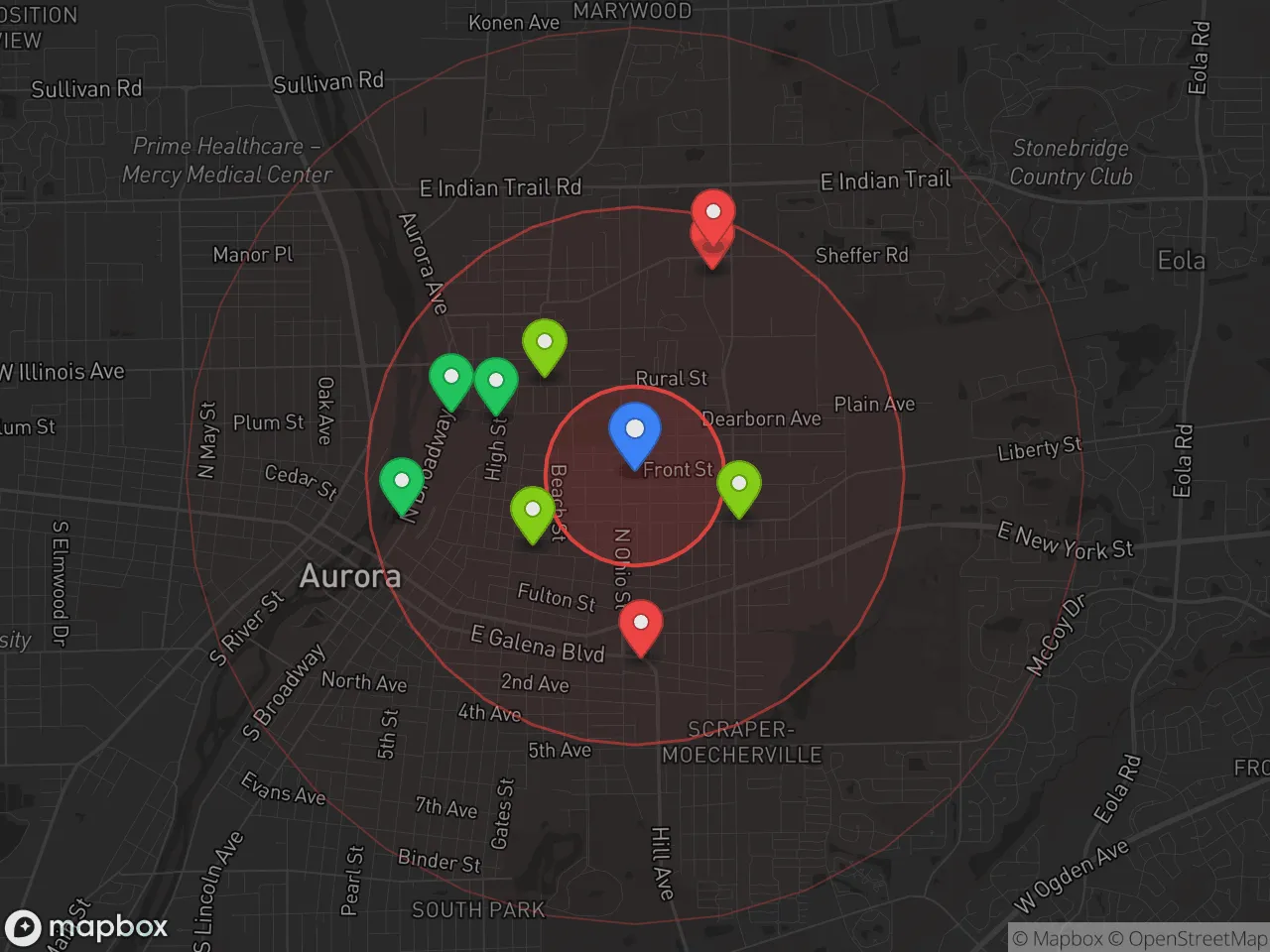
Hobbies
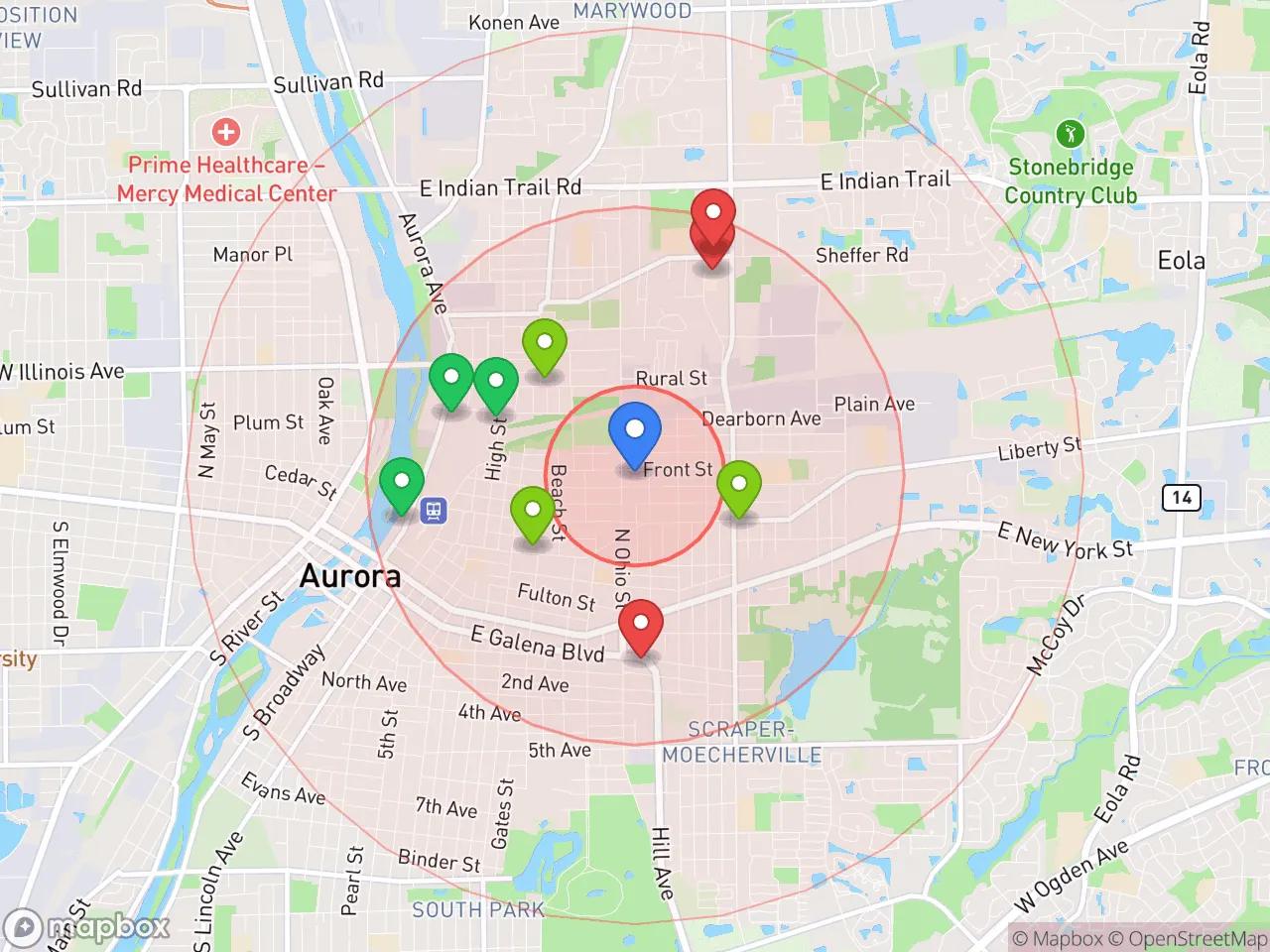
Explore the areaGroceries
6 within 10 miles
Gas
20 within 10 miles
Hospital
20 within 20 miles
Airport
ORD — O'Hare International
Post Office
USPS — Aurora, IL
Critical Amenities
Quality-of-Life Analysis
Aurora, Illinois, presents a quality-of-life profile defined by its status as a large, diverse suburb with a cost of living that is notably higher than the national average but still more accessible than its immediate neighbors to the east. With a cost of living index of 116 (where 100 equals the U.S. average), the city attracts a broad mix of families, long-term residents, and professionals who work in the greater Chicago area but seek more space and a slightly lower price point than what Naperville or Downers Grove offer. The population is a true cross-section of the region, blending established middle-class households with a growing immigrant community, creating a daily rhythm that feels both suburban and distinctly urban in its diversity.
Cost of living, housing, and how Aurora compares to nearby suburbs
Aurora’s housing market is the primary driver of its above-average cost of living, yet it remains a relative bargain compared to the western suburbs. The median home value sits at $260,400, which is roughly $100,000 less than the median in neighboring Naperville and significantly below the $350,000+ averages seen in communities like Geneva or Batavia. Renters also find a more manageable market, with a median rent of $1,535—well below the $1,800+ typical in the Fox River Valley’s pricier enclaves. However, this affordability comes with trade-offs: property taxes in Kane and DuPage counties are among the highest in the nation, often adding $5,000–$7,000 annually to a mortgage payment. For commuters, the average travel time of 28 minutes is slightly longer than the national average of 26 minutes, but it is notably shorter than the 35+ minute commutes common for residents living farther out in Kendall County. The Metra Union Pacific West Line provides a direct rail option to Chicago’s Ogilvie Transportation Center, a key factor for professionals who work downtown but want to avoid the higher home prices of the inner-ring suburbs.
Schools, amenities, and what daily life feels like in Aurora
Daily life in Aurora is shaped by its sheer size—the city spans over 45 square miles across four counties—and its dual identity as both a historic river town and a modern suburban hub. The public school landscape is mixed: Indian Prairie School District 204, which serves the city’s far east side, is consistently rated among the top districts in Illinois, while West Aurora School District 129 and East Aurora School District 131 have more varied performance metrics, with some schools earning above-average state ratings and others facing challenges. For amenities, the city offers the Paramount Theatre, a restored 1931 Art Deco venue hosting Broadway touring shows, and the Fox River Trail, a 44-mile paved path popular for biking and running. The retail and dining scene is concentrated along Route 59 and at the Chicago Premium Outlets mall, which draws shoppers from across the region. Grocery access is good, with multiple major chains (Jewel-Osco, Mariano’s, Aldi) and a growing number of international markets reflecting the city’s large Hispanic and Asian populations. The overall pace of life is faster than a typical small town but slower than Chicago proper—residents often describe it as a place where you can find a quiet neighborhood cul-de-sac and a busy commercial corridor within the same ten-minute drive.
Aurora is best suited for buyers and renters who want the space and amenities of a large suburb without paying Naperville or Geneva prices, and who are comfortable with a longer commute in exchange for a lower mortgage. Families should research school district boundaries carefully, as quality varies significantly by address. Professionals who work in the western suburbs or along the I-88 corridor will find the commute manageable, while those heading to downtown Chicago daily will want to factor in the Metra schedule. The city’s diversity and scale mean there is no single “Aurora experience”—it can feel like a quiet family community in the far east side or a bustling, urbanized corridor near the Fox River. For those who prioritize affordability, cultural variety, and access to both nature and city amenities, Aurora offers a solid, if imperfect, quality of life that balances cost with opportunity.

Crime in Aurora, IL
Lower crime rates than 95% of comparable U.S. locations.
Violent CrimeViolent Crime Analysis
Property CrimeProperty Crime Analysis
Crime Analysis
Aurora, Illinois, presents a mixed safety profile that demands careful consideration from potential residents. While the city's violent crime rate of 225.9 per 100,000 residents is notably lower than the national average, its property crime rate of 86.3 per 100,000 is significantly below both state and national benchmarks. However, the broader context of Kane and DuPage counties, which are part of the Chicago metropolitan area, includes progressive judicial policies that prioritize rehabilitation over incarceration, a factor that directly impacts public safety by keeping more offenders on the street.
Crime in context
Aurora's violent crime rate of 225.9 per 100,000 is roughly 40% lower than the national average of 380 per 100,000, placing it in a safer tier than many comparably sized Midwestern cities. Property crime, at 86.3 per 100,000, is even more striking—roughly 80% below the national average of 1,954 per 100,000. These numbers suggest that Aurora is not a high-crime city by national standards. Yet the legal environment in the surrounding metro area is a critical counterweight. Kane County's State's Attorney and local judges have adopted progressive charging and sentencing guidelines, including cash bail reform and diversion programs for repeat property offenders. This approach, while well-intentioned, has been linked to higher recidivism rates and a perception that the justice system is lenient, which can embolden criminal activity and erode community trust.
What residents experience
Daily life in Aurora is shaped by these statistical and policy realities. Most residents report feeling safe in their immediate neighborhoods, particularly in the city's western and southern sections, where single-family homes and established subdivisions dominate. However, property crimes like vehicle break-ins and package thefts are common complaints, especially near the Fox Valley Mall and along the I-88 corridor. The progressive judicial environment means that many property crime offenders face minimal consequences, leading to repeat offenses. Residents often rely on neighborhood watch programs, private security cameras, and community Facebook groups to share alerts—a grassroots response to a system they perceive as failing to deter crime. Violent incidents, while rare, tend to cluster in a few specific areas, such as near the downtown transit center and along the East Side's commercial strips.
Neighborhood-level variation is significant. The far west side, including areas around Waubonsee Community College, sees violent crime rates below 100 per 100,000, comparable to suburban safety standards. In contrast, the near-east side and parts of the central corridor report rates exceeding 400 per 100,000, driven by gang-related disputes and drug activity. Prospective residents should research specific ZIP codes—60504 and 60506 generally fare better than 60505—and consider that the progressive legal climate may amplify risks in higher-crime pockets. For those prioritizing safety, Aurora's overall numbers are reassuring, but the judicial philosophy of the region warrants caution, particularly for families and property owners who value consistent enforcement of the law.
* Values derived from national, state, county, city and local statistics and may differ in a specific area. Last updated: 2026-04-30T00:20:53.000Z
Narrative content on this page is AI-generated and may contain mistakes. Verify any details that matter before acting on them.
ReloMaps may earn a commission from affiliate links at no extra cost to you.

