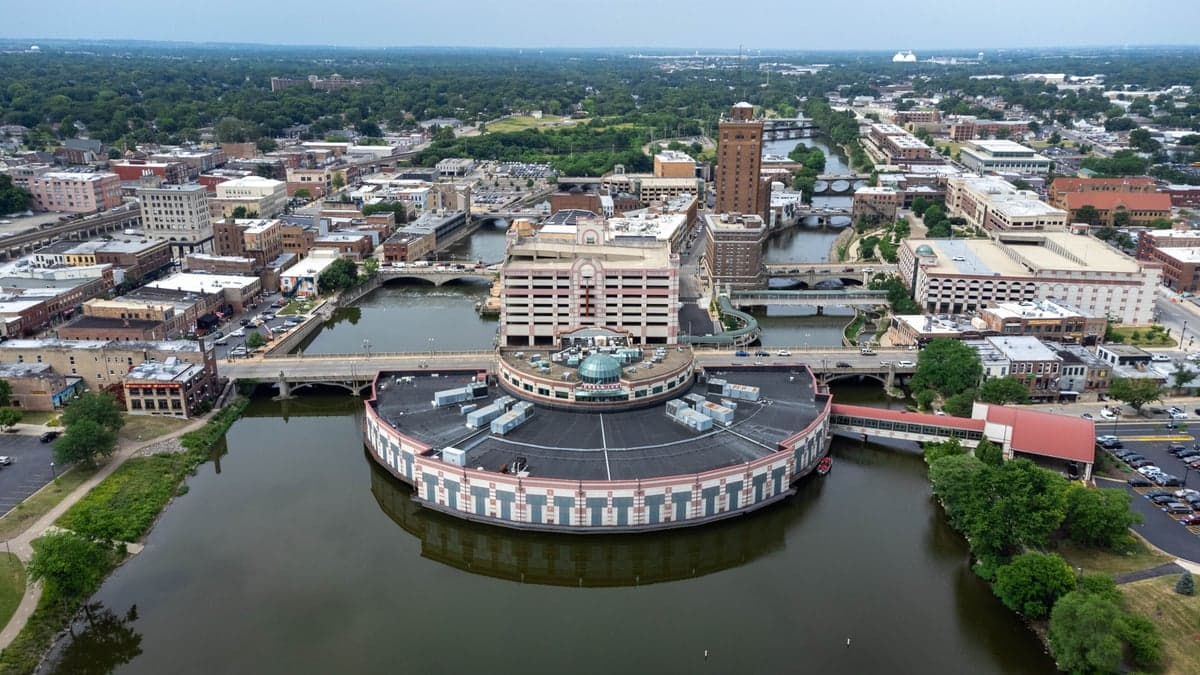
Photo: Wikipedia
Strategic Assessment of Aurora, IL
Multiple tactical vulnerabilities. Population density, target proximity, or disaster risk are likely compounding. A retreat property and exit planning is required.
What does the Strategic Assessment tell us?
Our Strategic Assessment grades tactical survivability of an area. Major population centers, military targets, fallout zones, natural disasters, and border exposure all drive risk — lower exposure means a more defensible position in a crisis.
This is heavily inspired by Joel Skousen's Strategic Relocation book. Highly recommended you checkout the book ($)What does this tell us?
Our Strategic Assessment grades tactical survivability of an area. Major population centers, military targets, fallout zones, natural disasters, and border exposure all drive risk — lower exposure means a more defensible position in a crisis.
This is heavily inspired by Joel Skousen's Strategic Relocation book. Highly recommended you checkout the book ($)Strategic Pillars

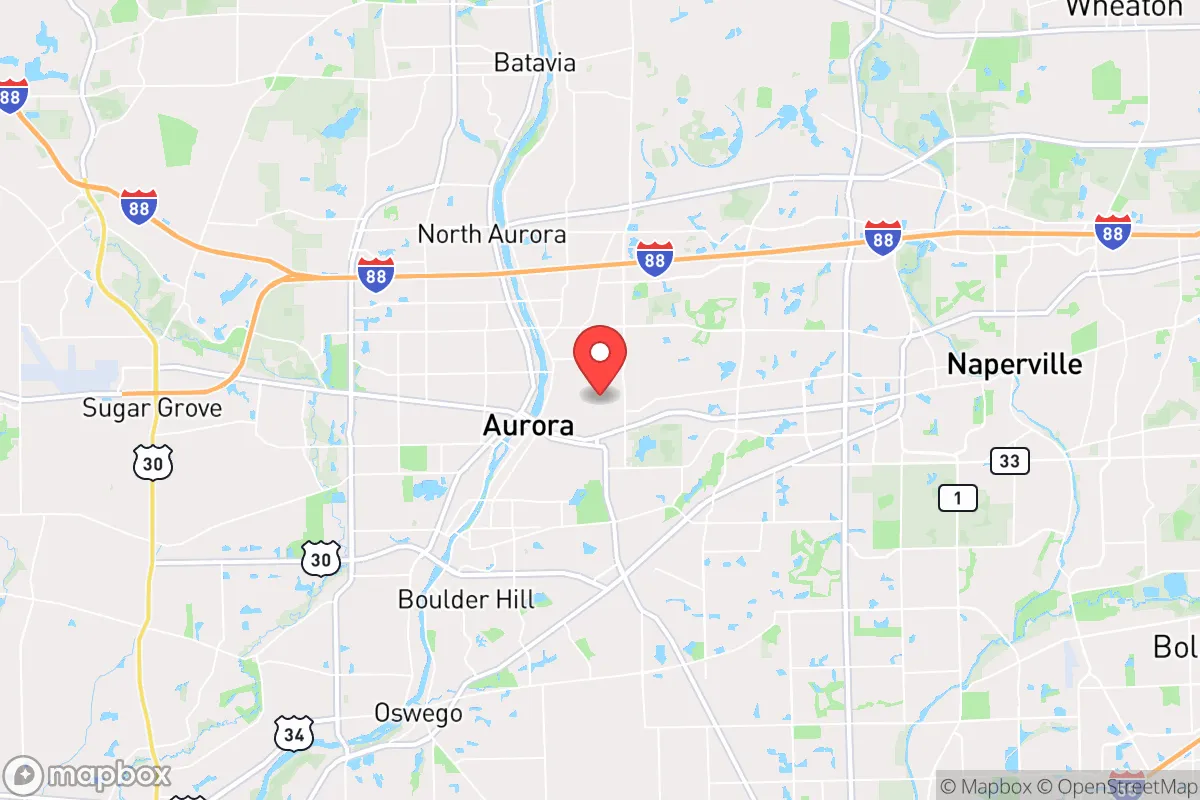
Key Distances
Regional Safe Places
Below is our recommended "safe zones" in Illinois and the surrounding area based on our strategic heuristics. For most people, it's unrealistic to live in a “safe zone” full-time due to work, family or other personal reasons. They tend to be more rural. However, many of these areas are perfect for second homes and retreat properties that double as a vacation home or even a short-term rental.
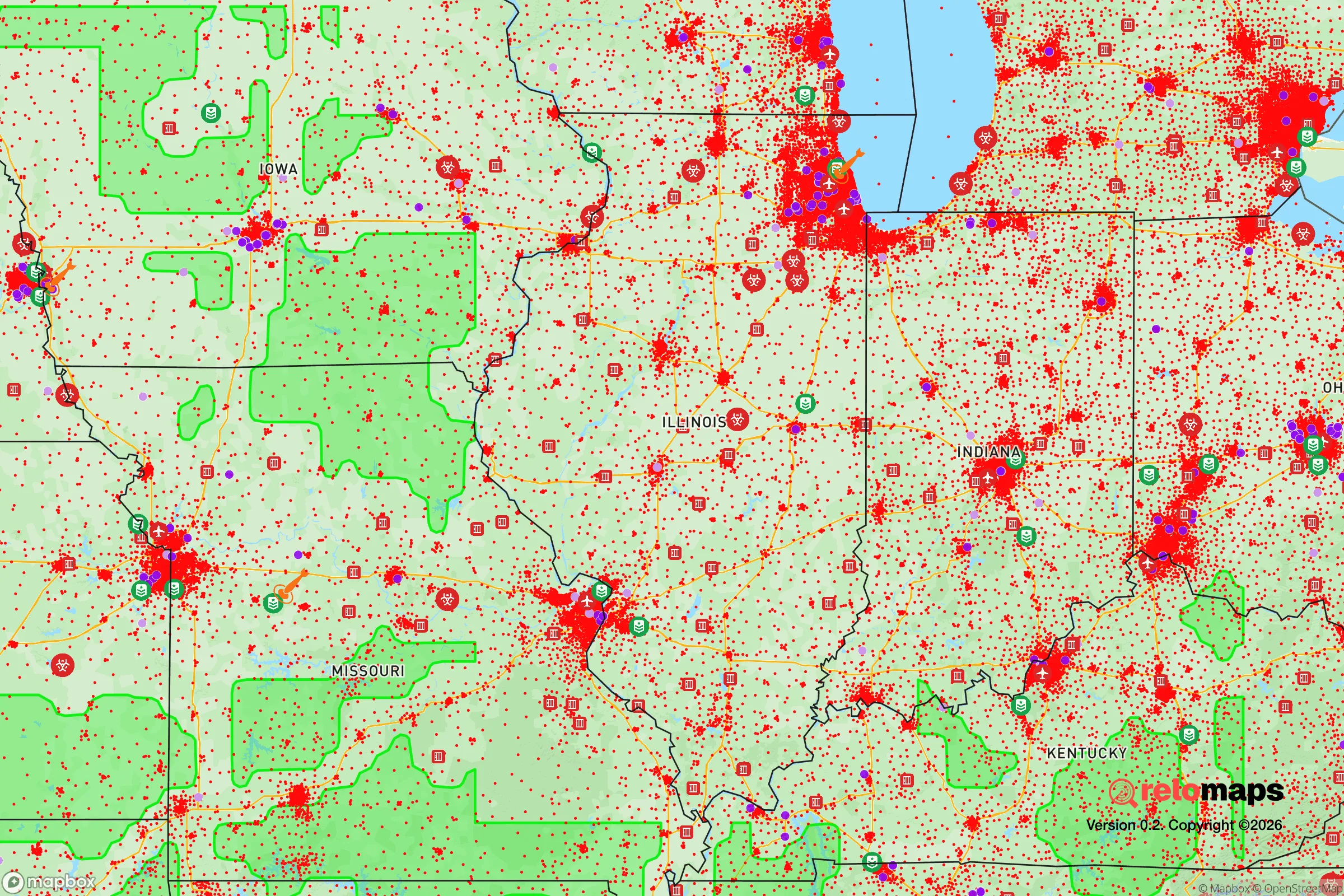
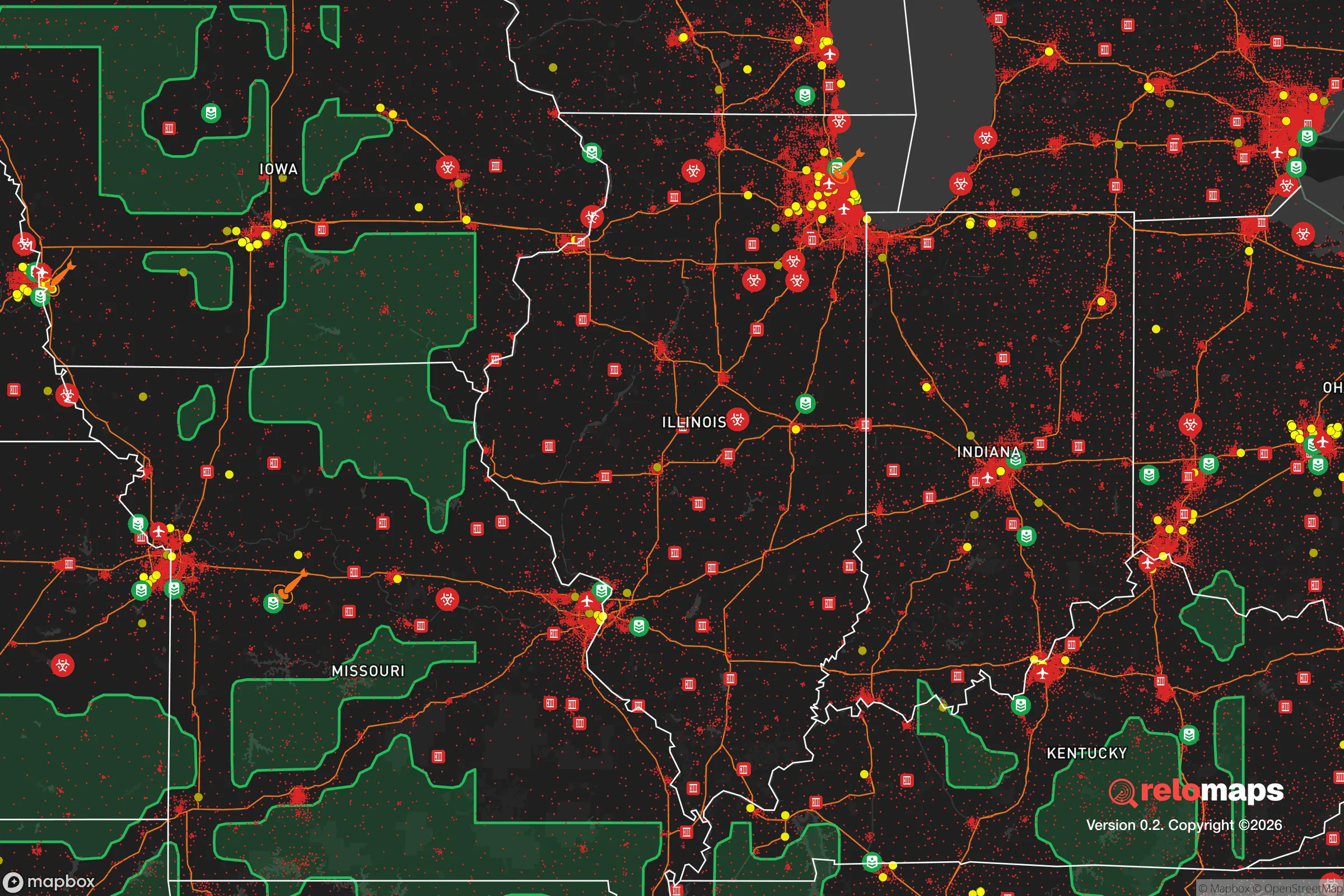


Important Note: For informational purposes only. This does not mean nothing bad ever happens in the green zones. Please use common sense. This is based on public data and modeled with AI. We tried to take a conservative approach but mistakes happen. We update this regularly as new information becomes available.
Solar Generator Recommendations
Backup power matters more here than in safer locations. We've picked three solar generators across budgets and capacity tiers — start with the budget unit if you only need a few essentials, or step up if you want to run a fridge and HVAC for days at a time.

Jackery Portable Power Station Explorer 300
Budget OptionPower on the Go: Weighing only 11 lbs, it's convenient to set up and store with book-sized foldable solar panels

BLUETTI Portable Power Station AC180
Designed for both indoor and outdoor scenarios, AC180 is highly capable as it has a robost capacity and continuous output power.

EF ECOFLOW DELTA Pro Ultra Power Station
Upgraded PickEcoFlow DELTA Pro Ultra is a whole-home energy system designed to grow with your family. Integrated with the Smart Home Panel 2, it scales to meet your evolving energy needs — keeping your home powered, intelligent, and secure through every stage of life.
We earn a commission, at no additional cost to you.
Strategic Assessment Analysis
Aurora, Illinois, presents a deeply contradictory picture for the strategic relocator. On one hand, its position along the Fox River and its status as the state’s second-largest city offer a veneer of infrastructure and economic activity. On the other, its proximity to Chicago—just 40 miles west—and its location within a densely populated corridor of the Midwest make it a high-risk zone for anyone prioritizing long-term survival and self-sufficiency. For the conservative-minded prepper, Aurora is less a destination and more a waypoint: a place to assess before deciding whether to push further west into the rural counties of Kendall or DeKalb.
Geographic position and natural advantages for long-term survival
Aurora’s geography is a mixed bag. The Fox River cuts through the city, providing a reliable freshwater source that could be critical during a prolonged grid-down scenario. The surrounding terrain is relatively flat, with pockets of forested land in the Fox River Valley and the nearby Blackberry Township area. This offers some cover and natural resources—firewood, game, and forage—but lacks the defensible high ground or rugged isolation found in the Driftless Region to the northwest. The city sits at the intersection of I-88 and I-55, two major arteries that would become chokepoints or escape routes depending on the event. For a relocator, the key advantage is the Fox River’s year-round flow, which can support small-scale hydropower or gravity-fed irrigation if you secure a property with riparian rights. The area’s moderate climate means fewer extremes than the northern Great Lakes, but summers are humid and winters can bring lake-effect snow that complicates travel. The real natural advantage lies not in Aurora itself but in the 30-minute drive west to the agricultural belt of DeKalb County, where grain farms and livestock operations offer a buffer of food production that the city lacks.
Risks, exposures, and proximity to fallout-relevant landmarks
This is where Aurora’s strategic picture darkens. The city is within the primary blast and fallout zone of the Chicago metropolitan area, a Tier-1 target for any nuclear exchange or coordinated attack. The Fermi 2 nuclear plant in Newport, Michigan, is roughly 250 miles east—outside immediate fallout range for most scenarios—but the Braidwood Generating Station in Will County, just 30 miles south, is a more immediate concern. A catastrophic failure or strike on Braidwood would put Aurora directly in the plume path depending on wind direction. Beyond nukes, the city’s location along the I-88 corridor means it would be a natural funnel for refugees fleeing Chicago during a collapse or civil unrest. The 2020 riots in nearby Naperville and the looting that reached Aurora’s own retail corridors demonstrated that the city is not insulated from urban contagion. The Kane County jail and the Aurora Police Department headquarters are potential targets for mob violence or coordinated attacks. For the prepper, the biggest risk is being trapped in a suburban bottleneck—Aurora’s population of over 180,000 means that any major event will trigger a scramble for the same limited exit routes, particularly the Fox River bridges and the I-88 on-ramps.
Practical resilience for a relocator: food, water, energy, and defensibility
Let’s talk logistics. Water is Aurora’s strongest card—the Fox River is a perennial stream, and the city’s water treatment plants draw from it. But in a grid-down scenario, those plants stop. You’ll need a Berkey filter or a well-drilled property outside city limits. The city’s municipal water supply is treated with chlorine and fluoride, so rainwater catchment and river filtration are your backup. Food is a problem. Aurora has grocery stores and big-box retailers, but those shelves empty in hours during a panic. The Kane County Farmers Market and local CSAs offer some local produce, but the real food security lies in the farmland west of town. If you’re relocating here, you want a property with at least an acre for a garden and a few chickens. The soil is decent—loam with some clay—but you’ll need to amend it for serious production. Energy is a mixed picture. Aurora’s grid is part of the ComEd system, which is aging and prone to outages during storms. Solar is viable—the area gets about 190 sunny days per year, slightly below the national average—but you’ll need battery storage to handle the cloudy stretches. Natural gas is widely available, but a propane backup generator is a smarter bet for off-grid scenarios. Defensibility is the weak link. Aurora is a sprawling suburb with few natural chokepoints and a street network that’s easy to navigate for anyone with a map. The best defensive position is a rural property on a dead-end road with a clear line of sight to the approach. The city itself is not defensible—too many entry points, too many neighbors, too much glass. For a single individual or a family, the practical play is to establish a retreat in the unincorporated areas of Kane or Kendall County, using Aurora as a resupply hub during stable times and a place to avoid during chaos.
The overall strategic picture for Aurora is one of calculated risk. It offers the infrastructure and economic activity that make daily life manageable—jobs at the Dreyer Medical Clinic, the Chicago Premium Outlets, and the Waubonsee Community College campus provide a stable income stream for building out your preps. But the city’s position as a Chicago satellite means it inherits the vulnerabilities of the larger metro area without the escape routes or defensible terrain of a true rural retreat. For the conservative relocator who values community and convenience but understands the fragility of the system, Aurora can work as a base of operations—provided you have a bug-out plan that puts you west of the Fox River within 30 minutes of a trigger event. The smart money is on a property in the Plano or Yorkville area, where the population thins out and the farmland begins. Aurora itself is a place to pass through, not to dig in. If you’re serious about long-term survival, treat it as a resupply point and a job market, not a home. The real strategic value of Aurora is that it forces you to think about your exit before you need it.

* Values derived from national, state, county, city and local statistics and may differ in a specific area. Last updated: 2026-04-30T00:20:53.000Z
Narrative content on this page is AI-generated and may contain mistakes. Verify any details that matter before acting on them.
ReloMaps may earn a commission from affiliate links at no extra cost to you.

