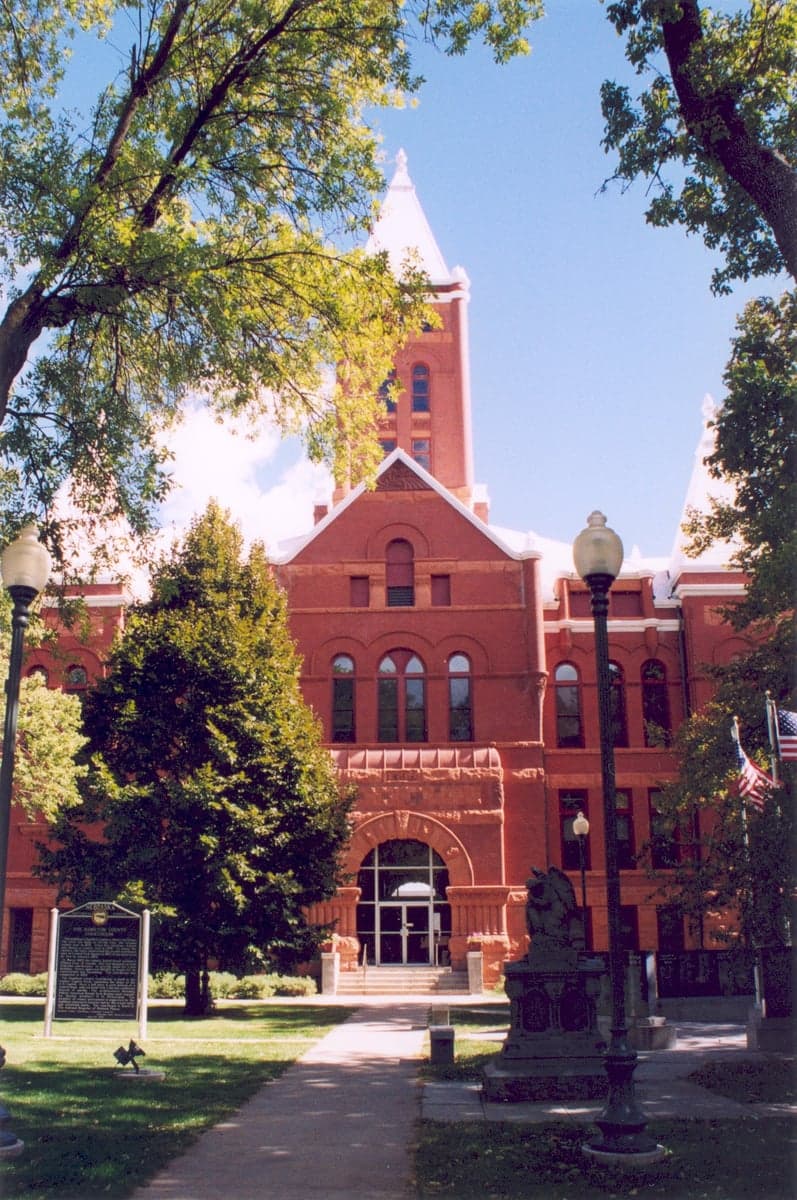
Photo: Wikipedia
Demographics of Aurora, NE
Affluence Level in Aurora, NE
A middle-class area roughly in line with national averages across income, home values, education, and employment.
People of Aurora, NE
The people of Aurora, Nebraska, today form a remarkably homogeneous community of 4,665 residents, characterized by a 94.5% white population and a negligible foreign-born share of 0.0%. This is a city where generational roots run deep, with a strong sense of place anchored in agriculture, manufacturing, and a quiet, family-oriented lifestyle. Distinctive identity markers include a high rate of homeownership, a visible presence of the Hamilton County Fair, and a civic life centered around local churches and the Aurora Public Schools system.
How the city was settled and grew
Aurora was founded in 1871 as a railroad town on the Burlington and Missouri River Railroad line, drawing its first wave of settlers primarily from Midwestern states like Iowa, Illinois, and Ohio. These were largely farmers and tradesmen of Northern European descent—German, Swedish, and Irish—who were attracted by the promise of cheap, fertile land under the Homestead Act. The original town site, now known as Downtown Aurora, was laid out around the railroad depot, and the first homes and businesses clustered along what is now 12th Street and L Street. A second wave arrived in the 1880s and 1890s, with a significant number of German-Russian immigrants from the Volga region, who brought expertise in dryland wheat farming. These families settled primarily in the South Aurora area, near the grain elevators and stockyards, establishing a distinct agricultural working-class character that persists today. By 1900, the population had reached roughly 1,500, and the city’s growth remained steady through the early 20th century, driven by the expansion of the Hamilton County Fair and the construction of the Nebraska Central Railroad.
Modern era (post-1965)
The post-1965 period saw Aurora’s population stabilize rather than surge, as the agricultural economy mechanized and younger generations began moving to larger cities. Unlike many Plains towns, Aurora did not experience significant suburbanization or new housing booms; instead, growth was largely organic, with existing families expanding within the city limits. The Northridge Addition, platted in the 1970s, became the primary destination for middle-class families, offering larger lots and newer ranch-style homes. This neighborhood remains the most desirable for young families today, with a mix of professionals employed at the region’s largest employer, the Hamilton County Hospital, and at manufacturing firms like Chief Industries. The East Park neighborhood, developed in the 1990s, attracted a smaller influx of retirees and empty-nesters, drawn by its proximity to the city’s golf course and park system. Notably, Aurora’s foreign-born population has remained at 0.0% for decades, and its Hispanic share (2.6%) is well below the state average, reflecting a community that has experienced almost no international immigration. The Black population (0.2%) and Asian population (0.0%) are statistically negligible, making Aurora one of the most racially and ethnically homogeneous cities in Nebraska.
The future
Aurora’s demographic trajectory points toward continued stability and gradual aging, rather than rapid change. The city’s population has hovered around 4,500–4,700 for the past 30 years, and projections suggest it will remain in that range through 2040. The Hispanic share may increase modestly as agricultural labor demands draw seasonal workers, but permanent settlement is unlikely given the lack of rental housing and limited entry-level jobs. The Westside neighborhood, a newer subdivision near the high school, is attracting a small number of out-of-state transplants, primarily remote workers and retirees seeking lower costs, but these are overwhelmingly white and middle-class. The city is not tribalizing into distinct ethnic enclaves; rather, it is homogenizing further, with the few non-white residents largely assimilating into existing neighborhoods. The biggest demographic shift will be the aging of the baby boomer cohort, which could lead to a slight population decline as older residents move to assisted living facilities in larger towns like Grand Island or Hastings.
For someone moving in now, Aurora offers a stable, safe, and deeply rooted community where nearly everyone shares a similar cultural and ethnic background. The lack of diversity is a defining feature, not a recent development, and the city’s future will likely look much like its present: quiet, family-focused, and overwhelmingly white. New residents should expect a warm welcome from neighbors who value tradition, but should also be prepared for a social fabric that is slow to change and largely closed to outside influences.

* Values derived from national, state, county, city and local statistics and may differ in a specific area. Last updated: 2026-04-21T13:45:23.000Z
Narrative content on this page is AI-generated and may contain mistakes. Verify any details that matter before acting on them.
ReloMaps may earn a commission from affiliate links at no extra cost to you.

