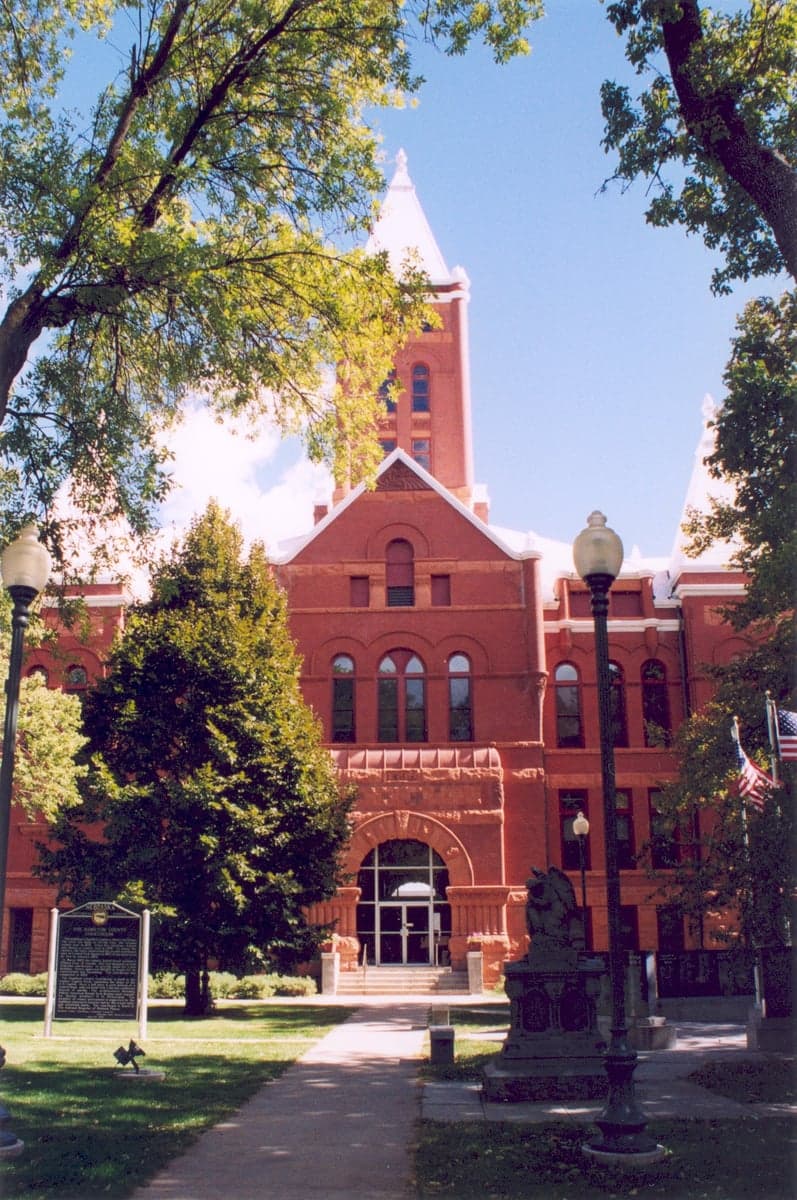
Photo: Wikipedia
Personal Sovereignty in Aurora, NE
Viable for self-reliance. Generally workable, though some barriers may limit total independence.
What does Personal Sovereignty tell us?
Personal Sovereignty measures your capacity for self-reliance and independence with minimal government friction. Higher scores mean fewer barriers between you and the way you want to live... but it assumes you have the space you need and good neighbors.
What does this tell us?
Personal Sovereignty measures your capacity for self-reliance and independence with minimal government friction. Higher scores mean fewer barriers between you and the way you want to live... but it assumes you have the space you need and good neighbors.
State Policy
Energy independence: Importer (35% of energy produced in-state)
Personal Liberty
Homesteading

Personal Liberty Analysis
Aurora, Nebraska, offers a notably high degree of personal sovereignty for those seeking to minimize government overreach and maximize self-reliance. In a state already known for its independent streak, Aurora stands out as a community where the default posture is one of personal responsibility rather than bureaucratic permission. For the survivalist or prepper, this translates into a legal and cultural environment that respects the individual’s right to make decisions about their own security, property, and family life without constant interference from distant authorities.
Tax burden and regulatory posture: How Nebraska compares to surrounding states
Nebraska’s overall tax burden is moderate, but Aurora benefits from a local culture that keeps regulatory friction low. The state’s individual income tax rate is a flat bracket system, with a top rate of 6.84% as of 2026, which is higher than neighboring South Dakota (which has no income tax) but lower than Kansas. Property taxes in Hamilton County, where Aurora sits, are a mixed bag—they fund solid local services but can be a consideration for landowners. However, the real advantage is the regulatory environment. Nebraska is a right-to-work state, meaning no forced union membership, and its occupational licensing requirements are less onerous than in coastal states. For a prepper, this means fewer hurdles to starting a side business, running a small farm, or operating a home-based trade. The state also has no specific “red flag” law on the books as of 2026, and local zoning in Aurora is generally permissive for agricultural and residential uses, provided you stay within city limits. The key takeaway: you’ll pay some taxes, but you won’t be buried in red tape.
Self-defense and gun law specifics: What the Second Amendment looks like in Aurora
Nebraska is a constitutional carry state, and Aurora fully reflects that. As of 2026, any law-abiding adult 21 or older can carry a concealed handgun without a permit, and open carry is legal without a license. This is a critical factor for those prioritizing personal security. The state preempts local firearm ordinances, so Aurora cannot enact its own bans or restrictions—what’s legal in the state is legal in the city. There is no waiting period for firearm purchases, no magazine capacity limit, and no requirement to register firearms. The state also has a “Stand Your Ground” law, codified in Nebraska Revised Statute 28-1409, which removes the duty to retreat before using deadly force in self-defense. For the survivalist, this means your home, vehicle, and person are legally defensible without having to second-guess your actions. The only notable restriction is that concealed carry is prohibited in certain posted locations like schools and government buildings, but these are standard exceptions. Aurora’s local sheriff’s office is known for being pro-Second Amendment, and the community’s rural ethos means gun ownership is the norm, not the exception.
Self-reliance and homesteading viability: Lot sizes, zoning, and off-grid feasibility
Aurora’s layout and zoning make it a strong candidate for those wanting to live with a degree of self-sufficiency. Within city limits, standard residential lots range from one-quarter to one-half acre, which is ample for a substantial garden, a few chickens, and even a small greenhouse. The city’s zoning code allows for “urban agriculture” including beekeeping and small livestock, though you’ll want to check specific HOA covenants if you’re in a newer subdivision. Outside city limits, in unincorporated Hamilton County, lot sizes jump to one acre or more, and there are virtually no restrictions on what you can do with your land—gardening, rainwater collection, solar panels, and even small-scale animal husbandry are all straightforward. Off-grid living is legally feasible, but with a caveat: Nebraska law requires dwellings to have a septic system and a water source, but there is no state mandate to connect to the electrical grid. Solar panels with battery storage are common, and the local utility, City of Aurora Electric, has net metering policies that make grid-tied solar a viable option. For the prepper, the biggest win is that Aurora is in a region with reliable groundwater and a growing season long enough for serious food production. The county’s agricultural extension office is also a practical resource for soil testing and crop planning.
Personal liberties: Parental rights, medical autonomy, speech, and property
On the front of personal liberties, Aurora and Nebraska as a whole lean heavily toward individual and parental rights. Nebraska has a strong parental rights framework, with state law affirming that parents have the fundamental right to direct the upbringing, education, and healthcare of their children. This means no forced medical procedures on minors without parental consent, and school boards in Aurora are generally responsive to parent concerns. Medical autonomy is also respected: Nebraska does not have a state-level vaccine mandate for adults, and while healthcare facilities can set their own policies, the local hospital, Aurora Memorial Hospital, is community-focused and less likely to push controversial protocols. Free speech is robust, with no state-level “hate speech” laws that chill political or religious expression. Property rights are protected by Nebraska’s strong eminent domain laws, which require just compensation and public necessity. For the prepper, this means you can build a fence, dig a well, or put up a “No Trespassing” sign without worrying about government overreach. The only area where the state is more assertive is in environmental regulations on large-scale agriculture, but for a small homesteader, these are irrelevant.
In the broader context of personal sovereignty, Aurora, Nebraska, offers a balance that is increasingly rare in the United States. It lacks the extreme libertarian permissiveness of, say, rural Idaho or Alaska, but it also avoids the heavy-handed regulation of the West Coast or Northeast. For the conservative-leaning individual or family who values self-defense, self-reliance, and minimal government intrusion into daily life, Aurora represents a solid, middle-American option where you can live largely on your own terms. The community’s culture reinforces the legal framework: neighbors respect boundaries, local officials are accessible, and the pace of life allows for genuine independence. If you’re looking to escape the creeping control of federal and state overreach, this is a place where you can breathe—and prepare.

* Values derived from national, state, county, city and local statistics and may differ in a specific area. Last updated: 2026-04-21T13:45:23.000Z
Narrative content on this page is AI-generated and may contain mistakes. Verify any details that matter before acting on them.
ReloMaps may earn a commission from affiliate links at no extra cost to you.

