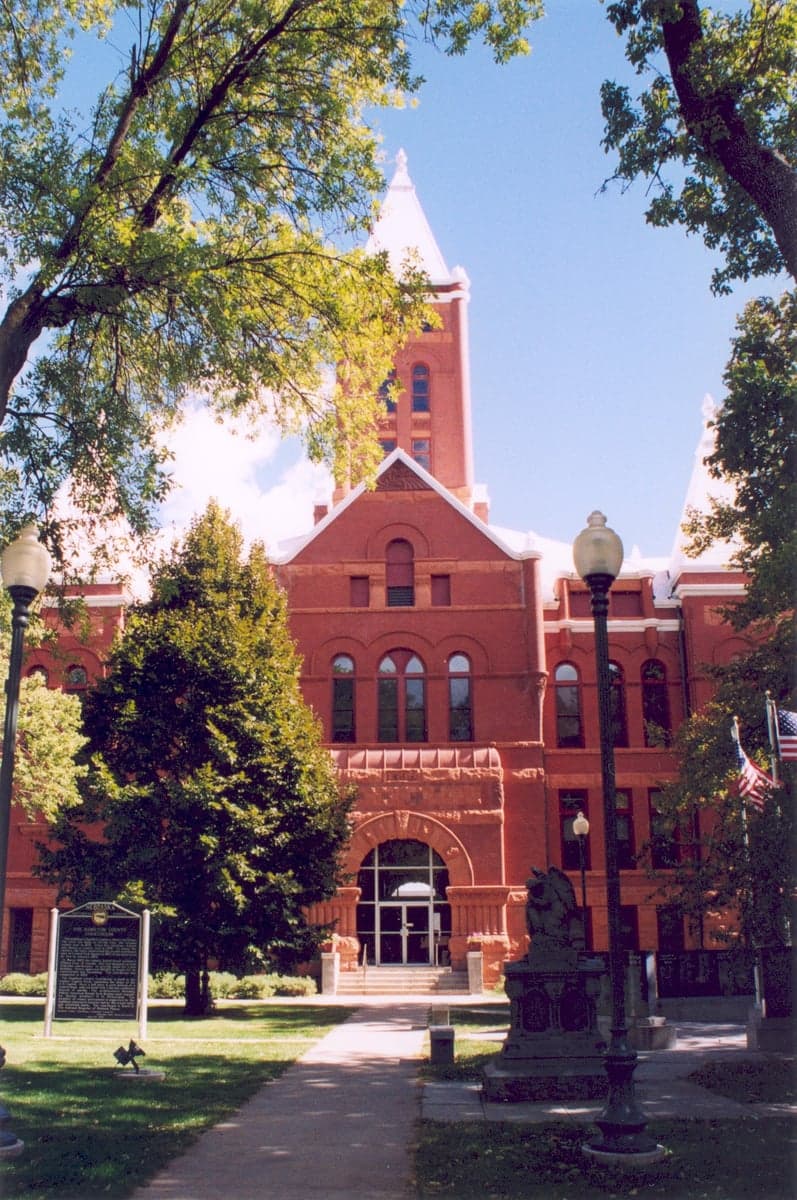
Photo: Wikipedia
Political ClimatePolitical Climate in Aurora, NE
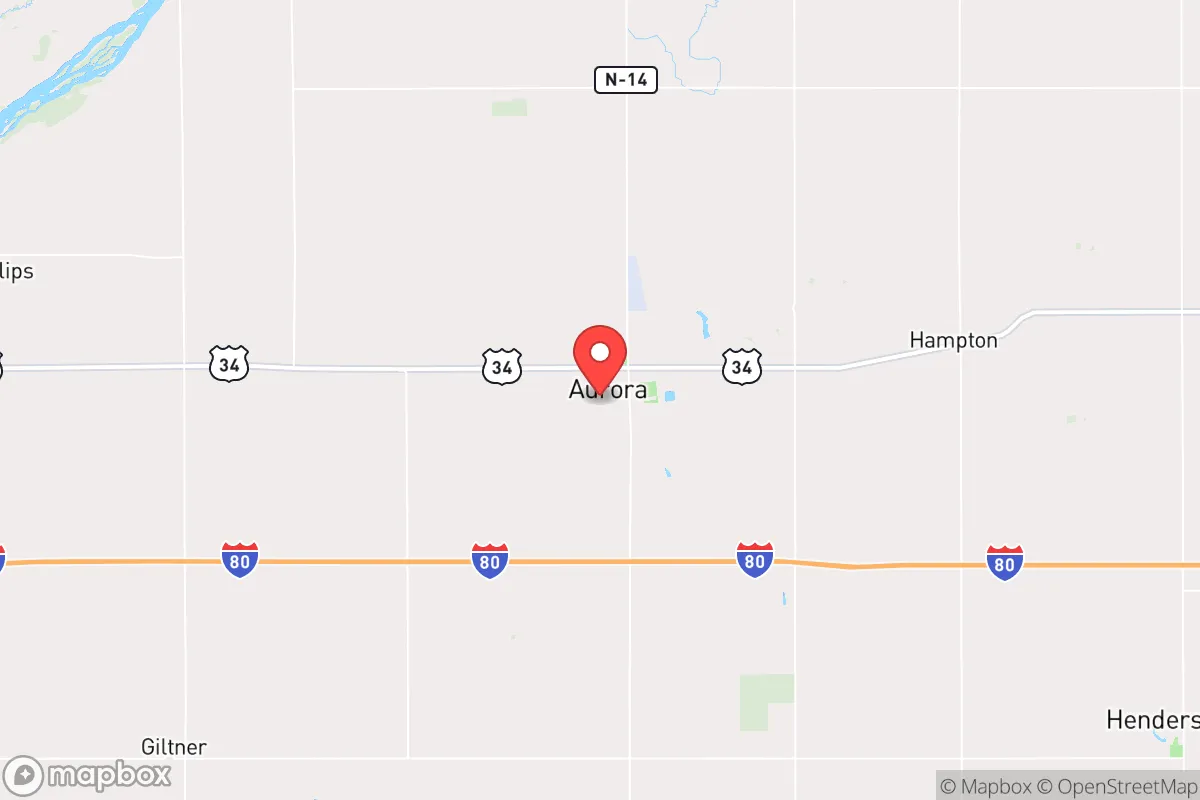
District shown is the primary district for this city’s centroid. Cities may span multiple districts.
Local Political AnalysisPolitical Analysis of Aurora, NE
Aurora, Nebraska, sits in a deeply conservative pocket of the state, and that’s not changing anytime soon. The Cook PVI of R+27 tells you the hard numbers, but living here, you feel it in the way folks wave from their trucks and how the county commission meetings run. We’ve been reliably red for as long as anyone can remember, and while the national winds shift, Aurora’s political ground stays firm. The trajectory is steady—if anything, the local pushback against any hint of progressive overreach has only gotten stronger in the last few years.
How it compares
Drive thirty miles east to York, and you’ll find a similar conservative vibe, but it’s not quite as rock-ribbed as Aurora. York has a few more transplants from Lincoln and Omaha, so you’ll hear a slightly different tone at the coffee shop. Head west to Grand Island, and it’s a whole different ballgame—more diverse, more urban, and you can feel the political lean shift toward the center, sometimes even left on local issues. Aurora, by contrast, is the kind of place where the county GOP dinner is the social event of the season, and the local school board hasn’t been tempted by the kind of curriculum battles you see in bigger towns. We’re surrounded by like-minded communities like Central City and St. Paul, but Aurora stands out for its consistency. There’s no real progressive foothold here, and that’s by design—people move here because they want to keep it that way.
What this means for residents
For the folks who call Aurora home, the political climate means a government that mostly stays out of your business. Property taxes are a perennial gripe, but the county commissioners are generally the type who think twice before adding a new regulation or fee. You won’t find the kind of zoning fights or mask mandates that plague bigger cities. The local schools stick to the basics—reading, writing, arithmetic—and there’s no pressure to adopt the latest social experiments from the coasts. The downside? If you’re not on board with the conservative consensus, you might feel a bit isolated. But for the vast majority, it’s a relief to live somewhere where the government isn’t trying to micromanage your family’s choices. The long-term worry is that as the state grows, some of that Lincoln influence could creep in, but for now, Aurora remains a stronghold where personal freedom and local control are still the rule.
Culturally, Aurora has a few quirks that set it apart. The city is home to the Plainsman Museum, which leans heavily into pioneer heritage and traditional values—no revisionist history here. The annual Fourth of July parade is a bigger deal than any election, and the local churches are the real community centers. There’s a quiet resistance to anything that feels like government overreach, whether it’s a new state mandate on water usage or a federal guideline on land use. People here remember when the feds tried to push a conservation plan on the Platte River, and the pushback was fierce. That independent streak runs deep. If you’re looking for a place where the government trusts you to make your own decisions, Aurora is about as good as it gets in Nebraska. Just don’t expect the politics to change anytime soon—we like it this way.

State Political ClimatePolitical Climate in Nebraska
State Political AnalysisPolitical Environment in the State
Nebraska is a solidly conservative state, but it’s not the monolith outsiders often assume. The state’s political lean is reliably Republican at the federal level—voting +19 points for Trump in 2024—but the real story is a growing urban-rural split that’s been widening for two decades. The dominant coalition is a mix of rural traditionalists and suburban fiscal conservatives, but the state’s single congressional district (NE-02) has flipped twice in the last four cycles, signaling that the Omaha metro is drifting left while the rest of the state holds firm. If you’re looking for a place where your vote counts and your values aren’t under constant assault, Nebraska still delivers—but you need to know where the fault lines are.
Urban vs. rural divide
The political map of Nebraska is a textbook case of the urban-rural chasm. The state’s two population centers—Omaha and Lincoln—drive almost all of the Democratic vote. Douglas County (Omaha) has trended blue for a decade, and in 2024 it went for Biden by about 8 points. Lancaster County (Lincoln) is more of a purple battleground, but it’s been inching leftward, especially in the city proper. Meanwhile, the rest of the state is deep red. Scottsbluff in the Panhandle, Norfolk in the northeast, and Kearney in the central Platte Valley all vote Republican by 30-40 point margins. The real outlier is Grand Island, a blue-collar town in Hall County that’s become a swing area thanks to a growing Hispanic population and meatpacking workers; it voted for Trump in 2024 but only by 4 points. The suburban donut around Omaha—places like Elkhorn and Papillion—is still reliably conservative, but those voters are more libertarian-leaning than the rural base, meaning they’ll support tax cuts but get squeamish on social issues. If you’re moving to Nebraska, your political experience will depend entirely on whether you land in the I-80 corridor or the farm country.
Policy environment
Nebraska’s policy environment is a mixed bag for conservatives, but the trend is mostly positive. On taxes, the state has a flat income tax rate of 5.84% (down from 6.84% in 2020) and no tax on Social Security benefits, which is a big win for retirees. Property taxes are high—among the top 10 in the nation—but the legislature passed LB 1107 in 2023 to provide credits and caps, though it’s still a sore spot for landowners. Education policy is a battleground: Nebraska has a robust school choice movement, and in 2024 the legislature passed a bill creating Education Savings Accounts (ESAs) for low-income families, though it’s been tied up in court challenges from the teachers’ union. The state’s unicameral, nonpartisan legislature is unique—no party labels on the ballot—which means you get more deal-making and less gridlock, but also less accountability. On healthcare, Nebraska expanded Medicaid under the Affordable Care Act in 2020 via a ballot initiative, which was a blow to conservatives, but the state has resisted further expansion and maintains a relatively free-market insurance market. Election laws are solid: Nebraska requires voter ID (passed in 2021), has no-excuse absentee voting, and purges inactive voters regularly. It’s not Texas-level strict, but it’s far from the chaos of a place like Colorado.
Trajectory & freedom
Nebraska is moving in the right direction on personal freedom, but it’s a slow grind. The biggest win for liberty in recent years was the 2023 permitless carry law (LB 77), which allows any law-abiding adult to carry a concealed firearm without a permit. That was a major victory for gun rights, and it passed with bipartisan support. On parental rights, the legislature passed LB 1084 in 2023, which prohibits schools from teaching sexual orientation or gender identity in grades K-5—a direct response to the woke curriculum creep seen in other states. Medical freedom took a hit when the state banned gender-affirming care for minors in 2023 (LB 574), which conservatives see as protecting kids, but it also restricted some adult access to certain procedures. Property rights are generally strong—Nebraska has no statewide rent control, and zoning in rural areas is minimal—but the state’s K-3 school mask mandate during COVID was a flashpoint that many felt was government overreach. The biggest red flag is the state’s inheritance tax, which still applies to estates over $40,000 for non-spouse heirs; it’s a relic that reformers are trying to kill, but it’s stubborn. Overall, Nebraska is trending freer, but it’s not a libertarian paradise—you’ll still deal with a heavy hand on property taxes and some regulatory red tape.
Civil unrest & political movements
Nebraska is not a hotbed of civil unrest, but there have been notable flashpoints. The 2020 George Floyd protests in Omaha turned violent for a few nights, with looting and fires in the Old Market district, but it was contained quickly and didn’t spread to Lincoln or rural areas. The 2023 abortion rights ballot initiative fight was the biggest political movement in years—pro-choice groups gathered enough signatures to put a measure on the 2024 ballot that would have enshrined abortion access in the state constitution, but it failed by a 52-48 margin after a massive ad campaign from both sides. Immigration politics are simmering: South Sioux City and Lexington have seen tensions over meatpacking plant workers, and the state passed a law in 2024 (LB 123) requiring local law enforcement to cooperate with ICE, which drew protests from immigrant advocacy groups. There’s no serious secession or nullification movement, but the Nebraska Republican Party has a vocal faction pushing for a constitutional convention to rein in federal power. Election integrity is a live issue—the 2020 election saw Trump win the state easily, but the Omaha-area congressional race was decided by just 6,000 votes, leading to calls for tighter ballot security. A new resident won’t see daily protests, but you’ll hear the political noise at county fairs and coffee shops.
Projection
Over the next 5-10 years, Nebraska will likely stay red but get more internally divided. The Omaha metro is growing faster than the rest of the state, and its demographic shift—more young professionals, more diversity—will push NE-02 further left. The rural areas will continue to depopulate, meaning their political power in the legislature will shrink relative to the cities. The Lincoln-Omaha corridor will become the decisive battleground for state-level races, and you can expect more ballot initiatives on issues like marijuana legalization (which failed in 2020 but came close) and abortion. The good news for conservatives is that the state’s unicameral system and nonpartisan structure make it harder for a progressive wave to flip the legislature quickly—rural seats are overrepresented, and the filibuster rules require 33 votes to pass most bills. In-migration is modest, mostly from Colorado and California, and those newcomers tend to be moderate Republicans or libertarians, not hard-left activists. If you move to Nebraska now, expect a decade of slow, grinding battles over taxes, education, and local control—but don’t expect a blue wave anytime soon.
Bottom line for a new resident: Nebraska is a safe bet if you want a state that respects your gun rights, keeps schools focused on basics, and doesn’t tax your retirement income. But you need to pick your county carefully—Douglas County is a political minefield, while places like Saunders County or Dawson County are still solidly conservative. Property taxes will annoy you, and the inheritance tax is a headache, but the overall trajectory is toward more freedom, not less. If you’re coming from a blue state, you’ll breathe easier here—just don’t expect a libertarian utopia. It’s Nebraska: steady, stubborn, and slowly getting better.
* Values derived from national, state, county, city and local statistics and may differ in a specific area. Last updated: 2026-04-21T13:45:23.000Z
Narrative content on this page is AI-generated and may contain mistakes. Verify any details that matter before acting on them.
ReloMaps may earn a commission from affiliate links at no extra cost to you.

