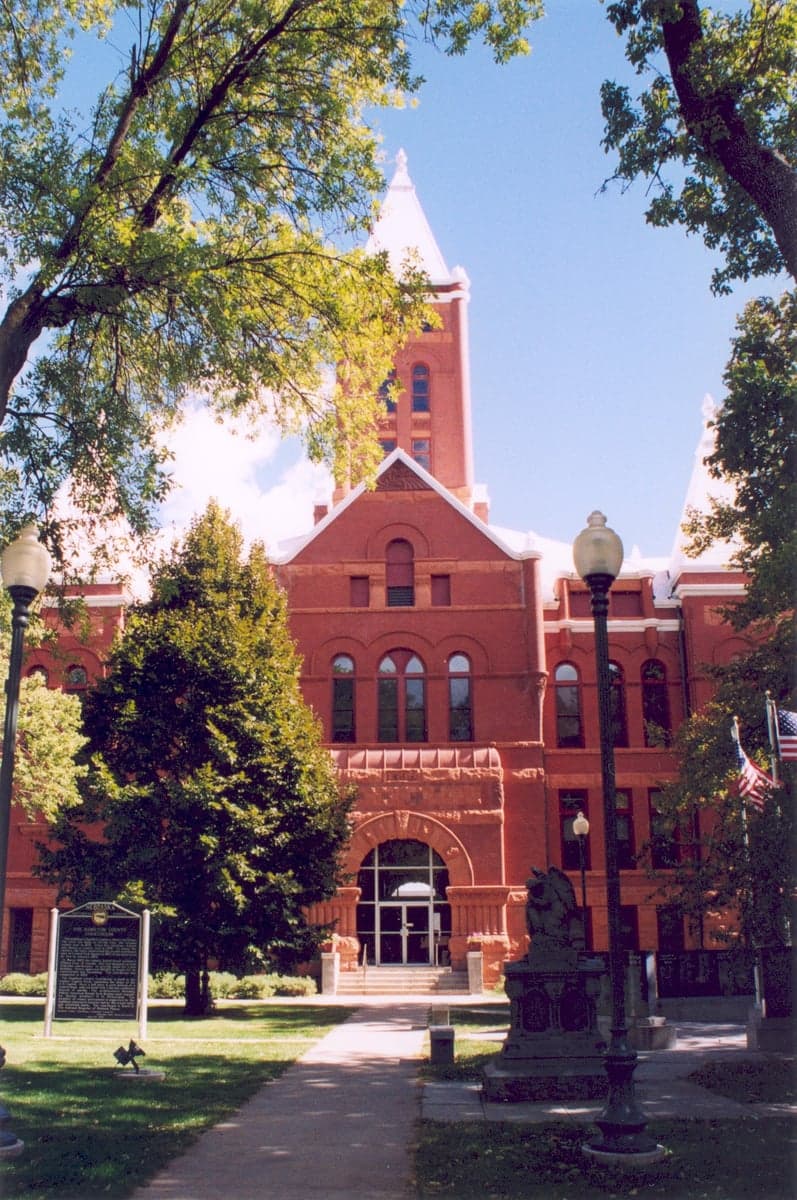
Photo: Wikipedia
Strategic Assessment of Aurora, NE
Workable tactical position. Some exposure to population density or targets, but generally defensible in a crisis.
What does the Strategic Assessment tell us?
Our Strategic Assessment grades tactical survivability of an area. Major population centers, military targets, fallout zones, natural disasters, and border exposure all drive risk — lower exposure means a more defensible position in a crisis.
This is heavily inspired by Joel Skousen's Strategic Relocation book. Highly recommended you checkout the book ($)What does this tell us?
Our Strategic Assessment grades tactical survivability of an area. Major population centers, military targets, fallout zones, natural disasters, and border exposure all drive risk — lower exposure means a more defensible position in a crisis.
This is heavily inspired by Joel Skousen's Strategic Relocation book. Highly recommended you checkout the book ($)Strategic Pillars

Key Distances
Regional Safe Places
Below is our recommended "safe zones" in Nebraska and the surrounding area based on our strategic heuristics. For most people, it's unrealistic to live in a “safe zone” full-time due to work, family or other personal reasons. They tend to be more rural. However, many of these areas are perfect for second homes and retreat properties that double as a vacation home or even a short-term rental.
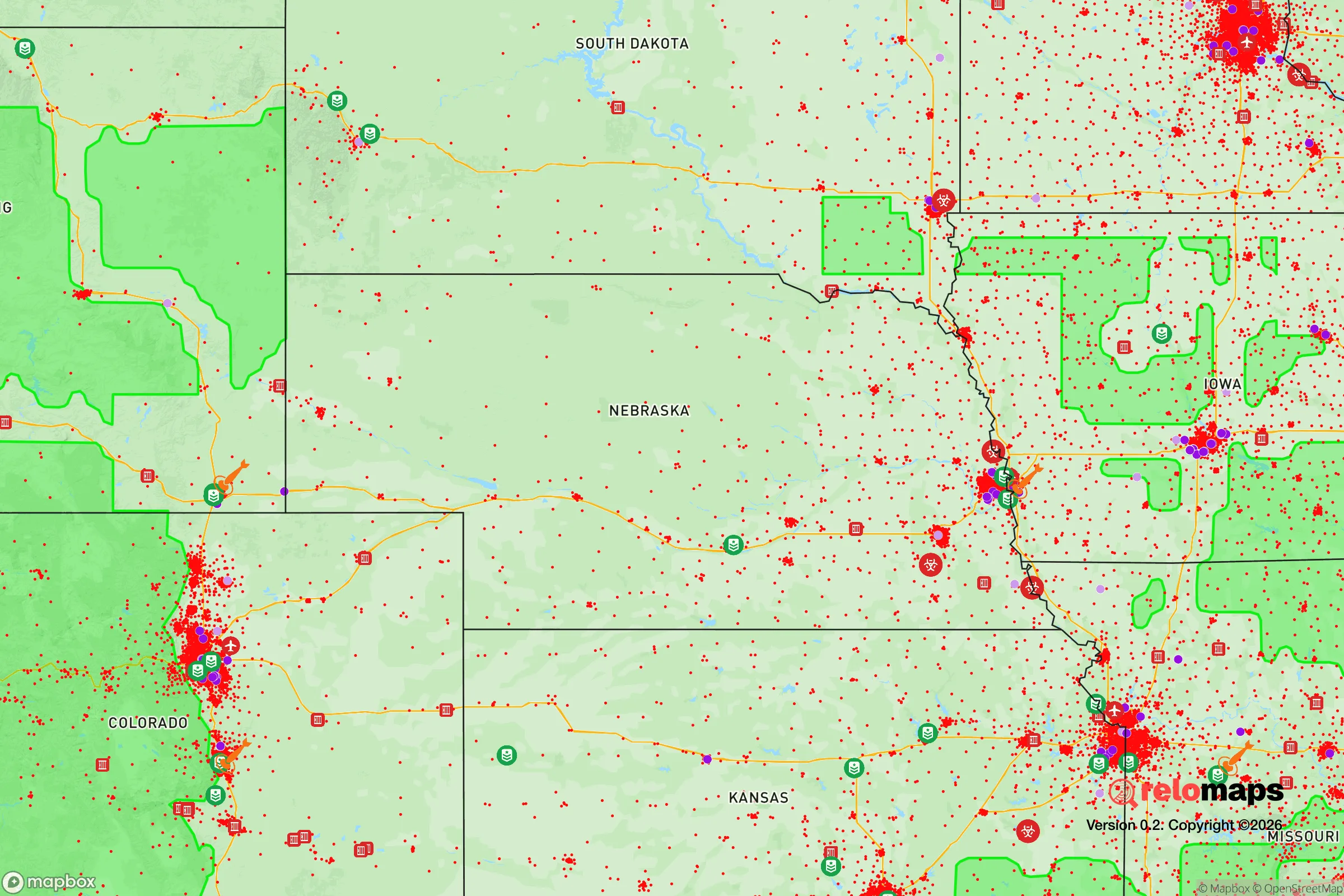
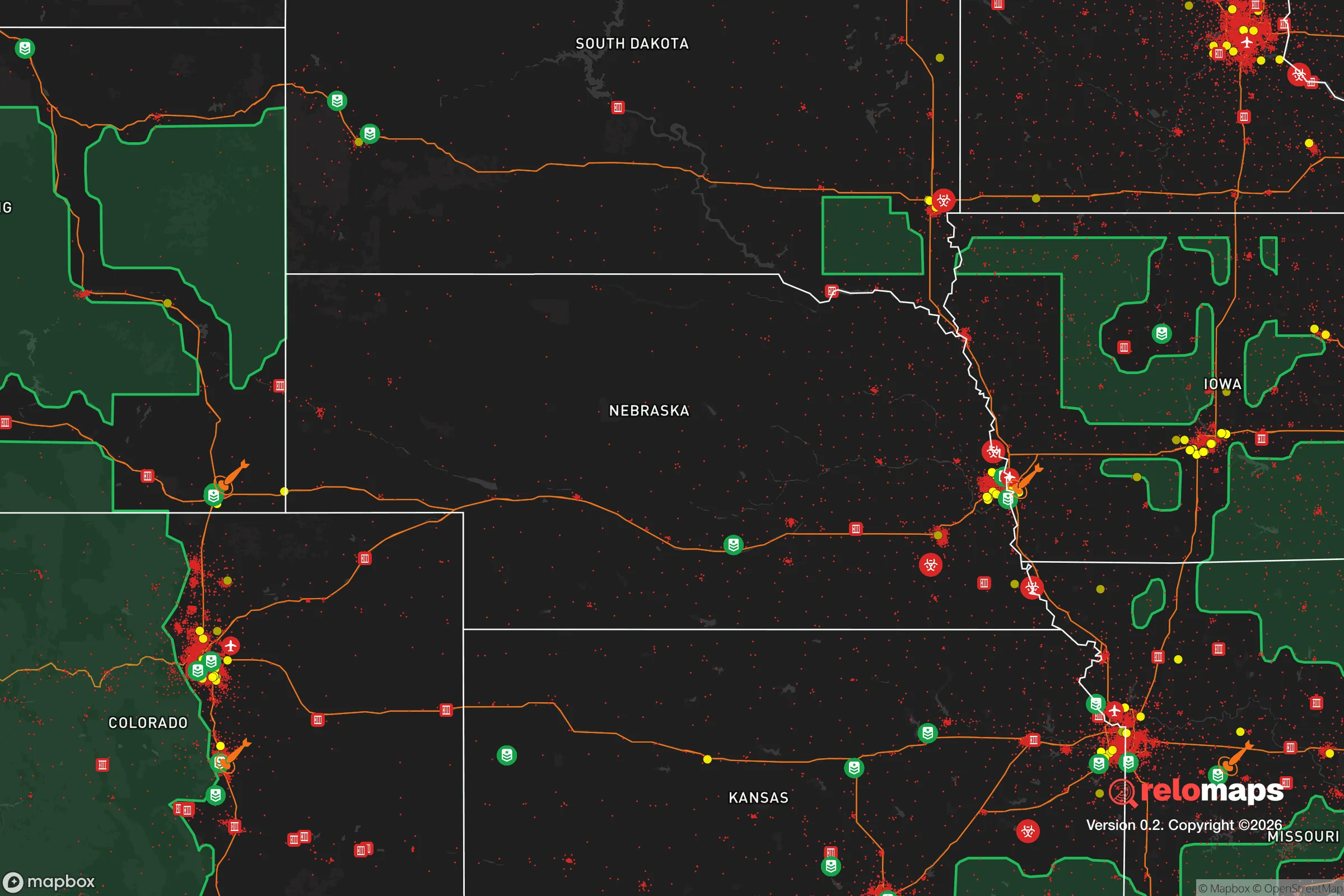


Important Note: For informational purposes only. This does not mean nothing bad ever happens in the green zones. Please use common sense. This is based on public data and modeled with AI. We tried to take a conservative approach but mistakes happen. We update this regularly as new information becomes available.
Solar Generator Recommendations
Backup power matters more here than in safer locations. We've picked three solar generators across budgets and capacity tiers — start with the budget unit if you only need a few essentials, or step up if you want to run a fridge and HVAC for days at a time.

Jackery Portable Power Station Explorer 300
Budget OptionPower on the Go: Weighing only 11 lbs, it's convenient to set up and store with book-sized foldable solar panels

BLUETTI Portable Power Station AC180
Designed for both indoor and outdoor scenarios, AC180 is highly capable as it has a robost capacity and continuous output power.

EF ECOFLOW DELTA Pro Ultra Power Station
Upgraded PickEcoFlow DELTA Pro Ultra is a whole-home energy system designed to grow with your family. Integrated with the Smart Home Panel 2, it scales to meet your evolving energy needs — keeping your home powered, intelligent, and secure through every stage of life.
We earn a commission, at no additional cost to you.
Strategic Assessment Analysis
Aurora, Nebraska, sits in a sweet spot that few relocators fully appreciate until they study the map. It is far enough from the chaos of the Front Range and the I-80 corridor to offer genuine buffer, yet close enough to Lincoln and Omaha for supply runs or medical access if things hold together. The town’s resilience isn’t flashy—it’s baked into its geography, its agricultural base, and its low profile. For someone thinking through worst-case scenarios, from supply-chain collapse to civil unrest, Aurora offers a quiet, defensible anchor in the heart of the Great Plains.
Geographic position and natural advantages for long-term security
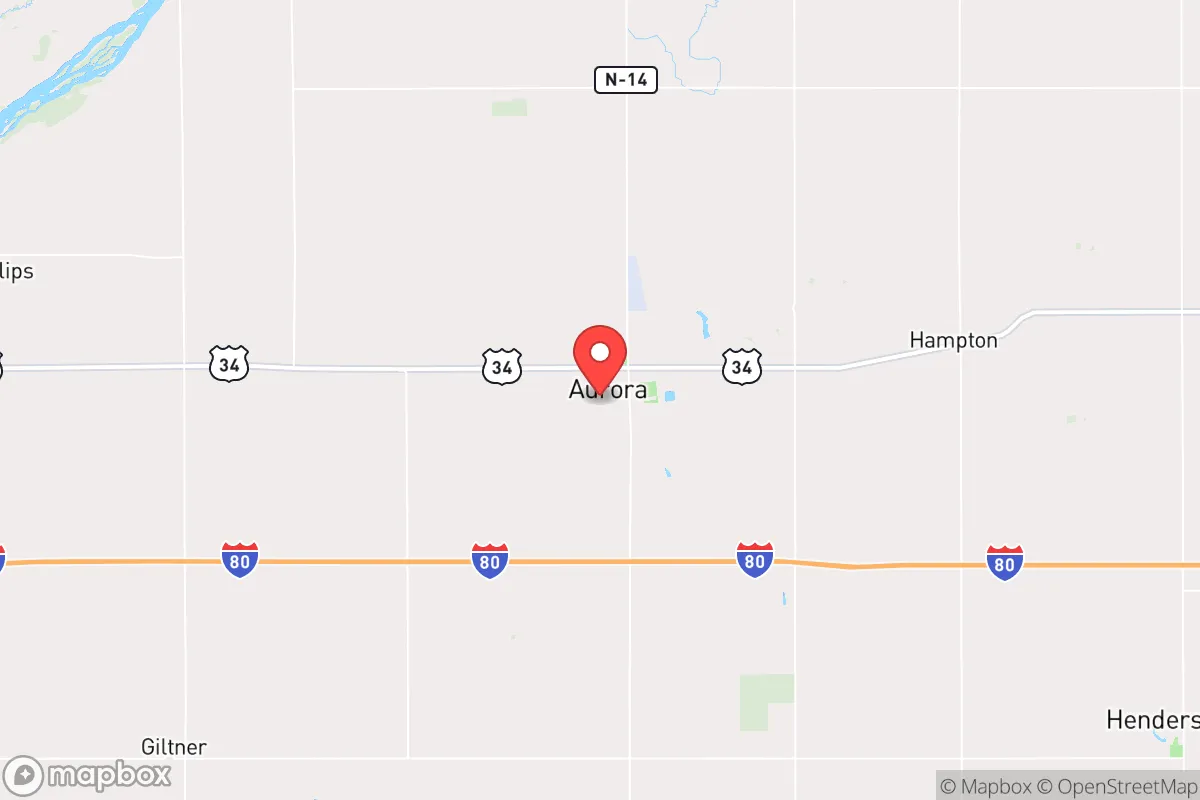
Aurora is located in Hamilton County, roughly 90 miles west of Lincoln and 120 miles southwest of Omaha. That distance matters. In a crisis, the 200,000-plus people in Lincoln and the 1.3 million in the Omaha metro area become liabilities—competition for fuel, food, and medical care. Aurora sits far enough outside those population centers that you aren’t caught in the initial wave of panic, but close enough that you can still reach specialty hospitals or supply hubs if the roads are open. The Platte River runs about 15 miles north of town, providing a reliable surface water source, and the surrounding farmland is some of the most productive in the state. The Ogallala Aquifer lies beneath much of this region, meaning groundwater is accessible for wells. The terrain is flat to gently rolling, which makes for easy travel by vehicle or foot, but also means you’ll want to think about defensible positions—more on that later. The climate is continental, with hot summers and cold winters, but the growing season is long enough for serious gardening or small-scale farming. Snowfall averages around 30 inches per year, which is manageable with basic preparation. There are no major fault lines, no hurricane zones, and no wildfire corridors. The biggest natural threat is a tornado, and while that’s real, the warning systems in Nebraska are robust, and the open country gives you time to react.
Risks, exposures, and proximity to fallout-relevant landmarks
The primary risk for Aurora is its proximity to the Trans-Nebraska I-80 corridor, which runs about 20 miles north of town. In a national emergency—whether a pandemic, economic collapse, or mass migration event—that highway becomes a funnel for desperate people moving west or east. Aurora is far enough south that you aren’t on the main artery, but you’re close enough that you could see spillover traffic on state highways 14 and 34. The Union Pacific mainline also runs along the I-80 corridor, carrying hazardous materials and military logistics. A derailment or attack on that line could create a secondary crisis. There are no nuclear power plants within 100 miles—the closest is the Fort Calhoun plant near Omaha, about 120 miles northeast. That’s outside the typical 50-mile emergency planning zone, but fallout patterns depend on wind. In a worst-case scenario, prevailing westerlies would push any plume from Fort Calhoun away from Aurora, but a shift could change that. The Offutt Air Force Base near Omaha is a Strategic Command headquarters and a high-value target in any conflict. If things go kinetic, that base is a primary strike location. Aurora is far enough away to avoid the blast zone, but you’d want to monitor wind direction and have a plan for sheltering in place for 48-72 hours. The town itself has no major industrial targets, no dams that could fail catastrophically, and no chemical plants. That’s a significant advantage.
Practical resilience for a relocator: food, water, energy, and defensibility
For someone serious about self-sufficiency, Aurora checks most boxes. The surrounding farmland means local food production is a given. The Hamilton County Fairgrounds and local co-ops can serve as distribution hubs in a crisis, but you’ll want to establish relationships with farmers now—not when the shelves are empty. The area has a strong 4-H and FFA culture, which means a lot of the local population already knows how to raise livestock, preserve food, and fix equipment. That’s a human capital advantage you can’t buy. Water is the bigger concern. The city water supply comes from groundwater wells, and the system is reliable, but if the grid goes down, you’ll need a backup. Many rural properties in the county already have private wells, and installing a hand pump or solar-powered pump is a straightforward upgrade. The Platte River is a backup source, but you’ll need filtration and treatment. Energy is manageable. Nebraska is a public-power state, meaning the grid is more stable than in many parts of the country, but it’s still vulnerable to cyberattack or EMP. Solar panels with battery storage are a smart investment here—the region gets about 220 sunny days per year. Propane is widely available for heating and cooking, and wood-burning stoves are common in older homes. Defensibility is where Aurora gets interesting. The town itself is laid out on a grid, with wide streets and open sightlines. The surrounding farmland offers clear fields of fire, but also limited cover. A rural property with a good well, a garden, and a few outbuildings is easier to defend than a suburban subdivision. The local sheriff’s office is small but responsive, and the community is tight-knit. In a breakdown of civil order, that social cohesion is your best asset. People know their neighbors, and they look out for each other. That’s not something you can relocate into—it has to be earned.
The overall strategic picture for Aurora is one of quiet viability. It is not a prepper’s fantasy of a remote mountain redoubt, but it is a functional, low-profile community with the agricultural base, water access, and geographic buffer to weather a range of crises. The risks are real—proximity to the I-80 corridor, the Offutt target, and the potential for tornadoes—but they are manageable with planning. For a conservative-leaning relocator who values self-reliance, community, and distance from the chaos of the coasts, Aurora offers a solid foundation. The key is to move early, build relationships, and invest in the infrastructure that will let you ride out the storm—because when the next one hits, you don’t want to be scrambling to catch up.

* Values derived from national, state, county, city and local statistics and may differ in a specific area. Last updated: 2026-04-21T13:45:23.000Z
Narrative content on this page is AI-generated and may contain mistakes. Verify any details that matter before acting on them.
ReloMaps may earn a commission from affiliate links at no extra cost to you.

