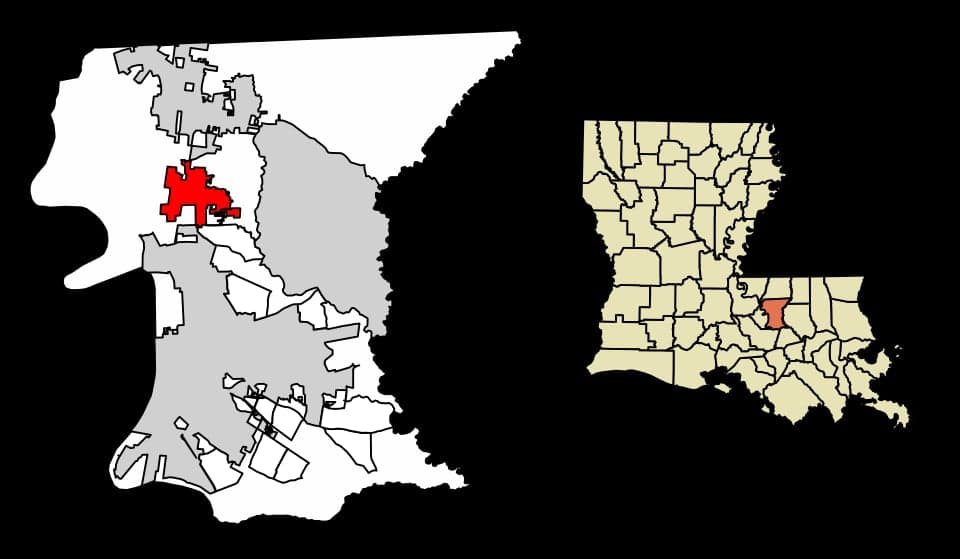
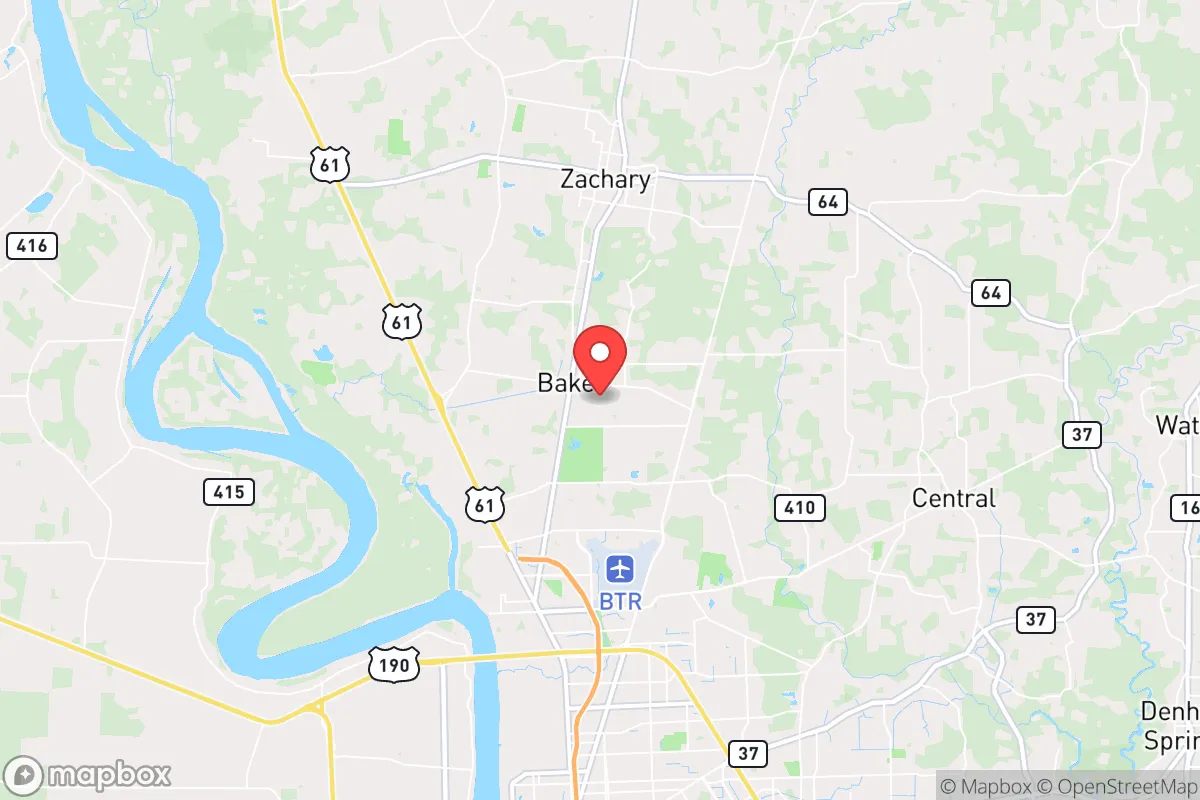
Photo: Wikipedia
Demographics of Baker, LA
Affluence Level in Baker, LA
A low-income area with significant economic hardship. Household wealth and educational attainment are well below national averages.
People of Baker, LA
The people of Baker, Louisiana, today form a densely concentrated, predominantly African American community of 12,322 residents, with a striking 86.4% Black population and a foreign-born share of just 0.1%—one of the lowest in the Baton Rouge metro area. The city is characterized by strong multigenerational ties, a modest college attainment rate of 20.2%, and a distinctly insular character shaped by decades of suburbanization and racial sorting. Baker’s identity is rooted in working-class stability, local church networks, and a deep sense of place, with residents overwhelmingly tracing their families’ arrival to the post-1965 era of white flight and subsequent Black suburban settlement.
How the city was settled and grew
Baker was not a plantation-era settlement or river port; it is a genuine 20th-century suburb, incorporated in 1945 as a small, predominantly white bedroom community for Baton Rouge’s industrial workforce. The original population was drawn by the expansion of the ExxonMobil Baton Rouge Refinery and the region’s petrochemical boom during and after World War II. Early white settlers—mostly of Southern Protestant stock—built modest homes in what are now the Baker Heights and Brownsfield neighborhoods, areas that remained overwhelmingly white through the 1960s. The city’s growth was slow and steady through the 1950s and early 1960s, with the population hovering around 3,000 and the racial composition nearly 100% white. No significant immigrant or minority wave arrived during this period; Baker was a deliberately homogeneous suburb, its housing stock and zoning designed for white nuclear families employed in the region’s oil, chemical, and construction sectors.
Modern era (post-1965)
The 1965 Hart-Cellar Act had negligible direct effect on Baker—the city’s foreign-born population remains near zero today. Instead, the transformative demographic shift came from domestic migration: the rapid suburbanization of Black families leaving Baton Rouge’s inner-city neighborhoods, particularly after school desegregation orders in the 1970s. White flight accelerated sharply in the 1970s and 1980s, with white families moving to newer exurbs like Zachary and Central. Black families, many from Baton Rouge’s North Baton Rouge and Scotlandville areas, moved into Baker’s existing housing stock, concentrating in the Maplewood and Park Forest subdivisions. By 1990, Baker’s population had grown to roughly 13,000, and the racial composition had flipped to over 70% Black. The Oak Hills Place and West Baker neighborhoods became the primary landing zones for middle-class Black families seeking affordable single-family homes and lower crime rates than central Baton Rouge. The Hispanic population remains minimal at 2.0%, concentrated in a handful of households near the Baker Boulevard commercial corridor, while East/Southeast Asian and Indian-subcontinent communities are statistically absent. The city’s 0.1% foreign-born share—roughly 12 individuals—means virtually no recent immigrant presence, making Baker one of the most ethnically homogeneous small cities in the Gulf South.
The future
Baker’s population trajectory points toward continued racial homogenization, not diversification. The city lost roughly 1,000 residents between 2010 and 2020, and the 2024 estimate of 12,322 suggests further slow decline. The Black share has stabilized above 85%, but the city is not tribalizing into distinct ethnic enclaves—it is simply becoming more uniformly African American as the tiny white and Hispanic populations age out or leave. No significant immigrant community is growing; the 0.1% foreign-born share has been flat for decades. The next 10-20 years will likely see Baker remain a predominantly Black, low-immigration suburb with a slowly aging population. The college attainment rate of 20.2%—well below the Louisiana average of roughly 26%—suggests limited in-migration of highly educated professionals, who tend to favor Baton Rouge’s newer suburbs or the city itself. The most plausible demographic shift is a modest increase in Hispanic households, mirroring statewide trends, but from a very low base. Baker is not becoming a melting pot; it is consolidating its existing character.
For someone moving in now, Baker offers a stable, culturally cohesive community where nearly nine in ten neighbors share the same racial and regional background, and where the pace of change is glacial. The trade-off is minimal diversity, very low immigration-driven dynamism, and a shrinking tax base that challenges public services. This is a place for those who value deep local roots and predictability over demographic flux or global connectivity.

* Values derived from national, state, county, city and local statistics and may differ in a specific area. Last updated: 2026-05-01T03:40:57.000Z
Narrative content on this page is AI-generated and may contain mistakes. Verify any details that matter before acting on them.
ReloMaps may earn a commission from affiliate links at no extra cost to you.

