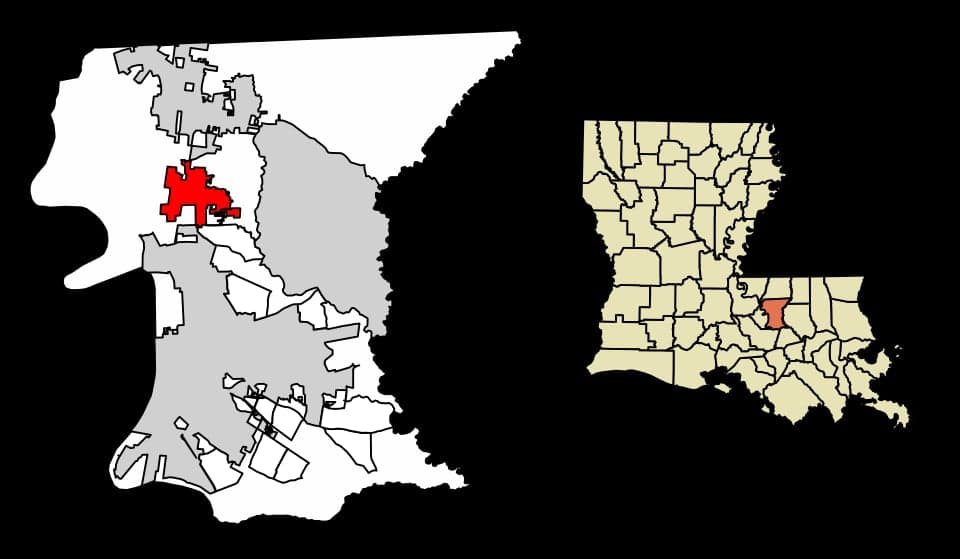
Photo: Wikipedia
Political ClimatePolitical Climate in Baker, LA
District shown is the primary district for this city’s centroid. Cities may span multiple districts.
Local Political AnalysisPolitical Analysis of Baker, LA
Baker, Louisiana, sits in a political landscape that’s been shifting under our feet. For a long time, this was a reliably conservative town, but the Cook PVI of D+8 tells you the official scorecard now leans Democrat. That’s not the whole story, though. The real picture is a tug-of-war between the old-school values a lot of us grew up with and the creeping influence of Baton Rouge’s more progressive politics. You see it in local elections and the way folks talk at the hardware store—there’s a quiet, stubborn resistance to the idea that the government in the capital knows what’s best for us here.
How it compares
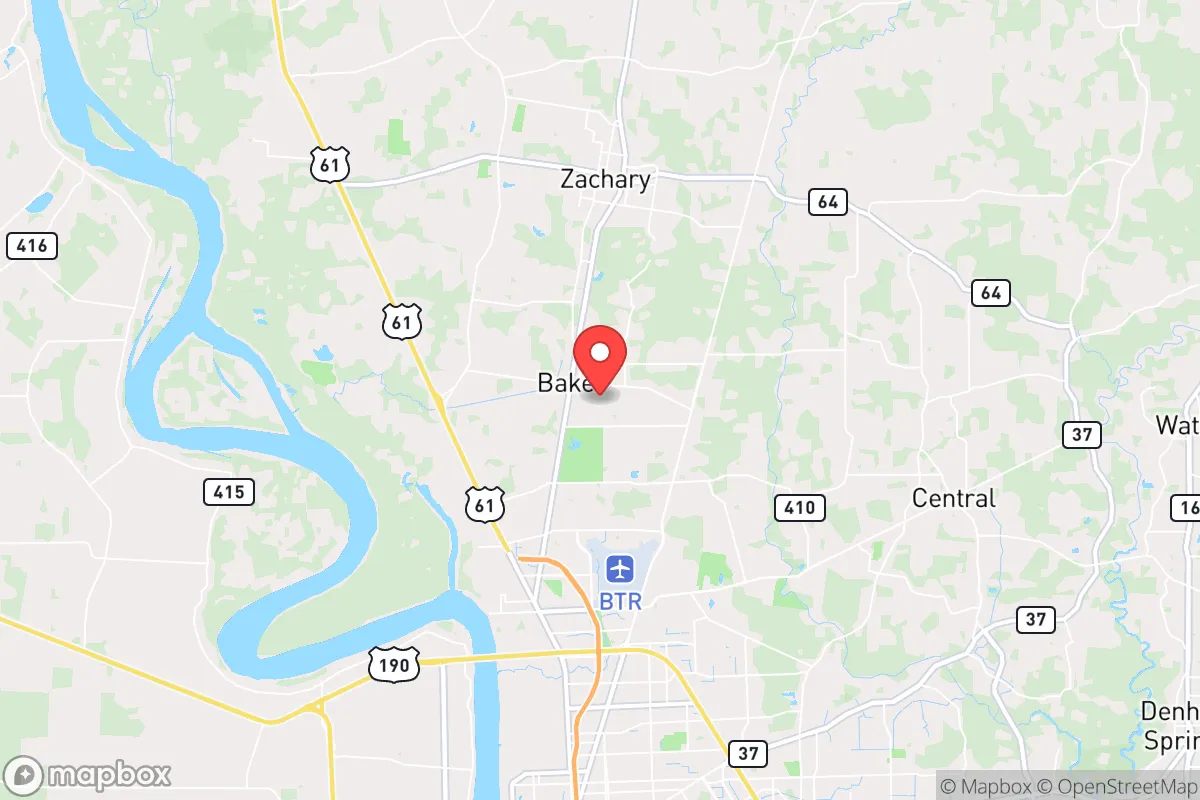
Drive ten minutes south into Baton Rouge proper, and you’re in a different world—a blue stronghold where the city-parish government has been pushing policies that feel like they’re written by people who don’t own a pickup truck. Compare that to places like Zachary or Central, just east of us, which vote solidly red and have kept their local governments focused on low taxes and personal liberty. Baker is the awkward middle child: we’re close enough to Baton Rouge to feel its political gravity, but far enough that a lot of us still remember when the biggest worry was potholes, not which bathroom your kid uses at school. The contrast is stark—our neighbors in East Baton Rouge Parish have seen property taxes creep up and zoning rules tighten, while we’ve fought to keep that kind of overreach at bay. It’s not easy, though. Every election cycle, there’s a push from the metro area to “harmonize” policies, which is just a fancy word for telling us how to live.
What this means for residents
For the average family here, the political climate means you have to stay vigilant. The biggest red flag is how quickly local government can adopt Baton Rouge’s playbook—like when they tried to push through a noise ordinance that would’ve made it a hassle to work on your own car in your driveway on a Saturday. That kind of thing gets shot down, but it keeps coming back. The school board is another battleground: there’s constant pressure to bring in “equity” programs that sound nice but often mean more bureaucracy and less local control over what your kids are taught. If you value the Second Amendment, you’ll notice the city council occasionally flirts with “safety” measures that feel like a backdoor to restrictions. The silver lining is that the community is tight-knit. People show up to meetings, and there’s a strong network of folks who remember the old Baker—a place where you could live your life without a permit for everything. The long-term worry is that as Baton Rouge expands, its politics will swallow us whole unless we keep pushing back.
Culturally, Baker still holds onto some distinctions that set it apart. You won’t find the same kind of woke activism here that you see in New Orleans or even parts of Baton Rouge. The local churches are still the backbone of the community, and the annual festivals are about food and family, not political statements. But there’s a creeping change—more signs for “inclusive” events and a quiet push to rebrand the town as “progressive.” For those of us who’ve been here a while, it feels like a slow erosion of the freedom to just be left alone. The policy that really gets under my skin is the way the parish has started using federal grants to fund “community outreach” programs that feel more like surveillance than help. If you’re thinking of moving here, know that you’ll have to pick a side: either you’re okay with the government getting its nose into your business, or you’re ready to fight to keep Baker the way it was. I know which side I’m on.

State Political ClimatePolitical Climate in Louisiana
State Political AnalysisPolitical Environment in the State
Louisiana has long been a reliably conservative state in federal elections, voting Republican in every presidential contest since 2000, but its political climate is far more complex than a simple red-state label suggests. The state’s dominant coalition is a mix of culturally conservative Cajun and Protestant voters, combined with a powerful business lobby that keeps taxes and regulations relatively low, though a strong Democratic presence in New Orleans and Baton Rouge creates persistent tension. Over the last 10-20 years, the state has shifted from a competitive purple state—where Democrats held many local offices—to a solidly Republican stronghold, driven by white working-class voters abandoning the national Democratic Party over cultural and energy policy issues.
Urban vs. rural divide
The political map of Louisiana is a textbook case of the urban-rural split. The New Orleans metro area, including Orleans Parish and Jefferson Parish, is the state’s Democratic stronghold, with Orleans consistently voting 80%+ Democratic in recent presidential elections. Baton Rouge, home to the state capital and Louisiana State University, is more competitive but still leans Democratic in city limits, while its suburbs like Prairieville and Denham Springs are deeply red. Lafayette, the heart of Cajun country, is reliably conservative, though the city itself has a small but vocal progressive contingent. The rural north—places like Shreveport, Monroe, and Alexandria—is overwhelmingly Republican, with many parishes voting 70-80% for Trump in 2020. The real political action is in the suburban ring around New Orleans, where Jefferson Parish has been steadily trending redder as white families move to places like Metairie and Kenner, flipping formerly Democratic precincts.
Policy environment
Louisiana’s policy environment is a mixed bag for conservatives. On the plus side, the state has no personal property tax on vehicles or boats, and its homestead exemption keeps property taxes among the lowest in the South—around 0.5% of assessed value on average. The corporate tax rate was cut from 8% to 7.5% in 2021, and the state has a right-to-work law, making it attractive for business. However, the sales tax is high—statewide 4.45%, but with local add-ons, it can hit 11% in New Orleans. Education policy is a bright spot: Louisiana has a robust school choice program, including the Louisiana Scholarship Program and charter schools, especially in New Orleans, which has one of the highest percentages of charter school students in the nation. Healthcare is more complicated—the state expanded Medicaid under the Affordable Care Act in 2016, a move many conservatives opposed, but it has not led to the fiscal disaster some predicted. Election laws are solid: voter ID is required, and the state has no no-excuse absentee voting, though mail-in voting is allowed for specific reasons like age or disability.
Trajectory & freedom
On the freedom front, Louisiana has been moving in a decidedly positive direction over the last five years. The state passed a constitutional carry law in 2024, allowing permitless concealed carry for anyone 18 or older who can legally possess a firearm—a major win for Second Amendment advocates. Parental rights were strengthened with the 2023 “Parents’ Bill of Rights,” which requires schools to notify parents about curriculum changes and medical services. On medical autonomy, the state banned COVID-19 vaccine mandates for state employees and contractors in 2022, and in 2024, it passed a law prohibiting mask mandates in schools and government buildings. Property rights got a boost with the 2023 “Takings” law, which requires the state to compensate landowners for any regulatory action that reduces property value by more than 20%. However, the state still has a high incarceration rate—second in the nation—which some see as government overreach, though efforts at criminal justice reform have stalled. The biggest red flag is the state’s reliance on oil and gas revenue, which makes it vulnerable to federal energy policy shifts, but the legislature has been proactive in preempting local bans on fossil fuel production.
Civil unrest & political movements
Louisiana has seen its share of political flashpoints. The 2016 “Alton Sterling” protests in Baton Rouge and the 2020 George Floyd demonstrations in New Orleans were significant, but they were largely contained to urban centers and did not spiral into the kind of sustained unrest seen in Portland or Seattle. The most organized activist movements are on the right: the Louisiana Firearms Coalition is a powerful grassroots group that successfully pushed constitutional carry, and the Louisiana Family Forum is a major force in education policy, advocating for school choice and against critical race theory. Immigration politics are relatively quiet—Louisiana is not a border state, and the state has a 2011 law requiring local law enforcement to cooperate with federal immigration authorities, with no sanctuary cities. There was a brief flurry of election integrity concerns after 2020, but the Republican-controlled legislature passed a 2021 law requiring stricter signature verification for mail-in ballots, which largely satisfied critics. Secession rhetoric is minimal—Louisiana is too dependent on federal disaster aid and energy revenue to seriously entertain that talk.
Projection
Over the next 5-10 years, Louisiana is likely to become even more conservative, but with a twist. The in-migration pattern is not as dramatic as Texas or Florida, but the state is seeing a steady influx of retirees from the Midwest and Northeast, drawn by low property taxes and warm weather. These newcomers tend to be culturally conservative but fiscally moderate, which could push the state toward a more pragmatic Republicanism. The biggest demographic shift is the continued exodus of young, educated liberals from New Orleans to places like Austin or Atlanta, while rural areas are aging and shrinking. This means the Republican majority will grow, but the party will face internal tension between the business-friendly, Chamber of Commerce wing and the more populist, anti-establishment faction. The wild card is climate change—if hurricanes become more frequent and severe, the state could see a net outflow of population, which would accelerate the conservative tilt as the remaining population is older and more rural. A new resident moving in now should expect to find a state that is reliably red, with low taxes and strong gun rights, but with a persistent undercurrent of corruption and inefficiency in state government that frustrates even the most loyal conservatives.
For a conservative individual or family considering a move, Louisiana offers a solid foundation: low property taxes, strong school choice, constitutional carry, and a culture that values independence and self-reliance. The trade-offs are a high sales tax, a sometimes dysfunctional state bureaucracy, and the ever-present risk of hurricanes. If you can stomach the humidity and the occasional political circus in Baton Rouge, you’ll find a state that largely leaves you alone to live your life as you see fit—which is more than you can say for many places these days.
* Values derived from national, state, county, city and local statistics and may differ in a specific area. Last updated: 2026-05-01T03:40:57.000Z
Narrative content on this page is AI-generated and may contain mistakes. Verify any details that matter before acting on them.
ReloMaps may earn a commission from affiliate links at no extra cost to you.

