Photo: Wikipedia
Personal Sovereignty in Baker, LA
Strong independent fundamentals that actively favor personal liberty and low regulation.
What does Personal Sovereignty tell us?
Personal Sovereignty measures your capacity for self-reliance and independence with minimal government friction. Higher scores mean fewer barriers between you and the way you want to live... but it assumes you have the space you need and good neighbors.
What does this tell us?
Personal Sovereignty measures your capacity for self-reliance and independence with minimal government friction. Higher scores mean fewer barriers between you and the way you want to live... but it assumes you have the space you need and good neighbors.
State Policy
Energy independence: Net exporter (280% of energy produced in-state)
Personal Liberty
Homesteading

Personal Liberty Analysis
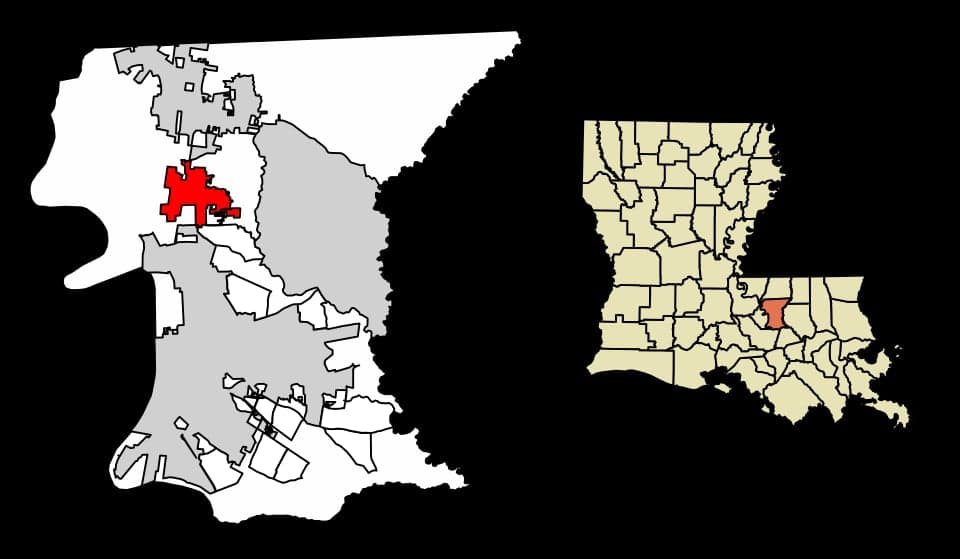
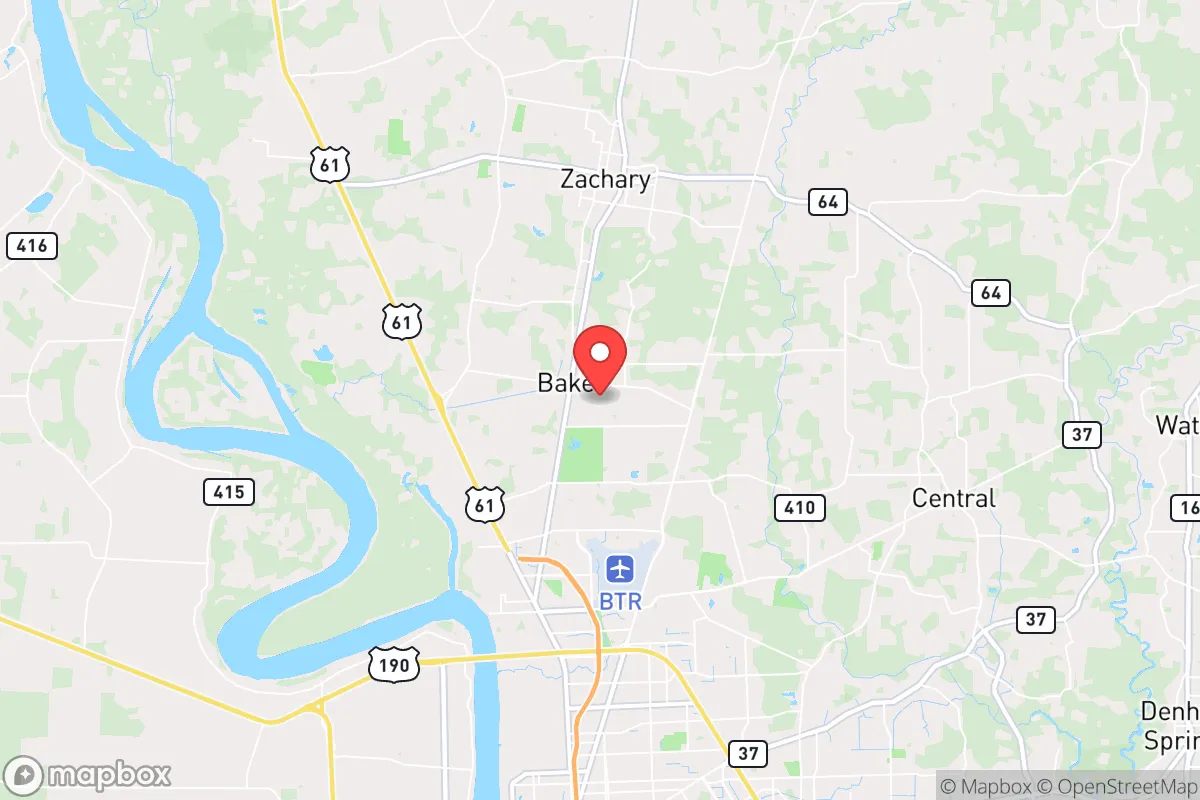
Baker, Louisiana, offers a personal sovereignty environment that is notably stronger than many other parts of the country, but it is not without its constraints. As a small city in East Baton Rouge Parish, Baker benefits from Louisiana’s generally pro-liberty state laws while being subject to the regulatory reach of a larger parish government. For those with a survivalist or prepper mindset, the key trade-off here is between the state’s relatively light touch on firearms, property rights, and taxation versus the local zoning and building codes that can complicate off-grid living. The overall autonomy picture is favorable for single individuals and parents who prioritize self-defense, homeschooling, and low taxes, but it requires careful navigation of parish-level bureaucracy.
Tax burden and regulatory posture: How Louisiana’s policies affect your wallet and freedom
Louisiana’s tax structure is a mixed bag for those seeking maximum personal sovereignty. The state has no property tax on vehicles or business inventory, which is a direct win for self-reliance—your truck, tools, and emergency supplies aren’t taxed annually. However, the state income tax rate is a flat 4.25% as of 2026, and combined state and local sales taxes in Baker can reach around 9.5% (state 4.45% plus local rates). That sales tax hits hard on gear, ammo, and bulk supplies. On the regulatory side, Louisiana is a “right-to-work” state, meaning no forced union membership, and it has no state-level occupational licensing for many trades—you can fix your own generator or build a chicken coop without a government permit. But East Baton Rouge Parish enforces building codes and permits for new structures, including sheds over 200 square feet, which can frustrate those wanting to erect a bunker or workshop without paperwork. The state’s homestead exemption protects up to $75,000 of your primary residence’s assessed value from property taxes, a solid buffer for homeowners. Overall, the tax burden is moderate, but the regulatory posture is permissive at the state level and moderately restrictive at the parish level—a common tension in the South.
Self-defense and gun law specifics: What you can carry, store, and use in Baker
Louisiana is a strong Second Amendment state, and Baker residents enjoy some of the most permissive gun laws in the country. The state has constitutional carry—no permit required for open or concealed carry of a handgun for anyone 18 or older who can legally possess a firearm. This is a major sovereignty win: you can strap up without asking the government for permission. There is no state-level magazine capacity ban, no assault weapon ban, and no waiting period for purchases. Stand-your-ground and castle doctrine laws are fully in effect, meaning you have no duty to retreat before using deadly force in your home, vehicle, or any place you have a right to be. For preppers, this means you can stockpile rifles, shotguns, and ammunition without arbitrary limits. The only notable restriction is that carrying a firearm in a vehicle without a permit is legal only if the firearm is “not readily accessible”—a concealed carry permit (easily obtained via a 9-hour course) removes that ambiguity. Baker itself has no local gun ordinances beyond state law, so you’re not dealing with city-level bans. For parents, this means you can teach your kids firearm safety and train them on your property without fear of overreach. The legal environment here is designed to let you defend your life and property on your own terms.
Self-reliance and homesteading viability: Lot sizes, zoning, and off-grid feasibility
Baker’s zoning and lot sizes offer moderate potential for homesteading, but off-grid living faces real hurdles. Residential lots in the city proper average 0.25 to 0.5 acres, which is enough for a large garden, a few chickens, and a small workshop, but not for livestock or significant acreage. The city allows backyard chickens (hens only, no roosters) with a permit, and beekeeping is allowed with registration. However, East Baton Rouge Parish requires all dwellings to be connected to the municipal water and sewer system—no well water or septic tanks are permitted within city limits. This kills the off-grid dream for anyone wanting to disconnect from utilities. Rainwater collection is legal but must not create mosquito breeding grounds, and solar panels are allowed but must meet building codes. For those willing to move just outside city limits into unincorporated areas of the parish, lot sizes jump to 1-5 acres, and you can drill a well and install septic. The parish also has no county-level zoning in many rural pockets, so you can build a metal shop, store supplies, and raise goats without permits. The trade-off is that you’ll be farther from Baker’s schools and stores, but for a prepper, that distance is a feature, not a bug. The viability of self-reliance is high if you choose the right parcel—inside Baker, it’s limited; outside, it’s wide open.
Personal liberties: Parental rights, medical autonomy, speech, and property
Louisiana is a strong state for parental rights and medical autonomy, which directly impacts sovereignty for families. The state has a robust homeschool law—you simply submit a “home study” application to the Board of Elementary and Secondary Education, and you’re free to teach your kids without state curriculum mandates or testing requirements. This is a huge win for parents who want to control their children’s education and shield them from government indoctrination. Medical autonomy is also solid: Louisiana has no state-level vaccine mandate for adults or children (though schools require standard childhood vaccines for attendance, with religious and medical exemptions available). The state passed a law in 2024 prohibiting COVID-19 vaccine mandates by private employers, a clear signal of respect for bodily autonomy. On speech, Louisiana has no “hate speech” laws that criminalize political or religious expression, and the state’s constitution explicitly protects the right to keep and bear arms as a “fundamental right.” Property rights are strong under Louisiana’s civil law system, which favors the landowner in disputes—eminent domain is limited to public use, and the state has no statewide rent control or land-use planning that restricts what you do on your own land. The only real friction is the parish-level building codes and the city’s utility requirements, which can feel like government overreach to a sovereignty-minded individual. Overall, Baker sits in a state that respects personal liberties more than most, with the caveat that local ordinances can nibble at the edges.
In the broader context of personal sovereignty, Baker, LA, ranks favorably compared to coastal states like California or New York, where taxes, gun laws, and parental rights are far more restrictive. It is roughly on par with other Southern small towns in Texas or Mississippi, but with the advantage of Louisiana’s constitutional carry and strong homestead exemption. The biggest sovereignty threats here are the parish-level building codes and the requirement to hook into municipal utilities, which limit true off-grid independence. For a single individual or parent with a prepper mindset, the calculus is simple: live inside Baker for proximity to schools and jobs, but accept that you’ll be on the grid and subject to permits. Or buy a few acres just outside city limits, where you can build a self-sufficient compound with minimal government interference. The state’s laws give you the foundation; your choice of location determines how much of that sovereignty you can actually exercise.

* Values derived from national, state, county, city and local statistics and may differ in a specific area. Last updated: 2026-05-01T03:40:57.000Z
Narrative content on this page is AI-generated and may contain mistakes. Verify any details that matter before acting on them.
ReloMaps may earn a commission from affiliate links at no extra cost to you.

