Photo: Wikipedia
Quality of Life in Baker, LA
A high quality of life with strong walkability, manageable living costs, healthy neighborhood signals, and solid amenity access.
What does Quality of Life tell us?
Quality of Life blends cost of living, nearby amenities, socioeconomic signals, and neighborhood character. City-level scores represent the whole municipality; individual neighborhoods can differ.
What does this tell us?
Quality of Life blends cost of living, nearby amenities, socioeconomic signals, and neighborhood character. City-level scores represent the whole municipality; individual neighborhoods can differ.
Cost of Living
26% below national average
The Real Cost of Living in Baker, LA for 2026
| Tier | Individual | Family (4) |
|---|---|---|
| Survival | $16k | $31k |
| Comfortable | $29k | $42k |
| Luxury | $87k+ | $134k+ |
| Elite (Top 5%) | $102k+ | $158k+ |
142%
The Area Signal
A metric tracking the socioeconomic signals of the area.
Hobbies
Explore the areaGroceries
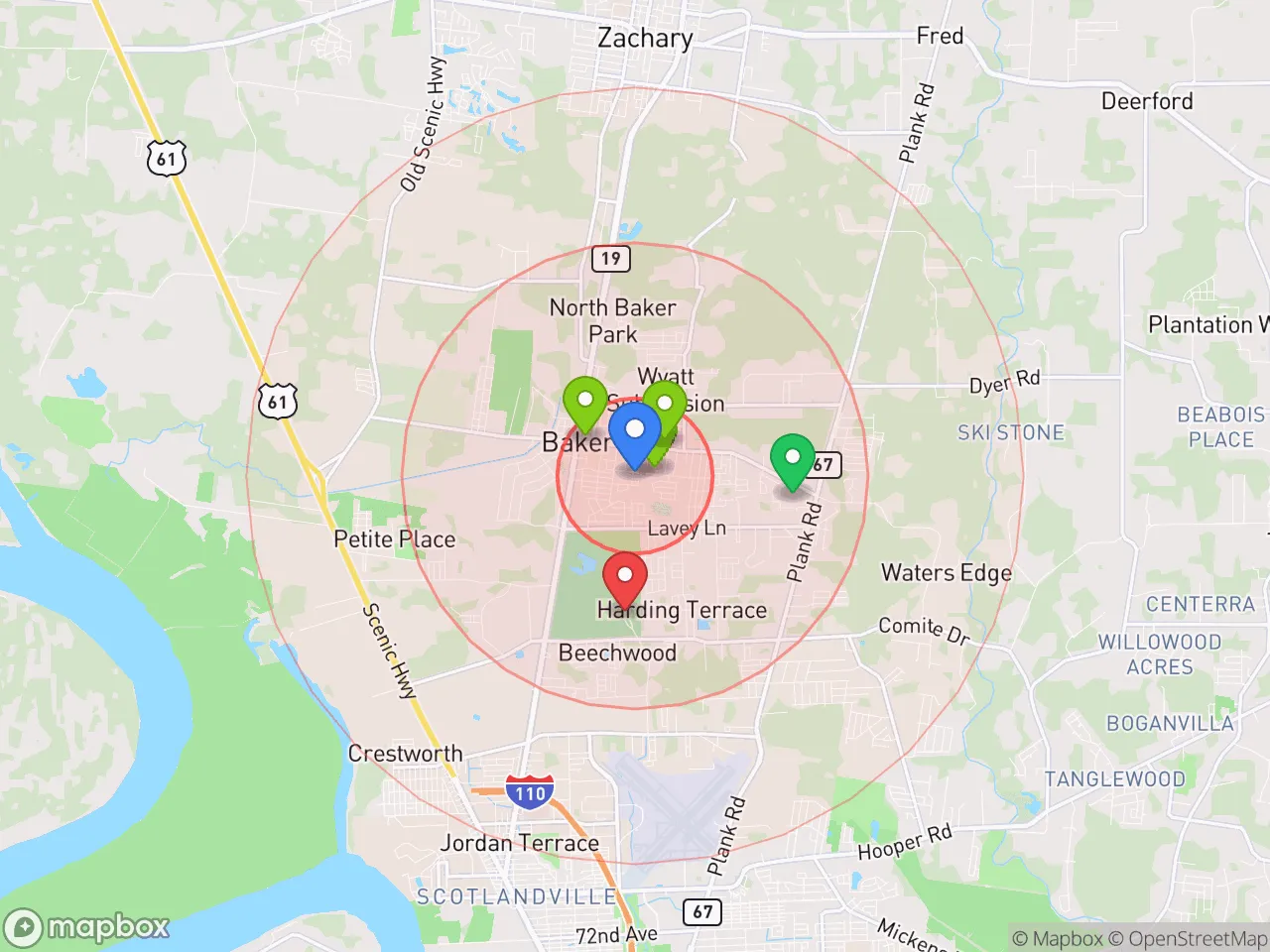
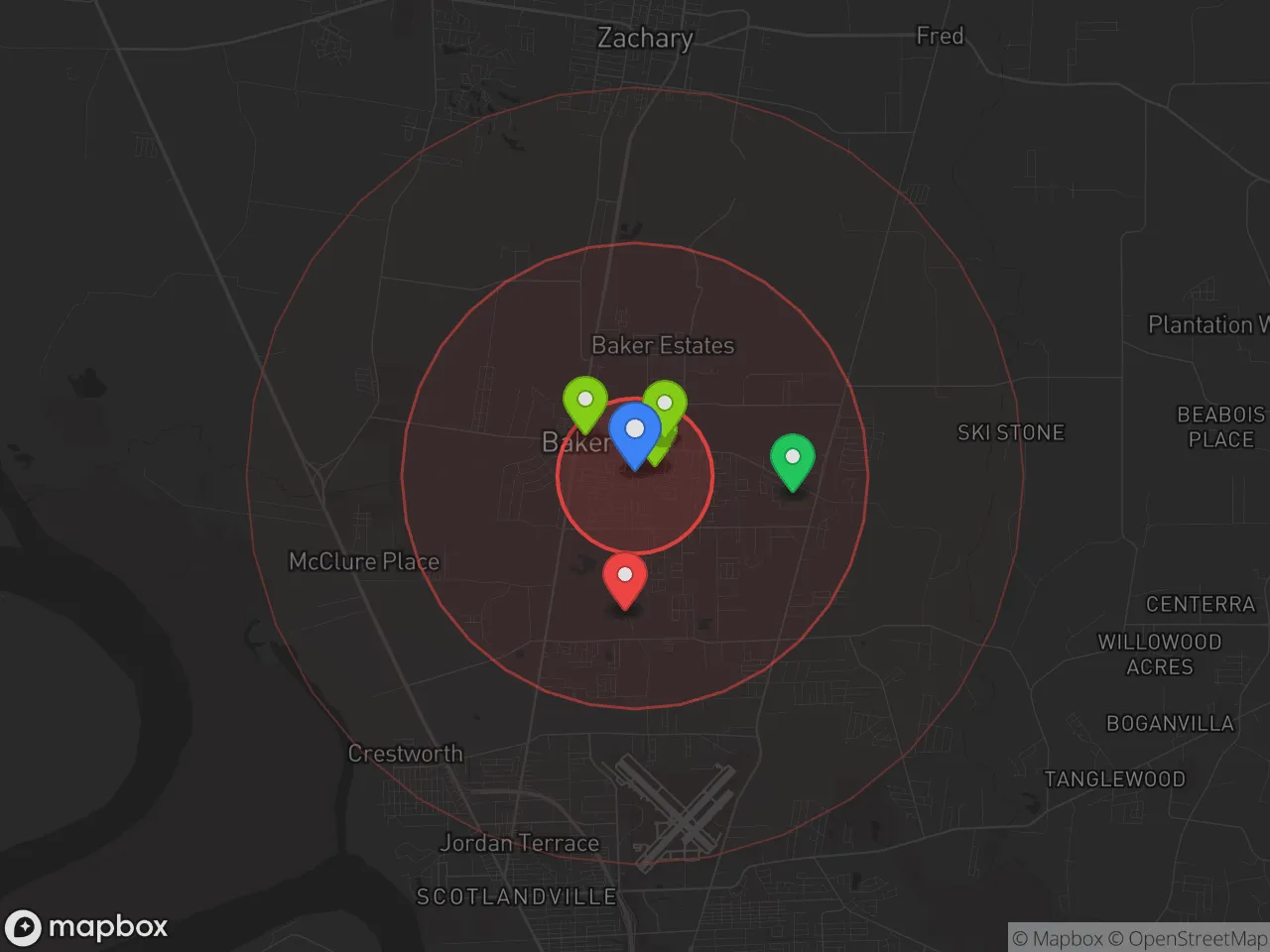
3 within 10 miles
Gas
20 within 10 miles
Hospital
20 within 20 miles
Airport
IAH — George Bush Intercontinental
Post Office
USPS — Baker, LA
Critical Amenities
Quality-of-Life Analysis
Baker, Louisiana, offers a notably affordable quality of life that attracts families and long-term residents seeking space and lower costs without complete isolation from urban job centers. With a cost of living index of 74—well below the national average of 100—the city provides a financial cushion that is increasingly rare in the Baton Rouge metro area. The population skews toward working-class homeowners and retirees who value stability over nightlife, creating a quiet, community-oriented atmosphere.
Cost of living, housing affordability, and how Baker compares to Baton Rouge
Baker’s housing market is the primary driver of its low cost of living. The median home value sits at $146,700, roughly half the Baton Rouge metro median of around $240,000, making homeownership accessible for first-time buyers and those on fixed incomes. Median rent is $1,031, which undercuts nearby East Baton Rouge Parish averages by about 20%. However, this affordability comes with trade-offs: property tax rates in Baker (approximately 0.85% of assessed value) are slightly higher than in some surrounding unincorporated areas, and the housing stock includes a higher share of older, smaller homes built before 1980. The average commute of 25.2 minutes is manageable, with most residents driving west on US-61 or I-110 into Baton Rouge for work, though traffic on Plank Road can add 10–15 minutes during peak hours.
Local amenities, schools, and what daily life feels like in Baker
Daily life in Baker revolves around a small-town rhythm with limited but functional amenities. The city’s own school system, Baker School District, operates three schools (Baker Elementary, Baker Middle, and Baker High), which serve about 1,800 students. While test scores trail the state average—Baker High’s graduation rate hovers near 75%—the district offers smaller class sizes and after-school programs through the Baker Parks and Recreation Department. For shopping and dining, residents rely on a handful of local restaurants (like the family-owned Baker Seafood) and a Walmart Supercenter on Plank Road, with most entertainment and medical services requiring a 15-minute drive into Baton Rouge. The Baker Municipal Park provides sports fields, a walking track, and a community center, but the city lacks a dedicated public library or major hospital. Crime rates are a concern: Baker’s violent crime rate is roughly 1.5 times the national average, though property crime has declined about 12% since 2020, according to local police data.
Baker is best suited for budget-conscious families, retirees, and remote workers who prioritize low housing costs and a slower pace over urban amenities. The city’s affordability allows residents to save significantly compared to living in Baton Rouge proper, but it demands a tolerance for limited retail options, below-average public school performance, and a longer drive for specialized healthcare or cultural events. Those who value a tight-knit community where neighbors know each other and housing remains attainable will find Baker a practical, no-frills base within commuting distance of Louisiana’s capital.

Crime in Baker, LA
Crime rates similar to the national median for U.S. locations.
Violent CrimeViolent Crime Analysis
Property CrimeProperty Crime Analysis
Crime Analysis
Baker, Louisiana, a small city of roughly 13,000 residents just north of Baton Rouge, reports crime rates that are significantly elevated compared to both state and national averages. With a violent crime rate of 397.5 per 100,000 residents and a property crime rate of 1,118.1 per 100,000, the city faces public safety challenges that prospective residents should weigh carefully. These figures place Baker in a higher-risk category than many similarly sized communities in the region.
Crime in context
Baker’s violent crime rate of 397.5 per 100,000 is roughly 14% higher than the Louisiana state average and more than double the national median. Property crime, at 1,118.1 per 100,000, also exceeds the national benchmark by a wide margin. The city’s proximity to Baton Rouge—a metro area with its own elevated crime statistics—means Baker is part of a broader regional pattern of above-average criminal activity. As part of East Baton Rouge Parish, the local justice system operates under the same prosecutorial and judicial leadership as the larger metro area. Critics note that progressive district attorneys and judges in such jurisdictions, while focused on rehabilitation and reducing incarceration, can result in more offenders remaining on the street, which directly undermines public safety and victim justice. This ideological approach to prosecution and sentencing is a factor that contributes to the persistently high crime numbers seen across the parish.
What residents experience
For those living in Baker, the daily reality includes a heightened risk of both violent and property offenses. The property crime rate of 1,118.1 per 100,000 translates to a roughly 1 in 89 chance of becoming a victim of theft, burglary, or vehicle crime each year. Violent incidents—including assault, robbery, and homicide—occur at a frequency that makes them a tangible concern for families and individuals. Residents often report that property crimes like vehicle break-ins and home burglaries are the most common nuisances, while violent crime tends to be concentrated in specific areas and social contexts. The city’s police department maintains a visible presence, but limited resources and the broader parish-wide challenges with repeat offenders mean that prevention and response can be inconsistent.
Neighborhood-level variation
Safety in Baker is not uniform across the city. Neighborhoods closer to the city’s core and along major thoroughfares like Plank Road and Baker Boulevard tend to see higher concentrations of both property and violent crime. In contrast, quieter residential subdivisions on the city’s northern and western edges, such as those near the Zachary border, generally report lower incident rates. Gated communities and newer developments often have private security measures that further reduce risk. Prospective residents are advised to consult local crime mapping tools and speak with current residents about specific streets and blocks, as the difference between a safer pocket and a higher-risk area can be just a few blocks. Overall, Baker requires a cautious approach to personal safety, with an understanding that the metro-area justice system’s progressive leanings may not prioritize the deterrent effects that many residents seek.
* Values derived from national, state, county, city and local statistics and may differ in a specific area. Last updated: 2026-05-01T03:40:57.000Z
Narrative content on this page is AI-generated and may contain mistakes. Verify any details that matter before acting on them.
ReloMaps may earn a commission from affiliate links at no extra cost to you.

