Photo: Wikipedia
Strategic Assessment of Bayonne, NJ
High tactical risk. This location is likely close to major population centers, strategic targets, or sits in a high-disaster corridor. A retreat property and careful exit planning is required.
What does the Strategic Assessment tell us?
Our Strategic Assessment grades tactical survivability of an area. Major population centers, military targets, fallout zones, natural disasters, and border exposure all drive risk — lower exposure means a more defensible position in a crisis.
This is heavily inspired by Joel Skousen's Strategic Relocation book. Highly recommended you checkout the book ($)What does this tell us?
Our Strategic Assessment grades tactical survivability of an area. Major population centers, military targets, fallout zones, natural disasters, and border exposure all drive risk — lower exposure means a more defensible position in a crisis.
This is heavily inspired by Joel Skousen's Strategic Relocation book. Highly recommended you checkout the book ($)Strategic Pillars

Key Distances
Regional Safe Places
Below is our recommended "safe zones" in New Jersey and the surrounding area based on our strategic heuristics. For most people, it's unrealistic to live in a “safe zone” full-time due to work, family or other personal reasons. They tend to be more rural. However, many of these areas are perfect for second homes and retreat properties that double as a vacation home or even a short-term rental.
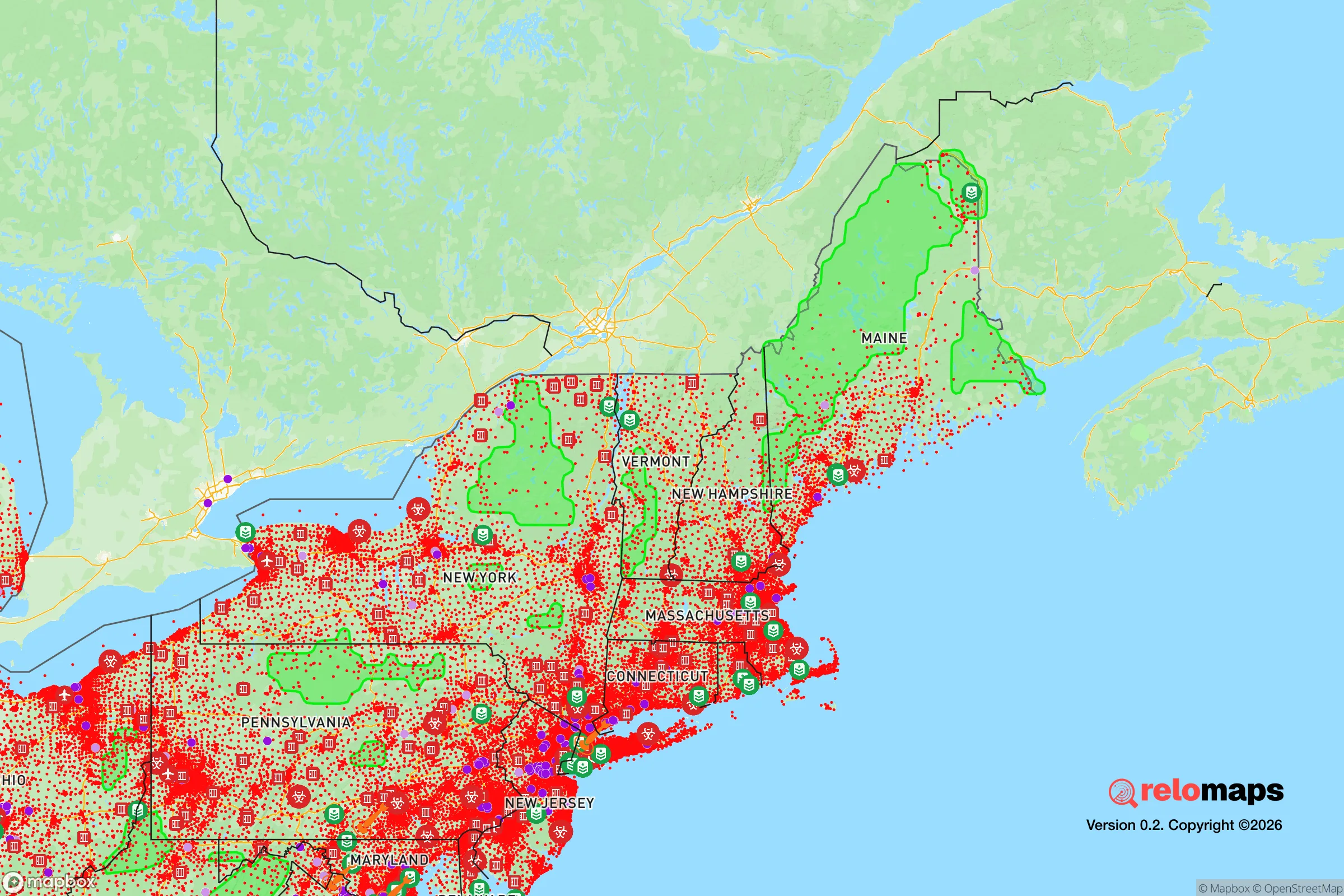
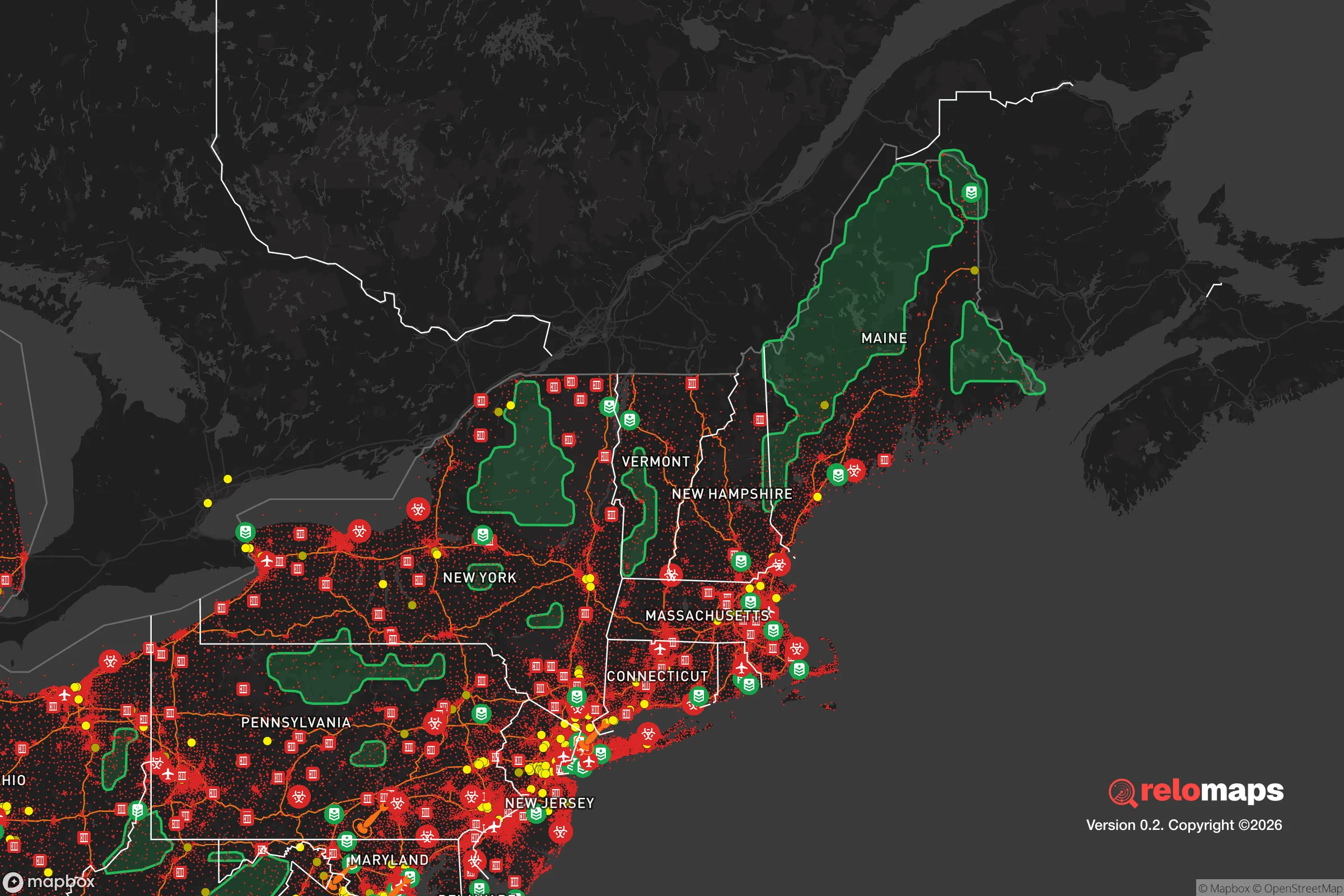


Important Note: For informational purposes only. This does not mean nothing bad ever happens in the green zones. Please use common sense. This is based on public data and modeled with AI. We tried to take a conservative approach but mistakes happen. We update this regularly as new information becomes available.
Solar Generator Recommendations
Backup power matters more here than in safer locations. We've picked three solar generators across budgets and capacity tiers — start with the budget unit if you only need a few essentials, or step up if you want to run a fridge and HVAC for days at a time.

Jackery Portable Power Station Explorer 300
Budget OptionPower on the Go: Weighing only 11 lbs, it's convenient to set up and store with book-sized foldable solar panels

BLUETTI Portable Power Station AC180
Designed for both indoor and outdoor scenarios, AC180 is highly capable as it has a robost capacity and continuous output power.

EF ECOFLOW DELTA Pro Ultra Power Station
Upgraded PickEcoFlow DELTA Pro Ultra is a whole-home energy system designed to grow with your family. Integrated with the Smart Home Panel 2, it scales to meet your evolving energy needs — keeping your home powered, intelligent, and secure through every stage of life.
We earn a commission, at no additional cost to you.
Strategic Assessment Analysis
Bayonne, New Jersey, sits in a precarious strategic position that demands a hard-eyed assessment for anyone serious about resilience and preparedness. Its location on a peninsula in New York Harbor offers undeniable geographic advantages, but those same features create severe vulnerabilities that a conservative prepper must weigh carefully. For a relocator prioritizing self-sufficiency and security in an era of potential civic unrest, mass casualty events, or large-scale disasters, Bayonne presents a mixed picture: it is a defensible choke point with access to maritime resources, yet it is also a high-density, high-target area within the blast radius of critical national infrastructure.
Geographic position and natural advantages for a prepared relocator
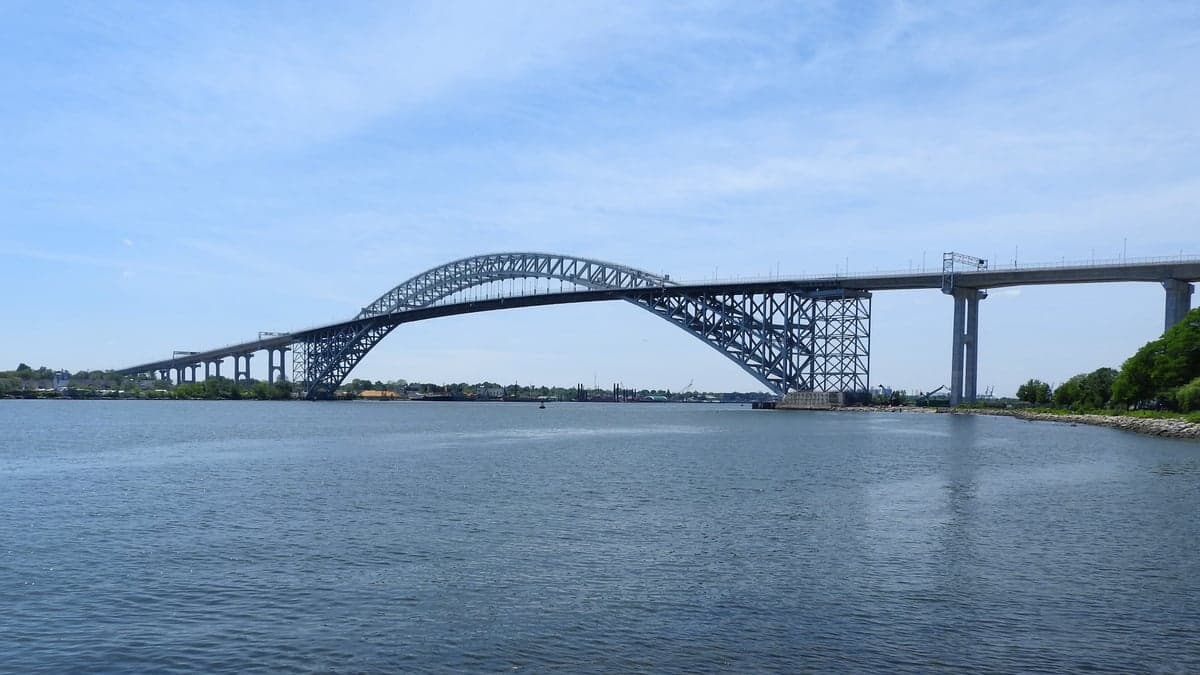
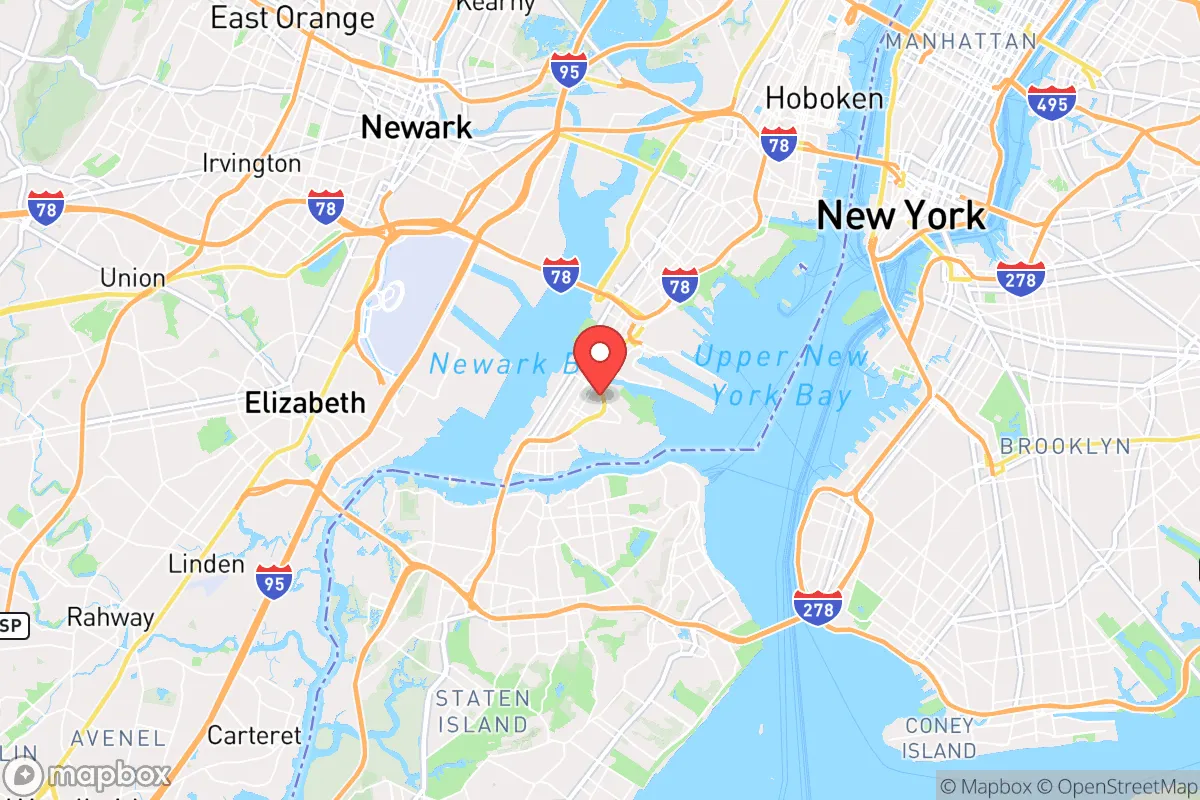
Bayonne’s peninsular geography—bounded by Newark Bay to the west, New York Bay to the east, and Kill Van Kull to the south—creates a natural defensive perimeter. Water on three sides limits ground-based approach vectors, meaning any civil unrest or organized threat would have to funnel through a narrow land bridge at the north end, near the Bayonne Bridge and the Port Jersey industrial area. This chokepoint can be monitored and, in extremis, controlled by a prepared community. The city’s elevation is generally low, averaging around 10 feet above sea level, but the presence of the Bayonne Golf Club and the former Military Ocean Terminal (now a mixed-use development) offers higher ground for observation and rally points. The Hudson River and Kill Van Kull provide direct access to the Atlantic Ocean, which is a critical advantage for maritime resupply, fishing, or evacuation if land routes become compromised. For a relocator, this means you are not landlocked: you have a blue-water escape route that most inland preppers lack. However, this same water access makes Bayonne a natural transit hub for shipping and military traffic, which draws attention in a crisis.
Risks, exposures, and proximity to fallout-relevant landmarks
The most glaring vulnerability is Bayonne’s proximity to New York City—less than 5 miles from Lower Manhattan as the crow flies. In any major event—whether a terrorist attack, a nuclear detonation, or widespread civil unrest—Bayonne would be in the immediate fallout zone, both physically and logistically. The city lies directly across the harbor from the Statue of Liberty and Ellis Island, and within 10 miles of the Port of New York and New Jersey, the largest container port on the East Coast. This port is a critical node in the national supply chain, making it a high-value target for adversaries or a flashpoint for labor unrest. Additionally, the Bayonne Bridge, which connects to Staten Island, is a key evacuation route that would likely be clogged or compromised in a crisis. The nearby Newark Liberty International Airport (8 miles west) and the Linden Airport (6 miles southwest) are additional risk multipliers—airports are common targets for both state and non-state actors. For a prepper, the density of population (roughly 71,000 people in 11 square miles) means that any disaster will produce a massive refugee flow from Manhattan and Jersey City, overwhelming local resources. The city’s industrial history, including former oil refineries and current chemical storage along the waterfront, also poses a toxic hazard in the event of a major fire or earthquake (though seismic risk is low).
Practical resilience for a relocator: food, water, energy, and defensibility
Bayonne’s practical resilience is a study in contrasts. On the positive side, the city has a robust municipal water supply sourced from the Newark Bay watershed, but this is a double-edged sword: the system is vulnerable to contamination from upstream industrial sites or saltwater intrusion during storm surges. A prepper should plan for at least two weeks of stored water per person, plus a high-quality filtration system (e.g., Berkey or Sawyer) capable of handling brackish water. Food security is weak—Bayonne has no significant agricultural land, and the few community gardens (like the one at 16th Street Park) are insufficient for a population of this size. You will need to rely on stored dry goods, fishing from the bay (though mercury levels in local fish are a concern), and barter networks. Energy infrastructure is similarly fragile: the city is served by PSE&G, and the grid is prone to outages during nor’easters and hurricanes. A whole-house generator with a 200+ gallon propane tank is non-negotiable, as is a solar panel setup for low-power electronics. Defensibility is the strongest card Bayonne holds. The narrow land bridge at the north end (the only road access from Jersey City) can be barricaded with vehicles or debris, and the waterfront provides natural barriers. The city’s street grid is mostly rectangular, which aids in sector-based security, but the high density of multi-family housing means you cannot easily secure a perimeter around a single-family home. A relocator should target the southern end of the peninsula (near 45th Street and south), where lots are larger and the Bayonne Bridge provides a secondary egress to Staten Island—though that route is itself a chokepoint. The presence of the Bayonne Medical Center (a Level II trauma center) is a plus for medical emergencies, but it would be overwhelmed in a mass casualty event.
The overall strategic picture for Bayonne is one of calculated risk. It is not a retreat location—it is a forward operating base for someone who needs to stay close to the economic opportunities of the New York metro area while maintaining a defensive posture. The water access and chokepoint geography are genuine advantages that a prepared individual can exploit, but the proximity to high-value targets, dense population, and industrial hazards demand a high level of readiness. For a conservative relocator who values self-reliance and community, Bayonne requires a serious investment in supplies, skills, and a network of like-minded neighbors. It is a location for those who understand that resilience is not about avoiding risk, but about managing it with clear eyes and a plan. If you are willing to put in the work, Bayonne can be a defensible anchor in an unstable region—but it is not a place for the unprepared or the faint of heart.

* Values derived from national, state, county, city and local statistics and may differ in a specific area. Last updated: 2026-04-29T22:59:41.000Z
Narrative content on this page is AI-generated and may contain mistakes. Verify any details that matter before acting on them.
ReloMaps may earn a commission from affiliate links at no extra cost to you.

