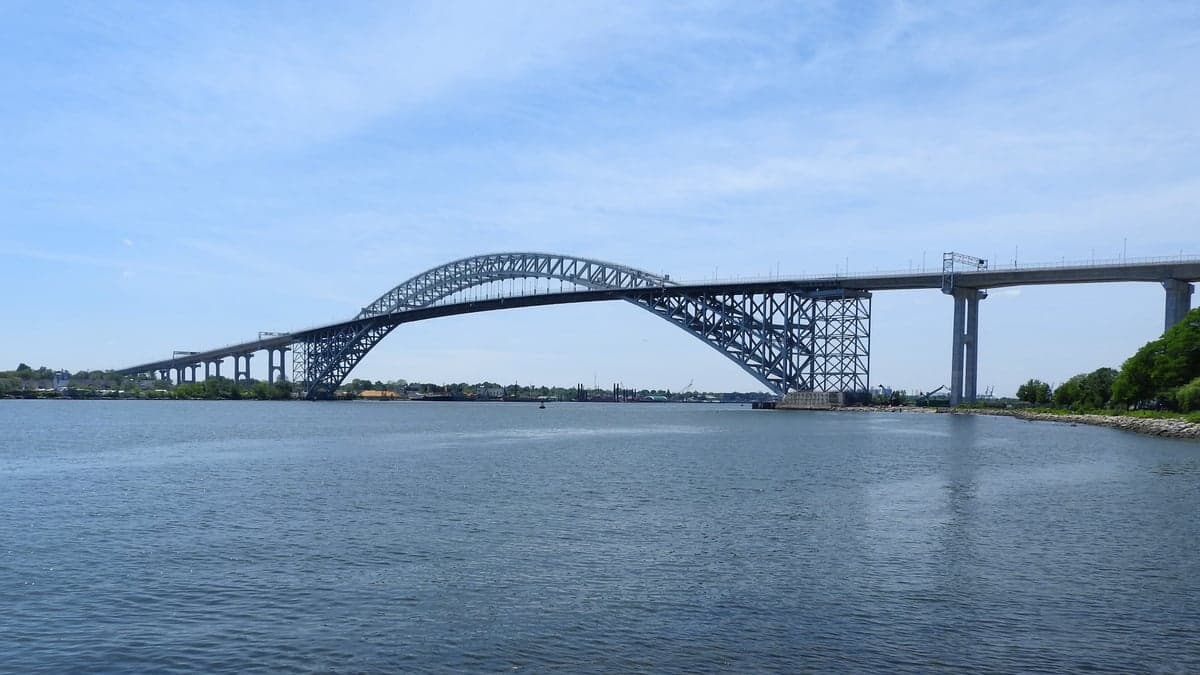
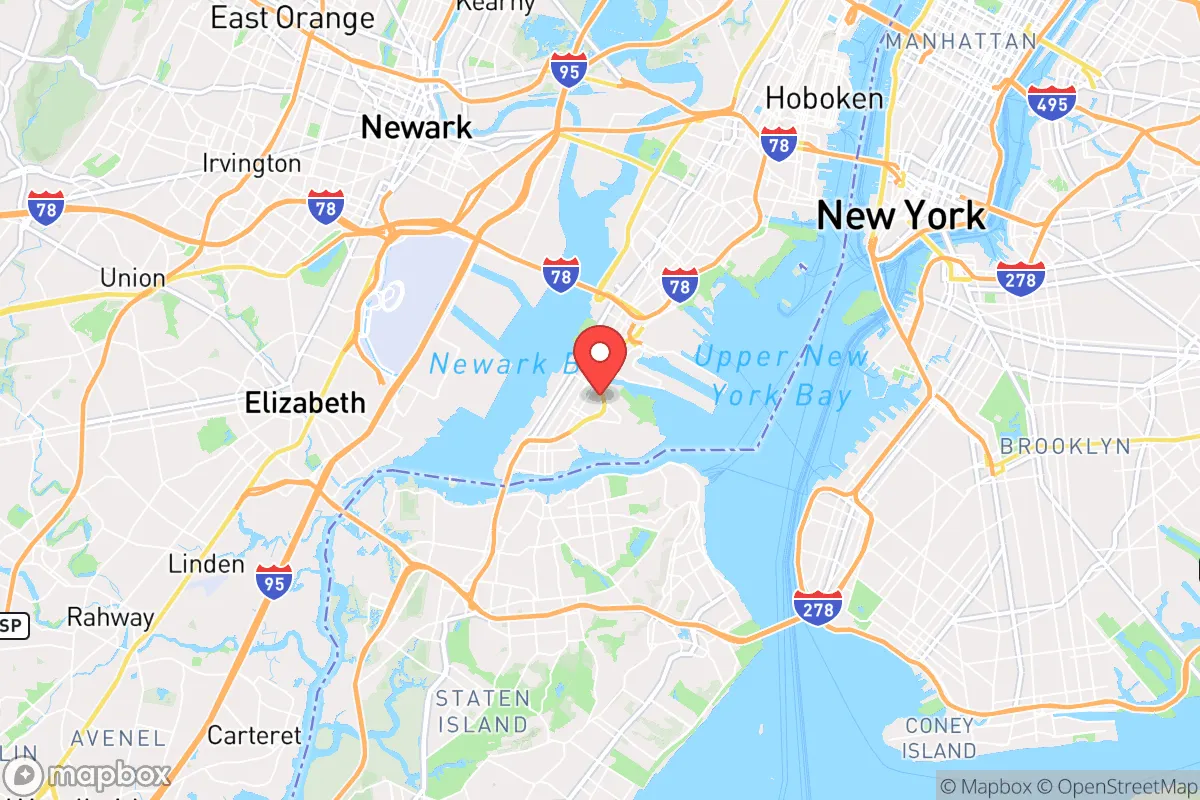
Photo: Wikipedia
Political ClimatePolitical Climate in Bayonne, NJ
District shown is the primary district for this city’s centroid. Cities may span multiple districts.
Local Political AnalysisPolitical Analysis of Bayonne, NJ
Bayonne, New Jersey, has a Cook PVI of D+15, meaning it leans heavily Democratic, but that number doesn't tell the whole story. This used to be a solid, blue-collar, union town where folks voted Democrat out of habit and loyalty to the old machine, not because they wanted the whole progressive package. Over the last decade, though, you've seen a real shift—the old-school, "leave me alone" Democrats are getting squeezed out by a younger, more activist crowd pushing policies that feel like they're coming straight from Jersey City or Hoboken, not from the working-class neighborhoods I grew up in.
How it compares
Drive ten minutes north into Jersey City, and you're in a completely different world—hyper-progressive, with rent control battles, sanctuary city status, and a city council that's all-in on social engineering. Bayonne used to be the sane alternative, the place where you could still buy a house without a trust fund and where the local government didn't meddle in every aspect of your life. But now, you're seeing the same playbook creep in: mask mandates that lingered longer than they should have, talk of "equity" audits for local businesses, and a school board that's more interested in DEI training than teaching kids how to read. Compare that to Staten Island, just across the bay, which votes reliably red and has a much more hands-off approach to local governance. The contrast is stark—Staten Islanders get to live their lives, while Bayonne residents are increasingly told what to do by people who think they know better.
What this means for residents
For the average guy or gal in Bayonne, this political drift means more rules, more fees, and less freedom. The city council has been pushing for stricter rental registration and inspection regimes that sound good on paper but end up as a backdoor way to control property rights. Small business owners are getting hit with new licensing requirements and zoning restrictions that make it harder to just open a shop and make a living. And if you're a parent, you've probably noticed the school curriculum getting a little more "woke" every year—less focus on the basics, more on social justice projects that make you wonder who's actually running the classroom. The property taxes are already among the highest in the state, and every new progressive initiative comes with a price tag that lands on your tax bill. It's not the Bayonne I remember, where the biggest political fight was over who got the pothole contract.
What the future looks like
Looking ahead, the trend is concerning. The old guard is retiring or getting voted out, and the new faces are coming from activist backgrounds, not from the local union halls or the VFW. You're seeing more calls for "defunding the police" rhetoric, even though Bayonne's crime rate is low and the cops here are actually decent. The housing market is being squeezed by state-level mandates for "affordable housing" quotas that force the city to approve high-density developments that change the character of quiet, single-family neighborhoods. And the school board elections are becoming battlegrounds for national culture war issues that have nothing to do with educating our kids. If you're a conservative or even a moderate who just wants to be left alone, you're going to feel increasingly out of step with the local government. The best advice I can give is to get involved in local politics—show up to council meetings, vote in school board elections, and support candidates who believe in limited government and personal responsibility. Otherwise, Bayonne will keep sliding into the same progressive abyss that's already swallowed up the rest of Hudson County.

State Political ClimatePolitical Climate in New Jersey
State Political AnalysisPolitical Environment in the State
New Jersey has long been a blue state, but it’s a specific kind of blue—a high-tax, high-regulation, deeply entrenched Democratic machine that has shifted further left over the past two decades. The state hasn’t voted Republican in a presidential race since 1988, and the GOP’s bench has shrunk to a handful of county-level strongholds. What was once a moderate, union-driven Democratic coalition has morphed into a progressive-dominated legislature that increasingly prioritizes government expansion over individual liberty. For a conservative considering relocation, the political climate here is less about winning elections and more about navigating a system that actively works against your values.
Urban vs. rural divide
The political map of New Jersey is a tale of two worlds. The northeastern corridor—Newark, Jersey City, Paterson, and Elizabeth—drives the state’s blue lean with massive, heavily Democratic urban populations. These cities are the engine of the machine, delivering 70-80% margins for Democrats. The suburbs of Bergen County and Essex County have also trended left, with once-competitive districts like the 7th and 11th now safely Democratic. In contrast, the rural and exurban areas—Sussex County, Warren County, and parts of Hunterdon and Salem—vote reliably Republican, often by 20-30 points. The Shore region (Monmouth and Ocean counties) is a mixed bag: Ocean County is a GOP stronghold, while Monmouth has swung from purple to blue in recent cycles. The divide is stark: drive 30 minutes west from Newark into Morris County, and you’ll find a different world of lower taxes and more conservative local governments, but those pockets are shrinking as the state’s population shifts north and east.
Policy environment
New Jersey’s policy environment is a case study in government overreach. The state has the highest property taxes in the nation, averaging over $9,500 annually, and a progressive income tax that tops out at 10.75% for earners over $1 million. The regulatory climate is hostile to business: the state’s Clean Energy Act and Environmental Justice Law impose costly mandates on new construction and industry. Education policy is dominated by the teachers’ union, with per-pupil spending exceeding $25,000—among the highest in the country—yet student outcomes are middling. Healthcare is heavily regulated, with a state-based exchange under the ACA and a public option bill that was debated in 2023 but hasn’t passed. Election laws are a sore point: the state has no-excuse mail-in voting, automatic voter registration, and same-day registration, which conservatives argue erodes election integrity. The Motor Vehicle Commission scandal in 2020, where non-citizens were found to have been registered to vote, only deepened distrust.
Trajectory & freedom
New Jersey is becoming less free by nearly any measure. The state’s 2022 gun law package—which banned carrying in “sensitive places” like parks and private businesses without explicit permission—was so restrictive it was partially struck down in federal court, but the legislature keeps pushing. Parental rights took a hit with the 2022 “Don’t Say Gay” law (actually a bill requiring schools to notify parents of LGBTQ+ curriculum, which was watered down and then vetoed by Governor Murphy). In 2023, the state passed a shield law protecting providers of gender-affirming care for minors, effectively making New Jersey a sanctuary for out-of-state families seeking treatments that are banned elsewhere. Property rights are under constant assault: the Mount Laurel Doctrine forces towns to build affordable housing, often overriding local zoning. Taxation is the biggest freedom-killer: the millionaire’s tax was made permanent in 2020, and a wealth tax on assets over $1 million was proposed in 2024 but hasn’t passed. The state’s COVID-19 mandates were among the longest-lasting in the nation, with school mask mandates not lifted until March 2022.
Civil unrest & political movements
New Jersey has seen its share of political flashpoints. The 2020 Black Lives Matter protests in Newark and Trenton were large but mostly peaceful, though looting occurred in Paterson. The state’s sanctuary policies are aggressive: the Immigrant Trust Directive (2018) limits local law enforcement cooperation with ICE, and the 2023 “Welcoming City” law prohibits municipalities from contracting with ICE detention facilities. Election integrity remains a hot-button issue: the 2020 vote-by-mail expansion led to widespread concerns about ballot harvesting, and a 2021 audit found thousands of duplicate registrations. The “New Jersey is a sanctuary state” debate flared up in 2023 when the state refused to extradite a man charged with murder in Texas. On the right, the New Jersey Firearms Coalition and NJ2AS have been active in lawsuits against the gun laws, and the “Parents’ Bill of Rights” movement has gained traction in suburban school boards like Westfield and Ridgewood. The “New Jersey Secession” movement is a fringe joke, but the “Move to Florida” sentiment is real—the state lost population in 2022 and 2023 for the first time in decades.
Projection
Over the next 5-10 years, New Jersey will likely get bluer and more expensive. The demographic trends are clear: the state’s population is aging, and young progressives are moving to the cities while conservatives flee to Florida, Texas, or the Carolinas. The 2024 election saw the state shift slightly right in some suburban areas, but the overall Democratic margin held. The 2025 gubernatorial election will be a key test: if a moderate Republican like Jack Ciattarelli wins, there might be a brake on the most extreme policies, but the legislature is veto-proof Democratic. Expect more gun control, more sanctuary policies, and more tax hikes. The “millionaire’s tax” will likely expand to cover lower income brackets, and a statewide rent control bill is on the horizon. The “Green New Deal” for New Jersey, with its electric vehicle mandates and net-zero goals, will drive up energy costs. For a conservative, the state will become a place where you pay more for less freedom—unless you can afford to live in a low-tax enclave like Hunterdon County or Morris County, and even those are under pressure.
For a new resident, the bottom line is this: New Jersey is a beautiful state with great schools, proximity to New York and Philadelphia, and a high quality of life—if you can afford it and are willing to accept a government that is increasingly hostile to your values. If you’re a conservative, you’ll be a permanent minority in state politics, fighting a rear-guard action in your local school board and town council. The state is not going to flip red anytime soon, and the trajectory is toward more government control, not less. If you’re moving here for a job or family, come prepared to pay high taxes and navigate a regulatory maze. If you’re looking for a place where your vote matters and your freedoms are respected, look elsewhere.
* Values derived from national, state, county, city and local statistics and may differ in a specific area. Last updated: 2026-04-29T22:59:41.000Z
Narrative content on this page is AI-generated and may contain mistakes. Verify any details that matter before acting on them.
ReloMaps may earn a commission from affiliate links at no extra cost to you.

