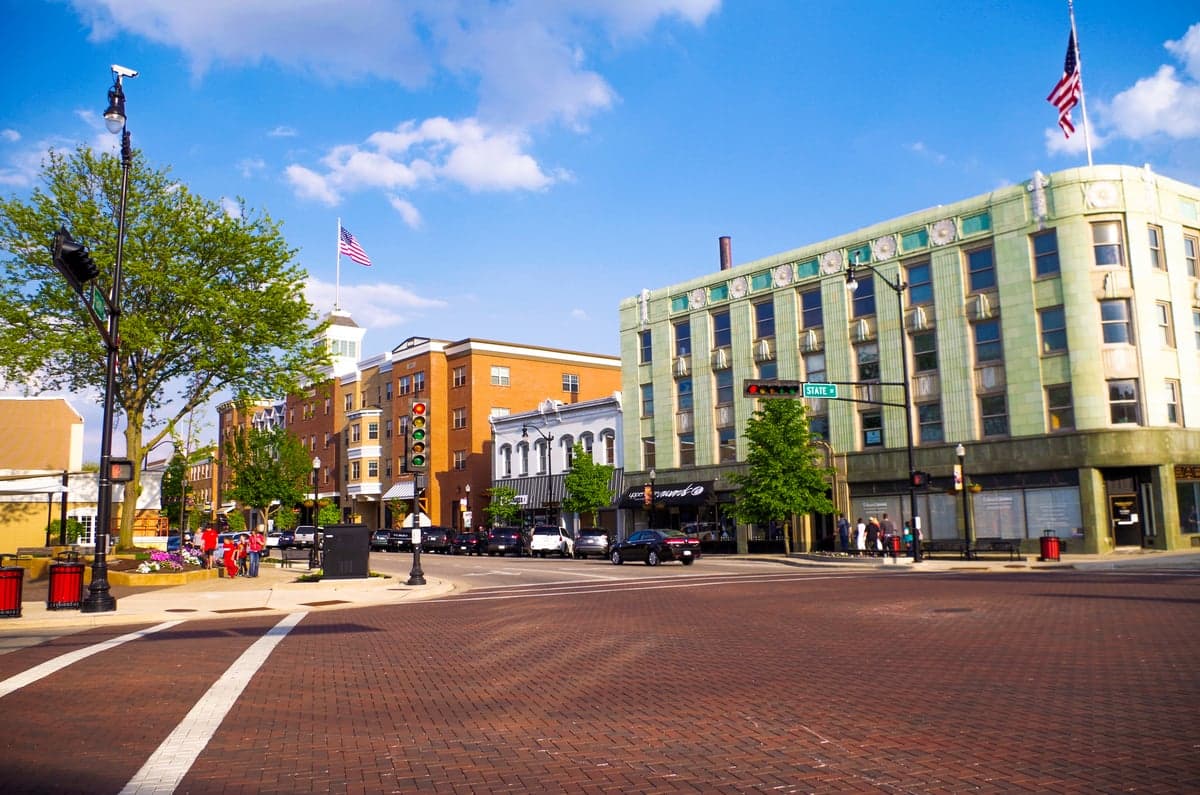
Photo: Wikipedia
Political ClimatePolitical Climate in Beloit, WI
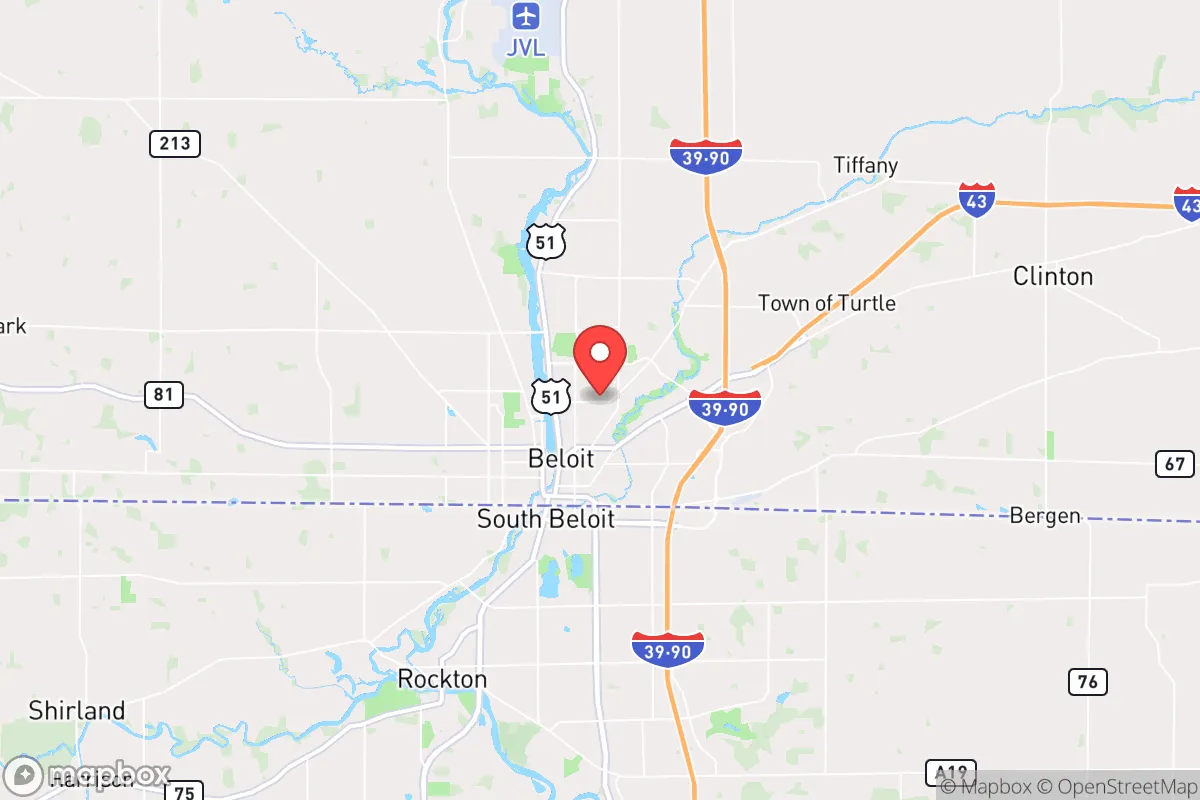
District shown is the primary district for this city’s centroid. Cities may span multiple districts.
Local Political AnalysisPolitical Analysis of Beloit, WI
Beloit, Wisconsin, sits in a political landscape that’s been shifting under our feet for the past decade. The Cook PVI rating of R+2 tells you the district leans slightly Republican, but that number doesn’t capture the tension you feel at the local diner or the school board meetings. Rock County as a whole has been trending bluer in presidential years, but Beloit itself—especially the rural edges and older neighborhoods—still holds a conservative core that’s wary of the progressive wave washing over Madison and Milwaukee. If you’ve lived here long enough, you remember when the town felt more like a quiet, self-reliant community; now, you can sense the friction between that old-school independence and the new push for centralized control.
How it compares
Drive 15 miles north to Janesville, and you’ll find a similar story—a manufacturing town that’s been tugged leftward by younger transplants and union influence, but still votes reliably red in local races. Head east toward Lake Geneva or west toward Monroe, and you’re in solidly conservative territory, where property rights and low taxes are practically religion. The real contrast is Madison, just 45 minutes north: a progressive stronghold where government mandates on everything from housing to energy are the norm. Beloit sits in the middle, but the worry here is that Madison’s overreach—like state-level zoning overrides or environmental rules that hit small businesses hardest—keeps creeping south. The R+2 rating masks a reality where a few thousand votes can flip a county seat, and that’s exactly what’s happened in recent cycles.
What this means for residents
For the average Beloit homeowner or small business owner, the political climate translates into a constant battle over personal freedoms. You see it in the push for higher property taxes to fund programs you didn’t ask for, or in school curriculum debates where parental rights get steamrolled by district administrators. The local government has flirted with progressive policies—like inclusionary zoning mandates that drive up housing costs—that feel like a solution in search of a problem. Long-term, the trajectory is concerning: if the county keeps tilting left, you could see more regulations on everything from lawn care to short-term rentals, chipping away at the autonomy that made this area a good place to raise a family. The silver lining is that Beloit’s conservative base is organized and vocal, showing up at town halls to push back on overreach.
Culturally, Beloit still holds onto distinctions that set it apart from the Madison bubble. The Beloit International Film Festival and the riverfront development are points of pride, but they haven’t turned the town into a haven for progressive activism. You’ll still find more pickup trucks than Priuses in the grocery store parking lot, and the local gun club has a waiting list. The real policy battleground is housing and development: the city council has debated density bonuses and affordable housing mandates that some see as government picking winners and losers. If you value the right to use your property as you see fit, without a bureaucrat’s permission slip, Beloit’s political future is worth watching closely. The next few election cycles will decide whether this stays a place where common sense and local control prevail, or whether it becomes another suburb of Madison’s regulatory machine.

State Political ClimatePolitical Climate in Wisconsin
State Political AnalysisPolitical Environment in the State
Wisconsin has long been a classic swing state, but over the past 20 years it’s shifted from a purple battleground to a deeply polarized state where the rural-urban split defines everything. The state’s overall partisan lean is essentially a coin flip in statewide races, but the coalition that wins depends entirely on whether the blue vote from Milwaukee and Madison can outrun the red wave from the WOW counties (Waukesha, Ozaukee, Washington) and the vast rural north and west. The 2024 presidential race saw the state go narrowly for Trump after a razor-thin Biden win in 2020, and the trajectory is clear: the Democratic strongholds are getting bluer and denser, while the rest of the state is hardening red. For a conservative looking to relocate, the key question is whether you’re landing in a blue enclave or a red stronghold.
Urban vs. rural divide
The political map of Wisconsin is a textbook case of the urban-rural chasm. Milwaukee County, home to the state’s largest city, delivers roughly 60% of its vote to Democrats, and Madison (Dane County) is even more lopsided at 75%+ Democratic. These two counties alone often decide statewide elections. Meanwhile, the suburban WOW counties — Waukesha, Ozaukee, and Washington — are among the most reliably Republican suburbs in the entire Midwest, routinely giving GOP candidates 60-65% of the vote. The rural northwoods counties like Vilas, Oneida, and Lincoln have trended sharply red over the past decade, as have the western driftless area counties like Crawford and Richland. The real battlegrounds are the smaller cities and exurbs: places like Green Bay (Brown County) and Kenosha have flipped back and forth, with Kenosha County going for Trump in 2024 after a 2020 Biden win. The Fox Valley region, anchored by Appleton and Oshkosh, is a mixed bag — Appleton leans slightly blue, but the surrounding Outagamie County is trending red. If you’re moving to Wisconsin as a conservative, you’ll want to land in the WOW counties, the Fox Valley exurbs, or any of the rural northern counties. Avoid Milwaukee and Madison unless you enjoy being a political minority.
Policy environment
Wisconsin’s policy environment is a mixed bag for conservatives. On the plus side, the state has a flat income tax rate of 4.4% (down from a progressive system in 2023), and property taxes are moderate compared to Illinois or Minnesota. The state is a right-to-work state, which has kept union influence in check, and it has a Republican-controlled legislature that has passed school choice expansion and a parental bill of rights. However, the governor’s mansion has been held by Democrat Tony Evers since 2019, and he has vetoed numerous conservative priorities, including a flat tax proposal that would have gone lower and a constitutional carry bill. On election integrity, Wisconsin has been a flashpoint: the state uses drop boxes (allowed by the state Supreme Court in 2024 after a flip to a liberal majority), and voter ID is required but not strictly enforced for absentee ballots. The state’s medical freedom record is mixed — it had a relatively light COVID lockdown compared to neighboring Illinois, but Evers kept a mask mandate in place for longer than many conservatives liked. For a conservative, the policy environment is better than Illinois or Minnesota, but worse than Iowa or South Dakota.
Trajectory & freedom
Wisconsin’s trajectory on personal freedom is concerning for conservatives, but not catastrophic. The biggest red flag is the state Supreme Court, which flipped to a 4-3 liberal majority in 2023 after the election of Janet Protasiewicz. That court has already struck down the state’s gerrymandered legislative maps (replacing them with maps that are more favorable to Democrats), and it’s likely to take up cases on abortion rights and gun laws. On the plus side, the legislature passed a constitutional amendment in 2024 requiring photo ID to vote (already law, but now locked in the constitution), and it passed a law banning local governments from imposing their own gun restrictions — a direct response to Milwaukee’s attempts to pass local gun control. The state also has a strong castle doctrine and stand-your-ground law, and there’s no red flag law on the books. However, the liberal court could change that. On parental rights, Wisconsin passed a law in 2023 requiring schools to notify parents if a child requests a name or pronoun change, but it’s weaker than Florida’s version. The bottom line: Wisconsin is not trending toward greater freedom, but it’s not in freefall either. The next few years will depend on whether the legislature can pass constitutional amendments to lock in conservative wins before the court strikes them down.
Civil unrest & political movements
Wisconsin has a history of political unrest that’s hard to ignore. The 2011 Act 10 protests in Madison over public union bargaining rights drew 100,000 people to the Capitol and set the stage for the state’s current polarization. In 2020, Kenosha became a national flashpoint after the Jacob Blake shooting, leading to riots and the Kyle Rittenhouse shooting — a case that became a symbol of self-defense rights for conservatives. The state has a strong grassroots conservative movement, particularly in the WOW counties and the northwoods, where groups like the Wisconsin Family Action and the Wisconsin Gun Owners lobby are active. On the left, the Wisconsin Democratic Party is heavily funded by out-of-state money, and groups like Indivisible and the ACLU are active in Milwaukee and Madison. Immigration politics are less heated than in border states, but there’s tension over sanctuary city policies — Milwaukee County has a “welcoming city” ordinance that limits cooperation with ICE, which has been a target of Republican legislation. Election integrity remains a live issue: the 2020 election saw widespread use of drop boxes and a massive private grant from the Center for Tech and Civic Life (funded by Mark Zuckerberg) that went to Milwaukee and other Democratic cities. The 2024 election was cleaner, but distrust remains on both sides. A new resident will notice the political divide most in the media: the Milwaukee Journal Sentinel leans left, while the Waukesha Freeman and local talk radio are solidly conservative.
Projection
Over the next 5-10 years, Wisconsin is likely to become more polarized, not less. The demographic trends favor Democrats in the long run: Milwaukee and Madison are growing slowly, while the rural counties are aging and shrinking. However, the in-migration from Illinois (which has been significant in the WOW counties and the Fox Valley) is bringing more conservative-leaning families who are fleeing high taxes and crime. The state Supreme Court will be the key battleground — if liberals hold the majority, expect rulings on abortion, gun rights, and election laws that will push the state left. If conservatives can flip the court back in 2025 or 2026, the trajectory could stabilize. The legislature is likely to remain Republican-controlled due to the new maps, but the margins will be tighter. For a conservative moving in now, expect to see more fights over school curriculum, parental rights, and local control. The state is not going to become California, but it’s also not going to become Texas. It will remain a purple state where your quality of life depends heavily on which county you choose.
For a conservative relocating to Wisconsin, the practical takeaway is this: pick your county carefully. If you land in Waukesha, Washington, or Ozaukee County, you’ll find strong schools, low crime, and a community that shares your values. If you end up in Milwaukee or Madison, you’ll be in a blue bubble with high taxes and progressive policies. The state’s policy environment is a work in progress — you’ll have a Republican legislature fighting for your interests, but a Democratic governor and a liberal court pushing back. If you’re willing to be politically active and vote in every election, Wisconsin is a place where your voice matters. If you just want to be left alone, the rural northwoods or the WOW suburbs are your best bet. Just don’t expect the state to trend conservative anytime soon — it’s a fight every cycle, and that’s not changing.
* Values derived from national, state, county, city and local statistics and may differ in a specific area. Last updated: 2026-05-03T20:39:25.000Z
Narrative content on this page is AI-generated and may contain mistakes. Verify any details that matter before acting on them.
ReloMaps may earn a commission from affiliate links at no extra cost to you.

