 Popular
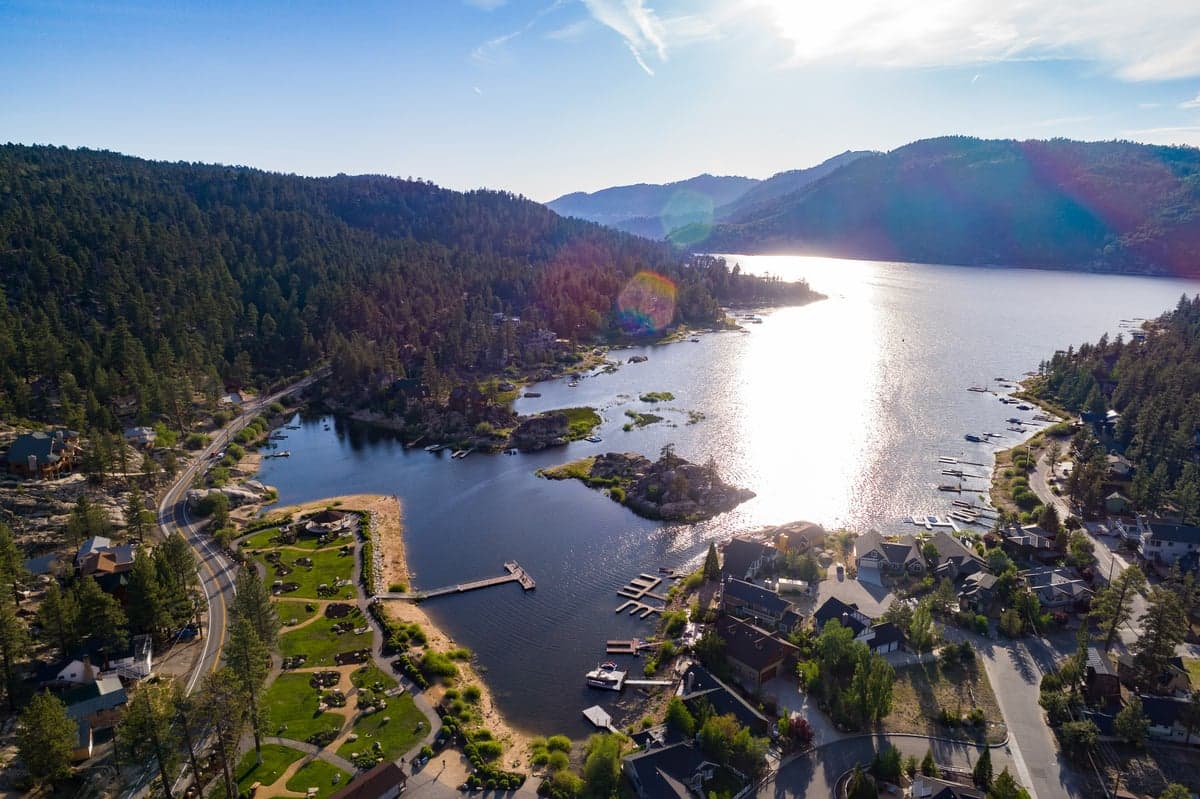
Photo: Wikipedia
Demographics of Big Bear Lake, CA
Affluence Level in Big Bear Lake, CA
An upper-middle-class area. Household wealth, education levels, and homeownership run ahead of national benchmarks.
People of Big Bear Lake, CA
The people of Big Bear Lake, California, today number 5,038, forming a predominantly White (67.7%) and Hispanic (25.2%) community with a small but notable East/Southeast Asian presence (2.5%). The city’s character is distinctly mountain-resort: a seasonal workforce, second-home owners, and a year-round population that values outdoor recreation and relative isolation. With only 4.6% foreign-born and a college-educated rate of 34.9%, Big Bear Lake is less diverse and less transient than many Southern California mountain towns, leaning toward a stable, family-oriented, and politically conservative identity.
How the city was settled and grew
Big Bear Lake’s human history begins not with colonial settlement but with the Serrano people, who used the valley seasonally for hunting and gathering. Permanent Euro-American settlement began in the 1840s, driven by the California Gold Rush. Prospectors and ranchers arrived, but the defining industry was logging—the 1880s saw the Bear Valley Lumber Company clear-cut the region, supplying timber to the growing Los Angeles basin. The original population was almost entirely White, drawn by resource extraction. The construction of the Big Bear Dam in 1884 created the lake itself, transforming the valley into a recreation destination. The first wave of resort-oriented residents settled in what is now Pine Knot Village, the historic downtown core, where early hotels and cabins catered to Los Angeles tourists arriving by stagecoach. By the early 1900s, the community was a summer getaway for wealthy Angelenos, with cabins and lodges concentrated in Moonridge (east of the lake) and Fox Farm (southwest shore). The population remained small and overwhelmingly White through the mid-20th century, with the 1950 census recording fewer than 1,000 year-round residents.
Modern era (post-1965)
The 1960s and 1970s brought two major shifts: the completion of State Route 18 (the Rim of the World Highway) made year-round access easier, and the 1965 Hart-Cellar Act began to diversify the broader region. However, Big Bear Lake itself saw limited direct immigration. The foreign-born share (4.6%) is low even by mountain-town standards. Instead, the post-1965 population growth came from domestic in-migration—White and Hispanic families from the Inland Empire and Los Angeles seeking affordable mountain property and a slower pace. The Hispanic population grew steadily from the 1980s onward, largely through service-sector workers in hospitality, construction, and property maintenance. These families concentrated in Upper Moonridge and the Lakeview Estates area, where more affordable housing stock and rental cabins are located. The East/Southeast Asian population (2.5%) is a more recent arrival, primarily professionals and second-home buyers from the San Gabriel Valley, settling in Eagle Point and Pine Knot Village. The Black population (0.4%) and Indian subcontinent population (0.0%) remain negligible. The city’s racial composition has shifted from nearly 90% White in 1980 to 67.7% White today, with the Hispanic share absorbing most of that change.
The future
Big Bear Lake’s population is likely to continue its slow homogenization into two distinct enclaves: a White, older, wealthier cohort concentrated in lakefront neighborhoods like Eagle Point and Fox Farm, and a younger, more Hispanic service-worker population in Upper Moonridge and Lakeview Estates. The East/Southeast Asian share may grow modestly as remote work makes mountain living more viable for professionals, but the city lacks the job base and housing density to attract large new immigrant communities. The foreign-born share is unlikely to rise above 6-7% in the next decade. The city’s population is aging—the median age is 43—and younger families are often priced out by vacation-home demand. The next 10-20 years will likely see a continued tribalization: lakefront properties become more exclusive, while the service workforce clusters in the less expensive eastern neighborhoods. The overall population may plateau or decline slightly as short-term rentals reduce available year-round housing.
For someone moving in now, Big Bear Lake is becoming a bifurcated community: a wealthy, predominantly White resort enclave on the water and a working-class, increasingly Hispanic service corridor inland. The city offers a stable, safe, and politically conservative environment, but newcomers should expect limited ethnic diversity and a housing market tilted toward second homes. The character is set—this is not a place of rapid demographic change, but of slow, predictable stratification by neighborhood and income.

* Values derived from national, state, county, city and local statistics and may differ in a specific area. Last updated: 2026-05-02T04:58:16.000Z
Narrative content on this page is AI-generated and may contain mistakes. Verify any details that matter before acting on them.
ReloMaps may earn a commission from affiliate links at no extra cost to you.

