 Popular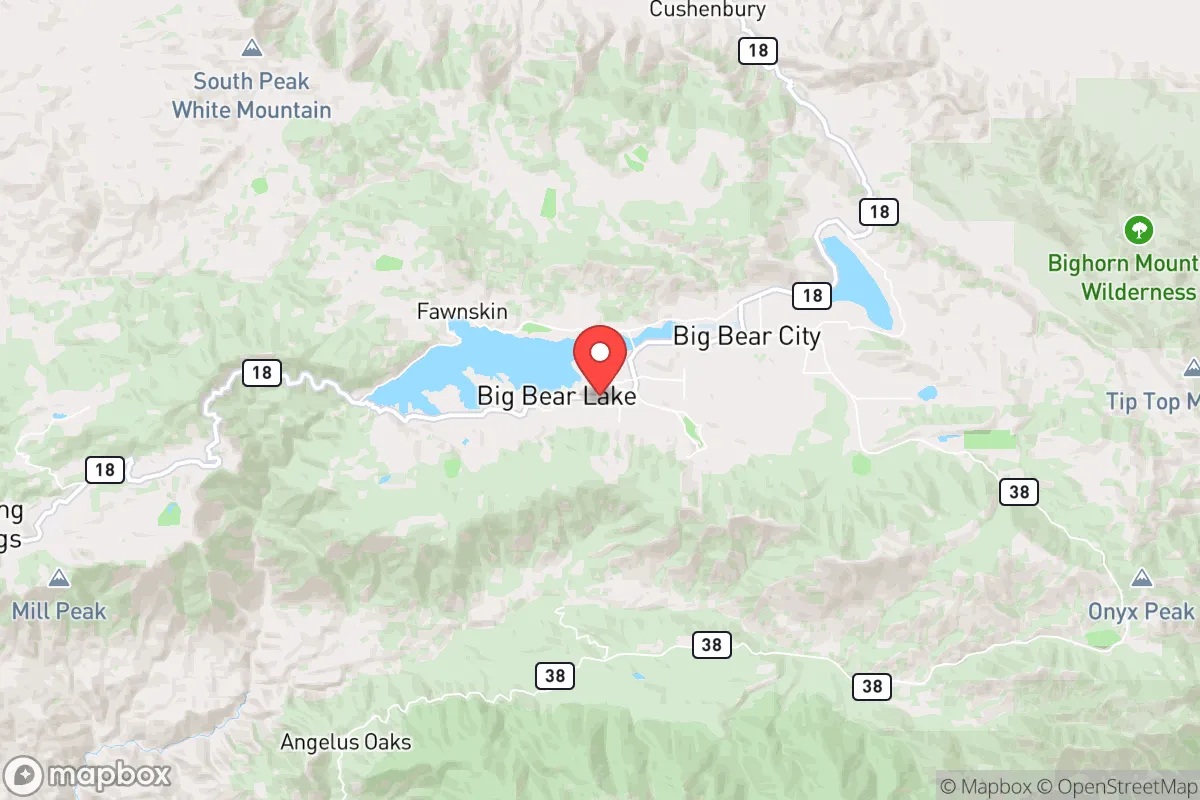
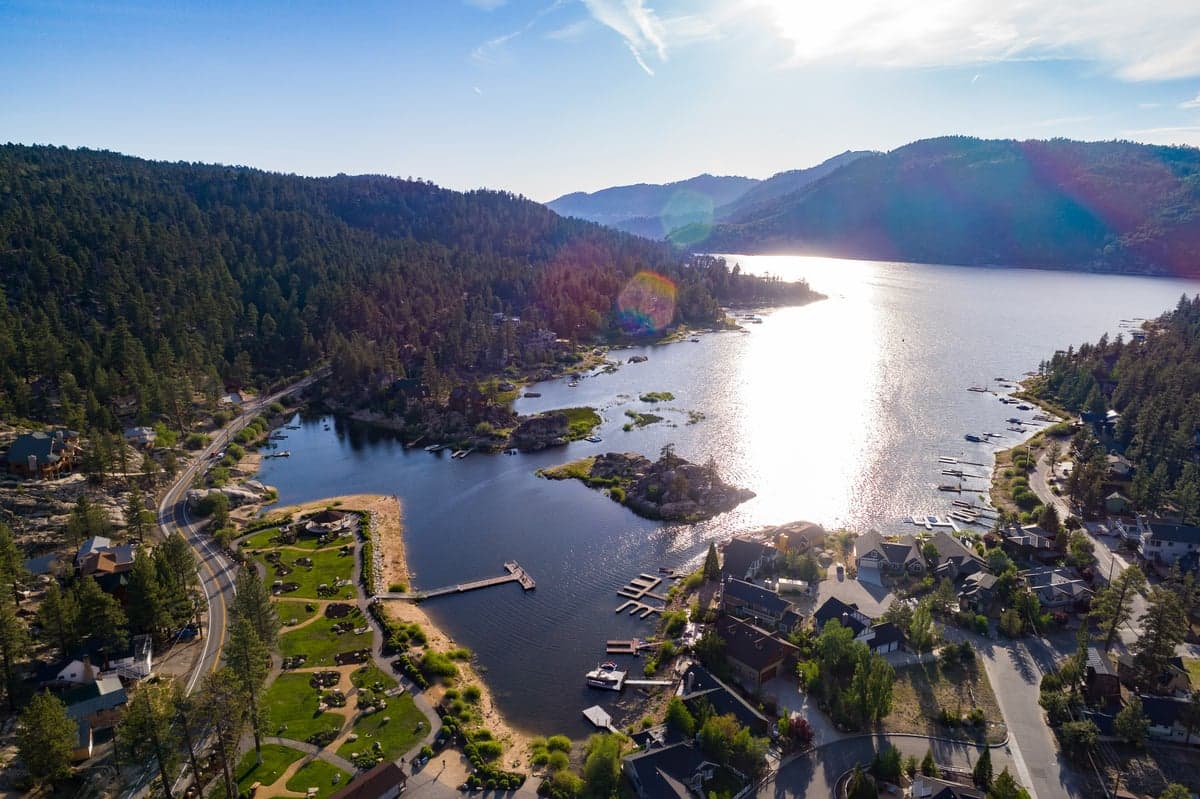
Photo: Wikipedia
Strategic Assessment of Big Bear Lake, CA
Multiple tactical vulnerabilities. Population density, target proximity, or disaster risk are likely compounding. A retreat property and exit planning is required.
What does the Strategic Assessment tell us?
Our Strategic Assessment grades tactical survivability of an area. Major population centers, military targets, fallout zones, natural disasters, and border exposure all drive risk — lower exposure means a more defensible position in a crisis.
This is heavily inspired by Joel Skousen's Strategic Relocation book. Highly recommended you checkout the book ($)What does this tell us?
Our Strategic Assessment grades tactical survivability of an area. Major population centers, military targets, fallout zones, natural disasters, and border exposure all drive risk — lower exposure means a more defensible position in a crisis.
This is heavily inspired by Joel Skousen's Strategic Relocation book. Highly recommended you checkout the book ($)Strategic Pillars

Key Distances
Regional Safe Places
Below is our recommended "safe zones" in California and the surrounding area based on our strategic heuristics. For most people, it's unrealistic to live in a “safe zone” full-time due to work, family or other personal reasons. They tend to be more rural. However, many of these areas are perfect for second homes and retreat properties that double as a vacation home or even a short-term rental.

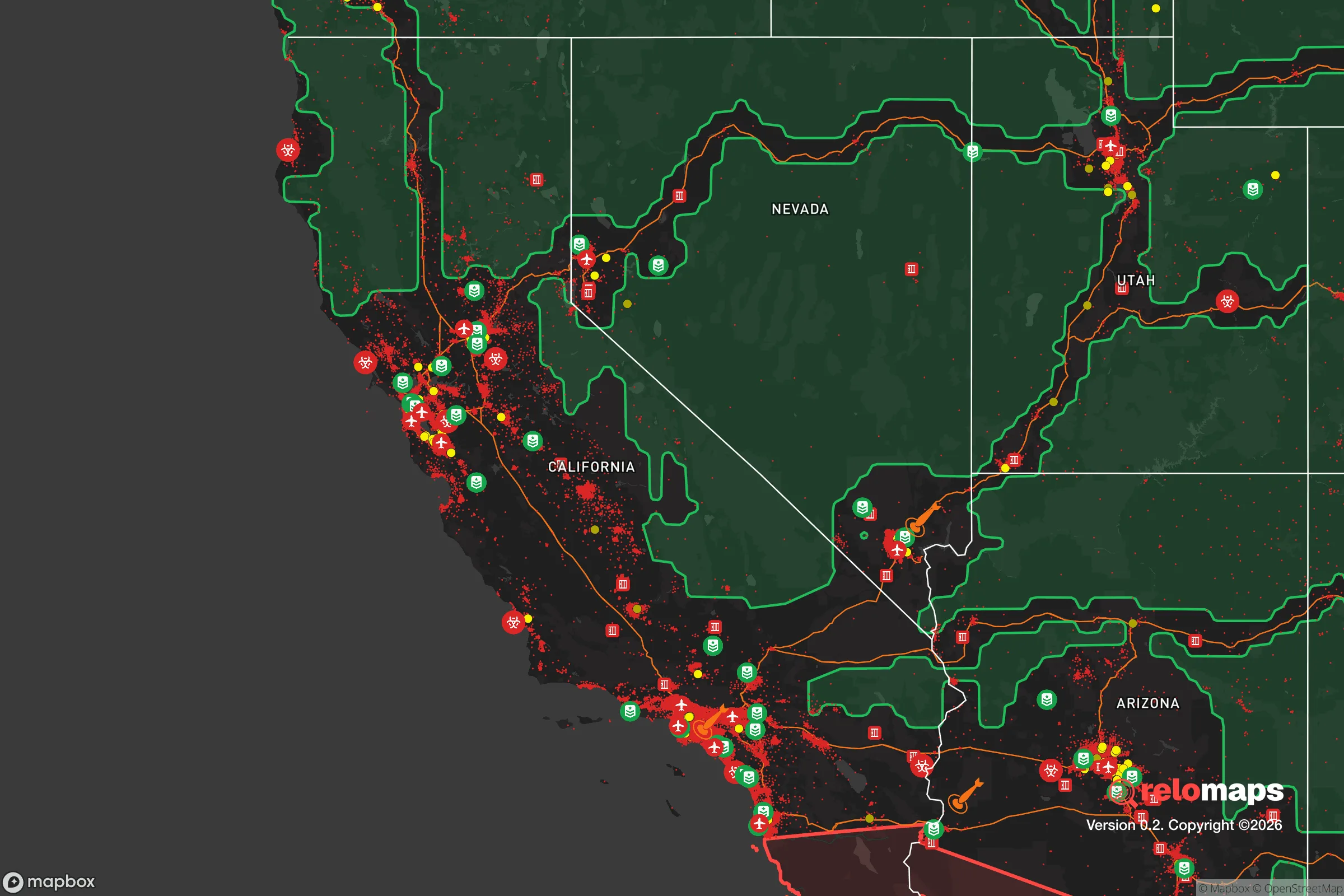


Important Note: For informational purposes only. This does not mean nothing bad ever happens in the green zones. Please use common sense. This is based on public data and modeled with AI. We tried to take a conservative approach but mistakes happen. We update this regularly as new information becomes available.
Solar Generator Recommendations
Backup power matters more here than in safer locations. We've picked three solar generators across budgets and capacity tiers — start with the budget unit if you only need a few essentials, or step up if you want to run a fridge and HVAC for days at a time.

Jackery Portable Power Station Explorer 300
Budget OptionPower on the Go: Weighing only 11 lbs, it's convenient to set up and store with book-sized foldable solar panels

BLUETTI Portable Power Station AC180
Designed for both indoor and outdoor scenarios, AC180 is highly capable as it has a robost capacity and continuous output power.

EF ECOFLOW DELTA Pro Ultra Power Station
Upgraded PickEcoFlow DELTA Pro Ultra is a whole-home energy system designed to grow with your family. Integrated with the Smart Home Panel 2, it scales to meet your evolving energy needs — keeping your home powered, intelligent, and secure through every stage of life.
We earn a commission, at no additional cost to you.
Strategic Assessment Analysis
Big Bear Lake, California, sits at a strategic altitude of roughly 6,750 feet in the San Bernardino Mountains, offering a natural buffer against the coastal chaos that often defines Southern California. Its resilience stems from a combination of geographic isolation, a tight-knit community of roughly 5,000 year-round residents, and a local economy that has weathered everything from drought to wildfire scares. For a relocator with a prepper mindset, this mountain town provides a defensible redoubt that is close enough to urban centers for supply runs but far enough to avoid the immediate fallout of a major civic disruption.
Geographic position and natural advantages for a defensive retreat
Big Bear Lake’s primary strategic asset is its elevation and terrain. The only paved access routes are State Route 18 (the Rim of the World Highway) and State Route 38, both winding mountain roads that can be monitored and, if necessary, blocked with minimal effort. The lake itself—a 7-mile-long reservoir—provides a natural water source that is less vulnerable to contamination than valley aquifers. The surrounding San Bernardino National Forest offers abundant cover, firewood, and game, though hunting is regulated. The area’s four distinct seasons mean a relocator must prepare for snow (average 60 inches annually) and freezing temperatures, but this climate also deters unprepared transient populations. The mountain’s granite bedrock limits groundwater drilling, so existing wells and lake access are critical. For a conservative-minded individual, this isolation is a double-edged sword: it offers security but demands self-sufficiency in heating, food storage, and winter mobility.
Risks, exposures, and proximity to fallout-relevant landmarks
Big Bear Lake’s greatest vulnerability is its proximity to San Bernardino (about 30 miles as the crow flies) and the greater Los Angeles basin (roughly 100 miles). In a mass casualty event or civil unrest scenario, the mountain roads would become choke points, potentially trapping residents or funneling desperate populations upward. The area sits within the San Andreas Fault zone—the 1857 Fort Tejon quake caused significant ground rupture nearby—and a major seismic event could sever roads and power lines for weeks. Wildfire risk is acute: the 2020 El Dorado Fire burned over 22,000 acres and forced evacuations, and the 2003 Old Fire threatened the entire north shore. The local hospital, Bear Valley Community Hospital, is a small critical-access facility with limited trauma capacity; serious injuries would require a 90-minute ambulance ride down the mountain. For a prepper, the proximity to March Air Reserve Base (45 miles south) and Edwards Air Force Base (100 miles north) means potential military activity in a crisis, but also makes the area a secondary target in a broader conflict. The San Onofre Nuclear Generating Station (decommissioned but still holding spent fuel) is 100 miles southwest—within the fallout plume radius for a worst-case event, though prevailing winds typically blow toward the ocean.
Practical resilience for a relocator: food, water, energy, and defensibility
Water is the most immediate concern. Big Bear Lake’s reservoir is managed by the Big Bear Municipal Water District, and year-round residents rely on a mix of lake water and private wells. However, drought restrictions are common—the lake level dropped to 45% of capacity in 2015—so a prepper should invest in rainwater catchment (average 20 inches of precipitation annually, mostly snow) and a gravity-fed filtration system. Food security is moderate: the local Vons and Stater Bros. are supplied by trucks that must navigate mountain roads, meaning shelves empty quickly during panic events. The Big Bear Farmers Market (summer only) and a handful of local growers provide limited fresh produce, but most calories must be stockpiled or grown in short-season greenhouses. Energy is a bright spot: the area has above-average solar insolation (over 5.5 peak sun hours per day in summer), and many homes already have backup generators due to frequent winter power outages. Propane delivery is reliable, but a prepper should plan for a 500-gallon tank minimum. Defensibility is excellent for a small group: the terrain offers natural chokepoints, and the Big Bear Sheriff’s Station has about 20 deputies for the entire valley—meaning law enforcement response times can exceed 30 minutes in remote areas. A well-armed, organized household can secure a property with minimal risk of confrontation, as the local culture leans heavily toward self-reliance and firearm ownership. The Big Bear Gun Club and regular shooting events indicate a community that values preparedness.
The overall strategic picture for Big Bear Lake is one of high potential with significant trade-offs. It offers a defensible, resource-rich environment that is far enough from major population centers to avoid the worst of urban collapse, yet close enough to access supplies and medical care in normal times. The primary risks—wildfire, earthquake, and winter isolation—are manageable with proper planning, but the area is not a self-sufficient paradise. A relocator must invest in water storage, off-grid energy, and a robust food supply chain to weather a prolonged disruption. For a conservative-leaning individual or family seeking a balance between retreat and accessibility, Big Bear Lake is a viable option—but only for those willing to treat it as a serious preparedness project, not a weekend getaway.

* Values derived from national, state, county, city and local statistics and may differ in a specific area. Last updated: 2026-05-02T04:58:16.000Z
Narrative content on this page is AI-generated and may contain mistakes. Verify any details that matter before acting on them.
ReloMaps may earn a commission from affiliate links at no extra cost to you.

