 Popular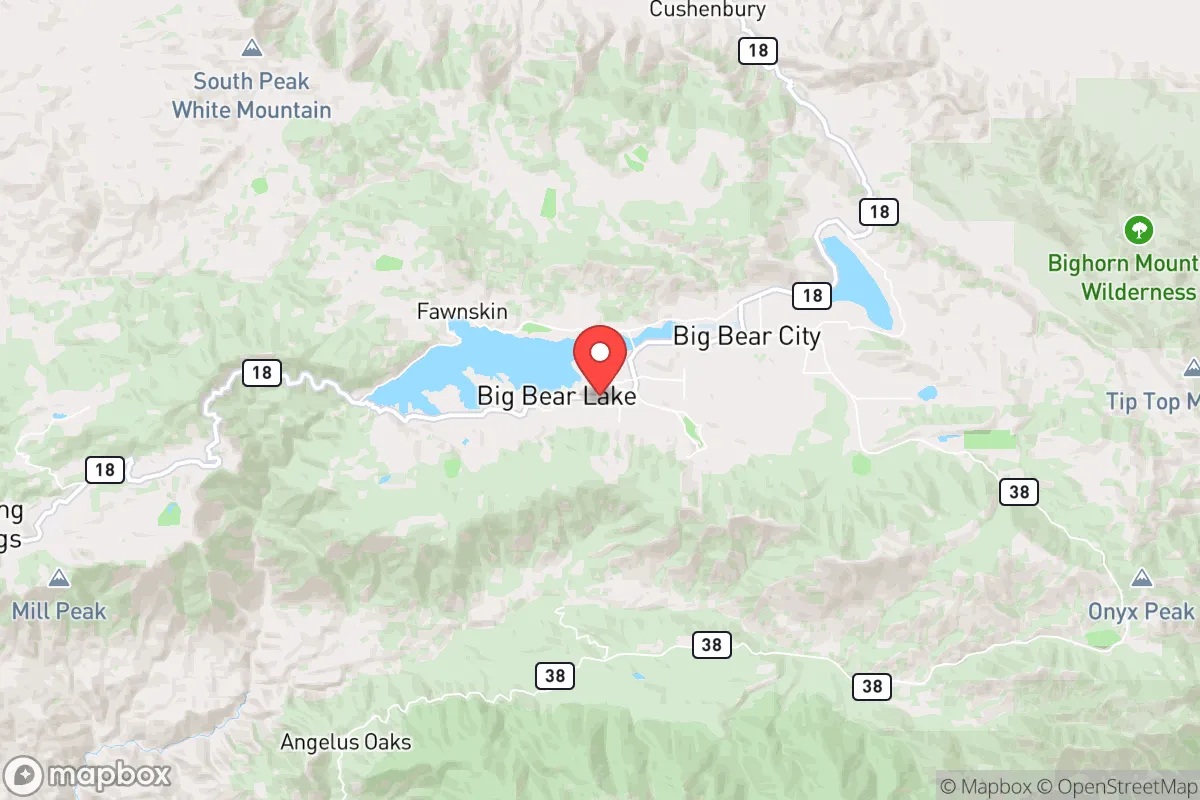
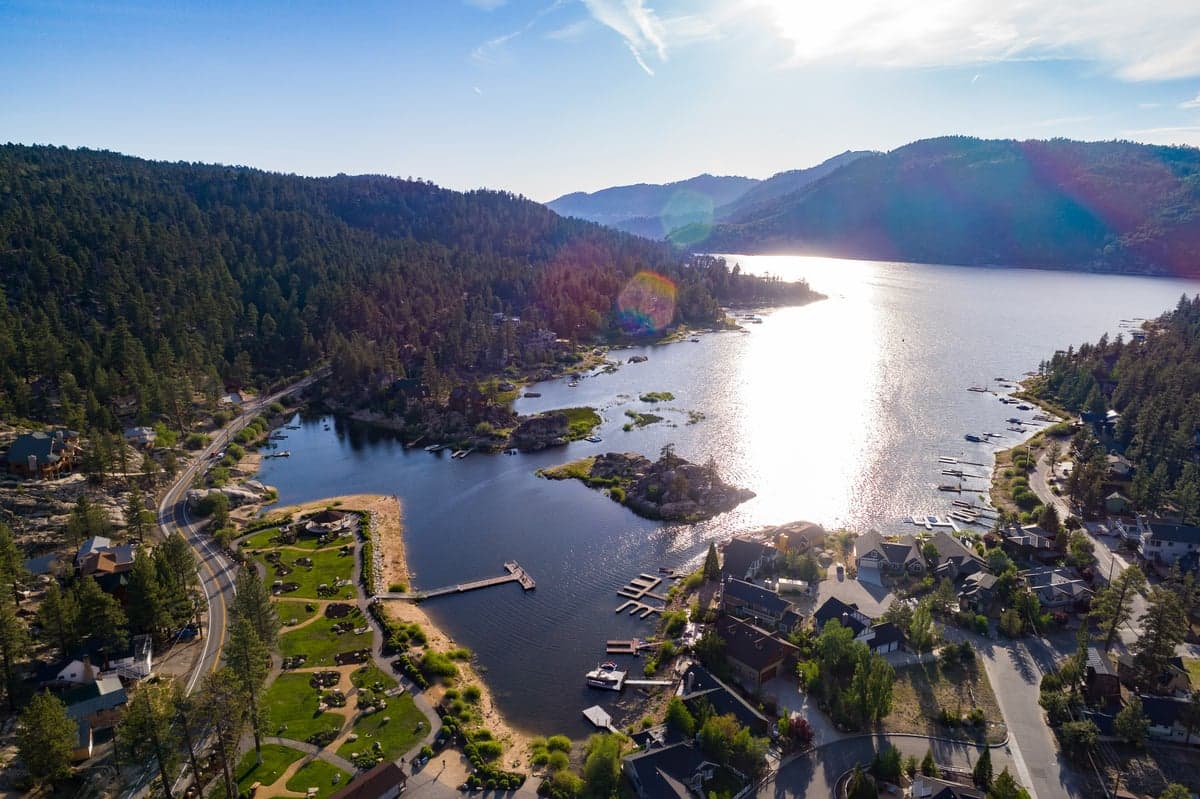
Photo: Wikipedia
Political ClimatePolitical Climate in Big Bear Lake, CA
District shown is the primary district for this city’s centroid. Cities may span multiple districts.
Local Political AnalysisPolitical Analysis of Big Bear Lake, CA
Big Bear Lake has long been a solidly conservative community, and that hasn't changed much. The area carries a Cook PVI of R+8, meaning it votes about eight points more Republican than the national average, and that number feels about right if you've lived here a while. You see it in local elections, in the way people talk about property rights and water access, and in the general attitude that government should stay out of your business. The trajectory, though, is worth watching—there's a slow trickle of folks moving up from Los Angeles and Orange County, and while most come for the mountain lifestyle, a few bring big-city voting habits with them. So far, the local culture has held firm, but it's something to keep an eye on.
How it compares
If you drive down the mountain, the contrast is stark. San Bernardino, just 30 miles south, leans heavily Democratic, and even nearby cities like Redlands and Highland have shifted left in recent years. Big Bear Lake sits in San Bernardino County, which as a whole is purple-to-blue, but the mountain communities—Big Bear City, Fawnskin, and the unincorporated areas around the lake—are a different world. We vote more like the rural parts of the county, closer to places like Crestline or the high desert towns of Hesperia and Victorville. The difference is that those desert towns are growing fast and getting more diverse politically, while Big Bear's isolation and small population (around 5,000 year-round residents) help keep the conservative vibe intact. You won't find many yard signs for progressive candidates up here, and the local school board and city council races tend to focus on practical issues like road maintenance and fire safety, not ideological battles.
What this means for residents
For someone who values personal freedom and limited government, Big Bear Lake is still a pretty good place to be. Property taxes are reasonable, there's no city income tax, and the local government generally takes a hands-off approach to business and land use. That said, you can't ignore the county-level influence. San Bernardino County has pushed some progressive policies—like mask mandates during the pandemic and certain environmental restrictions on lakefront development—that rubbed a lot of locals the wrong way. The real concern is that as the county gets bluer, those mandates and overreaches could creep up the mountain. The local sheriff's office is conservative and well-respected, which helps, but state-level laws from Sacramento—like stricter gun control and housing mandates—are already affecting life here. If you're worried about government overreach, this is the front line: the state tells us what to do, the county sometimes amplifies it, and the city tries to push back where it can.
On the cultural side, Big Bear Lake still feels like old California. The Fourth of July parade is a big deal, hunting and fishing are common pastimes, and most folks believe in minding their own business. There's a strong sense of community self-reliance—when the snow hits, neighbors help each other dig out, not wait for the county. The biggest policy distinction is probably water rights and environmental regulation. The lake is the centerpiece of the local economy, and there's constant tension between state environmental agencies and locals who want to keep the lake accessible for boating, fishing, and tourism. Any shift toward more progressive environmental rules—like restricting motorized boats or limiting shoreline access—would be a direct hit to the way of life here. For now, the conservative majority holds the line, but the long-term trend depends on who moves in and who votes. If you're looking for a place where your rights aren't treated as optional, Big Bear Lake is still a solid bet, but don't take it for granted.

State Political ClimatePolitical Climate in California
State Political AnalysisPolitical Environment in the State
California is a deep-blue state dominated by the Democratic Party, holding a supermajority in both legislative chambers and controlling every statewide office. Over the past 20 years, the state has shifted from a competitive purple state—where Republicans like Arnold Schwarzenegger could win—to a one-party monopoly, with Democrats now holding a roughly 2-to-1 voter registration advantage. The 2020 presidential election saw Joe Biden win by 29 points, and the 2022 gubernatorial race gave Gavin Newsom a 19-point victory. This trajectory is driven by massive population growth in coastal metros, declining rural influence, and a steady exodus of moderate and conservative voters to states like Texas and Idaho.
Urban vs. rural divide
The political map of California is a tale of two worlds. The coastal urban crescent—from San Francisco and Oakland in the Bay Area down through Los Angeles, San Diego, and Orange County—generates the vast majority of Democratic votes. San Francisco County gave Biden 85% of the vote in 2020; Los Angeles County gave him 71%. In contrast, the interior—the Central Valley, the Sierra foothills, and the far north—is deeply Republican. Bakersfield (Kern County) voted +22 for Trump, Redding (Shasta County) +31, and El Centro (Imperial County) flipped to Trump in 2020 after decades of Democratic lean. The divide is stark: the 10 most Democratic counties cast 3.5 times more votes than the 10 most Republican counties. Suburbs like Simi Valley (Ventura County) and Murrieta (Riverside County) are conservative holdouts, but even Orange County—once a GOP stronghold—flipped blue in 2018 and hasn't looked back.
Policy environment
California’s policy environment is aggressively progressive, with a tax-and-regulate posture that conservatives find suffocating. The state has the highest top marginal income tax rate in the nation (13.3%), a 7.25% sales tax floor (often higher with local add-ons), and some of the highest gas taxes and property taxes (Prop 13 caps aside). Regulatory overreach is pervasive: the California Environmental Quality Act (CEQA) is weaponized to block housing and infrastructure; the California Air Resources Board (CARB) effectively sets national vehicle emissions standards; and the state mandates employer-paid health insurance, paid family leave, and a $16 minimum wage (rising to $18 by 2026). Education policy is dominated by teachers unions, with school choice limited and charter schools under attack. Election laws include universal mail-in voting (made permanent in 2021), same-day registration, and no voter ID requirement—a package that conservatives argue erodes election integrity.
Trajectory & freedom
California is becoming less free by any conservative measure. The state has enacted some of the strictest gun control in the nation—including an "assault weapons" ban, a 10-day waiting period, and a 2023 law (SB 2) banning concealed carry in most public places, which is currently tied up in court. Parental rights have eroded: in 2024, the state passed AB 1955, which prohibits school districts from requiring parental notification when a child changes their gender identity. Medical autonomy took a hit with the 2022 mandate (SB 523) requiring employers to cover abortion and transgender procedures, including for minors, without parental consent. Property rights are under constant pressure from rent control expansions (AB 1482 caps annual rent increases at 5% plus inflation) and a 2024 ballot measure that would have allowed local governments to impose rent control on single-family homes (it failed, but the fight continues). On the plus side, California has strong sunshine laws and a robust initiative process, but the legislature increasingly uses "gut-and-amend" tactics to bypass voter input.
Civil unrest & political movements
California has been a flashpoint for political unrest. The 2020 George Floyd protests in Los Angeles and Oakland saw widespread looting and property destruction, with some estimates of $1 billion in damages statewide. The "Recall Newsom" movement in 2021 gathered 1.7 million signatures but failed to unseat him, though it revealed deep dissatisfaction in rural and exurban areas. Immigration politics are a constant battleground: California is a "sanctuary state" (SB 54, 2017), prohibiting local law enforcement from cooperating with federal immigration authorities. This has led to tensions with the Trump administration and ongoing legal fights. Secession rhetoric—the "Calexit" movement—peaked in 2016-2017 but fizzled after a 2018 poll showed only 32% support. More recently, "New California" and "State of Jefferson" movements advocate for rural counties to break away, but they lack legislative traction. Election integrity controversies flared in 2020 when then-Governor Newsom sent mail-in ballots to all registered voters, and a 2024 audit of Los Angeles County found thousands of duplicate registrations.
Projection
Over the next 5-10 years, California will likely become even more Democratic and more progressive. Demographic trends favor the left: the state’s Latino population (40% of residents) leans heavily Democratic, and Asian-American voters (15%) are shifting left. In-migration is overwhelmingly from blue states and foreign countries, while out-migration—roughly 300,000 net residents per year—is disproportionately conservative and middle-class, heading to Texas, Arizona, and Idaho. The Republican Party in California is in a death spiral, unable to win statewide office and losing ground in the legislature. Expect further tax increases (a wealth tax is being discussed), stricter environmental regulations, and expanded government healthcare (single-payer proposals resurface every session). The housing crisis will worsen, driving more middle-class families out. For a conservative moving in now, the state will feel increasingly hostile to your values in a decade—higher taxes, less parental control, more regulation, and a political culture that treats dissent as bigotry.
Bottom line for a new resident: If you're a conservative considering California, you're moving into a state where your vote will be marginalized, your taxes will be high, and your personal freedoms—especially around guns, education, and medical decisions—will be under constant assault. The coastal cities are vibrant and economically powerful, but the political climate is unapologetically left-wing. If you value low taxes, school choice, gun rights, and local control, you'll find California increasingly frustrating. The best you can hope for is to carve out a life in a conservative pocket like Bakersfield or Redding, but even those areas are losing influence to the blue wave. Think hard before making the move.
* Values derived from national, state, county, city and local statistics and may differ in a specific area. Last updated: 2026-05-02T04:58:16.000Z
Narrative content on this page is AI-generated and may contain mistakes. Verify any details that matter before acting on them.
ReloMaps may earn a commission from affiliate links at no extra cost to you.

