 Popular
Photo: Wikipedia
Personal Sovereignty in Big Bear Lake, CA
Moderate friction. Expect trade-offs in some aspect of personal liberty and independence.
What does Personal Sovereignty tell us?
Personal Sovereignty measures your capacity for self-reliance and independence with minimal government friction. Higher scores mean fewer barriers between you and the way you want to live... but it assumes you have the space you need and good neighbors.
What does this tell us?
Personal Sovereignty measures your capacity for self-reliance and independence with minimal government friction. Higher scores mean fewer barriers between you and the way you want to live... but it assumes you have the space you need and good neighbors.
State Policy
Energy independence: Importer (33% of energy produced in-state)
Personal Liberty
Homesteading

Personal Liberty Analysis
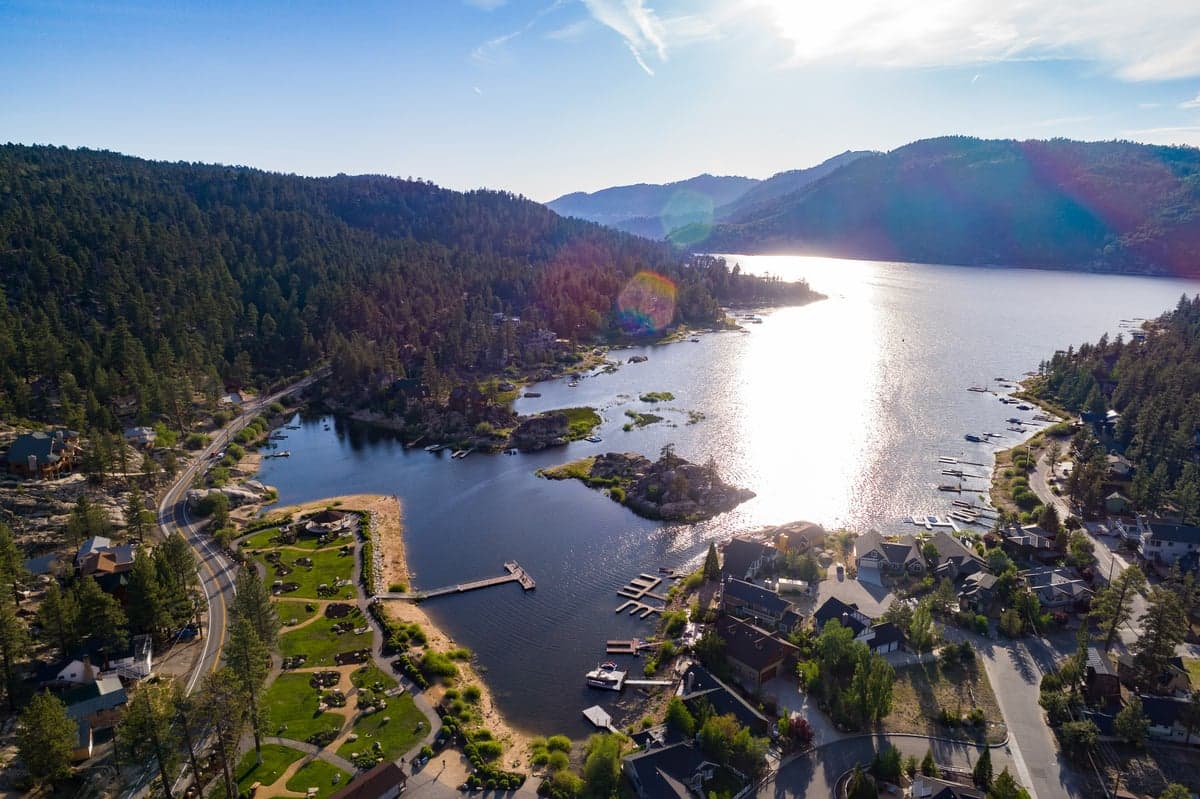
Big Bear Lake offers a unique balance of personal sovereignty that appeals to those seeking distance from urban governance without abandoning California entirely. Nestled in the San Bernardino Mountains at 7,000 feet, this mountain community provides a physical buffer from state-level overreach while still subjecting residents to California’s broader regulatory framework. For the survivalist-minded individual or family, Big Bear Lake represents a strategic compromise: you gain geographic isolation, a tight-knit community of like-minded residents, and a landscape that rewards self-reliance, but you must navigate the state’s tax burden, gun laws, and medical mandates with eyes wide open. The key question is whether the mountain’s natural advantages outweigh the political headwinds blowing from Sacramento.
Tax burden and regulatory posture in a high-cost state
California’s tax structure is among the most aggressive in the nation, and Big Bear Lake does not escape it. Residents pay the state’s top marginal income tax rate of 13.3% on high earners, a flat 7.25% sales tax (with local add-ons pushing it higher in San Bernardino County), and property taxes capped at 1% of assessed value under Proposition 13—though reassessment upon sale can spike costs significantly. For a prepper household, this means every dollar earned is heavily taxed before it can be redirected toward supplies, land improvements, or emergency funds. The regulatory posture is equally burdensome: California’s California Environmental Quality Act (CEQA) can delay or kill construction projects, and local zoning in Big Bear Lake restricts building heights, lot coverage, and even the color of your roof to preserve the “mountain aesthetic.” Permits for rainwater catchment, solar panels, or backup generators require navigating a thicket of county and city approvals. While the community’s remote location reduces some day-to-day bureaucratic friction, the state’s hand remains heavy on property rights and economic freedom. For those prioritizing low-tax sovereignty, states like Nevada or Texas offer clearer advantages, but Big Bear Lake’s natural defensibility and water access may justify the cost for those willing to fight for every inch of autonomy.
Self-defense and gun law specifics in California’s restrictive environment
California’s firearm laws are among the most restrictive in the country, and Big Bear Lake residents must comply fully. The state bans “assault weapons” by feature, requires a 10-day waiting period for all firearm purchases, mandates a Firearm Safety Certificate, and enforces a 10-round magazine limit. Concealed carry permits (CCWs) are issued by the San Bernardino County Sheriff, and while the county is generally more permissive than coastal jurisdictions, the process still requires a training course, background check, and “good cause” statement—though the Bruen decision has weakened that requirement. Open carry is prohibited in most circumstances. For the survivalist, this means building a defensive arsenal requires patience, paperwork, and legal vigilance. However, the mountain environment offers natural advantages: the dense forest and limited road access create chokepoints that a prepared homeowner can defend, and the local sheriff’s office is known for a pro-Second Amendment stance relative to state norms. Ammunition purchases are tracked, and private transfers must go through a licensed dealer, so stockpiling requires foresight. If you’re willing to jump through the hoops, you can legally own handguns, shotguns, and bolt-action rifles for hunting and defense—just don’t expect the same freedom as a free state like Arizona or Montana. For those who view gun rights as non-negotiable, Big Bear Lake is a compromise, not a sanctuary.
Self-reliance and homesteading viability in a mountain setting
Big Bear Lake’s geography and zoning create real opportunities for self-reliance, but with significant caveats. Lot sizes in the area vary widely, from small cabin lots of 5,000 square feet in the city limits to larger parcels of 1-5 acres in unincorporated areas like Fawnskin or Sugarloaf. Zoning allows for chickens, small livestock, and vegetable gardens on most residential lots, but pigs, goats, and larger animals require a conditional use permit. Off-grid feasibility is limited: the city requires connection to municipal water and sewer in most developed areas, though some remote parcels allow wells and septic systems. Solar panels are permitted but must meet local design standards, and battery storage is encouraged for backup power—critical given the area’s wildfire risk and occasional grid outages. Rainwater catchment is legal but restricted to 200 gallons per property without a permit, a nod to state water rights concerns. For the serious homesteader, the best bet is to buy land in the surrounding national forest or unincorporated county areas, where restrictions are looser. The short growing season (May to September) limits year-round food production, but deer hunting, fishing in the lake, and foraging for pine nuts and berries supplement a self-sufficient lifestyle. Wood stoves are common for heating, and many homes have propane tanks for cooking and hot water. The mountain’s isolation means you’ll need to be your own handyman, mechanic, and medic—there’s no Home Depot around the corner, and emergency services can take 30 minutes or more in a snowstorm. For the prepper, this is a feature, not a bug: it forces competence and community interdependence.
Personal liberties in a state that micromanages daily life
California’s appetite for regulating personal choices extends into Big Bear Lake, but the mountain’s culture pushes back. Parental rights are under constant pressure from state mandates: California requires all schoolchildren to be vaccinated for school attendance (with limited medical exemptions), and the state’s progressive sex education curriculum can override local school board decisions. The Bear Valley Unified School District, which serves Big Bear Lake, is more conservative than urban districts, but parents must remain vigilant and involved to protect their children from state-imposed curricula. Medical autonomy is similarly constrained: California’s health mandates during the pandemic were among the strictest, and while those are largely lifted, the legal framework for future mandates remains in place. For those seeking medical freedom, the nearest “free state” is Nevada, a 3-hour drive. Speech and property rights fare better at the local level: the community is politically diverse but leans conservative, and you can fly a Gadsden flag or post a “No Trespassing” sign without harassment. Property rights, however, are limited by California’s coastal commission-style oversight of the lake and forest, which restricts dock construction, tree removal, and even the color of your house. The county’s planning department has a reputation for being reasonable but slow. Overall, Big Bear Lake offers more personal liberty than Los Angeles or San Francisco, but it’s still California—you’ll trade some freedoms for the mountain lifestyle.
In the broader landscape of American sovereignty, Big Bear Lake occupies a middle ground. It provides a defensible, self-reliant lifestyle with a supportive community and natural resources that reward preparation, but it remains tethered to a state government that views personal autonomy as a privilege to be granted, not a right to be exercised. For the survivalist or prepper who values geographic isolation, water access, and a like-minded network, the trade-offs may be worth it. For those who prioritize absolute freedom from taxation, regulation, and state overreach, the mountain is a stepping stone to Nevada, Arizona, or Idaho. Big Bear Lake is not a sovereign enclave—it’s a strategic outpost in hostile territory, and you’ll need to fight to keep what’s yours.

* Values derived from national, state, county, city and local statistics and may differ in a specific area. Last updated: 2026-05-02T04:58:16.000Z
Narrative content on this page is AI-generated and may contain mistakes. Verify any details that matter before acting on them.
ReloMaps may earn a commission from affiliate links at no extra cost to you.

