 Popular
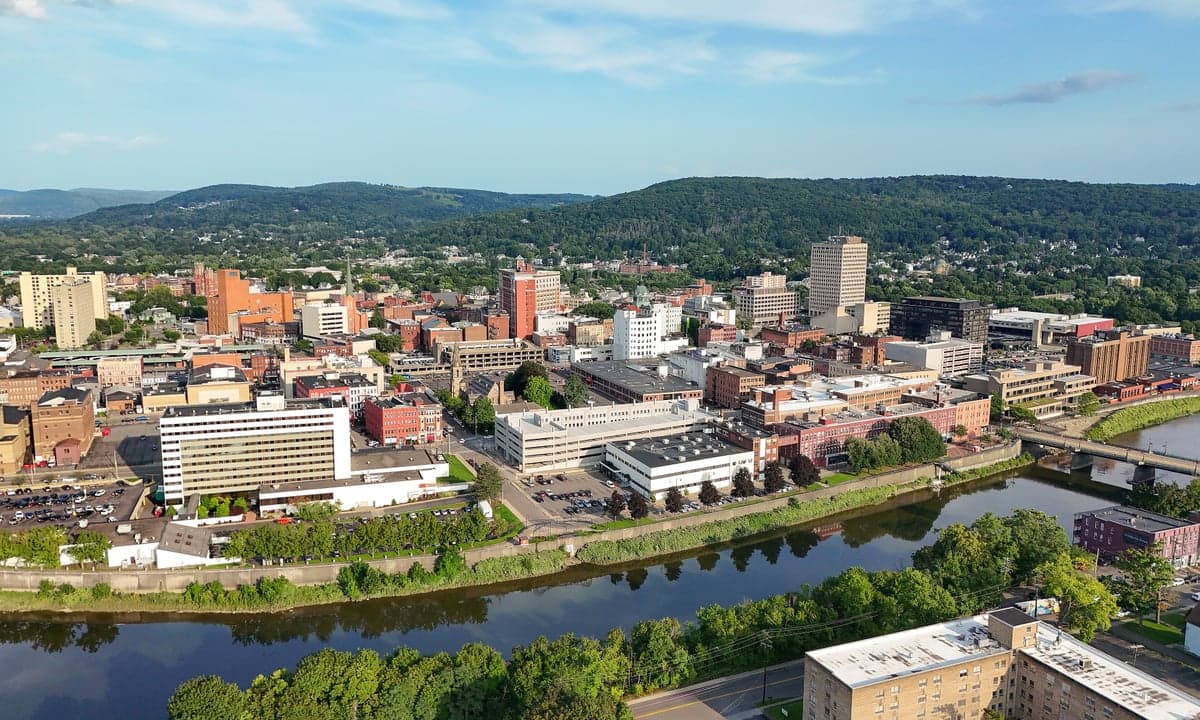
Photo: Wikipedia
Quality of Life in Binghamton, NY
A high quality of life with strong walkability, manageable living costs, healthy neighborhood signals, and solid amenity access.
What does Quality of Life tell us?
Quality of Life blends cost of living, nearby amenities, socioeconomic signals, and neighborhood character. City-level scores represent the whole municipality; individual neighborhoods can differ.
What does this tell us?
Quality of Life blends cost of living, nearby amenities, socioeconomic signals, and neighborhood character. City-level scores represent the whole municipality; individual neighborhoods can differ.
Cost of Living
39% below national average
The Real Cost of Living in Binghamton, NY for 2026
| Tier | Individual | Family (4) |
|---|---|---|
| Survival | $14k | $26k |
| Comfortable | $24k | $35k |
| Luxury | $80k+ | $124k+ |
| Elite (Top 5%) | $121k+ | $188k+ |
125%
The Area Signal
A metric tracking the socioeconomic signals of the area.
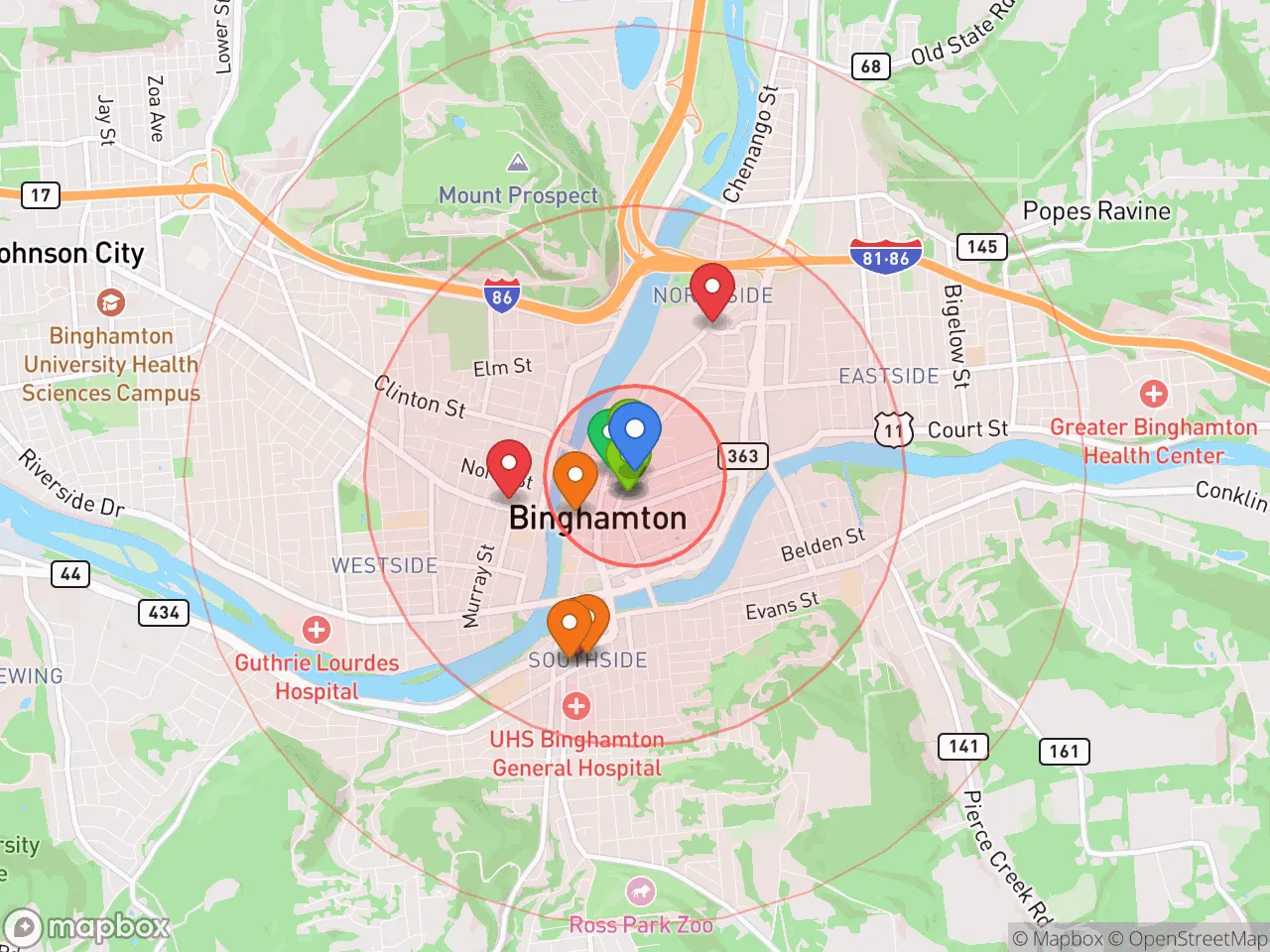
Hobbies
Explore the areaGroceries
6 within 10 miles
Gas
20 within 10 miles
Hospital
7 within 20 miles
Airport
EWR — Newark Liberty International
Post Office
USPS — Binghamton, NY
Critical Amenities
Quality-of-Life Analysis
Binghamton, New York, offers a cost of living dramatically below the national average, making it one of the most affordable small cities in the Northeast. With a cost-of-living index of 61 (where 100 equals the U.S. average), the area attracts a mix of SUNY students, early-career professionals, and retirees seeking a slower pace and lower expenses. The city’s median household income hovers around $40,000, reflecting a working-class and academic community rather than an affluent one, though the broader Broome County region includes more prosperous suburbs like Vestal and Endwell.
How housing costs and affordability compare to nearby cities
Binghamton’s housing market is exceptionally affordable, especially when compared to larger New York metros like Ithaca (45 minutes north) or Syracuse (70 minutes northwest). The median home value in Binghamton is $117,400, roughly one-third the national median and a fraction of Ithaca’s $280,000 average. Median rent sits at $867, well below the state average of $1,400, making the city a viable option for renters on a budget. The average commute time is just 19.7 minutes, significantly shorter than the national average of 26 minutes, which reduces transportation costs and frees up time for daily life. However, property taxes in Broome County are relatively high—around 2.5% of assessed value—which can offset some housing savings for homeowners. For comparison, nearby Scranton, Pennsylvania, offers even lower taxes but slightly higher home prices, while Ithaca’s housing costs are prohibitive for most middle-income buyers.
What daily life is like for families and professionals
Daily life in Binghamton revolves around a compact downtown core, the SUNY Binghamton campus in Vestal, and a network of parks along the Susquehanna and Chenango rivers. The Binghamton City School District serves about 5,000 students, with a graduation rate near 80%, while suburban districts like Vestal and Chenango Forks consistently rank higher in state assessments. Amenities include the Roberson Museum and Science Center, the Binghamton Rumble Ponies minor-league baseball team, and the annual Spiedie Fest & Balloon Rally, which draws regional crowds. The city’s restaurant scene is modest but features local staples like spiedies (marinated meat sandwiches) and a growing number of farm-to-table options. For professionals, major employers include United Health Services (the region’s largest hospital system), BAE Systems (defense manufacturing), and SUNY Binghamton itself, which employs over 5,000 faculty and staff. The rhythm of life is slower than in larger metros, with most errands and entertainment concentrated within a 15-minute drive.
Binghamton is best suited for those who prioritize affordability and a low-stress lifestyle over urban excitement or high-end amenities. Retirees on fixed incomes, remote workers seeking a low-cost base, and SUNY students or graduates who stay in the area will find the most value. The city’s challenges—including a shrinking population (down 10% since 2010) and limited job growth outside healthcare and education—mean it is not ideal for ambitious professionals in fast-growing industries. For anyone willing to trade career dynamism for financial breathing room and a tight-knit community, Binghamton delivers a quality of life that is hard to match at this price point in the Northeast.

Crime in Binghamton, NY
Higher crime rates than 72% of comparable U.S. locations.
Violent CrimeViolent Crime Analysis
Property CrimeProperty Crime Analysis
Crime Analysis
Binghamton, New York, presents a challenging safety profile, with crime rates that significantly exceed both state and national averages. The city recorded a violent crime rate of 548.1 incidents per 100,000 residents and a property crime rate of 3,138.1 per 100,000 in the most recent reporting period. These figures place Binghamton among the higher-crime small cities in the Southern Tier region, a reality shaped by economic pressures and the local criminal justice system's approach to prosecution and sentencing.
Crime in context
Binghamton's violent crime rate is roughly 50% higher than the national average and more than double the New York State average, which is suppressed by New York City's low violent crime numbers. Property crime in the city is also elevated, running about 20% above the national benchmark. The surrounding Broome County area, including suburbs like Vestal and Endwell, reports substantially lower crime rates, underscoring that the city itself concentrates the region's public safety challenges. The presence of a large metro-area dynamic—Binghamton is the urban core of a metro of roughly 250,000—combined with a political environment that leans progressive, has direct consequences for public safety. Liberal district attorneys and judges in Broome County have been criticized for pursuing lenient plea deals and alternative-to-incarceration programs that, while intended to reduce recidivism, often result in repeat offenders cycling back onto the streets quickly. This approach, sympathetic to offenders, directly undermines justice for victims and erodes the deterrent effect of prosecution, leaving residents to contend with a revolving door of criminal activity.
What residents experience
For those living in Binghamton, the elevated crime rates translate into tangible daily concerns. Property crime is the most common encounter: vehicle break-ins, package thefts from porches, and burglaries of ground-floor apartments are frequent, particularly in neighborhoods near downtown and the West Side. Violent incidents, while less common, are concentrated in specific areas and often involve disputes among individuals known to one another, though random assaults do occur. Residents report that the city's response to quality-of-life crimes—such as drug dealing, vandalism, and public intoxication—is inconsistent, with many cases resulting in citations or short sentences rather than meaningful intervention. The progressive justice philosophy that prioritizes offender rehabilitation over victim restitution means that even when arrests are made, consequences are often minimal, fostering a sense among law-abiding residents that the system does not prioritize their safety.
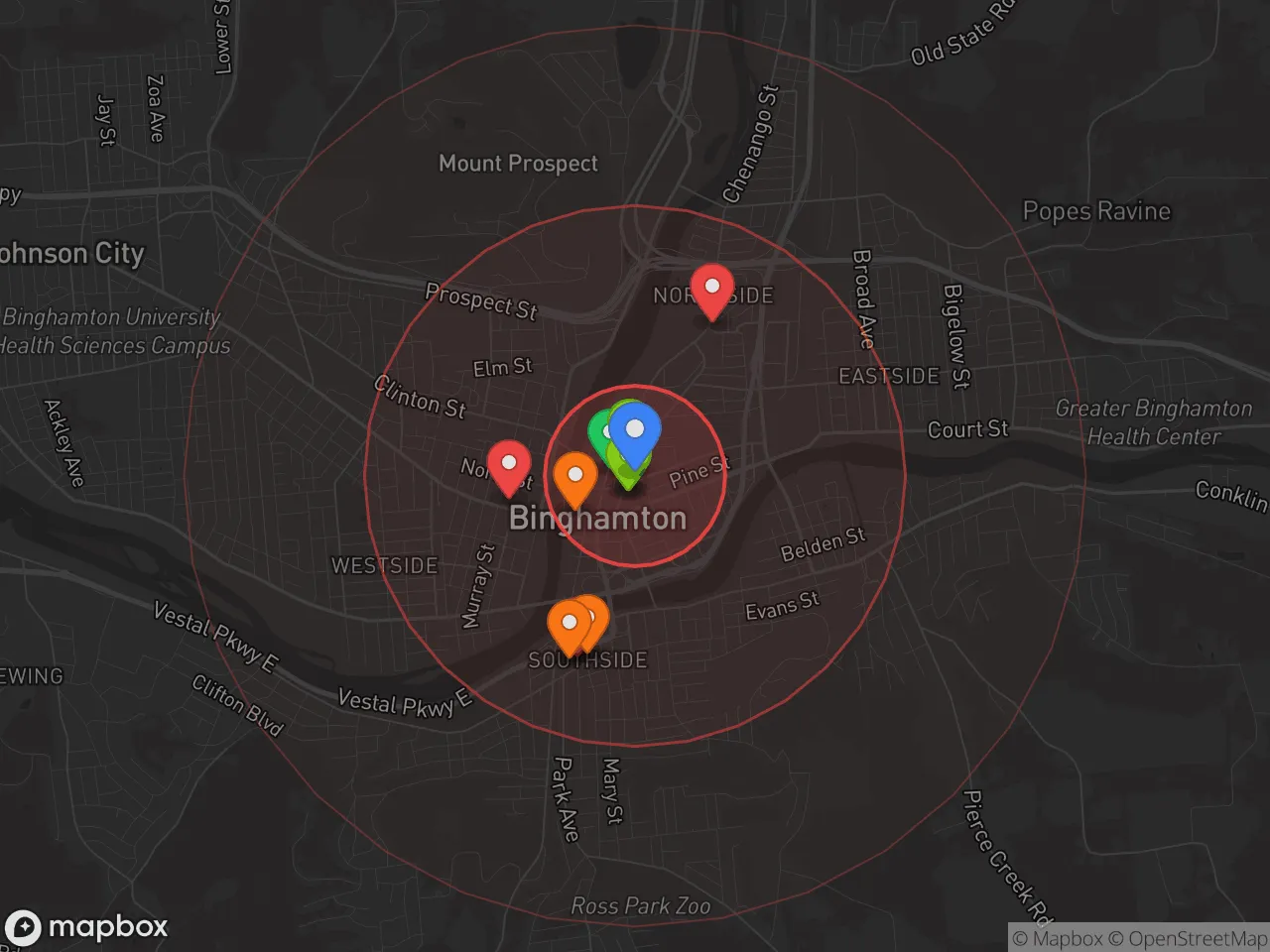
Neighborhood-level variation is pronounced. The First Ward and parts of the South Side see the highest concentrations of both violent and property crime, while the more residential East Side and the tree-lined streets of the North Side near the Susquehanna River offer comparatively lower risk. Areas immediately surrounding Binghamton University, such as the West Side near the campus, experience elevated property crime but lower violent crime, reflecting the student population's vulnerability to theft. For anyone considering a move to Binghamton, choosing a specific neighborhood and understanding the local court system's track record are critical steps in assessing personal safety.
* Values derived from national, state, county, city and local statistics and may differ in a specific area. Last updated: 2026-05-01T00:47:30.000Z
Narrative content on this page is AI-generated and may contain mistakes. Verify any details that matter before acting on them.
ReloMaps may earn a commission from affiliate links at no extra cost to you.

