 Popular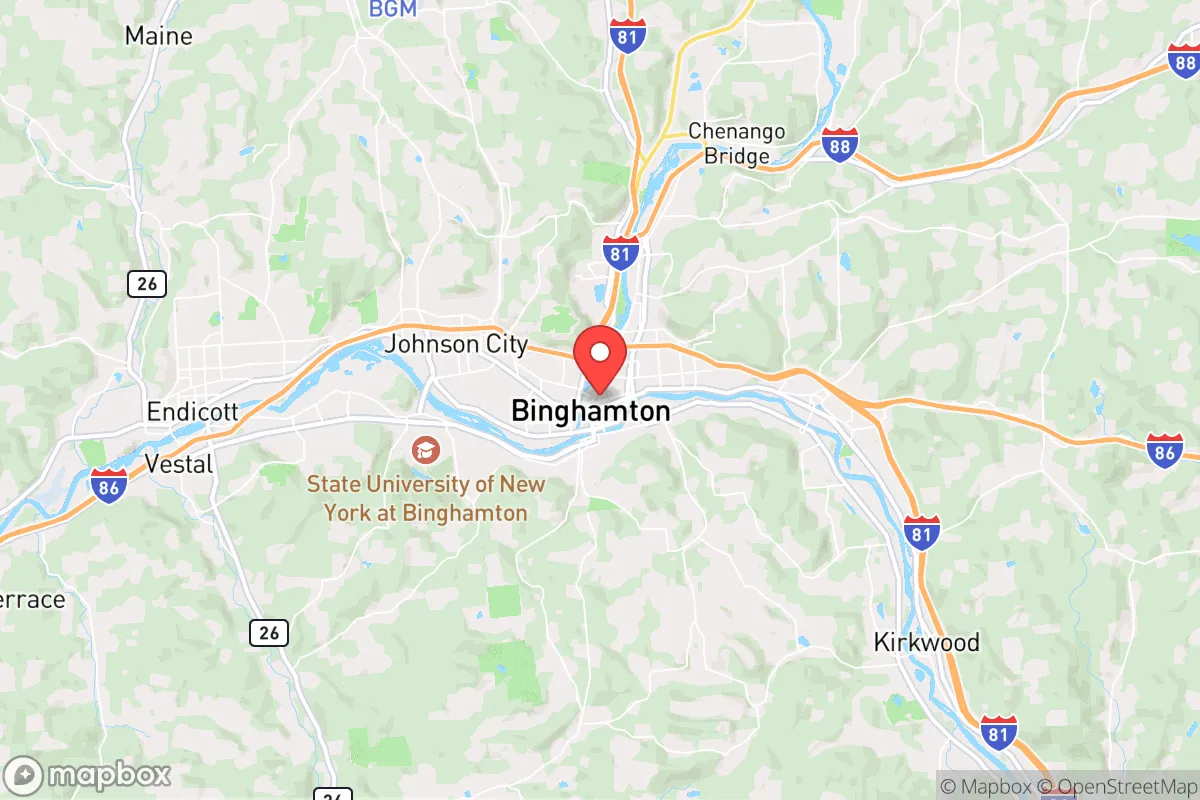
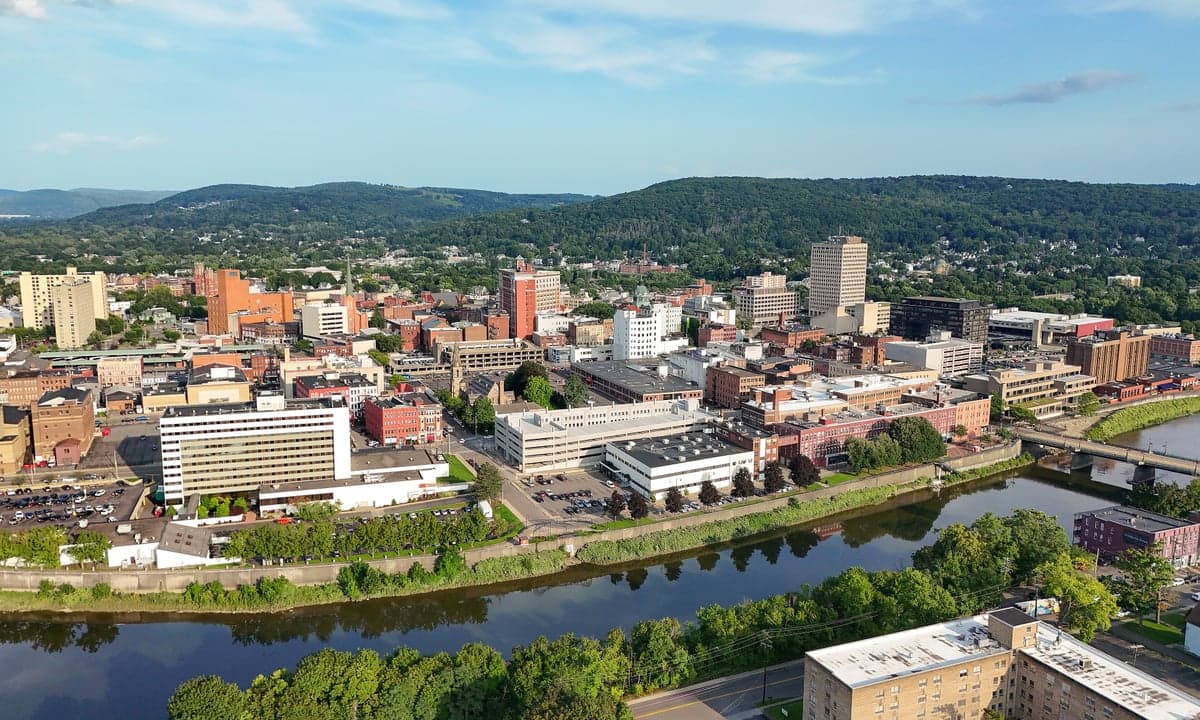
Photo: Wikipedia
Political ClimatePolitical Climate in Binghamton, NY
District shown is the primary district for this city’s centroid. Cities may span multiple districts.
Local Political AnalysisPolitical Analysis of Binghamton, NY
Binghamton’s political climate has shifted noticeably over the last decade, and if you’ve lived here as long as I have, you’ve felt it. The city itself leans left, with a Cook PVI of D+1, but that single point doesn’t tell the whole story. For decades, this was a reliably blue-collar, union-heavy town where folks voted their pocketbooks and didn’t much care for social experiments. Today, you’ll still find plenty of that old-school sensibility in the surrounding suburbs and towns—places like Endwell, Vestal, and Johnson City—where the voting patterns are more conservative and the skepticism of government overreach runs deep. But inside the city limits, especially among the newer transplants and the university crowd, the energy has shifted toward progressive policies that many of us see as a red flag for personal freedoms.
How it compares
Drive ten minutes in any direction from downtown, and you’ll hit a different political world. Broome County as a whole is more purple than blue, with rural towns like Chenango Forks and Windsor voting solidly Republican. Meanwhile, Ithaca, just 45 minutes up Route 79, is a progressive stronghold that makes Binghamton look moderate by comparison. The contrast is stark: in Ithaca, you’ll see aggressive zoning changes and local ordinances that push a top-down social agenda, while Binghamton’s progressive shift has been slower but unmistakable. The city council has taken steps that worry long-time residents—things like defunding police initiatives and pushing sanctuary city policies that prioritize non-citizens over law-abiding locals. It’s a pattern that feels less like community improvement and more like government telling you how to live your life.
What this means for residents
For the average family or small business owner, the practical effect is a growing sense that your voice matters less than the loudest activist. Property taxes have crept up to fund programs that don’t always align with local values, and there’s a creeping feeling that the city’s leadership is more interested in national trends than in fixing potholes or keeping the streets safe. If you value the right to make your own choices—whether that’s about your kids’ education, your business operations, or your Second Amendment rights—you’ll find yourself increasingly at odds with the local government. The school board has seen heated debates over curriculum and library books, and the push for “equity” initiatives often feels like a backdoor for ideological conformity. It’s not yet the chaos you see in bigger cities, but the trajectory is concerning.
What sets Binghamton apart
One thing that still gives this place character is the stubborn independence of the people. Even as the city government leans left, you’ll find a strong network of local churches, gun clubs, and small business associations that push back. The annual Spiedie Fest and the old-school diners on Main Street remind you that this isn’t a place that rolls over easily. But the long-term trend is worrisome: as Binghamton University expands and attracts more out-of-state students and faculty, the voting base shifts younger and more progressive. If you’re looking for a place where your conservative values are respected and your freedoms aren’t treated as negotiable, you might want to look at the surrounding towns rather than the city itself. The next five to ten years will tell whether Binghamton doubles down on the progressive path or whether the old guard manages to pull it back toward common sense.

State Political ClimatePolitical Climate in New York
State Political AnalysisPolitical Environment in the State
New York State has become a one-party dominant state, with Democrats controlling every lever of government for over a decade, and the partisan lean has shifted sharply leftward since the 2010s. In 2024, Joe Biden carried the state by roughly 12 points, but that number masks a brutal urban-rural split: New York City’s five boroughs alone delivered a margin of over 2 million votes, while the rest of the state voted Republican by a combined margin. The trajectory over the last 20 years is unmistakable—the state has moved from a purple-ish blue to deep blue, driven by massive population growth in New York City and its inner suburbs, and a simultaneous exodus of conservative-leaning families from places like Buffalo, Rochester, and Syracuse to Florida, Texas, and the Carolinas.
Urban vs. rural divide
The political map of New York is a tale of two states. The five boroughs of New York City—Manhattan, Brooklyn, Queens, the Bronx, and Staten Island—are the Democratic engine room, with Manhattan and Brooklyn routinely delivering 80-85% of the vote to Democrats. The inner-ring suburbs of Westchester County and Nassau County on Long Island have also trended blue, though Nassau still has pockets of Republican strength in towns like Oyster Bay and Hempstead. Upstate, the picture flips: counties like Allegany, Wyoming, and Orleans in the western part of the state routinely vote 65-70% Republican. The Capital Region around Albany is a swing area, with Albany County itself being reliably Democratic but surrounding counties like Saratoga and Rensselaer leaning red. The Hudson Valley is a battleground—Dutchess County and Ulster County have trended blue, but Orange County and Rockland County still have competitive races. The real story is the Southern Tier and the North Country, vast rural stretches that vote Republican but are so sparsely populated they barely register in statewide elections. The divide isn't just political—it's cultural and economic, with upstate feeling increasingly ignored by a state government that prioritizes NYC transit funding over rural road repairs.
Policy environment
New York's policy environment is among the most progressive in the nation, and it shows in the tax code. The state has a progressive income tax that tops out at 10.9% for income over $25 million, but even middle-class families in the $100,000-$300,000 range face effective rates of 6-7%, plus New York City adds its own income tax of up to 3.9%. Property taxes are among the highest in the country—the median effective rate is around 1.7%, but in places like Westchester County and Nassau County, it's closer to 2.5%. Sales tax is 8.875% in NYC and 8% in most of the state. On education, the state has adopted the "New York State Education Department" framework that emphasizes DEI initiatives and social-emotional learning, and it was one of the first states to mandate "CRT-adjacent" curriculum standards in 2021. Healthcare is heavily regulated, with the state expanding Medicaid under the Affordable Care Act and implementing a "public option" for health insurance in 2021. Election laws are among the most permissive in the country: no-excuse absentee voting, early voting, same-day registration, and automatic voter registration were all enacted between 2019 and 2022. The state also passed the "John R. Lewis Voting Rights Act" in 2022, which requires pre-clearance for any local voting changes in jurisdictions with a history of discrimination—a move that effectively gives the state attorney general veto power over local election rules.
Trajectory & freedom
New York is becoming less free by almost any measure, and the trend has accelerated since 2019. On gun rights, the state passed the "SAFE Act" in 2013, which banned "assault weapons" and limited magazine capacity to 10 rounds, and then in 2022, after the Supreme Court's Bruen decision, the legislature passed the "Concealed Carry Improvement Act" (CCIA), which effectively made it nearly impossible to get a concealed carry permit by requiring "good moral character" affidavits and banning carry in a vast list of "sensitive places" including Times Square, subways, and even private businesses unless the owner explicitly posts a sign allowing it. On parental rights, the state passed a "shield law" in 2023 that protects doctors who perform gender-transition procedures on minors from out-of-state lawsuits, effectively overriding parental consent laws in other states. On medical autonomy, the state legalized recreational marijuana in 2021, but the rollout has been chaotic, with a heavy regulatory hand that has favored social-equity applicants over existing businesses. On property rights, the state passed the "Housing Stability and Tenant Protection Act" in 2019, which eliminated vacancy decontrol in rent-stabilized apartments and made it harder for landlords to evict non-paying tenants—a move that has been blamed for a wave of small landlords selling out to corporate buyers. The state also passed the "Climate Leadership and Community Protection Act" in 2019, which mandates a 100% carbon-free electricity grid by 2040 and net-zero emissions by 2050, effectively banning natural gas hookups in new construction starting in 2026. For a conservative-leaning resident, the message is clear: the state is actively reducing personal autonomy in favor of government mandates.
Civil unrest & political movements
New York has been a flashpoint for political activism on both sides. The 2020 Black Lives Matter protests in New York City were among the largest in the country, with tens of thousands taking to the streets for weeks, and the state responded by passing police reform legislation that included banning chokeholds and repealing 50-a, a law that had shielded police disciplinary records. On the right, the "New York State Rifle & Pistol Association" has been the lead plaintiff in multiple Supreme Court cases, including Bruen, and there is a growing "Second Amendment sanctuary" movement in upstate counties like Allegany and Wyoming, where sheriffs have pledged not to enforce the CCIA. Immigration politics are a major fault line: New York City is a "sanctuary city" under Mayor Eric Adams, and the state has a "Green Light Law" that allows undocumented immigrants to obtain driver's licenses. In 2022-2023, the city saw an influx of over 100,000 asylum seekers from the southern border, which strained shelter systems and sparked backlash in working-class neighborhoods in Queens and Brooklyn. There is also a small but vocal "secession" movement in upstate New York, with groups like "Divide NY" pushing for the separation of New York City from the rest of the state, though it has gained little legislative traction. Election integrity remains a concern for conservatives: the state's 2020 election saw widespread use of mail-in ballots due to COVID, and the 2022 law allowing no-excuse absentee voting has led to concerns about ballot harvesting, though no major scandals have been proven.
Projection
Over the next 5-10 years, New York is likely to become even more Democratic and more progressive, driven by two demographic trends. First, New York City continues to attract young, college-educated, left-leaning migrants from other states and countries, while the upstate population continues to decline—the state lost a congressional seat after the 2020 census, and projections show it could lose another after 2030. Second, the exodus of conservative-leaning families to Florida, Texas, and the Carolinas is accelerating, with the state losing a net 300,000 residents to other states between 2020 and 2023. This means the political center of gravity will shift even further toward NYC and its suburbs, making it harder for Republicans to win statewide office. The state's fiscal situation is also precarious: the state budget has grown by over 40% since 2019, and the state faces a $4 billion deficit in 2025, which will likely lead to tax increases on high earners or cuts to services. For someone moving in now, the expectation should be that the policy environment will continue to tighten—more gun control, more climate mandates, more tenant protections, and higher taxes. The only wildcard is a potential federal intervention: if a future Republican administration withholds federal funding or challenges state laws in court, New York could face a fiscal crisis that forces a course correction.
For a conservative-leaning individual or family considering a move to New York, the bottom line is this: you will be living in a state where your political views are in the minority, where your tax dollars will fund policies you likely oppose, and where your personal freedoms—especially around guns, education, and property rights—will be increasingly constrained. If you're looking for a place where your vote counts and your values are reflected in state law, New York is not that place. But if you have a specific reason to be here—a job in finance, a family connection, or a love for the Adirondacks—you can still find community in the red counties of upstate or the conservative suburbs of Long Island. Just know that the state government is not on your side, and it's only getting more hostile.
* Values derived from national, state, county, city and local statistics and may differ in a specific area. Last updated: 2026-05-01T00:47:30.000Z
Narrative content on this page is AI-generated and may contain mistakes. Verify any details that matter before acting on them.
ReloMaps may earn a commission from affiliate links at no extra cost to you.

