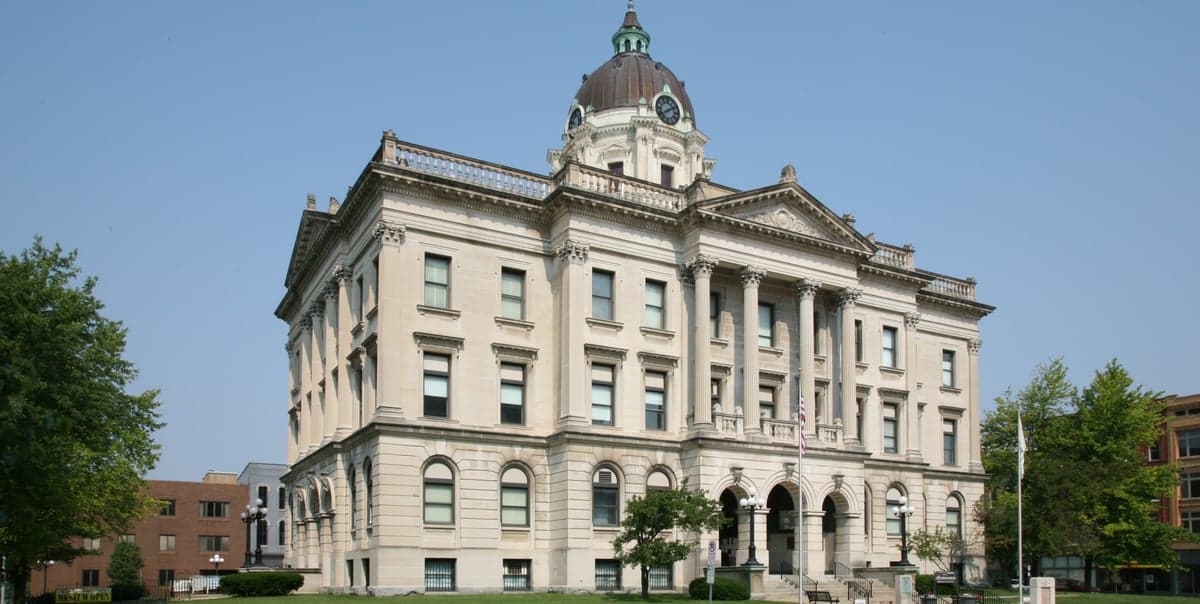
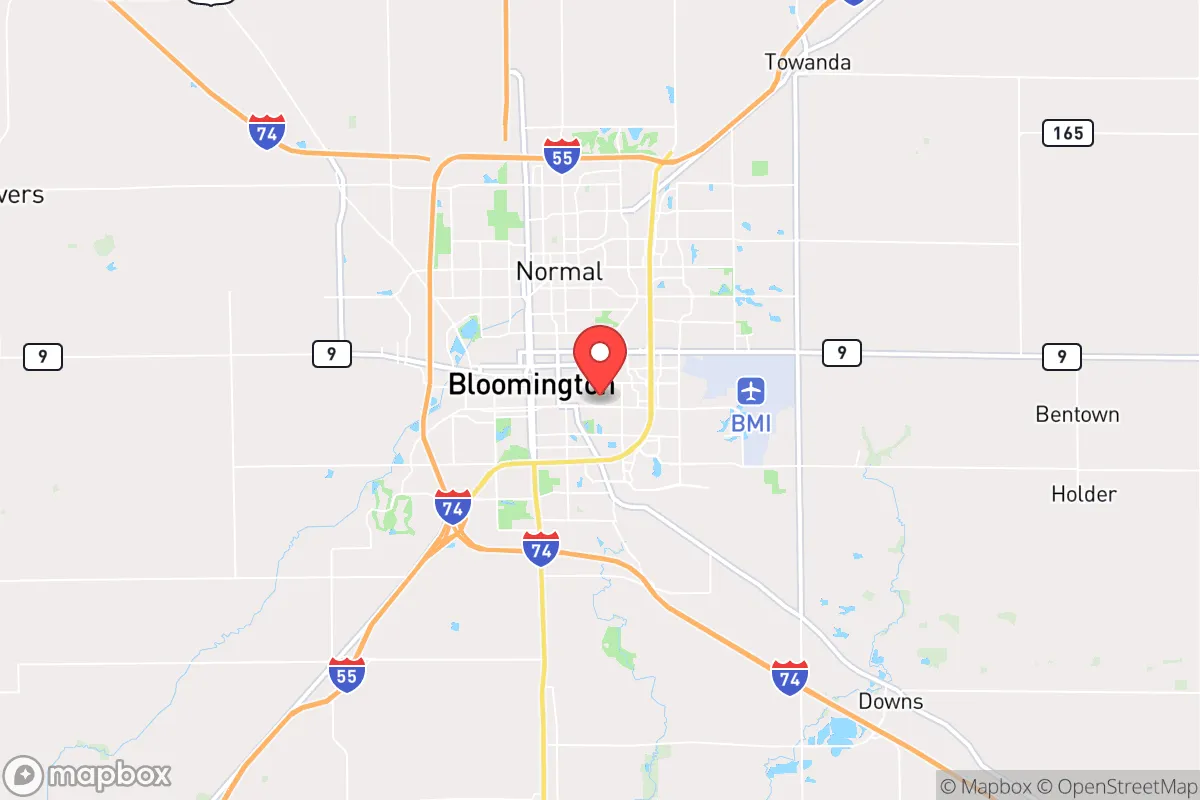
Photo: Wikipedia
Demographics of Bloomington, IL
Affluence Level in Bloomington, IL
A middle-class area roughly in line with national averages across income, home values, education, and employment.
People of Bloomington, IL
Bloomington, Illinois, is a city of roughly 78,700 residents that blends a historic Midwestern manufacturing and railroad backbone with a modern, college-educated professional class. Its population is predominantly white (70.6%), but includes significant Black (9.7%), Hispanic (7.3%), and Indian-subcontinent (5.5%) communities, alongside a smaller East/Southeast Asian population (2.3%). The city’s character is shaped by its role as the home of State Farm Insurance and Illinois State University, giving it a stable, family-oriented feel with a notable concentration of white-collar workers and a growing diversity driven by professional migration.
How the city was settled and grew
Bloomington was founded in the 1830s as the McLean County seat, drawing its earliest settlers—primarily Yankees from New England and upstate New York—via the fertile prairie land and the promise of the Illinois Central Railroad. The railroad’s arrival in the 1850s turned the town into a regional hub for grain and livestock, attracting German and Irish immigrants who built the working-class neighborhoods of West Bloomington and the near-west side around the rail yards. By the late 19th century, the city’s industrial base expanded with the founding of the Bloomington-Normal streetcar system and the Eureka Company (later part of the White Consolidated Industries), drawing additional waves of German, Swedish, and Italian immigrants. These groups settled in distinct enclaves: Germans concentrated in the Davis Addition and Oakland Avenue areas, while Irish families clustered near the railroad depots in what is now the Downtown core. The early 20th century saw a small but steady Black migration from the rural South, primarily settling in the East Side near the railroad and industrial zones, forming the foundation of Bloomington’s historic Black community.
Modern era (post-1965)
The post-1965 period reshaped Bloomington’s demographics through two major forces: the expansion of State Farm Insurance and the growth of Illinois State University. State Farm’s corporate headquarters, established in the 1920s but booming after the 1960s, drew a wave of white-collar professionals from across the Midwest, fueling suburban development in northwest Bloomington and the Towanda Creek area. The 1965 Immigration and Nationality Act opened the door for new immigrant groups. The most notable post-1965 arrival is the Indian-subcontinent community, which grew from a handful of university faculty and medical professionals in the 1970s to a substantial 5.5% share today. This group is heavily concentrated in the Oakland Avenue corridor and near the university, with many working in healthcare (OSF St. Joseph Medical Center) and tech roles at State Farm. The East/Southeast Asian population (2.3%) arrived later, primarily as students and professionals tied to Illinois State University, settling in the Normal border area and near the campus. The Hispanic population (7.3%) grew steadily from the 1990s onward, driven by agricultural and construction work, and is concentrated in West Bloomington and the South Side near the old rail yards. The Black population (9.7%) has remained relatively stable, with many families still rooted in the East Side and Douglas Street corridor, though some have moved to newer subdivisions in the northwest.
The future
Bloomington’s population is trending toward greater professionalization and moderate diversification, but not rapid homogenization. The Indian-subcontinent community is the fastest-growing group, driven by continued hiring in healthcare and insurance, and is likely to reach 7-8% of the population within a decade. The East/Southeast Asian population is growing slowly, primarily through university enrollment, and is unlikely to exceed 3%. The Hispanic population is expanding steadily through both birth rates and continued migration, with the West Bloomington enclave becoming more established. The white population, while still the majority, is aging and slightly declining as younger professionals move to suburbs like Normal or out of state. The city is not tribalizing into stark enclaves—most neighborhoods are mixed—but distinct clusters remain: Indian families near the university and medical district, Hispanic families in the west side, and Black families in the east side. The next 10-20 years will likely see Bloomington become slightly more diverse, with the Indian and Hispanic shares rising, while the white share drops to around 65-68%. The city’s overall growth is modest (roughly 0.5-1% annually), constrained by housing costs and a limited supply of new construction.
For someone moving to Bloomington now, the city offers a stable, family-oriented environment with a strong job market anchored by State Farm and the university. The population is becoming more diverse but remains predominantly white and college-educated, with clear but not rigid neighborhood patterns. New arrivals should expect a community that values education, stability, and professional life, with a growing but still manageable immigrant presence that enriches the local culture without overwhelming it.

* Values derived from national, state, county, city and local statistics and may differ in a specific area. Last updated: 2026-04-30T01:34:36.000Z
Narrative content on this page is AI-generated and may contain mistakes. Verify any details that matter before acting on them.
ReloMaps may earn a commission from affiliate links at no extra cost to you.

