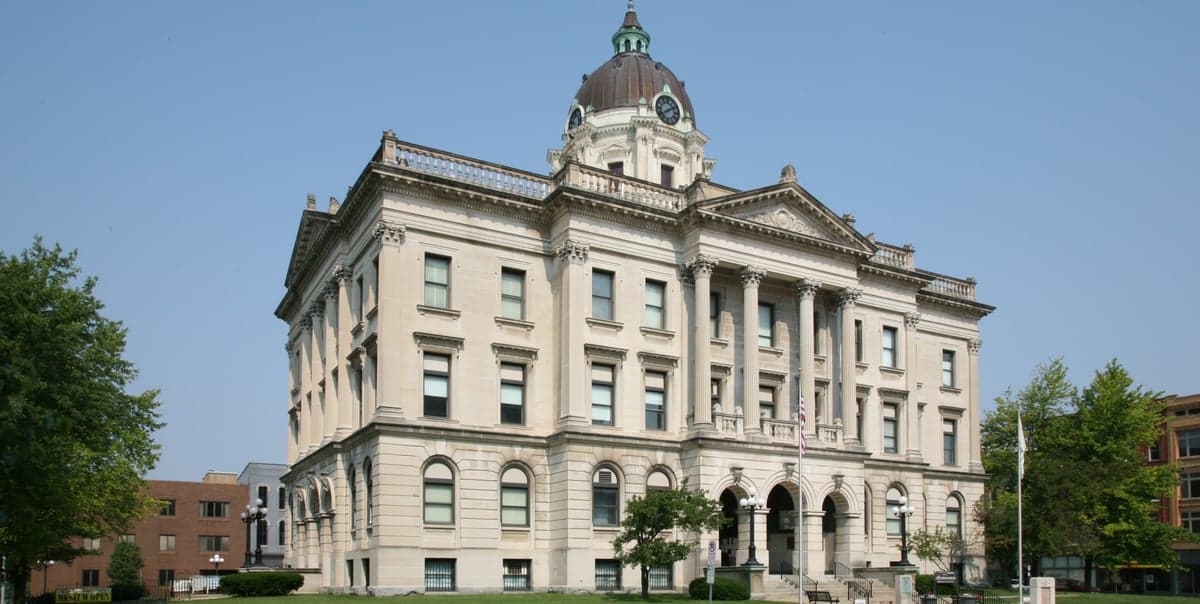
Photo: Wikipedia
Political ClimatePolitical Climate in Bloomington, IL
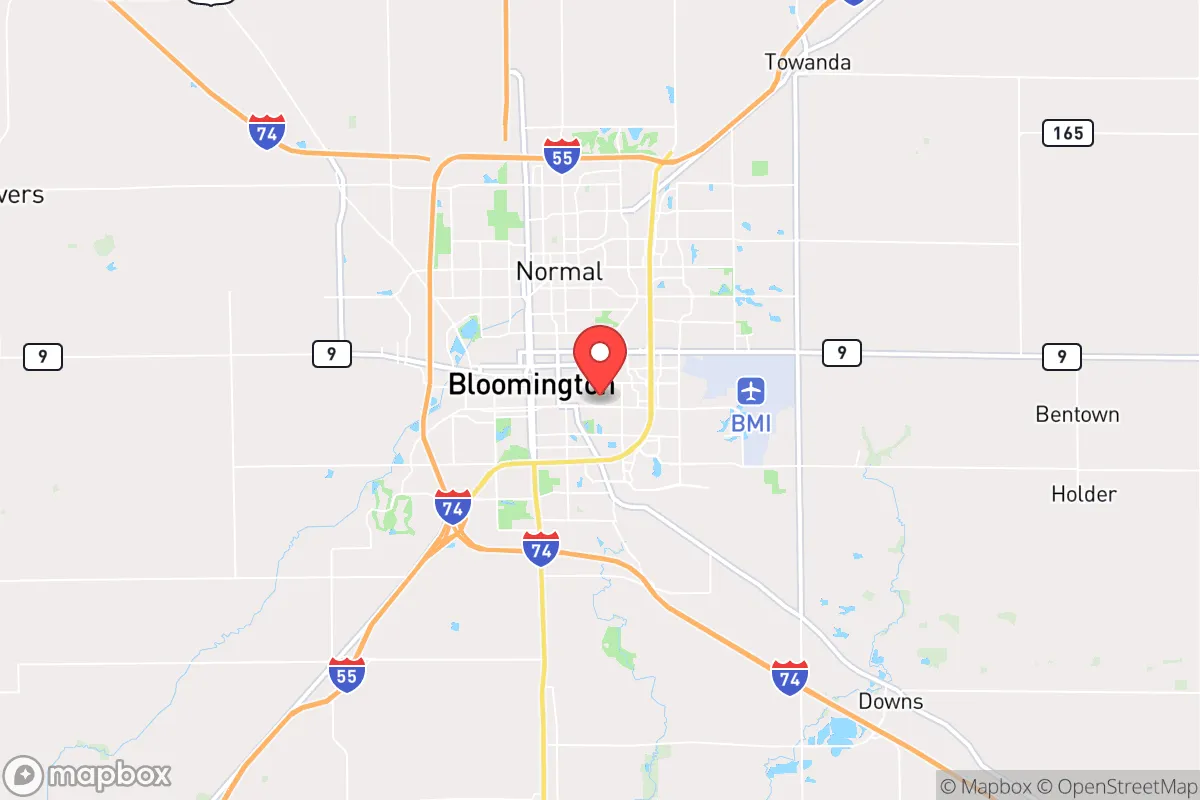
District shown is the primary district for this city’s centroid. Cities may span multiple districts.
Local Political AnalysisPolitical Analysis of Bloomington, IL
Bloomington, Illinois, has shifted noticeably to the left over the past decade, and if you’ve lived here as long as I have, you’ve felt it. The city now carries a Cook PVI of D+3, meaning it votes about three points more Democratic than the national average—a far cry from the reliably purple swing area it used to be. While McLean County as a whole still leans slightly right, Bloomington itself has become a Democratic stronghold, and the surrounding towns like LeRoy, Downs, and even parts of Normal tell a different, more conservative story. The trajectory is clear: the local government is increasingly embracing progressive policies, and for those of us who value limited government and personal freedoms, that’s a real concern.
How it compares
Drive just 15 minutes east to LeRoy, and you’ll find a town that votes reliably Republican—often by double digits. The same goes for Downs to the north and even some rural pockets of Normal, though Normal itself has trended blue alongside Bloomington thanks to Illinois State University’s influence. The contrast is stark: Bloomington’s city council and county board have pushed through zoning changes, tax hikes, and social programs that feel out of step with the surrounding farmland. In the 2024 election, McLean County overall voted about +2 Republican, but Bloomington’s precincts swung hard for Democratic candidates. That D+3 rating masks a deeper divide—the city is becoming an island of progressive governance in a sea of traditional, common-sense conservatism.
What this means for residents
For folks who just want to be left alone, the shift is unsettling. Property taxes have crept up to fund new affordable housing mandates and expanded public transit—initiatives that sound good on paper but often mean more government intrusion into your wallet and your property rights. The city has also tightened rental regulations and added new business licensing requirements, which small business owners I know say feel like red tape for red tape’s sake. If you value the freedom to run your life without a bureaucrat’s sign-off, Bloomington’s direction is worth watching closely. The long-term trend suggests more of the same: higher taxes, more regulations, and a growing disconnect between the city’s priorities and the values of the folks who actually work the land or run the shops around here.
One cultural distinction that stands out is the local attitude toward firearms and self-defense. While the rest of McLean County generally supports Second Amendment rights, Bloomington’s city council has flirted with safe-storage ordinances and even discussed “red flag” laws at public meetings—moves that many of us see as a direct threat to personal responsibility and the right to protect our families. The city’s public schools have also leaned into DEI initiatives and gender-inclusive policies that would have been unthinkable 20 years ago. It’s not that Bloomington is a bad place to live—it’s still got good people and a strong sense of community—but the political climate is shifting in a way that feels less like progress and more like a slow erosion of the freedoms that made this area great. If you’re considering a move here, just know what you’re walking into.

State Political ClimatePolitical Climate in Illinois
State Political AnalysisPolitical Environment in the State
Illinois is a deeply blue state in statewide elections, but that label hides a much more complicated reality. The Democratic coalition is powered almost entirely by Chicago and its inner suburbs, while the rest of the state—from the Mississippi River towns to the southern tip—votes reliably Republican. Over the last 20 years, the state has shifted leftward on cultural and economic issues, driven by a shrinking rural population and a growing, heavily Democratic Chicago metro. If you’re considering a move here, understand that your experience of Illinois politics will depend almost entirely on which zip code you choose.
Urban vs. rural divide
The political map of Illinois is a study in extremes. Cook County, home to Chicago, casts roughly 40% of the state’s total vote and delivers margins of 70-80% for Democrats. The collar counties—DuPage, Lake, Kane, Will, and McHenry—were once Republican strongholds but have trended blue in presidential years, especially in the inner-ring suburbs like Naperville and Arlington Heights. Meanwhile, downstate Illinois is solidly red. Counties like Effingham, Marion, and Williamson routinely vote 70%+ Republican. The divide isn’t just cultural; it’s economic. Chicago’s economy is service-based, global, and union-heavy, while downstate relies on agriculture, manufacturing, and energy. This split means state government is perpetually at war with itself—Chicago Democrats push for higher taxes and progressive social policy, while rural Republicans fight for lower property taxes, gun rights, and local control. The result is a state that feels like two different countries sharing a border.
Policy environment
Illinois’s policy environment is a cautionary tale for anyone who values limited government. The state has the second-highest property tax burden in the nation, with effective rates often exceeding 2% of home value. The state income tax is a flat 4.95%, but there’s a progressive tax amendment on the table every few years. Sales taxes can hit 10.25% in Chicago. On the regulatory side, Illinois is one of the most restrictive states for gun owners—it requires a Firearm Owner’s ID (FOID) card, a concealed carry license, and bans many common rifle features. Education policy is dominated by the Chicago Teachers Union, which has successfully resisted charter school expansion and performance-based pay. Healthcare is heavily regulated, with a state-based insurance exchange and Medicaid expansion under the Affordable Care Act. Election laws are among the most liberal in the country: no voter ID requirement, automatic voter registration, and mail-in ballots sent to all registered voters. For a conservative, the policy environment feels like a slow-motion erosion of personal freedom, especially in the areas of taxation and self-defense.
Trajectory & freedom
Over the last decade, Illinois has become less free by almost any measure. The 2013 passage of the Firearm Concealed Carry Act was a rare win for gun rights, but it came with a restrictive “may-issue” system that was later loosened by court order. In 2019, the state banned assault weapons and high-capacity magazines under the Protect Illinois Communities Act, a law that has sparked ongoing legal challenges. On the parental rights front, Illinois has some of the most permissive abortion laws in the country, with no parental notification requirement for minors. The state also passed a law in 2021 requiring public schools to teach LGBTQ-inclusive history, which has drawn backlash from conservative parents. Property rights have been weakened by the state’s aggressive use of eminent domain for private development, particularly in Chicago. The tax burden continues to rise, with no serious property tax reform in sight. The trajectory is clear: more regulation, higher taxes, and less individual autonomy, especially for gun owners and parents who want a say in their children’s education.
Civil unrest & political movements
Illinois has seen its share of political flashpoints. The 2020 George Floyd protests in Chicago turned into widespread looting and property destruction, with over $60 million in damage in the Loop alone. The state’s sanctuary city policies, which limit cooperation between local police and federal immigration authorities, have been a constant source of tension between Chicago and downstate counties. In 2023, the city of Elgin became a flashpoint over a proposed migrant shelter, drawing protests from both sides. On the right, the Illinois State Rifle Association remains a powerful lobbying force, and groups like Awake Illinois have organized against school mask mandates and critical race theory. Election integrity is a live issue: in 2020, Cook County sent out thousands of unsolicited mail-in ballots, and the state’s lack of voter ID has fueled ongoing distrust. For a new resident, the most visible sign of unrest is the political graffiti and protest signs that linger in Chicago’s neighborhoods, a constant reminder that the city is a battleground for national cultural wars.
Projection
Looking ahead 5-10 years, Illinois is likely to become more Democratic and more progressive. The Chicago metro is growing slowly, but it’s growing, while downstate continues to lose population. The 2020 census cost Illinois one congressional seat, and that trend will continue. The state’s pension crisis—over $140 billion in unfunded liabilities—will force either massive tax hikes or service cuts, and neither option is friendly to conservatives. The gun ban will likely survive legal challenges, and new restrictions on ammunition and storage are probable. The only countervailing trend is the slow but steady migration of conservatives to exurban counties like McHenry and Kendall, where they can still find low taxes and local control. But those counties are being absorbed into the Chicago orbit. If you move to Illinois now, expect to be living in a state that is increasingly run by Chicago’s progressive machine, with fewer options for those who value limited government and personal freedom.
For a conservative considering a move to Illinois, the bottom line is this: choose your location carefully. If you live in Chicago or its inner suburbs, you will be subject to high taxes, restrictive gun laws, and a progressive cultural environment. If you live in a rural county like Effingham or Marion, you can still find a community that shares your values, but you will be fighting a losing battle at the state level. The state’s trajectory is not friendly to limited-government conservatives, and the best you can hope for is to carve out a local oasis while the state as a whole drifts left. If you’re willing to pay the price in taxes and regulation, Illinois offers world-class amenities in Chicago. But if you value freedom above all, you’ll find more of it in neighboring Indiana or Missouri.
* Values derived from national, state, county, city and local statistics and may differ in a specific area. Last updated: 2026-04-30T01:34:36.000Z
Narrative content on this page is AI-generated and may contain mistakes. Verify any details that matter before acting on them.
ReloMaps may earn a commission from affiliate links at no extra cost to you.

