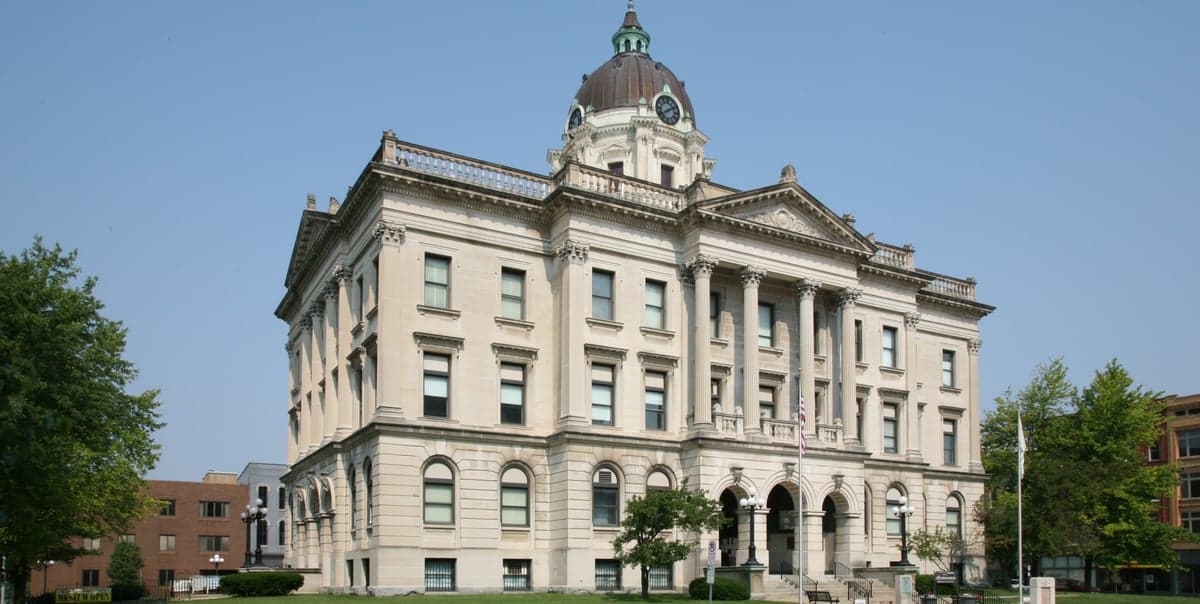
Photo: Wikipedia
Quality of Life in Bloomington, IL
Above-average quality of iife. The area offers a reasonable cost of living, decent mobility, and a mix of neighborhood amenities.
What does Quality of Life tell us?
Quality of Life blends cost of living, nearby amenities, socioeconomic signals, and neighborhood character. City-level scores represent the whole municipality; individual neighborhoods can differ.
What does this tell us?
Quality of Life blends cost of living, nearby amenities, socioeconomic signals, and neighborhood character. City-level scores represent the whole municipality; individual neighborhoods can differ.
Cost of Living
20% below national average
The Real Cost of Living in Bloomington, IL for 2026
| Tier | Individual | Family (4) |
|---|---|---|
| Survival | $16k | $30k |
| Comfortable | $39k | $57k |
| Luxury | $136k+ | $211k+ |
| Elite (Top 5%) | $163k+ | $253k+ |
133%
The Area Signal
A metric tracking the socioeconomic signals of the area.
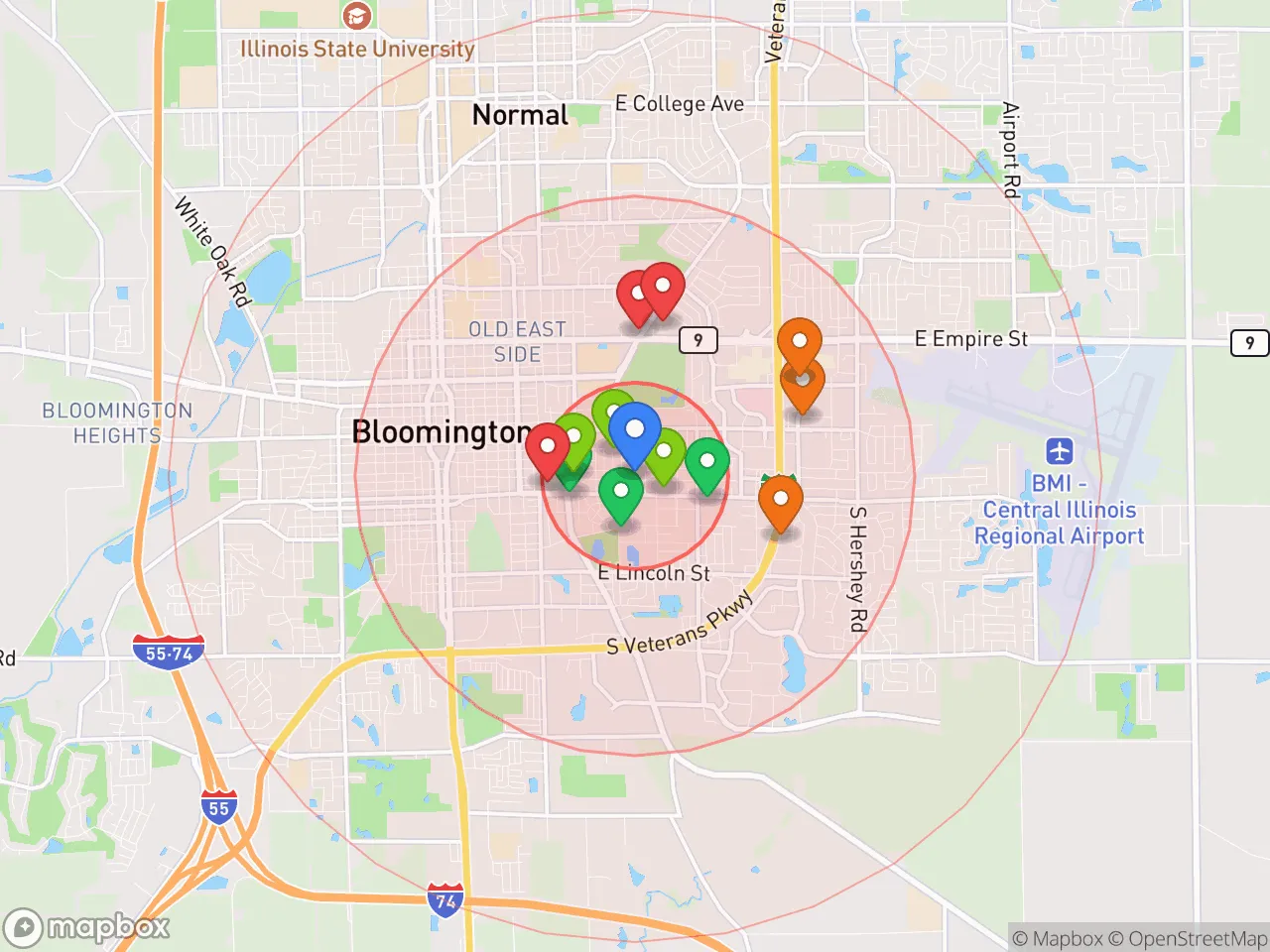
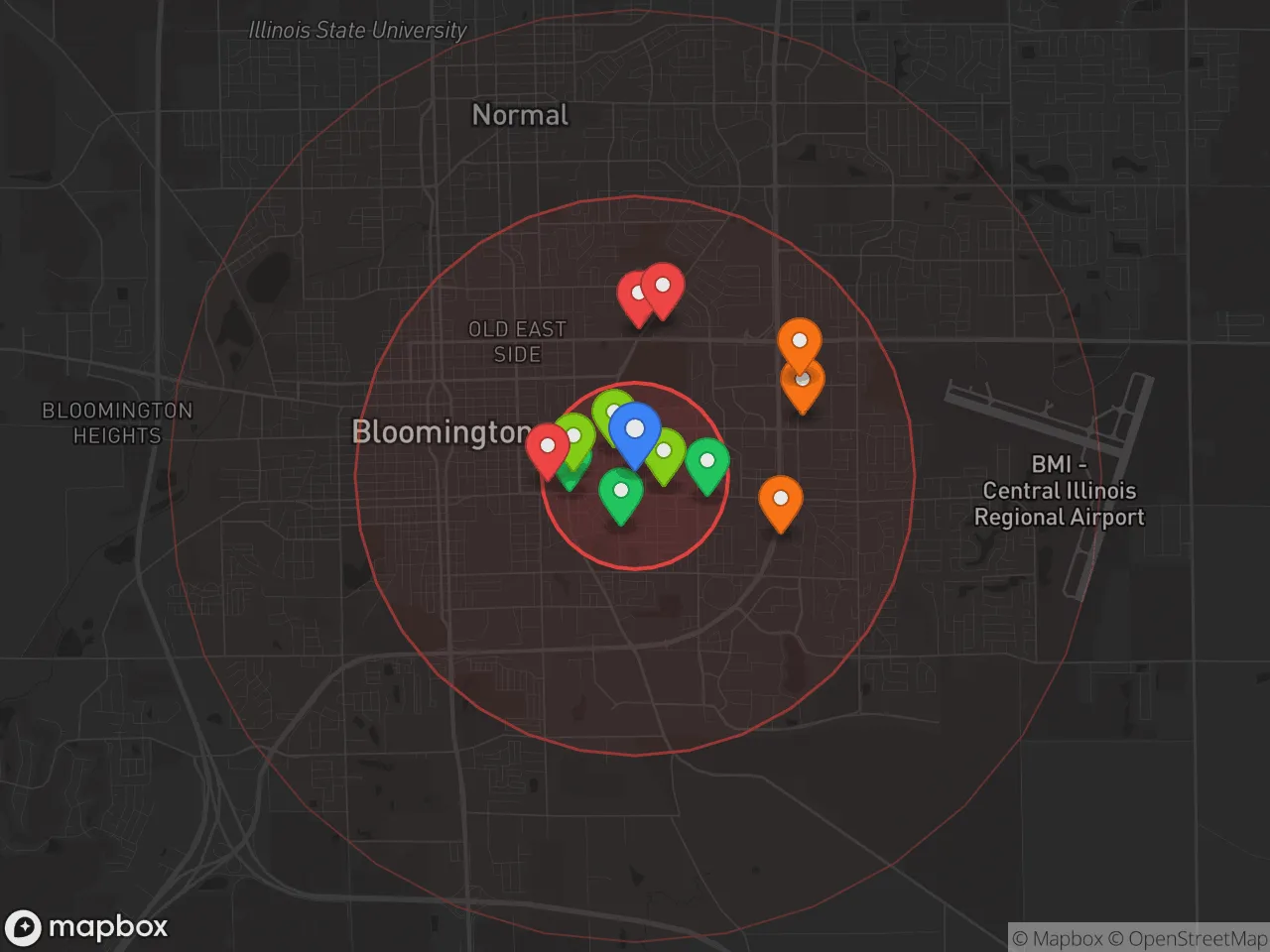
Hobbies
Explore the areaGroceries
6 within 10 miles
Gas
20 within 10 miles
Hospital
2 within 20 miles
Airport
MDW — Midway International
Post Office
USPS — Bloomington, IL
Critical Amenities
Quality-of-Life Analysis
Bloomington, Illinois, offers a quality of life defined by Midwestern stability, a lower cost of living, and a strong sense of community, attracting a mix of young professionals, families, and retirees. With a cost of living index of 80—20% below the national average—residents enjoy financial breathing room that is increasingly rare in larger metropolitan areas. The city’s population of roughly 78,000 is anchored by two major employers, State Farm Insurance and Illinois State University, creating a workforce that is both educated and economically resilient. This combination of affordability and steady employment makes Bloomington a practical choice for those seeking a balanced, less stressful lifestyle.
Cost of living, housing affordability, and how it compares to nearby areas
Bloomington’s housing market is notably accessible, with a median home value of $198,800 and a median rent of $1,004 per month—both well below national medians. For context, the median home value in nearby Champaign-Urbana is roughly $210,000, while in the Chicago suburbs it often exceeds $350,000. This affordability allows first-time buyers to enter the market with a conventional mortgage and a manageable down payment. Renters also benefit: a two-bedroom apartment in Bloomington typically costs $900–$1,100, compared to $1,400+ in Normal or Peoria’s pricier neighborhoods. The average commute of 16.7 minutes is among the shortest in the state, reducing transportation costs and freeing up time for family or leisure. Property taxes in McLean County are moderate, averaging around 2.1% of assessed value, which is lower than in many downstate Illinois counties but higher than in neighboring Livingston County.
Local amenities, schools, and what daily life feels like for families
Daily life in Bloomington revolves around a walkable downtown core, a robust park system, and a calendar of community events. The city’s Unit 5 School District consistently ranks among the top in Illinois, with high schools like Normal Community West and Bloomington High School offering Advanced Placement courses and strong extracurricular programs. Illinois State University provides cultural and athletic events, from Redbird basketball games to theater productions at the Center for the Performing Arts. Families frequent the Miller Park Zoo, the Children’s Discovery Museum, and the 1,200-acre Comlara Park for hiking and fishing. The downtown area features independent coffee shops, farm-to-table restaurants, and the historic Bloomington Center for the Performing Arts. Grocery and retail needs are met by chains like Hy-Vee and Meijer, while the Eastland Mall offers national retailers. The rhythm of life is unhurried; traffic jams are rare, and weekend farmers’ markets are a staple from May through October.
Bloomington is best suited for those who value financial stability, short commutes, and a tight-knit community over the fast pace and high salaries of a major city. Young professionals at State Farm or ISU will find affordable starter homes and a social scene built around trivia nights, running clubs, and local breweries like Destihl Brewery. Families appreciate the strong schools and safe neighborhoods, while retirees are drawn to the low cost of living and access to healthcare via OSF HealthCare St. Joseph Medical Center. The city’s biggest trade-off is limited nightlife and fewer high-end dining options compared to Chicago or St. Louis, but for those who prioritize space, savings, and a slower pace, Bloomington delivers a high quality of life at a fraction of the cost.

Crime in Bloomington, IL
Generally safer than 60% of comparable U.S. locations.
Violent CrimeViolent Crime Analysis
Property CrimeProperty Crime Analysis
Crime Analysis
Bloomington, Illinois, reports a violent crime rate of 312.5 incidents per 100,000 residents and a property crime rate of 1,291.5 per 100,000, placing it in a cautionary position relative to national averages. While not among the most dangerous cities in the state, these figures signal that crime is a tangible concern for residents, particularly when viewed through the lens of local prosecutorial and judicial philosophies. The city’s location as a small metro hub in Central Illinois, combined with its progressive political leanings, introduces specific dynamics that potential movers should weigh carefully.
Crime in context
Bloomington’s violent crime rate of 312.5 per 100,000 is roughly 10% below the national average of approximately 370 per 100,000, but its property crime rate of 1,291.5 per 100,000 exceeds the national average by about 15%. Compared to Illinois as a whole, the city’s violent crime rate is lower than the state average (which hovers near 400 per 100,000), but property crime is notably higher than the statewide figure of roughly 1,100 per 100,000. This pattern—elevated property crime with moderate violent crime—is common in smaller cities that serve as regional commercial hubs, where theft and burglary are more frequent than assault or homicide. However, the broader context of McLean County’s justice system matters: the area is served by a state’s attorney and judges who have been characterized as progressive, emphasizing diversion programs and reduced sentencing for non-violent offenders. Critics argue this approach can lead to higher recidivism and embolden property criminals, as consequences for theft and burglary are less certain.
What residents experience
For daily life in Bloomington, the most immediate safety concern is property crime. Vehicle break-ins, package theft, and bicycle theft are common complaints, particularly in neighborhoods near Illinois State University and the downtown commercial corridor. Residents often report that police response times for property crimes can be slow, and that stolen items are rarely recovered—a frustration that aligns with the perception that the justice system prioritizes offender rehabilitation over victim restitution. Violent crime, while less frequent, is not absent: aggravated assaults and robberies occur, often concentrated in specific areas like the west side near the railroad tracks and certain apartment complexes near campus. The presence of a large student population also contributes to a transient environment where opportunistic crime thrives. Neighborhood-level variation is significant: areas like the historic East Side and newer subdivisions in the north and east parts of town report far fewer incidents, while the central core and areas near the university see higher rates of theft and occasional violence. Prospective residents should research block-level crime maps and consider that the city’s progressive judicial philosophy may result in shorter sentences for repeat offenders, potentially increasing the risk of victimization in higher-crime pockets.
* Values derived from national, state, county, city and local statistics and may differ in a specific area. Last updated: 2026-04-30T01:34:36.000Z
Narrative content on this page is AI-generated and may contain mistakes. Verify any details that matter before acting on them.
ReloMaps may earn a commission from affiliate links at no extra cost to you.

