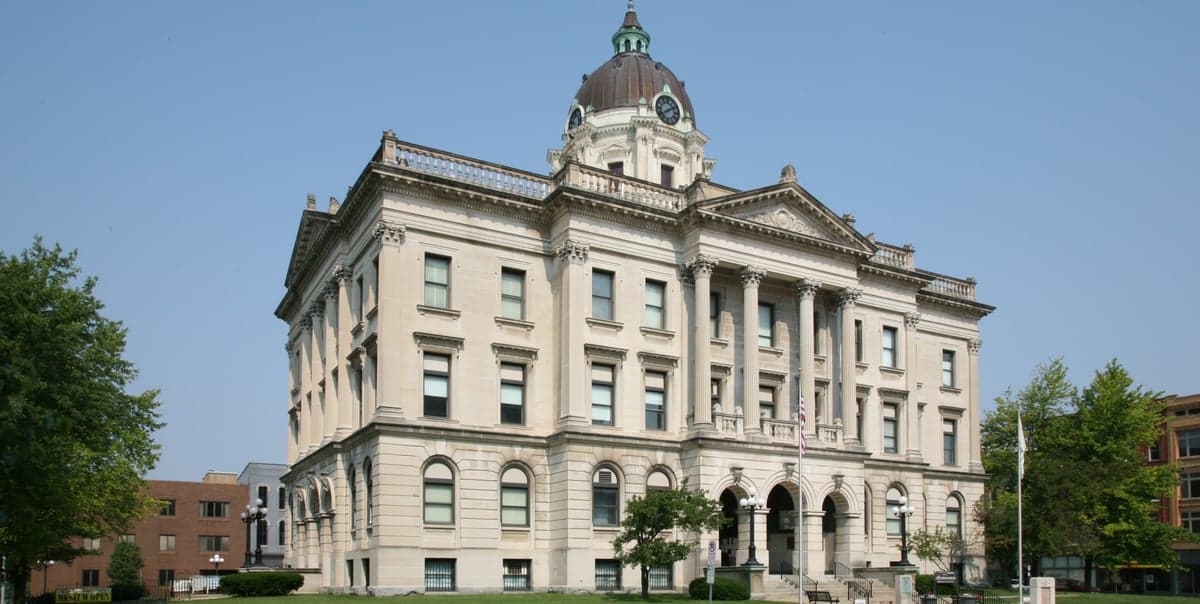
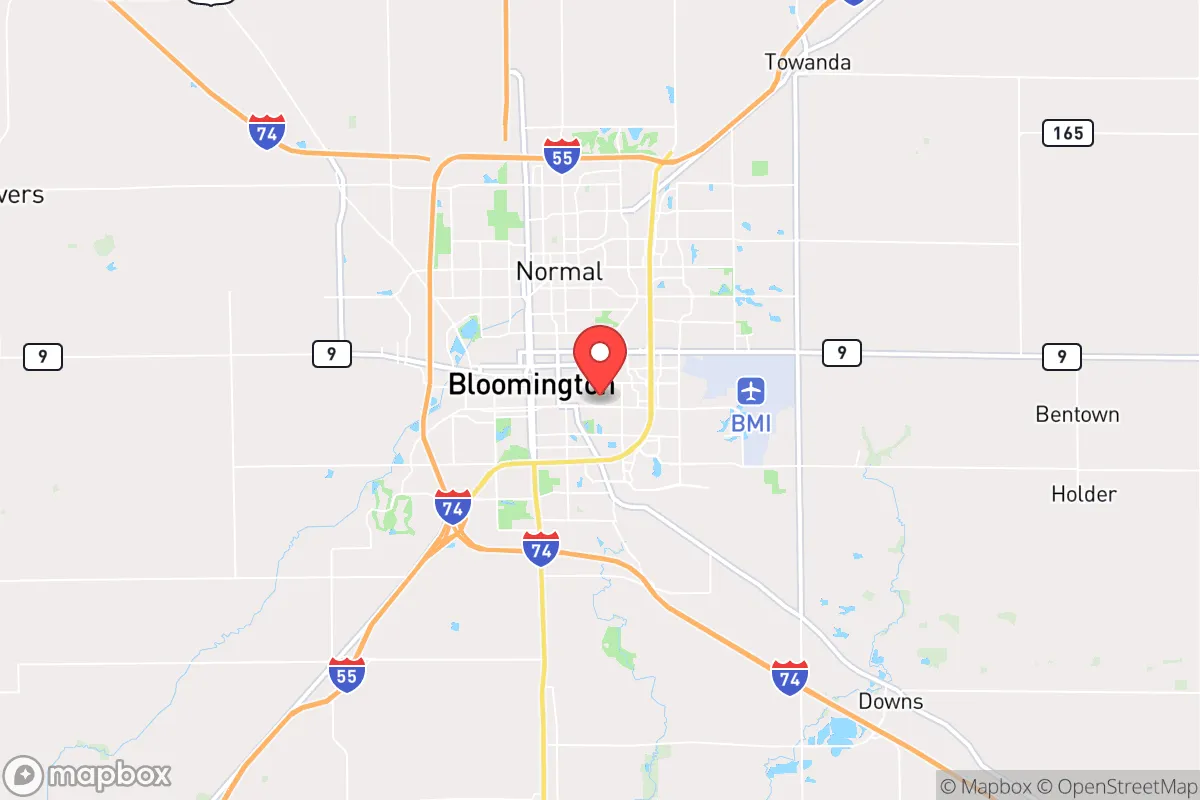
Photo: Wikipedia
Find The Best Places To Live
in Bloomington
PRO TIP! You can paste a Zillow or Redfin link to get info on that property.
What It's Like Living in Bloomington, IL
Bloomington, Illinois, has a way of surprising people. It’s not a flashy college town, not a sleepy farm community, but something in between—a place where State Farm’s corporate campus meets cornfields, and where a Friday night might mean a high school football game or a craft beer at a downtown taproom. With about 78,700 residents, it’s big enough to have a real downtown and a minor-league baseball team, but small enough that you’ll run into someone you know at the grocery store. The vibe is practical, Midwestern, and quietly ambitious—people here work hard, raise families, and don’t feel the need to prove much to anyone.
The Daily Rhythm: Work, Commute, and Weekend Habits
Life in Bloomington revolves around two anchors: State Farm and Illinois State University. State Farm’s headquarters dominates the local economy, employing thousands in insurance, IT, and corporate roles. The average commute is a remarkably short 16.7 minutes, which means most people are home by 5:15, even with a stop at the grocery store. The median household income sits at $75,449, well above the national average, and the cost of living index is 80—meaning your paycheck goes noticeably further here than in Chicago or even Peoria. Weekends often start at the Downtown Bloomington Farmers Market (May through October), followed by a walk through Miller Park Zoo or a hike at the Constitution Trail, a 50-mile paved network that cuts through town and connects to neighboring Normal. For dinner, locals rotate between Anju Above (Korean fusion), Epiphany Farms (farm-to-table in a former church), and Lucca Grill, a 1940s-era pizza joint that’s been a family staple for generations.
Sports, Festivals, and the Local Identity
Sports here are a big deal, but not in a loud, obsessive way. The Bloomington Normal CornBelters (summer collegiate baseball) draw solid crowds at the Corn Crib, and Illinois State University Redbirds football and basketball games fill Hancock Stadium and Redbird Arena on fall and winter weekends. But the real pulse is high school sports: Bloomington High School and Normal Community High School football games on Friday nights are community events, with parents, alumni, and even childless neighbors showing up. The biggest annual festival is the Illinois Shakespeare Festival at Ewing Manor, which runs June through August and draws surprisingly polished productions for a town this size. For music, The Castle Theatre in downtown Bloomington hosts national touring acts (everything from country to indie rock), while Grossinger Motors Arena brings in bigger concerts and the occasional monster truck rally. A quirky local tradition: the Sweet Corn Festival in nearby Chenoa every August, where you can eat roasted corn and watch a parade that feels like it hasn’t changed since 1975.
Who Fits In—and Who Might Struggle
Bloomington works best for people who value stability over excitement. The median age is 36, and 48.9% of adults hold a bachelor’s degree or higher, so the population is educated but not pretentious. You’ll find a lot of State Farm middle managers, ISU professors, healthcare workers (OSF St. Joseph and Carle BroMenn are major employers), and remote workers who moved here for the lower cost of living. Families are drawn to the strong public schools—particularly University High School (a public lab school) and Normal West High School—and the fact that a median home value of $198,800 buys a three-bedroom house with a yard. Singles and young professionals tend to cluster in apartments near Uptown Normal or the Warehouse District in downtown Bloomington. The downside? Nightlife is limited. After 10 p.m., your options are basically Fat Jack’s (a dive bar with live blues), Maggie’s Pub (a quiet Irish bar), or a chain restaurant. If you’re under 25 and looking for a buzzing club scene, you’ll be bored. The weather also grinds on some: summers are humid, winters are gray and cold, and spring is a mud season that lasts about three weeks.
Pros and Cons of Living in Bloomington
- Pro: Affordable housing. A $200,000 home here is move-in ready, not a fixer-upper. Rent for a one-bedroom averages $900–$1,100.
- Con: Limited career mobility outside insurance and education. If you lose your State Farm job, you may need to commute to Peoria or Champaign for alternatives.
- Pro: Low traffic. The 16-minute commute is real. Rush hour means an extra five minutes at the stoplight on Veterans Parkway.
- Con: Violent crime rate of 312.5 per 100,000 is higher than the national average, though it’s concentrated in specific neighborhoods (south and east sides). Most residents feel safe downtown and in the suburbs.
- Pro: Strong sense of community. People volunteer, coach youth sports, and show up for school board meetings. It’s easy to feel connected.
- Con: Winters are long. Snowfall averages 22 inches, and the gray skies can feel oppressive by February.
For a conservative-leaning audience, Bloomington offers a mostly red-leaning environment in a blue state. McLean County voted for Trump in 2024, and the local culture leans pragmatic and family-oriented. Gun rights are respected, and the cost of living means you can actually afford a home on a single income. The trade-off is that you’re 2.5 hours from Chicago and 1.5 hours from St. Louis—close enough for a weekend trip, far enough that you won’t make it often. Most people here are fine with that. They’ve got everything they need, and they’re not looking to leave.

Similar small cities to Bloomington
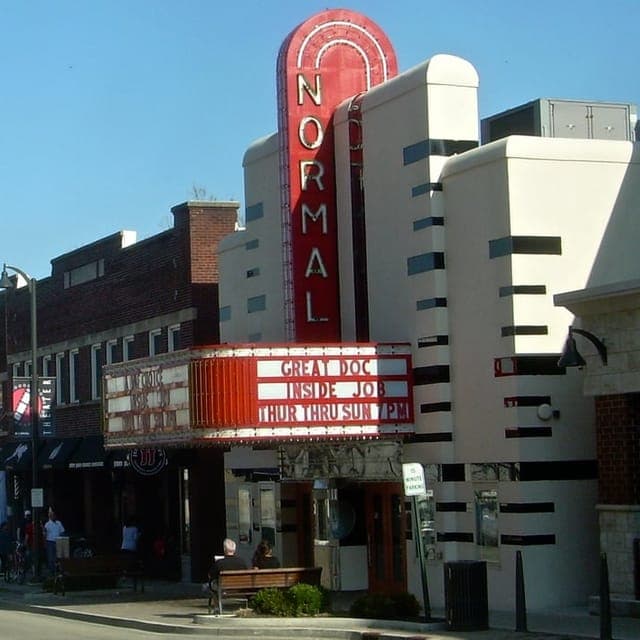
* Values derived from national, state, county, city and local statistics and may differ in a specific area. Last updated: 2026-04-30T01:34:36.000Z
Narrative content on this page is AI-generated and may contain mistakes. Verify any details that matter before acting on them.
ReloMaps may earn a commission from affiliate links at no extra cost to you.

