
Photo: Wikipedia
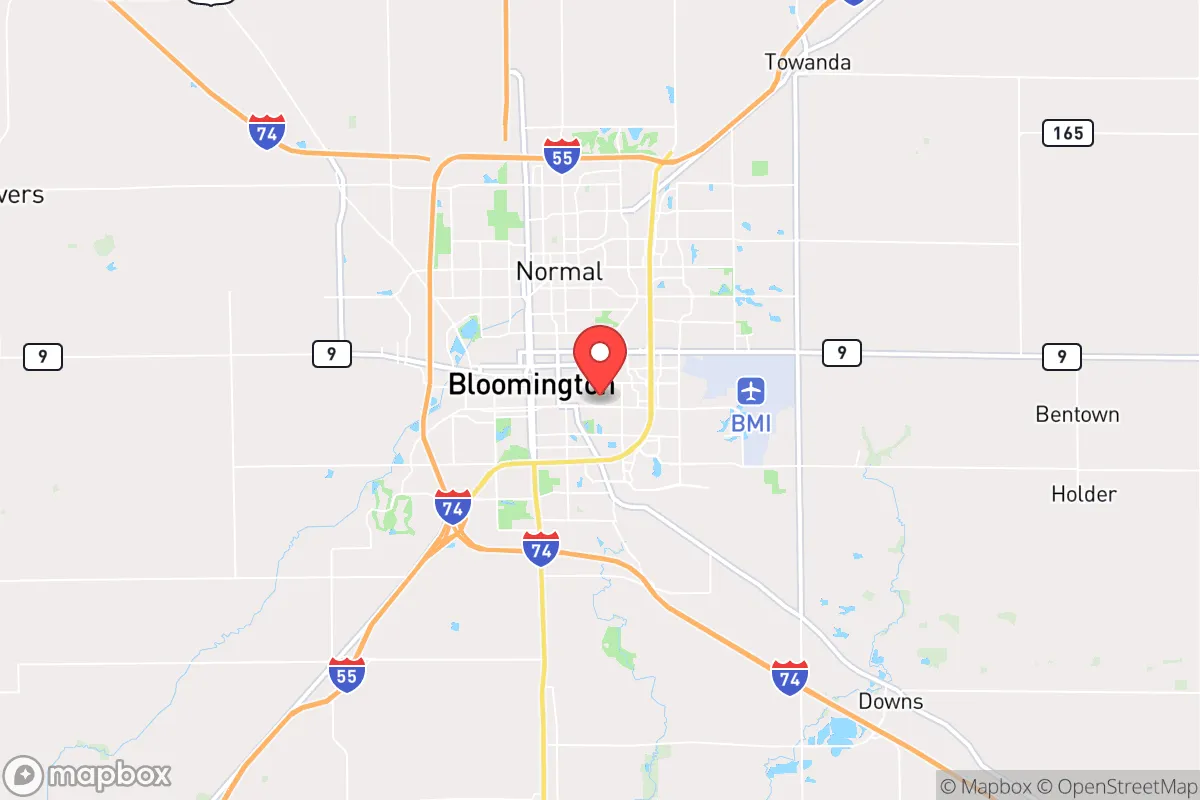
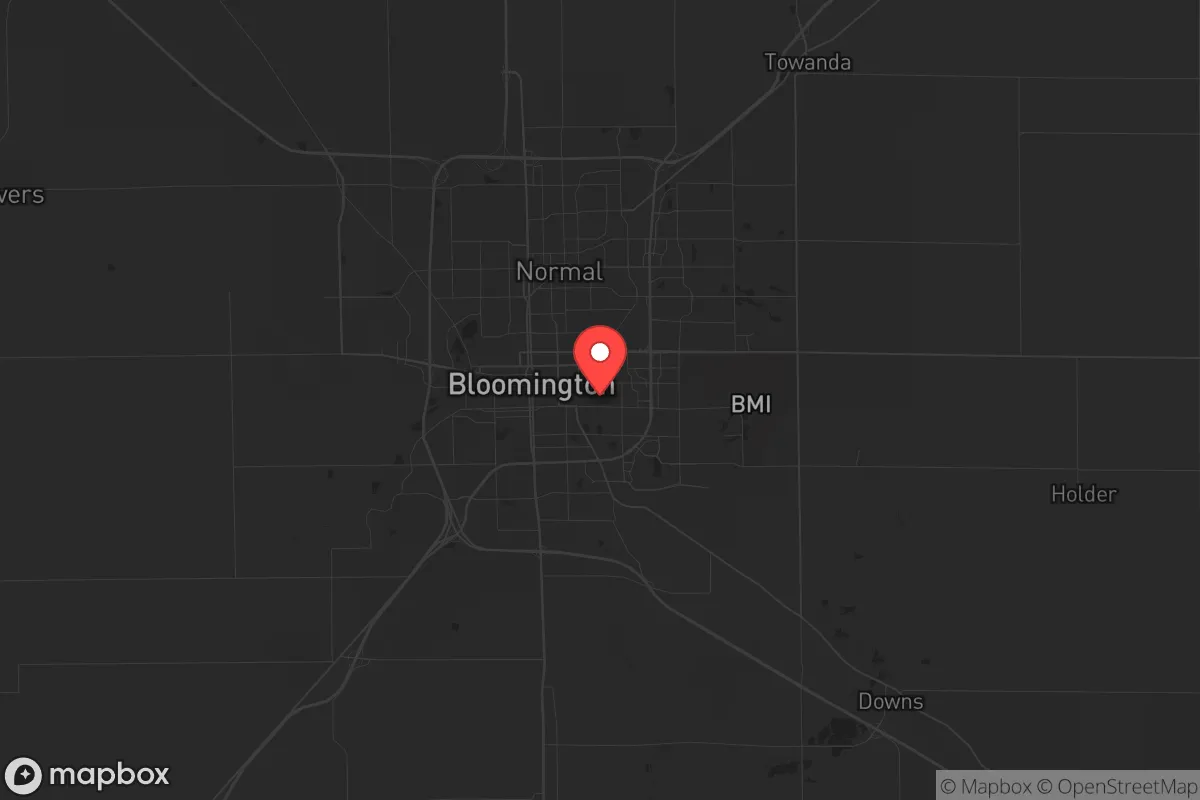
Strategic Assessment of Bloomington, IL
Meaningful friction. Expect exposure to either population pressure, blast zones, or natural disaster risk. Consider buying a retreat property.
What does the Strategic Assessment tell us?
Our Strategic Assessment grades tactical survivability of an area. Major population centers, military targets, fallout zones, natural disasters, and border exposure all drive risk — lower exposure means a more defensible position in a crisis.
This is heavily inspired by Joel Skousen's Strategic Relocation book. Highly recommended you checkout the book ($)What does this tell us?
Our Strategic Assessment grades tactical survivability of an area. Major population centers, military targets, fallout zones, natural disasters, and border exposure all drive risk — lower exposure means a more defensible position in a crisis.
This is heavily inspired by Joel Skousen's Strategic Relocation book. Highly recommended you checkout the book ($)Strategic Pillars

Key Distances
Regional Safe Places
Below is our recommended "safe zones" in Illinois and the surrounding area based on our strategic heuristics. For most people, it's unrealistic to live in a “safe zone” full-time due to work, family or other personal reasons. They tend to be more rural. However, many of these areas are perfect for second homes and retreat properties that double as a vacation home or even a short-term rental.
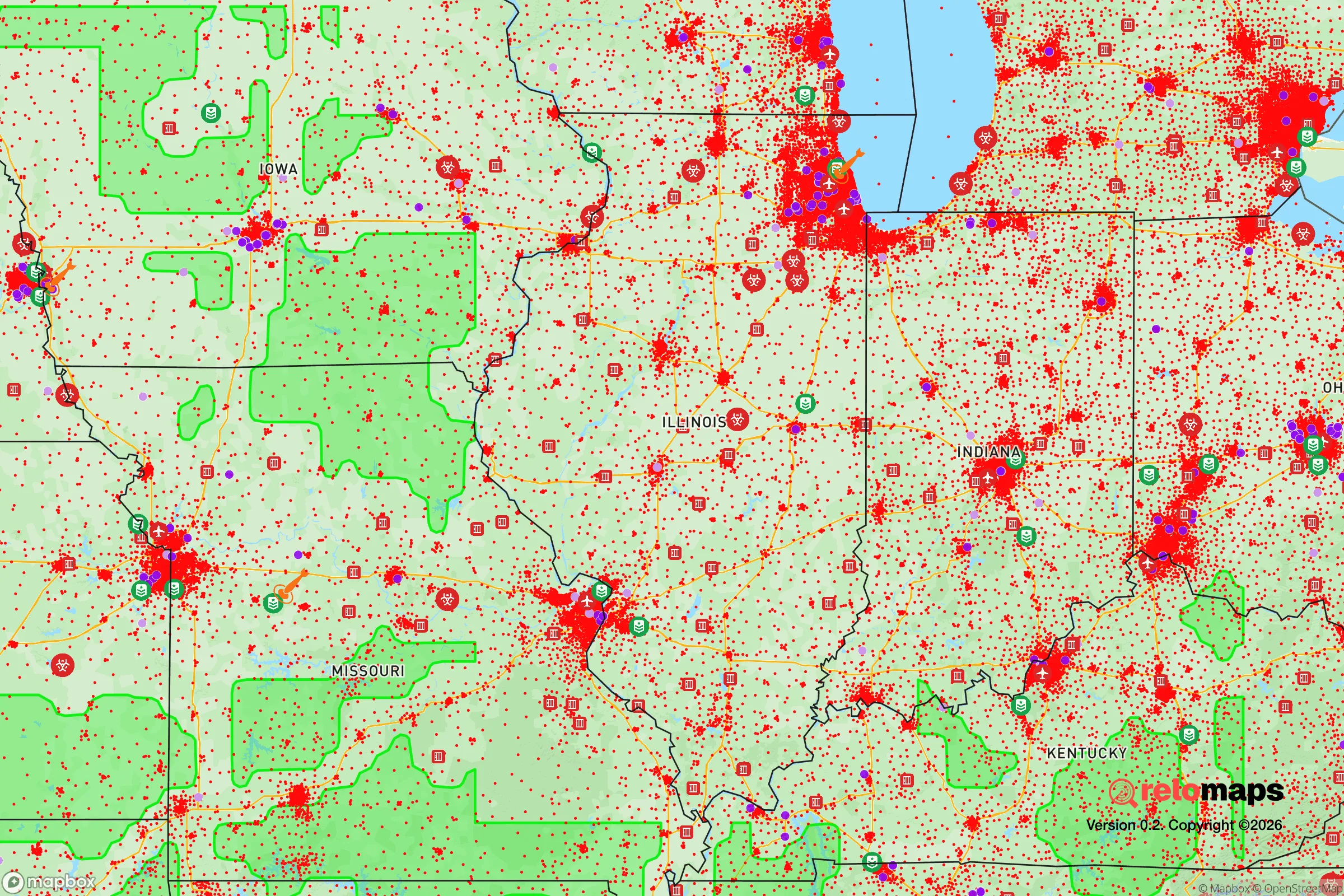
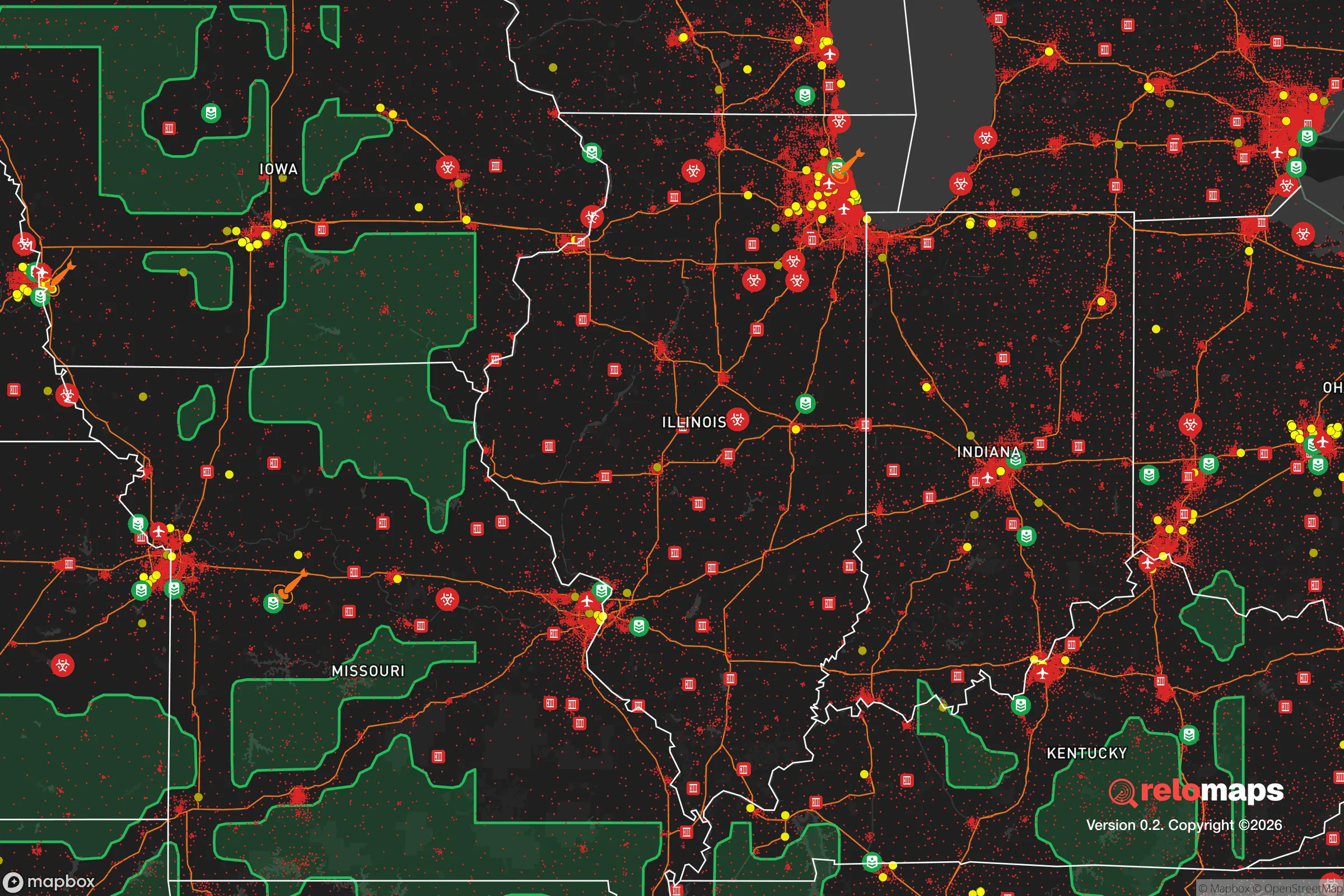


Important Note: For informational purposes only. This does not mean nothing bad ever happens in the green zones. Please use common sense. This is based on public data and modeled with AI. We tried to take a conservative approach but mistakes happen. We update this regularly as new information becomes available.
Solar Generator Recommendations
Backup power matters more here than in safer locations. We've picked three solar generators across budgets and capacity tiers — start with the budget unit if you only need a few essentials, or step up if you want to run a fridge and HVAC for days at a time.

Jackery Portable Power Station Explorer 300
Budget OptionPower on the Go: Weighing only 11 lbs, it's convenient to set up and store with book-sized foldable solar panels

BLUETTI Portable Power Station AC180
Designed for both indoor and outdoor scenarios, AC180 is highly capable as it has a robost capacity and continuous output power.

EF ECOFLOW DELTA Pro Ultra Power Station
Upgraded PickEcoFlow DELTA Pro Ultra is a whole-home energy system designed to grow with your family. Integrated with the Smart Home Panel 2, it scales to meet your evolving energy needs — keeping your home powered, intelligent, and secure through every stage of life.
We earn a commission, at no additional cost to you.
Strategic Assessment Analysis
Bloomington, Illinois, often flies under the radar in strategic relocation discussions, but for a prepper or conservative-minded relocator, its position offers a surprisingly solid mix of isolation and access. Sitting squarely in the middle of the state, it’s far enough from Chicago’s chaos and St. Louis’s volatility to avoid the immediate blast zones of a major event, yet close enough to major highways (I-55, I-74, and I-39) to allow for rapid movement if needed. The area’s economic anchor—State Farm Insurance’s global headquarters—provides a stable, white-collar employment base that isn’t tied to volatile industries, and the presence of Illinois State University adds a layer of institutional resilience. For someone thinking about long-term stability, this isn’t a flashy choice, but it’s a defensible one.
Geographic position and natural advantages for long-term survival
Bloomington’s location in Central Illinois is its strongest card. It sits on the edge of the Grand Prairie, a vast, flat agricultural zone that produces corn, soybeans, and wheat in abundance. This isn’t just a scenic detail—it means that in a prolonged disruption of supply chains, you’re surrounded by food production, not just distribution hubs. The area is over 120 miles from Chicago’s urban core and roughly 150 miles from St. Louis, putting it well outside the likely fallout zones of a nuclear event targeting those cities. The prevailing westerly winds in this region also mean that any airborne contamination from a Chicago strike would likely drift east-northeast, away from Bloomington. The terrain is flat, which is a double-edged sword: it offers no natural cover for concealment, but it also provides unobstructed lines of sight for security and makes farming or livestock grazing straightforward. The local water table is high, with the Mahomet Aquifer—one of the largest in the Midwest—lying directly beneath the region. This means well water is a viable, long-term option for those who secure property outside city limits, a critical advantage over areas reliant on surface reservoirs that could be contaminated or targeted.
Risks, exposures, and proximity to fallout-relevant landmarks
No location is perfect, and Bloomington has its share of strategic liabilities. The most obvious is its proximity to the Clinton Nuclear Power Plant, located about 25 miles east-northeast of the city. While the plant has a solid safety record, any major incident—whether from sabotage, grid failure, or natural disaster—could render large swaths of the area uninhabitable for years. The prevailing winds would carry fallout toward Decatur and beyond, but Bloomington sits close enough that evacuation or sheltering would be a serious concern. Additionally, the city is a transportation hub: I-55 and I-74 intersect here, and the Bloomington-Normal Amtrak station and Central Illinois Regional Airport (BMI) mean the area is a natural chokepoint for movement. In a scenario of civil unrest, these corridors could become contested zones, drawing looters or refugees from Chicago or St. Louis. The presence of Illinois State University (roughly 20,000 students) also introduces a transient population that could become a liability during a breakdown—universities are often flashpoints for ideological conflict and resource strain. Finally, the flat terrain offers no natural defensive barriers; a determined group could approach from any direction with little to stop them.
Practical resilience for a relocator: food, water, energy, and defensibility
For the individual or family looking to set up a resilient homestead, Bloomington’s practical assets are strong but require deliberate action. Food security is the standout advantage: the surrounding farmland means you can buy directly from local producers, and the area has a robust network of farmers’ markets, co-ops, and bulk food suppliers (like the Bloomington Cooperative Market). For those with acreage, the soil is rich and well-suited for gardening, and the growing season (roughly April to October) is long enough for two crop cycles of staples like beans, squash, and potatoes. Water is less of a concern than in many parts of the country—the Mahomet Aquifer provides clean, deep groundwater, and most rural properties can drill a well for under $10,000. However, the city’s municipal water supply comes from Lake Bloomington and Evergreen Lake, both surface reservoirs that could be vulnerable to contamination or sabotage. Energy resilience is a mixed bag: the grid is reliable by Midwest standards, but winter ice storms can knock out power for days. Solar is viable (the area gets about 200 sunny days per year), but battery storage is essential given the flat terrain’s lack of windbreaks. Natural gas is widely available in town, but rural properties often rely on propane, which requires storage and supply chain access. Defensibility is the weakest link: the flat, open landscape means you’ll need to invest in perimeter security—fencing, cameras, and possibly a reinforced safe room—since there’s no natural cover. Neighbors tend to be spread out in rural areas, which is good for privacy but bad for mutual aid. The local gun culture is strong, with several ranges and gun shops in the area, and Illinois’s firearm laws are restrictive compared to states like Indiana or Missouri, but Bloomington’s conservative-leaning rural outskirts often operate with a more practical mindset.
The overall strategic picture for Bloomington is one of calculated trade-offs. It’s not a bug-out paradise in the mountains, nor is it a fortified compound in the desert. What it offers is a stable, food-secure base in a region that’s unlikely to be a primary target in a national crisis, with enough infrastructure to support a comfortable normal life while you build your preparations. The risks—nuclear plant proximity, flat terrain, and corridor vulnerability—are real but manageable with proper planning. For a conservative relocator who values community, self-reliance, and a low-key profile, Bloomington is a solid B+ option. It won’t make headlines, but that’s exactly the point.

* Values derived from national, state, county, city and local statistics and may differ in a specific area. Last updated: 2026-04-30T01:34:36.000Z
Narrative content on this page is AI-generated and may contain mistakes. Verify any details that matter before acting on them.
ReloMaps may earn a commission from affiliate links at no extra cost to you.

