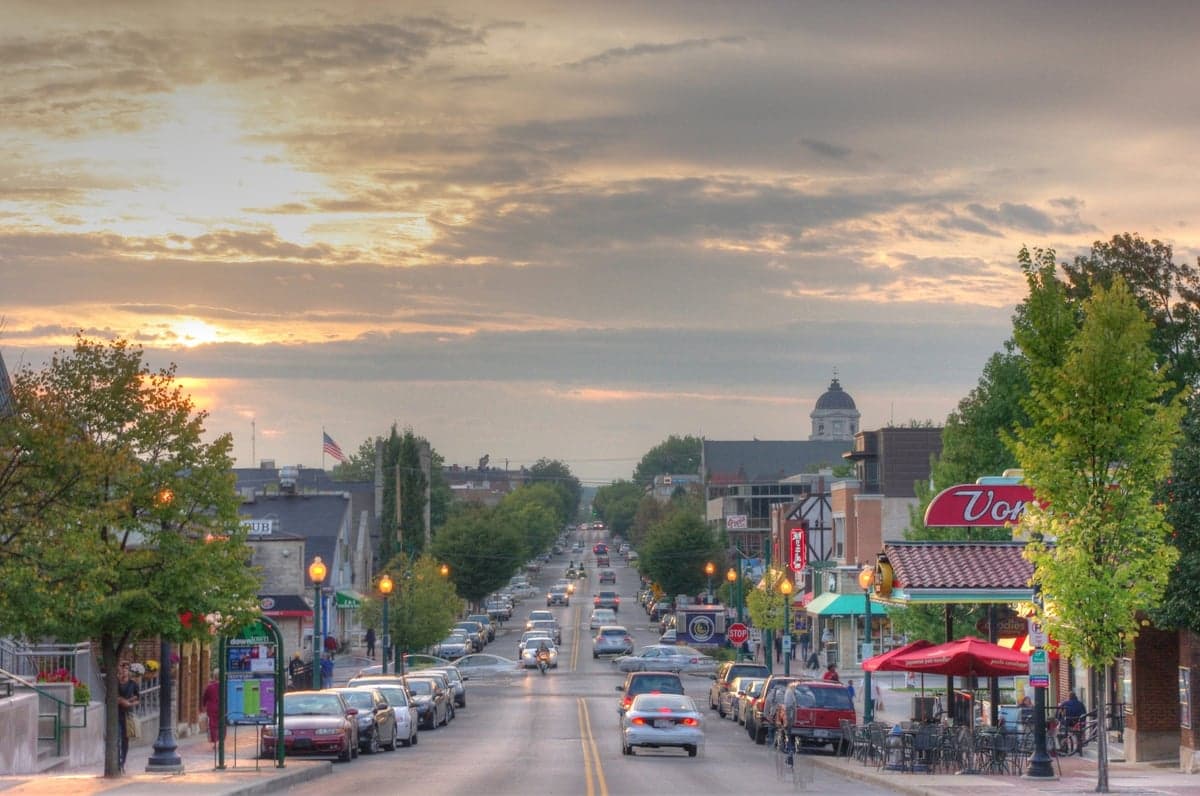
Photo: Wikipedia
Political ClimatePolitical Climate in Bloomington, IN
District shown is the primary district for this city’s centroid. Cities may span multiple districts.
Local Political AnalysisPolitical Analysis of Bloomington, IN
Look, I’ve lived in and around Bloomington my whole life, and I’ve watched this town change in ways that would make my granddad spin in his grave. The political climate here used to be a lot more balanced—you had your university liberals, sure, but also plenty of farmers, small business owners, and folks who just wanted to be left alone. Today, Bloomington leans hard left, and the surrounding Monroe County has become a progressive stronghold that often feels disconnected from the rest of Indiana. The Cook PVI for the county is R+15, which tells you the surrounding rural areas still vote solidly Republican, but inside the city limits, the political energy is overwhelmingly blue—and getting bluer every election cycle.
How it compares
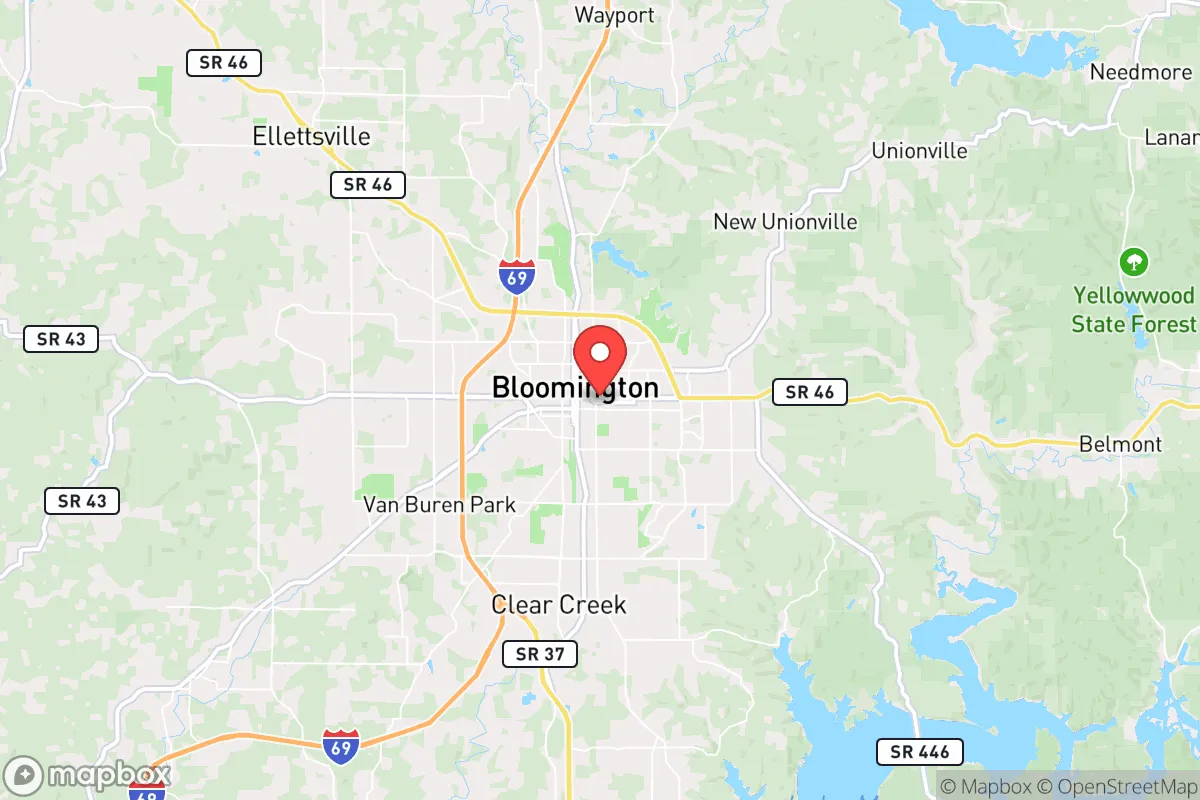
If you drive just 15 minutes north to Ellettsville or 20 minutes south to Bedford, you’ll find a completely different world. Those towns vote red, folks wave American flags on their porches, and the local government isn’t trying to reinvent the wheel every Tuesday. Bloomington, by contrast, has become a bubble—the city council has pushed zoning changes that reduce single-family home lots, expanded sanctuary city policies, and raised local taxes to fund social programs that many residents never voted for. Compared to nearby Columbus or even Martinsville, Bloomington feels like it’s operating under a different set of rules entirely. The university (Indiana University) drives most of this, bringing in a constant influx of out-of-state students and faculty who vote for policies that locals who’ve been here for decades often oppose.
What this means for residents
For a conservative or even a moderate who values personal freedom, living in Bloomington today means constantly watching your back. The city has implemented a local income tax that funds things like a “racial justice” task force and expanded public health mandates that go beyond state law. During the pandemic, Bloomington was one of the first cities in Indiana to impose mask mandates and vaccine requirements for city employees, even after the state legislature tried to limit local emergency powers. If you own a business here, you’ve probably dealt with extra licensing fees, paid sick leave requirements, and noise ordinances that make it hard to operate on your own terms. The school board has also shifted left, pushing critical race theory-inspired curriculum and gender identity policies that many parents find intrusive. It’s not the live-and-let-live town it used to be—now, the government seems to have an opinion on everything you do.
On the cultural side, Bloomington has become a place where traditional values are often mocked or sidelined. The annual Fourth of July parade used to be a community-wide celebration, but now it’s been rebranded as a “community festival” with less emphasis on patriotism. The local farmers’ market, once a simple gathering of growers, has been embroiled in political fights over who gets to sell there. If you’re a gun owner, you’ll find that Bloomington’s city council has passed resolutions supporting state-level gun control, even though Indiana is a shall-issue state. Looking ahead, I expect the divide to keep widening—the university will keep pulling the city left, while the surrounding county stays red. If you value personal freedom and want a government that stays out of your life, Bloomington is probably not your long-term home. But if you’re willing to fight for your rights and keep an eye on every city council meeting, you can still carve out a life here—it just takes a lot more effort than it used to.

State Political ClimatePolitical Climate in Indiana
State Political AnalysisPolitical Environment in the State
Indiana has been a reliably Republican state for decades, but the political climate here is more layered than a simple red-state label suggests. The state has voted for the GOP presidential candidate in every election since 2008, and before that, it only broke for Democrats in 1964 and 2008 (when Barack Obama narrowly won the state). However, the dominant coalition is a mix of traditional Midwestern conservatives, libertarian-leaning independents, and a shrinking but still influential moderate Republican bloc. Over the last 10-20 years, the state has shifted rightward on cultural and economic issues, but the pace and depth of that shift vary dramatically depending on where you live—and that’s the real story for anyone considering a move here.
Urban vs. rural divide
The political map of Indiana is a textbook case of the urban-rural split. The Indianapolis metro area, including Marion County and its fast-growing suburbs like Carmel, Fishers, and Noblesville, is the state’s Democratic stronghold. Marion County itself has voted blue in every presidential election since 2008, and the inner-ring suburbs are trending that way too, driven by an influx of younger, college-educated professionals and a growing minority population. Meanwhile, the rest of the state is deeply red. Fort Wayne (Allen County) is a Republican bastion, and the rural counties in the northern and southern thirds of the state—places like Kosciusko County (home to Warsaw) and Dubois County (Jasper)—routinely deliver 70-80% of the vote for GOP candidates. The real battlegrounds are the exurban and small-city counties that have been shifting rightward: Hamilton County (north of Indianapolis) is still reliably red, but its margins have tightened as the suburbs diversify. Conversely, Lake County in the northwest corner (part of the Chicago metro) is the state’s second-largest Democratic county, but its influence is waning as population growth slows. The bottom line: if you’re moving to Indiana, your political experience will be almost entirely determined by whether you land in a blue urban island or the vast red sea around it.
Policy environment
Indiana’s policy environment is broadly conservative, but with some notable exceptions that matter for personal freedom. The state has a flat income tax rate of 3.15% (as of 2025), which is among the lowest in the Midwest, and there’s no inheritance or estate tax. Property taxes are capped at 1% of assessed value for owner-occupied homes, which keeps housing costs manageable. On education, Indiana has a robust school choice program—the Choice Scholarship Program (vouchers) and Education Savings Accounts (ESAs) are among the most expansive in the nation, allowing parents to direct tax dollars to private or homeschool options. This is a major draw for conservative families. Healthcare policy is mixed: the state expanded Medicaid under the Affordable Care Act (via the HIP 2.0 waiver), which was a pragmatic move by then-Governor Mike Pence, but it also means the state is entangled in federal healthcare mandates. Election laws are restrictive by national standards: voter ID is required, early voting is limited to 28 days before an election, and no-excuse absentee voting was made permanent in 2023. The state also passed a near-total abortion ban in 2022 (Senate Enrolled Act 1), with limited exceptions, which aligns with conservative values but has created legal uncertainty as courts weigh challenges. Overall, the policy environment leans toward limited government on taxes and education, but with a heavier hand on social issues and healthcare.
Trajectory & freedom
Indiana is becoming more free in several key areas, but there are warning signs for those who prize personal liberty above all else. On the positive side, the state enacted Constitutional Carry (permitless carry of handguns) in 2022, which was a major win for Second Amendment advocates. Parental rights were strengthened with the Parental Bill of Rights (House Enrolled Act 1134) in 2023, requiring schools to notify parents about curriculum changes and medical services. Property rights got a boost with the Private Property Protection Act (2023), which limits eminent domain abuse. However, the state also passed Senate Enrolled Act 1 (the abortion ban), which some libertarians see as government overreach into personal medical decisions. On the economic front, the state has been phasing out the business personal property tax, which is a net positive for small business owners. The trajectory is mixed: Indiana is moving toward more freedom on guns, education, and taxes, but the social conservative agenda is also expanding the state’s role in private life. For a new resident, the net effect is a state that respects economic and Second Amendment freedoms but is willing to legislate on cultural issues.
Civil unrest & political movements
Indiana has seen its share of political flashpoints, but nothing like the chaos of coastal states. The 2020 George Floyd protests in Indianapolis were large and occasionally violent, with property damage in the downtown area, but they were contained and didn’t spread to the suburbs or rural areas. The Indiana Black Legislative Caucus and local activist groups have pushed for police reform, but the GOP-controlled legislature has largely resisted. On the right, the Indiana Freedom Coalition and local Moms for Liberty chapters have been active in school board meetings, particularly in Hamilton County and Johnson County, pushing back against critical race theory and LGBTQ curriculum. Immigration politics are relatively quiet—Indiana is not a border state, and sanctuary city policies are virtually nonexistent (a 2011 state law bans them). Election integrity controversies flared after 2020, with some GOP county officials questioning results, but no major fraud was found. The most visible flashpoint for a new resident would likely be the ongoing debate over abortion access, with clinics closing in South Bend and Terre Haute and activists on both sides holding regular rallies at the Statehouse. Overall, political movements here are organized but not disruptive—Indiana is a place where people vote and advocate, but they don’t burn down buildings.
Projection
Over the next 5-10 years, Indiana is likely to become more conservative on cultural issues but may see a slow demographic shift in the Indianapolis metro that could make statewide races more competitive. The state is experiencing modest in-migration from Illinois and California, but these newcomers tend to settle in the blue suburbs of Carmel and Fishers, not the red rural counties. The GOP’s supermajority in the legislature is secure for the foreseeable future, but the governor’s race in 2028 could be tighter if Democrats nominate a moderate candidate. The biggest wildcard is the state’s aging population—rural counties are losing young people to cities, which could erode the GOP’s rural base over time. For a new resident, expect the state to remain a solidly conservative place with a growing libertarian streak, but with a Democratic urban core that will continue to push back on social issues. If you’re moving here for freedom, you’ll find it in the suburbs and small towns, but the cities will feel increasingly like blue islands in a red sea.
For a conservative individual or family considering a move, Indiana offers a strong alignment with traditional values on taxes, education, and gun rights, but you’ll need to choose your location carefully. The rural and exurban areas—places like Zionsville, Westfield, or Brown County—are where you’ll find the most freedom from government overreach. The urban centers, particularly Indianapolis and Bloomington, are trending in a more progressive direction, so if that’s not your speed, steer clear. Bottom line: Indiana is a good bet for someone who wants low taxes, school choice, and a culture that respects personal responsibility, but keep an eye on the legislature—they’re not afraid to use government power to enforce social norms, which cuts both ways on freedom.
* Values derived from national, state, county, city and local statistics and may differ in a specific area. Last updated: 2026-04-22T07:25:39.000Z
Narrative content on this page is AI-generated and may contain mistakes. Verify any details that matter before acting on them.
ReloMaps may earn a commission from affiliate links at no extra cost to you.

