Photo: Wikipedia
Find The Best Places To Live
in Columbus
PRO TIP! You can paste a Zillow or Redfin link to get info on that property.
What It's Like Living in Columbus, IN
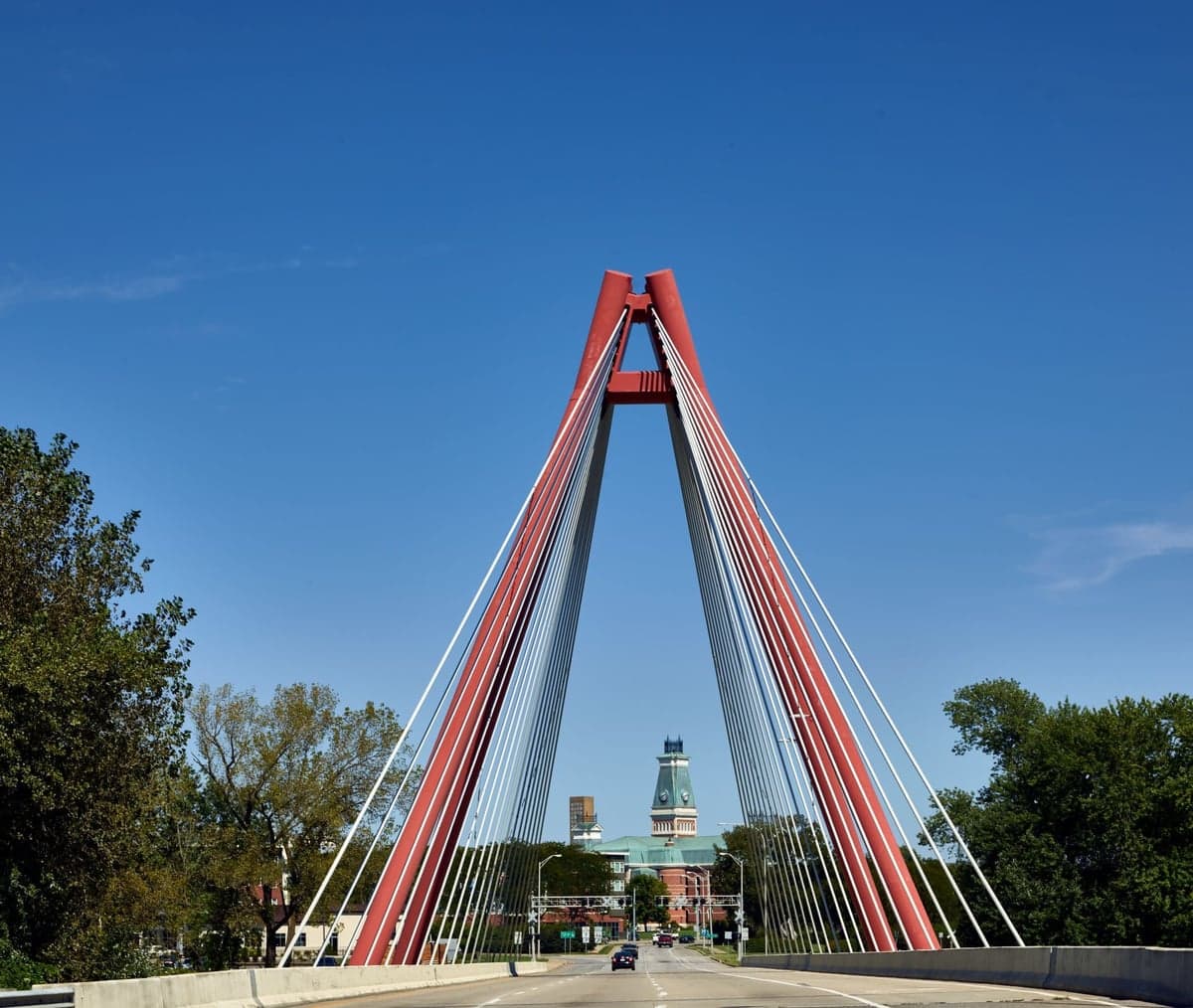
Columbus, Indiana, is one of those places that surprises people the first time they drive through. You come for the architecture—the city is famous for its modernist buildings designed by I.M. Pei, Eero Saarinen, and others—but you stay because it actually works as a place to live. With about 51,000 residents, it’s big enough to have a real downtown and a major employer (Cummins Inc.), but small enough that you still run into people you know at the grocery store. The vibe is practical, Midwestern, and quietly ambitious, which makes sense for a town built around diesel engines and design.
The Daily Rhythm: Work, Errands, and Weekend Habits
Most people here work a standard 8-to-5, and the average commute is just 18 minutes—short enough that you can go home for lunch if you want. The biggest employer by far is Cummins, the engine manufacturer that also funds much of the city’s architectural legacy. You’ll find a mix of engineers, factory workers, healthcare professionals, and small business owners. The median household income is $76,856, which goes a long way here because the cost of living is 9% below the national average. A median home value of $231,000 gets you a solid three-bedroom house in a good school district, not a fixer-upper.
Weekends tend to revolve around family, sports, or outdoor time. People shop at the local Kroger or Meijer, grab coffee at the Columbus Bagel Company, and eat dinner at spots like ZwanzigZ Pizza or the quirky 4th Street Bar & Grill. The farmers market on Saturday mornings at the Bartholomew County Fairgrounds is a genuine community hub—not just for produce, but for running into neighbors. If you’re outdoorsy, the People Trails system offers over 30 miles of paved paths connecting parks and neighborhoods, and nearby Lake Monroe is a 40-minute drive for boating and hiking.
Sports, Schools, and Community Identity
Sports here are high school-centric, and that’s not a knock. Columbus North High School football and basketball games draw real crowds, especially when rivalries with Bloomington South or East Central heat up. There’s no pro team within an hour, so Friday night lights are a big deal. The local youth soccer and baseball leagues are well-organized and heavily parent-driven. If you’re a parent, your social calendar will likely revolve around games and school events—that’s just how it works here.
The schools themselves are a major selling point. The Bartholomew Consolidated School Corporation has a strong reputation, and the community invests in them. About 41.3% of adults hold a bachelor’s degree or higher, which is above the national average and reflects the white-collar workforce at Cummins and other firms. The median age is 36, so you’re looking at a population that’s settled but not elderly—lots of families with kids in elementary and middle school.
What’s There to Do: Festivals, Bars, and the Architecture Thing
You can’t talk about Columbus without mentioning the architecture. The city has more than 70 modernist buildings, and the annual Exhibit Columbus festival draws design nerds from across the country. But for most residents, the buildings are just background—what matters more are the events. The Republic Festival in September brings live music, food trucks, and a carnival to downtown. The Scottish Festival at the fairgrounds is a quirky local tradition. And the Mill Race Center hosts concerts and community theater year-round.
For nightlife, it’s low-key. You’ve got a handful of bars like the Upland Columbus Pump House (a brewpub in a restored 1900s water pumping station) and Twisted Sisters for live music on weekends. There’s no club scene—if you want that, you drive 45 minutes to Indianapolis. What you get instead is a town where you can have a beer with your neighbor and actually talk, not shout over a DJ.
Pros and Cons of Living Here
- Pros: Low cost of living, short commutes, excellent schools, genuine community feel, and a surprising amount of cultural depth for a town this size. The violent crime rate is 7.6 per 100,000—among the lowest in the state—so safety is a real asset.
- Cons: Limited job diversity (Cummins dominates the economy), a quiet social scene that can feel slow for singles under 30, and a lack of major retail or entertainment options. Winters are gray and cold, and summers can be humid. If you’re not into high school sports or architecture, you might find weekends repetitive.
The kind of person who fits in here is someone who values stability, community, and a slower pace. It’s great for families and for people who want a safe, affordable place to raise kids. Singles or young professionals without a connection to Cummins might feel a bit isolated—the dating pool is small, and most social life revolves around established friend groups. But if you’re looking for a place where you can actually own a home, know your neighbors, and not spend your life in traffic, Columbus delivers. It’s not flashy, but it’s honest, and that’s exactly what a lot of people are looking for.

Similar small cities to Columbus
* Values derived from national, state, county, city and local statistics and may differ in a specific area. Last updated: 2026-04-30T02:18:37.000Z
Narrative content on this page is AI-generated and may contain mistakes. Verify any details that matter before acting on them.
ReloMaps may earn a commission from affiliate links at no extra cost to you.

