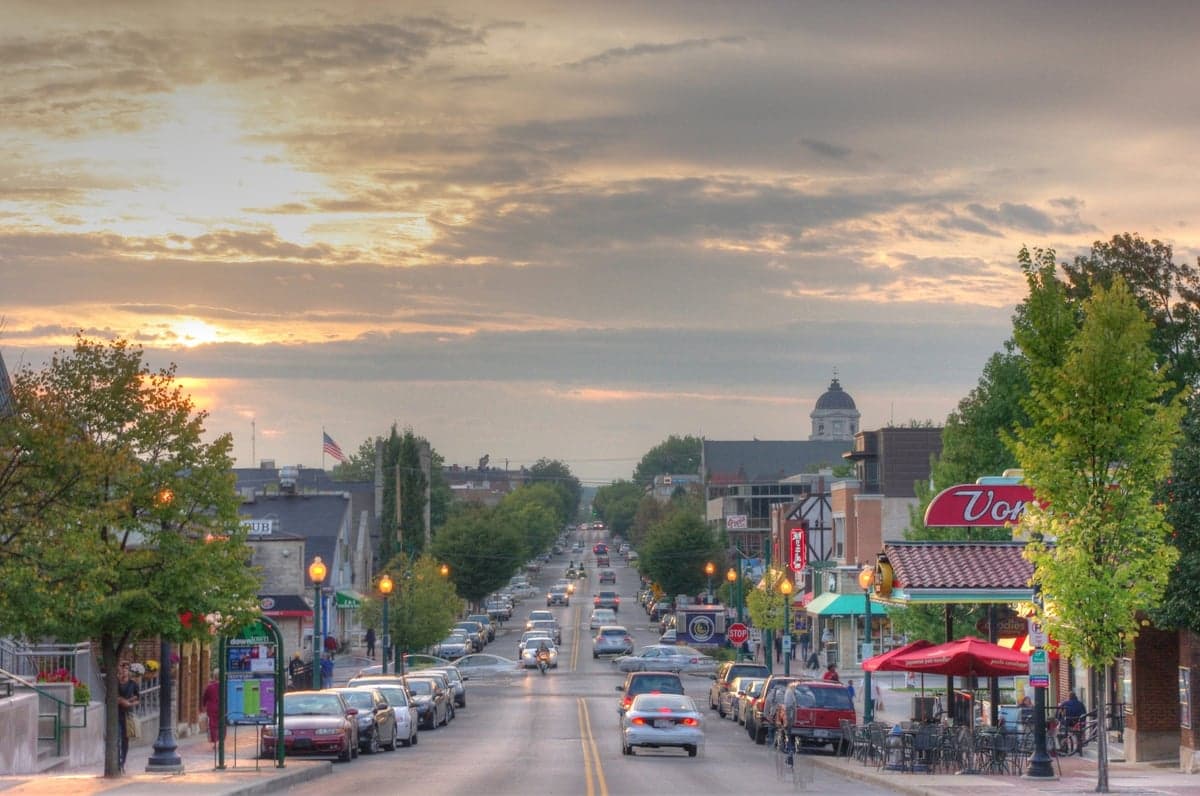
Photo: Wikipedia
Quality of Life in Bloomington, IN
A high quality of life with strong walkability, manageable living costs, healthy neighborhood signals, and solid amenity access.
What does Quality of Life tell us?
Quality of Life blends cost of living, nearby amenities, socioeconomic signals, and neighborhood character. City-level scores represent the whole municipality; individual neighborhoods can differ.
What does this tell us?
Quality of Life blends cost of living, nearby amenities, socioeconomic signals, and neighborhood character. City-level scores represent the whole municipality; individual neighborhoods can differ.
Cost of Living
1% above national average
The Real Cost of Living in Bloomington, IN for 2026
| Tier | Individual | Family (4) |
|---|---|---|
| Survival | $19k | $35k |
| Comfortable | $56k | $83k |
| Luxury | $88k+ | $137k+ |
| Elite (Top 5%) | $138k+ | $215k+ |
59%
The Area Signal
A metric tracking the socioeconomic signals of the area.
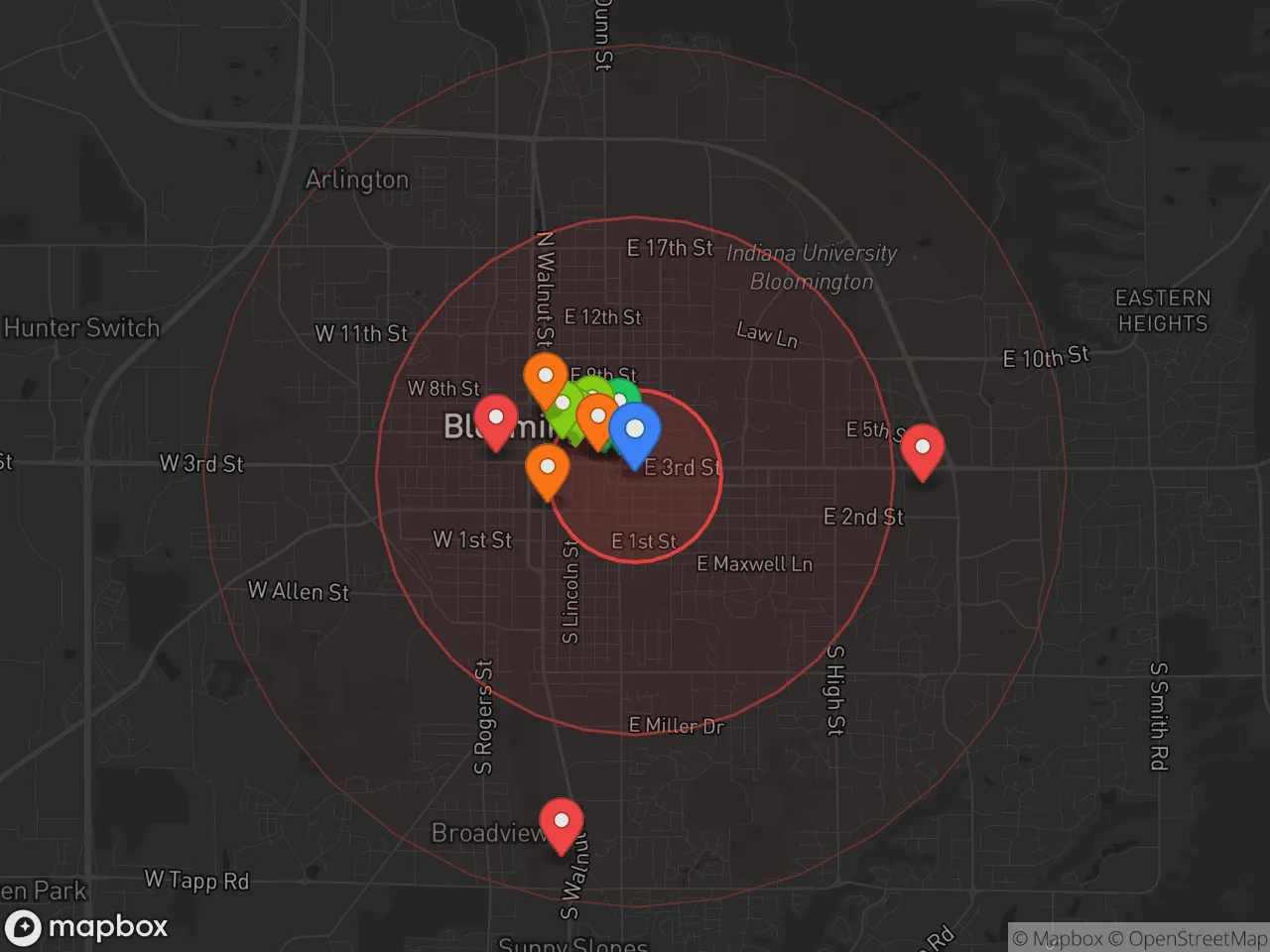
Hobbies
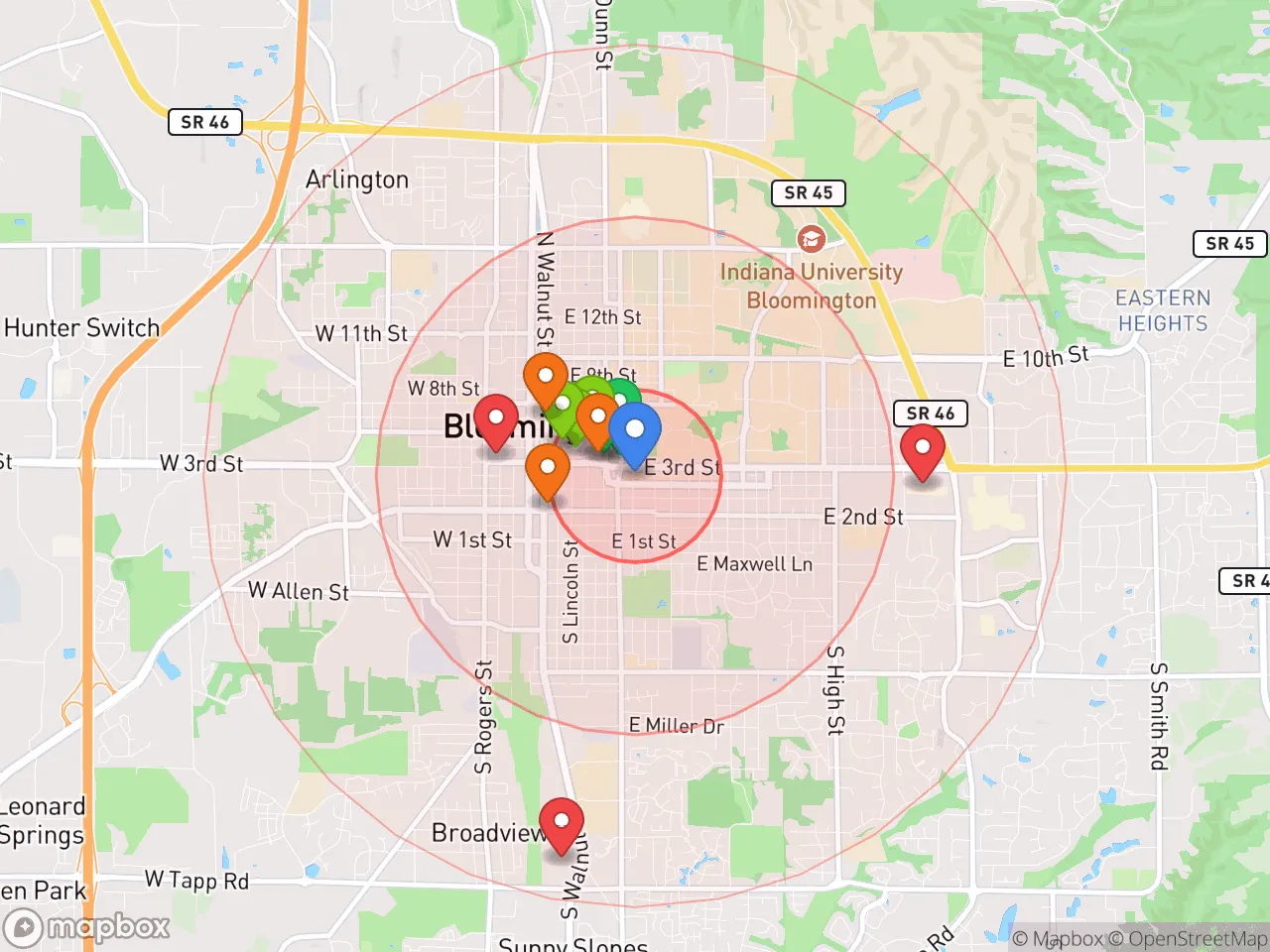
Explore the areaGroceries
5 within 10 miles
Gas
20 within 10 miles
Hospital
7 within 20 miles
Airport
Indianapolis International Airport
Post Office
USPS — South Walnut Street, Bloomington
Critical Amenities
Quality-of-Life Analysis
Bloomington, Indiana, presents a quality of life shaped by its dual identity as a classic Midwestern college town and a growing regional economic hub. The city’s cost of living index sits at 101 (on par with the U.S. average), attracting a mix of Indiana University faculty, students, remote tech workers, and families seeking a walkable, culturally rich environment without the premium prices of larger metros. While not an affluent enclave by national standards, Bloomington’s median household income of roughly $52,000 (slightly below the state average) masks a bifurcated economy: a stable, educated professional class alongside a significant student and service-worker population.
Cost of living, housing affordability, and how Bloomington compares to nearby cities
Bloomington’s housing market is notably more expensive than surrounding rural Monroe County but remains cheaper than Indianapolis suburbs like Carmel or Fishers. The median home value of $289,700 is roughly 15% above the Indiana state median, reflecting strong demand from university employees and out-of-state buyers. Median rent of $1,160 is manageable for a two-bedroom unit but has risen 22% since 2020, outpacing wage growth for service-sector workers. Compared to Bloomington, the nearby town of Bedford (25 miles south) offers median home values near $150,000, while Columbus (30 miles east) sits around $220,000, making Bloomington a premium choice for those prioritizing walkability and cultural amenities over raw affordability. The average commute of under 17 minutes is a standout advantage—far shorter than the national average of 26 minutes—freeing up time for family, recreation, or side projects.
What daily life is like for families, students, and remote workers
Daily life in Bloomington revolves around the Indiana University campus, which anchors a vibrant downtown with independent bookstores, farmers’ markets, and live music venues like the Buskirk-Chumley Theater. The Monroe County Community School Corporation (MCCSC) is well-regarded, with several elementary schools earning state “A” ratings, though high school options include the rigorous Bloomington High School North and South. For families, the city’s over 30 parks (including the 1,200-acre Griffy Lake Nature Preserve) and the B-Line Trail—a 3.1-mile rail-trail connecting downtown to the south side—provide year-round outdoor recreation. Remote workers benefit from reliable fiber-optic internet (Smithville Fiber covers most of the city) and coworking spaces like The Mill, a tech hub housed in a former furniture factory. The rhythm is slower than Indianapolis but faster than most rural Indiana towns: weekends see packed farmers’ markets and IU basketball games at Assembly Hall, while weekdays maintain a steady hum of academic and small-business activity.
Bloomington is best suited for people who value a tight-knit, walkable community with strong educational and cultural assets, and who can tolerate a modest housing market premium for those benefits. It works well for university-affiliated professionals, remote workers in creative or tech fields, and families who prioritize short commutes and outdoor access over suburban sprawl. Those seeking ultra-low housing costs or a booming job market outside of education and healthcare may find better options in Indianapolis or Columbus, Indiana. But for a city where nearly 40% of residents hold a graduate degree and the downtown is genuinely pedestrian-friendly, Bloomington offers a quality of life that punches well above its population of 80,000.

Crime in Bloomington, IN
Lower crime rates than 76% of comparable U.S. locations.
Violent CrimeViolent Crime Analysis
Property CrimeProperty Crime Analysis
Crime Analysis
Bloomington, Indiana, reports a violent crime rate of 133.8 per 100,000 residents and a property crime rate of 980.6 per 100,000, figures that place it below the national average for violent offenses but near the national average for property crime. However, the city's overall safety picture is complicated by its status as a liberal college town and the progressive judicial philosophy prevalent in Monroe County, which prioritizes offender rehabilitation over punitive measures. This approach, while well-intentioned, has direct consequences for public safety by keeping more repeat offenders on the street and diminishing the deterrent effect of prosecution.
Crime in context
Bloomington's violent crime rate of 133.8 per 100K is significantly lower than the national average of roughly 380 per 100K, but this statistic masks underlying risks. The property crime rate of 980.6 per 100K is slightly above the national average of about 1,000 per 100K, with theft and vehicle break-ins being the most common offenses. Compared to the rest of Indiana, Bloomington's crime rates are elevated, driven largely by its dense student population and transient residents. Progressive district attorneys in Monroe County have implemented policies such as reduced cash bail, diversion programs for theft, and lenient sentencing for property crimes, which critics argue embolden offenders and lead to higher recidivism. This judicial environment means that even relatively low violent crime numbers do not fully capture the risk of being victimized by individuals who cycle through the system without meaningful consequences.
What residents experience
Daily life in Bloomington involves a heightened awareness of property crime, particularly near the Indiana University campus and downtown areas. Bicycle theft, package theft, and vehicle break-ins are routine, and residents often report that police response is slow due to understaffing and a focus on more serious incidents. The progressive justice system's emphasis on "restorative justice" and treatment over incarceration means that many property crimes result in citations or short-term diversion programs rather than jail time, creating a perception that crime has few consequences. For victims, this can be deeply frustrating: stolen property is rarely recovered, and offenders are often back on the street within days. Violent crime, while less common, does occur—typically in the form of aggravated assaults related to disputes or alcohol-fueled incidents near bars—and the same lenient approach can apply, with plea deals reducing charges.
Neighborhood-level variation
Safety in Bloomington varies sharply by neighborhood. The Near West Side and areas directly adjacent to campus see the highest rates of property crime, while the more affluent and family-oriented neighborhoods on the east and south sides—such as the Winslow area and Sherwood Oaks—experience significantly lower crime rates. The Elm Heights and Prospect Hill historic districts are generally safe but still vulnerable to opportunistic theft. Conversely, the area around the College Mall and the SR 46 corridor has a higher concentration of retail theft and vehicle break-ins. Prospective residents should research specific blocks and consider that the city's overall progressive judicial climate means that even in "safe" neighborhoods, the risk of encountering a repeat property offender is higher than in jurisdictions with tougher sentencing practices.
* Values derived from national, state, county, city and local statistics and may differ in a specific area. Last updated: 2026-04-22T07:25:39.000Z
Narrative content on this page is AI-generated and may contain mistakes. Verify any details that matter before acting on them.
ReloMaps may earn a commission from affiliate links at no extra cost to you.

