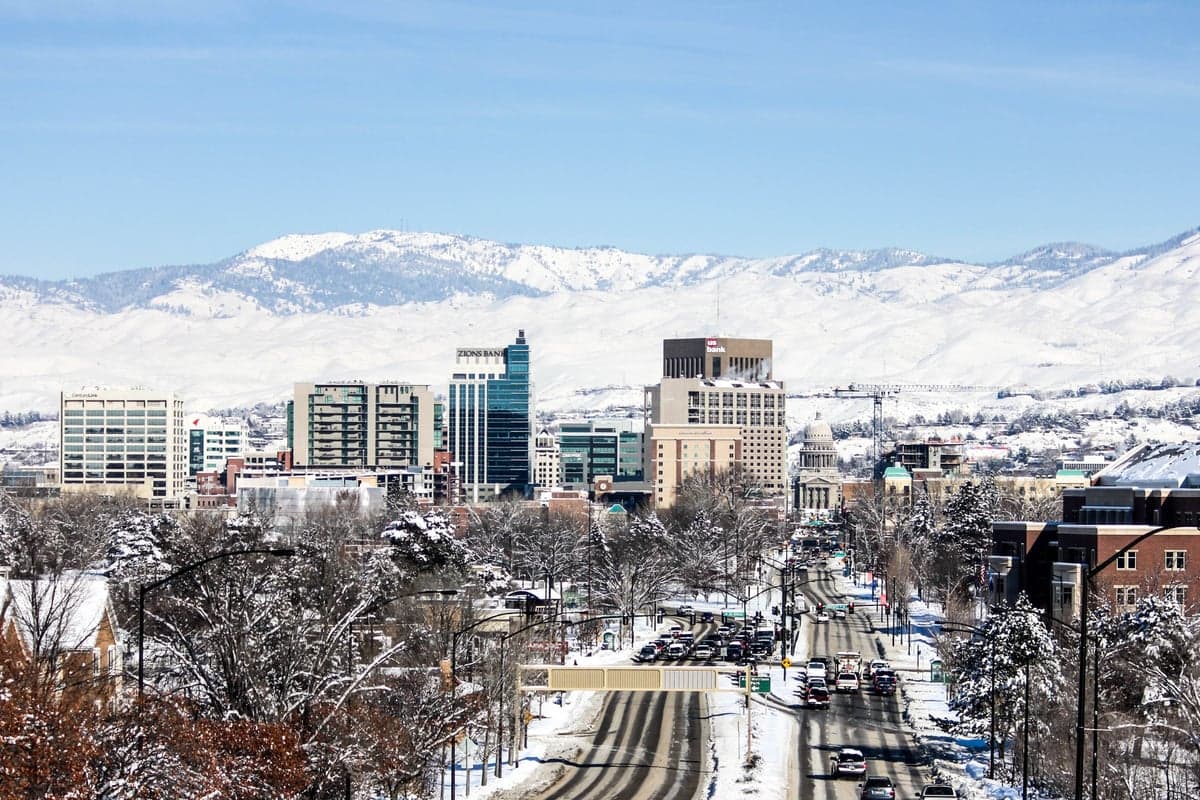
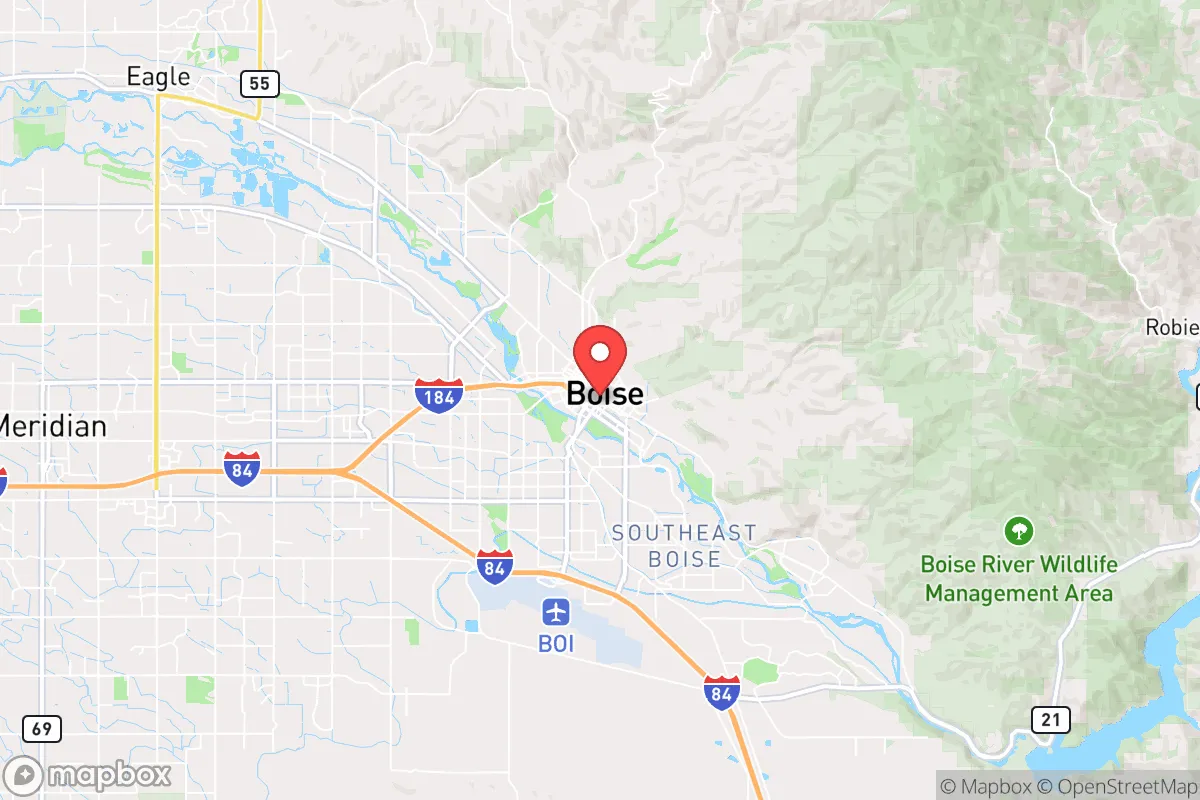
Photo: Wikipedia
Demographics of Boise, ID
Affluence Level in Boise, ID
A middle-class area roughly in line with national averages across income, home values, education, and employment.
People of Boise, ID
The people of Boise today number 235,701, forming a predominantly white (80.4%) and college-educated (46.6%) population that is notably less diverse than the national average. The city’s character is shaped by a low foreign-born share of just 3.3% and a Hispanic population of 9.5%, reflecting a history of domestic in-migration rather than international gateway dynamics. Boiseans tend to be politically moderate to conservative, family-oriented, and outdoors-focused, with a strong sense of local identity rooted in the city’s frontier and agricultural past.
How the city was settled and grew
Boise was founded in 1863 as a military outpost during the Idaho gold rush, with the original population drawn by mining claims and later by the Oregon Trail. The first permanent settlers were predominantly white Anglo-American farmers and merchants, many of whom arrived from the Midwest and the South after the Civil War. The North End neighborhood, with its historic Victorian homes, was built by these early merchant and professional families. By the early 20th century, Basque sheepherders from the Pyrenees mountains of Spain and France established a distinct community in what is now the Basque Block downtown, making Boise home to one of the largest Basque diaspora populations in the United States. A small wave of Chinese laborers, originally brought in for railroad construction, settled near the River Street area, though discriminatory laws and violence drove most out by the 1920s. The city grew steadily through the mid-20th century as a regional agricultural and government hub, with the Veterans Memorial Park area attracting returning WWII veterans and their families under the GI Bill. By 1960, Boise’s population was over 90% white, with the Basque community as the largest ethnic enclave.
Modern era (post-1965)
The post-1965 era brought modest demographic shifts, largely through domestic migration rather than international immigration. The 1980s and 1990s saw an influx of white-collar professionals from California and the Pacific Northwest, drawn by lower housing costs and the growth of tech and government sectors. This wave concentrated in the West Bench and Harris Ranch neighborhoods, which feature newer subdivisions and higher home prices. The Hispanic population grew from roughly 3% in 1990 to 9.5% today, driven by agricultural and construction labor demand, with many settling in the Chinden Boulevard corridor and the West Boise area. East and Southeast Asian communities (2.4% of the population) are small but visible, with a concentration of Vietnamese and Filipino families in the South Boise neighborhoods near the airport. The Indian subcontinent population (0.9%) is even smaller, primarily professionals in tech and healthcare, living in the Meridian border area rather than within Boise proper. The Black population remains minimal at 1.3%, with no single neighborhood concentration. Overall, Boise’s modern growth has been driven by domestic white in-migration, keeping the city’s racial composition relatively stable compared to national trends.
The future
Boise’s population is projected to continue growing, but the demographic trajectory points toward gradual diversification rather than rapid change. The Hispanic share is expected to rise to 12-14% by 2040, driven by higher birth rates and continued labor migration, with the West Boise and Chinden areas becoming more distinctly Hispanic enclaves. The East/Southeast Asian and Indian populations will likely grow slowly, tied to tech sector expansion at companies like Micron and HP, but will remain small relative to the white majority. The white population share is expected to decline from 80.4% to around 72-75% by 2040, primarily through aging and lower birth rates rather than out-migration. The city is not tribalizing into distinct ethnic enclaves in the way larger metros are; instead, Boise is experiencing a slow homogenization of its white professional class, with new arrivals from out of state blending into existing neighborhoods. The foreign-born share may rise to 5-6% but will remain well below the national average.
For someone moving to Boise now, the city offers a stable, predominantly white, family-oriented environment with a growing but still modest Hispanic presence. The population is becoming slightly more diverse over time, but the pace is slow enough that the city’s cultural and political character will remain recognizably conservative and Midwestern-influenced for at least another generation. New residents should expect a community that values outdoor recreation, civic engagement, and neighborly familiarity, with the trade-off being less ethnic and cultural variety than in larger Western cities.

* Values derived from national, state, county, city and local statistics and may differ in a specific area. Last updated: 2026-04-15T23:29:25.000Z
Narrative content on this page is AI-generated and may contain mistakes. Verify any details that matter before acting on them.
ReloMaps may earn a commission from affiliate links at no extra cost to you.

