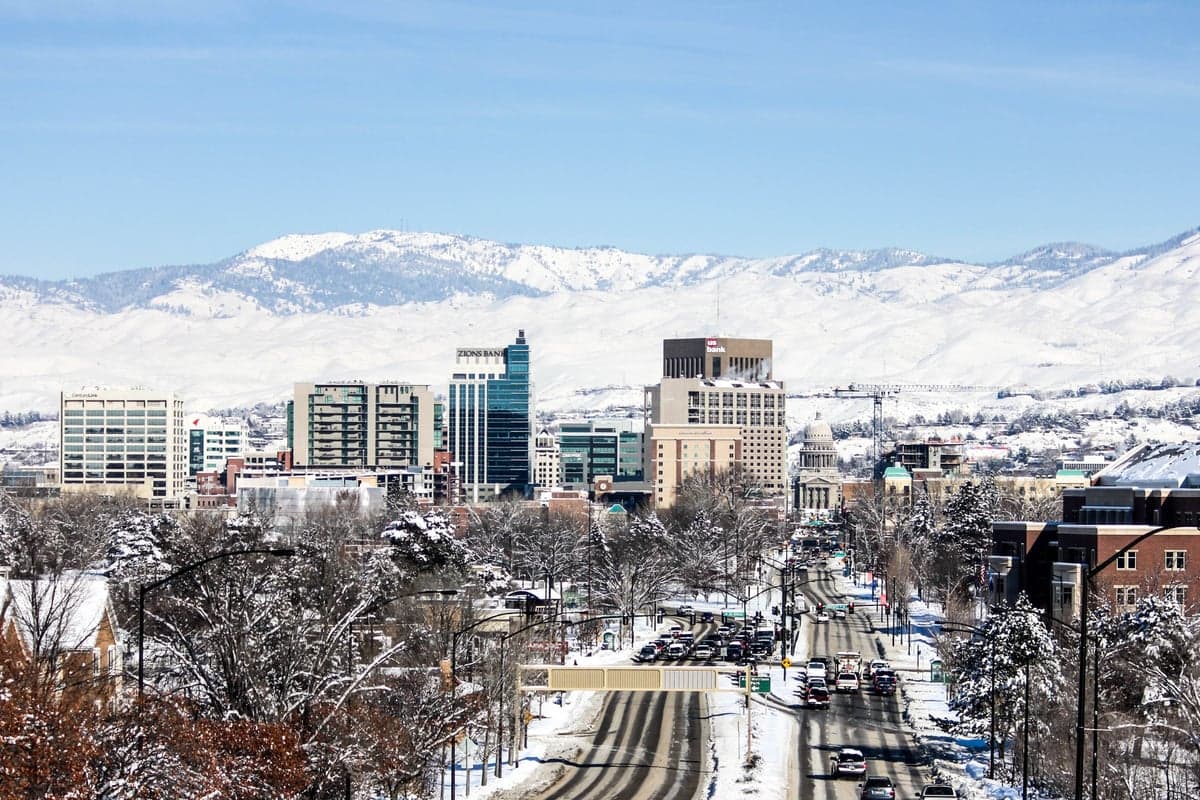
Photo: Wikipedia
Political ClimatePolitical Climate in Boise, ID
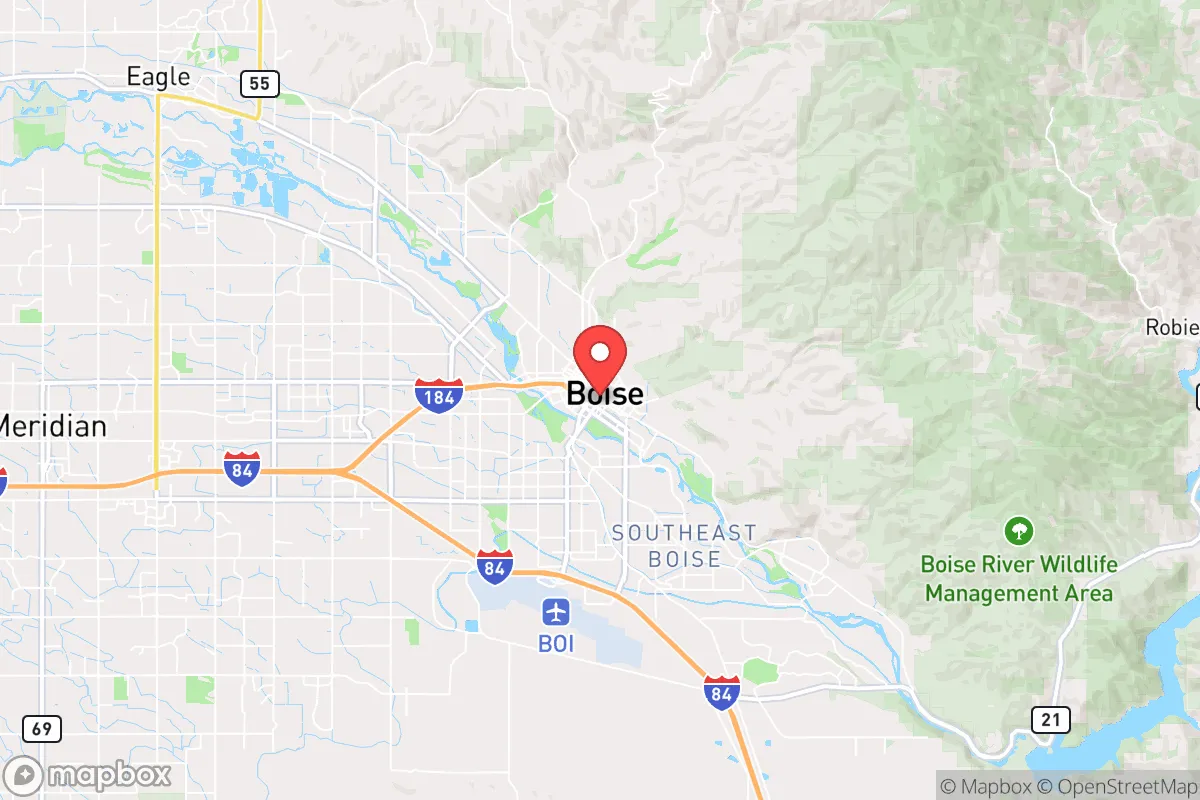
District shown is the primary district for this city’s centroid. Cities may span multiple districts.
Local Political AnalysisPolitical Analysis of Boise, ID
Boise has long been a reliably conservative stronghold, but if you’ve lived here as long as I have, you’ve watched the political ground shift under your feet. The city itself, with its Cook PVI of R+13, still leans solidly Republican on paper, but the daily reality feels more like a tug-of-war between traditional Western values and an influx of progressive transplants from California and the Pacific Northwest. The surrounding Treasure Valley—places like Meridian, Eagle, and Nampa—holds the line much harder, voting red by wider margins, while Boise proper has seen a noticeable drift toward purple, especially in its downtown core and near the university.
How it compares
Drive 20 minutes west to Nampa or Caldwell, and you’re in deep-red territory where Second Amendment rights and limited government are still the default. Head east to the foothills or south toward Kuna, and the story’s the same. But inside Boise’s city limits, especially in the North End or near Boise State University, you’ll find pockets that vote blue—sometimes by double digits. That’s a stark contrast from even a decade ago, when the whole valley felt like one big conservative family. The difference isn’t subtle: in the 2024 election, Ada County as a whole went Republican, but Boise’s urban precincts flipped for the Democratic candidate, while the suburbs held firm. If you’re looking for a place where your vote for limited government and personal freedom still carries weight, the surrounding towns are where the real conservative heartbeat is.
What this means for residents
For those of us who value personal freedoms—whether it’s the right to keep and bear arms, choose our own healthcare, or send our kids to the school that fits them best—the shift in Boise’s political climate is something to watch closely. The city council has flirted with zoning changes and density mandates that feel like top-down planning, and there’s been a steady push for more bike lanes and transit projects that some see as government overreach into how we live our daily lives. Property taxes have crept up, and while the state legislature in Boise still passes conservative laws—like the 2024 school choice expansion and permitless carry—the local city government sometimes feels like it’s marching to a different drummer. If you’re a longtime resident, you notice the little things: more regulations on short-term rentals, stricter noise ordinances, and a growing bureaucracy that wasn’t here 15 years ago.
Culturally, Boise still has that Idaho friendliness and a strong sense of community, but the policy battles are real. The state’s preemption laws on firearms and land use keep the worst of the progressive impulses in check, but the city’s push for “complete streets” and affordable housing mandates feels like a slow creep toward the kind of government control that drove many of us here in the first place. The long-term trajectory depends on who moves in next—if the transplants keep coming from blue states, Boise could look more like a Portland-lite within a generation. For now, the suburbs and rural areas remain a refuge for those who want to keep government small and personal freedom big. If you’re considering a move, know that Boise itself is a mixed bag, but the surrounding valley still offers the conservative, live-and-let-live culture that made Idaho famous.

State Political ClimatePolitical Climate in Idaho
State Political AnalysisPolitical Environment in the State
Idaho has been a reliably Republican state for decades, but the nature of that conservatism has shifted dramatically since the 1990s. The state’s political center of gravity has moved from a traditional, live-and-let-live Western independence to a more assertive, culturally conservative posture, driven largely by an influx of out-of-state transplants and a growing suburban population around Boise. Over the last 20 years, the Republican share of the presidential vote has actually increased from about 67% in 2000 to over 63% in 2024, but the real story is the internal realignment: the old moderate Republicanism of the Gem State has been largely replaced by a populist, freedom-oriented conservatism that dominates the legislature and the governor’s mansion.
Urban vs. rural divide
The political map of Idaho is starkly divided between a handful of growing urban islands and a vast, deeply conservative rural expanse. Ada County (Boise) is the state’s political engine, but it’s not a liberal stronghold—it’s a purple-to-light-red county that has trended slightly leftward as tech workers and Californians move in. In 2024, Ada County voted for Trump by about 12 points, down from 18 points in 2016. Canyon County (Nampa, Caldwell), just west of Boise, is the real conservative powerhouse in the Treasure Valley, voting for Trump by over 30 points. The rural counties—Lemhi, Custer, Butte, and Clark—routinely deliver 80-90% Republican margins. The only reliably blue area is Blaine County (Sun Valley/Ketchum), a wealthy resort area that votes Democratic by 20-30 points. The divide isn’t just about population density; it’s about economic base. The rural counties depend on agriculture, mining, and timber, while the Boise metro is driven by tech, healthcare, and government. This creates a cultural tension where Boise’s growth is seen by rural residents as a threat to the state’s identity, even as the newcomers often vote Republican.
Policy environment
Idaho’s policy environment is among the most conservative in the nation, with a strong emphasis on limited government and individual liberty. The state has a flat income tax of 5.8% (down from 6.5% in 2022) and a sales tax of 6%, with no tax on groceries. Property taxes are relatively low, though they vary by county. The regulatory posture is aggressively pro-business: Idaho is a “right-to-work” state, has no statewide zoning mandates, and permits open carry of firearms without a permit. Education policy is a major battleground. The state has a robust school choice movement, with a tax-credit scholarship program (the “Idaho Opportunity Scholarship”) and a growing charter school sector. However, the legislature has repeatedly rejected universal school vouchers, a point of tension between the governor and the more libertarian wing of the party. Healthcare is largely market-driven; Idaho did not expand Medicaid until 2020 (via ballot initiative), and the state has some of the most restrictive abortion laws in the country, with a near-total ban after six weeks (the “Idaho Fetal Heartbeat Act”). Election laws are strict: voter ID is required, same-day registration is not allowed, and the state has a closed primary system that effectively bars independents from voting in Republican primaries.
Trajectory & freedom
Idaho is arguably becoming more free in some areas and less free in others, depending on your definition. On the plus side for conservatives, the state has expanded gun rights significantly. In 2023, the legislature passed a “Second Amendment Preservation Act” that prohibits state and local law enforcement from enforcing federal gun laws that violate the state constitution. Parental rights have been strengthened: the “Parents’ Bill of Rights” (2023) requires schools to notify parents of any curriculum changes and gives them the right to opt their children out of sex education. Medical freedom is a mixed bag. The state banned COVID-19 vaccine mandates for government employees and private businesses, but it also passed a law restricting gender-affirming care for minors (the “Idaho Vulnerable Child Protection Act”). Property rights are generally strong, but the influx of new residents has driven up housing costs, creating a tension between the right to develop and the desire to preserve rural character. The biggest concern for freedom-minded residents is the growing influence of the state government in local affairs—the legislature has preempted local ordinances on everything from plastic bags to rent control, which some see as overreach.
Civil unrest & political movements
Idaho has a long history of anti-government sentiment, but the modern political movements are more organized and mainstream. The “Constitutional Sheriffs” movement is active in rural counties, with sheriffs in places like Bonner County and Boundary County publicly refusing to enforce certain state or federal laws they deem unconstitutional. The “Idaho Freedom Foundation” is a powerful libertarian-leaning think tank that has successfully pushed for tax cuts and school choice. On the left, the “Idaho Women’s March” and “Reclaim Idaho” (the group behind the Medicaid expansion ballot initiative) are active, but they have little legislative success. Immigration politics are a flashpoint: the state has a “sanctuary cities” ban (2019) that prohibits local governments from adopting policies that limit cooperation with federal immigration enforcement. In 2024, the legislature passed a bill allowing law enforcement to arrest and detain undocumented immigrants, which is currently being challenged in court. Election integrity is a hot-button issue; the state has a “Voter Integrity Act” (2021) that requires all ballots to be hand-counted in certain precincts, a move that has drawn both praise and criticism. The most visible flashpoint for a new resident would be the “Idaho State Capitol” in Boise, where competing protests over abortion, gun rights, and LGBTQ issues occur regularly, though they are generally peaceful.
Projection
Over the next 5-10 years, Idaho will likely become more conservative, but in a different way. The demographic shift is the key driver: the state is growing by about 2% per year, with most newcomers coming from California, Washington, and Oregon. These transplants are often fiscally conservative but socially moderate, which could create a new “suburban Republican” bloc that is less interested in culture war battles and more focused on housing costs, traffic, and school quality. However, the rural counties are shrinking, and the legislature is becoming more dominated by the Treasure Valley. This could lead to a split between the “MAGA” wing (strong in rural areas and Canyon County) and the “Chamber of Commerce” wing (strong in Ada County). The most likely outcome is that the state will continue to pass conservative legislation on guns, abortion, and parental rights, but will face increasing pressure to address infrastructure and housing affordability. The wild card is the federal government: if the Supreme Court or Congress restricts state authority on issues like abortion or immigration, Idaho’s legislature will likely push back hard, possibly with nullification rhetoric. For a new resident, the state will feel freer than most of the country, but the political climate will be more intense and polarized than the “laid-back Idaho” of the 1990s.
Bottom line for a new resident: If you’re moving to Idaho for freedom, you’ll find it—but it’s a freedom that comes with a fight. The state is a battleground between the old Western independence and a new, more aggressive conservatism. You’ll need to be comfortable with a government that is deeply involved in your personal life (on issues like abortion and education) but hands-off on economics. The best places for a conservative family are the suburbs of Meridian, Eagle, and Star (Ada County) or the rural towns of Sandpoint, Coeur d’Alene, and Rexburg. Avoid Boise proper and Ketchum if you want a reliably conservative environment. The political climate is stable but intense—expect to be engaged, whether you want to be or not.
* Values derived from national, state, county, city and local statistics and may differ in a specific area. Last updated: 2026-04-15T23:29:25.000Z
Narrative content on this page is AI-generated and may contain mistakes. Verify any details that matter before acting on them.
ReloMaps may earn a commission from affiliate links at no extra cost to you.

