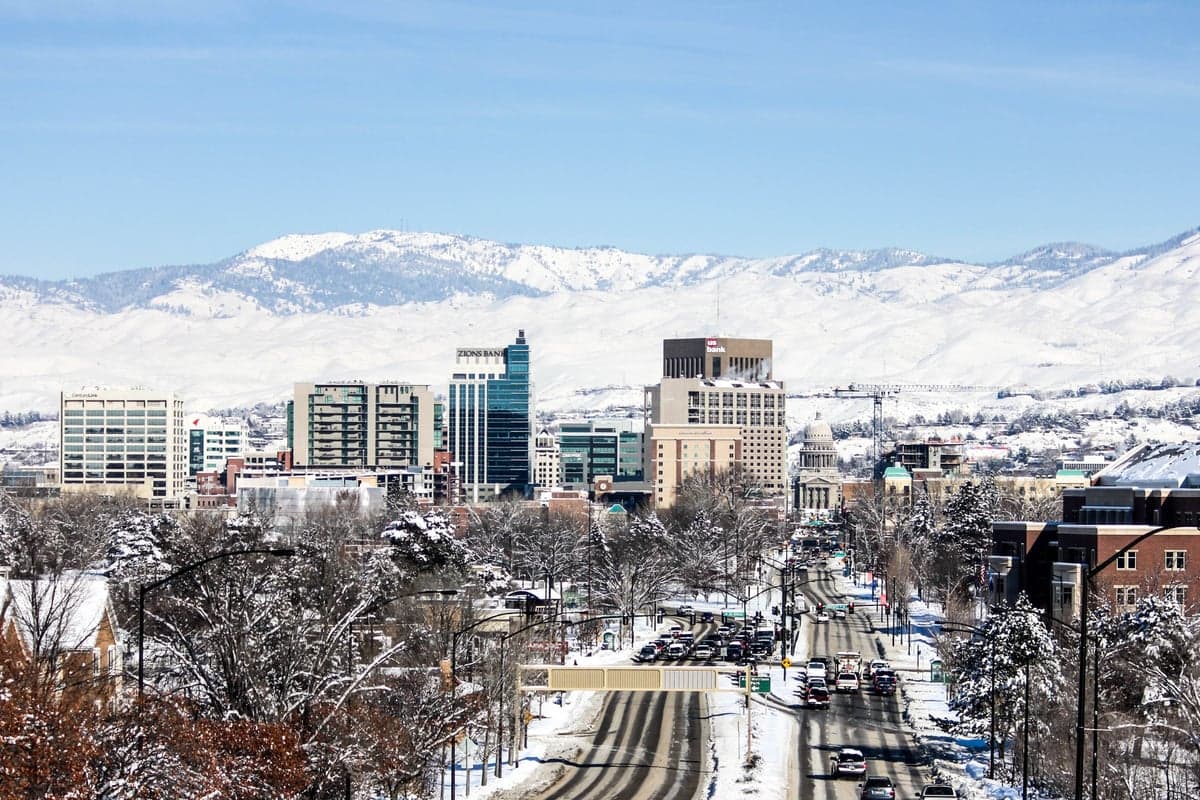
Photo: Wikipedia
Personal Sovereignty in Boise, ID
Moderate friction. Expect trade-offs in some aspect of personal liberty and independence.
What does Personal Sovereignty tell us?
Personal Sovereignty measures your capacity for self-reliance and independence with minimal government friction. Higher scores mean fewer barriers between you and the way you want to live... but it assumes you have the space you need and good neighbors.
What does this tell us?
Personal Sovereignty measures your capacity for self-reliance and independence with minimal government friction. Higher scores mean fewer barriers between you and the way you want to live... but it assumes you have the space you need and good neighbors.
State Policy
Energy independence: Importer (25% of energy produced in-state)
Personal Liberty
Homesteading

Personal Liberty Analysis
Boise, Idaho, offers one of the strongest personal sovereignty environments in the western United States, particularly for those who view government overreach as a primary threat to individual liberty. The city sits within a state that has deliberately constructed legal and cultural barriers against federal and state intrusion, making it a strategic relocation target for conservative singles and parents who prioritize autonomy. While Boise itself has grown more politically diverse in recent years, the surrounding Ada County and the state legislature remain firmly committed to protecting the rights of individuals to live, work, and defend themselves without excessive bureaucratic interference. This analysis examines the specific legal and practical dimensions of that sovereignty, focusing on the factors that matter most to those who value self-reliance and limited government.
Tax burden and regulatory posture: How Boise compares to high-control states
Idaho’s tax structure is a deliberate counterweight to the high-tax, high-regulation environments found in states like California, Oregon, and Washington. There is no state-level estate tax, no inheritance tax, and no tax on social security benefits, which directly preserves wealth for families rather than the state. The state income tax is a flat 5.8% as of 2025, and while not the lowest in the nation, it is significantly lower than the progressive brackets in neighboring states. Property taxes in Ada County average around 0.7% of assessed value, which is moderate but can be mitigated through the state’s homeowner exemption program. More importantly, Idaho’s regulatory posture is explicitly designed to resist federal overreach. The state has passed multiple laws asserting its authority under the Tenth Amendment, including the Idaho Sovereignty Act, which prohibits state resources from being used to enforce federal mandates that violate the Second Amendment or other constitutional rights. For a survivalist or prepper, this means fewer layers of state-level bureaucracy to navigate when building a homestead, starting a business, or simply living without constant government surveillance. The state’s right-to-work laws and lack of state-level occupational licensing for many trades further reduce the regulatory friction that plagues more controlled jurisdictions.
Self-defense and gun law specifics: Stand your ground and constitutional carry
Idaho is one of the most firearm-friendly states in the nation, and Boise residents enjoy the full spectrum of self-defense rights without the licensing burdens found in coastal states. The state has constitutional carry, meaning no permit is required to carry a concealed firearm for any law-abiding adult 18 or older. This is not a recent compromise; it has been the law since 2016 and has not been rolled back despite population growth. Idaho also has a strong Stand Your Ground statute, codified in Idaho Code § 19-202A, which removes any duty to retreat before using deadly force in self-defense, both inside and outside the home. There are no state-level magazine capacity restrictions, no assault weapon bans, and no red flag laws—despite repeated attempts by out-of-state activists to introduce them. The state legislature has preempted local governments from enacting their own gun control ordinances, meaning Boise city officials cannot impose restrictions that contradict state law. For parents, this means the ability to teach children firearm safety and self-defense without fear of legal repercussions. For singles, it means the legal framework supports the mindset that personal protection is an individual responsibility, not a state-granted privilege. The only notable limitation is that carrying a concealed firearm into a K-12 school requires a special enhanced permit, but even that is shall-issue and relatively straightforward to obtain.
Self-reliance and homesteading viability: Lot sizes, zoning, and off-grid feasibility
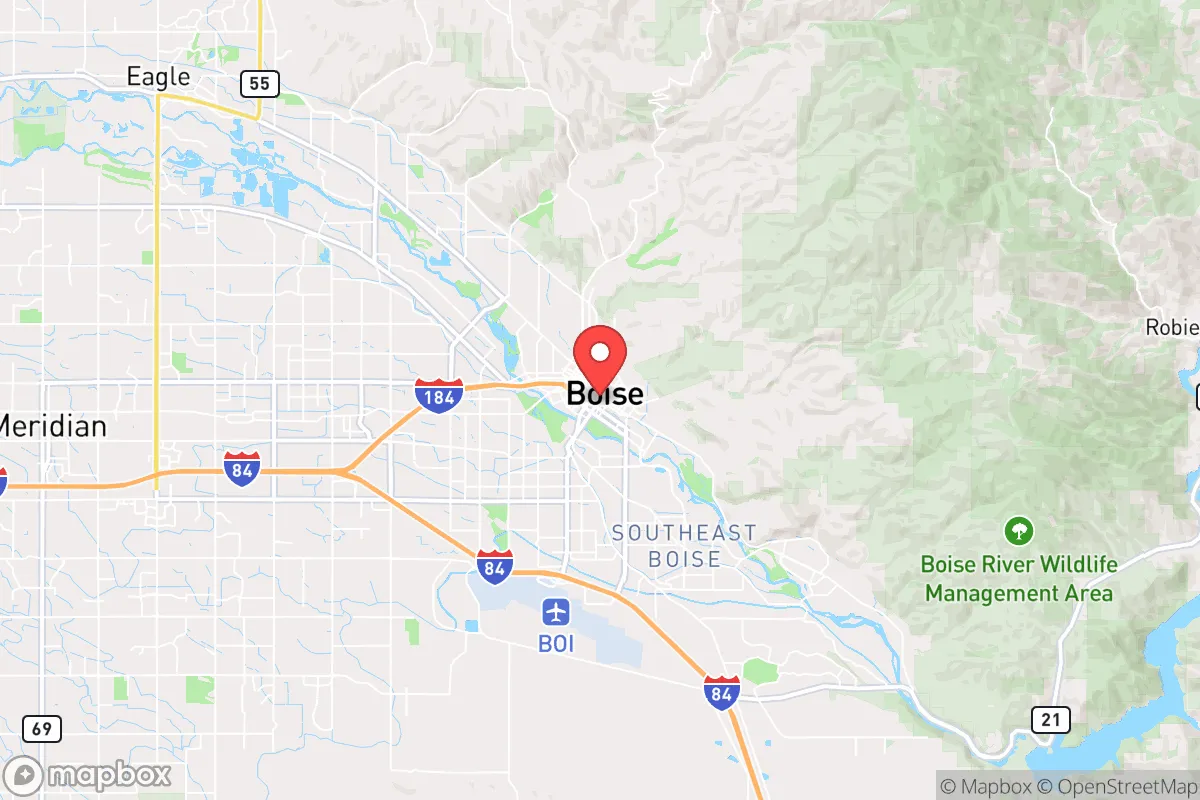
Boise itself is an urban center, but the surrounding Ada County and adjacent areas like Eagle, Kuna, and rural parts of Canyon County offer realistic opportunities for self-reliant living. Zoning in unincorporated areas allows for larger lot sizes—typically one to five acres in agricultural or rural residential zones—without the restrictive minimum square footage requirements found in suburban subdivisions. Chickens, goats, and even small livestock are permitted on parcels of one acre or more in most rural zones, though city limits impose stricter rules. Off-grid feasibility is high, but with caveats. Idaho has no state-level ban on rainwater collection, and many rural properties rely on private wells and septic systems, which are regulated by the Idaho Department of Environmental Quality but are generally straightforward to permit. Solar panels are legal and encouraged, with net metering available through Idaho Power, though the utility’s rates are not as favorable as in some sunnier states. The bigger challenge is the growing urban footprint: Boise’s population has increased by over 20% since 2020, driving up land prices and making large parcels within commuting distance more expensive. However, for those willing to live 30-45 minutes outside the city, land can still be found for under $10,000 per acre, and the regulatory environment does not actively discourage homesteading. The state’s right-to-farm laws protect agricultural activities from nuisance lawsuits, which is a critical legal shield for anyone raising animals or running a small farm near expanding suburbs.
Personal liberties: Parental rights, medical autonomy, speech, and property
Idaho has become a national leader in protecting parental rights, particularly in education and healthcare. The state’s Parental Rights in Education law, passed in 2023, requires schools to obtain parental consent before any medical or mental health screening, and it prohibits classroom instruction on gender identity and sexual orientation in grades K-3. More broadly, Idaho Code § 32-101 explicitly recognizes that parents have the fundamental right to direct the upbringing, education, and healthcare of their children, and this right cannot be infringed by the state without a compelling interest. Medical autonomy for adults is also strong: Idaho has no state-level vaccine mandate for employment or public services, and the state’s medical freedom laws protect individuals from being forced to take experimental treatments or medications as a condition of work or education. Free speech protections are robust, with no state-level hate speech laws that could be used to chill political or religious expression. Property rights are reinforced by Idaho’s strong eminent domain protections, which require just compensation and a public use that is narrowly defined. The state also has a castle doctrine that extends to vehicles and workplaces, not just homes. For the survivalist or prepper, these laws create a legal environment where the default assumption is that the individual is sovereign, not the state. The government must prove a compelling reason to interfere, rather than the individual having to prove a right to be left alone.
In the broader context of the United States, Boise and Idaho represent a rare combination of low taxes, strong self-defense laws, viable homesteading options, and robust personal liberties that is increasingly difficult to find in other regions. The state’s legal framework is explicitly designed to resist federal overreach and protect individual autonomy, making it a top-tier destination for those who view government expansion as a threat to their way of life. While no location is perfect—Boise’s housing costs have risen, and the city’s politics are more mixed than the state’s—the overall sovereignty environment here is among the best in the West. For singles and parents who want to live without constant state interference, and who are willing to trade some urban amenities for legal and cultural freedom, Boise is a strategic choice that few other cities can match.

* Values derived from national, state, county, city and local statistics and may differ in a specific area. Last updated: 2026-04-15T23:29:25.000Z
Narrative content on this page is AI-generated and may contain mistakes. Verify any details that matter before acting on them.
ReloMaps may earn a commission from affiliate links at no extra cost to you.

