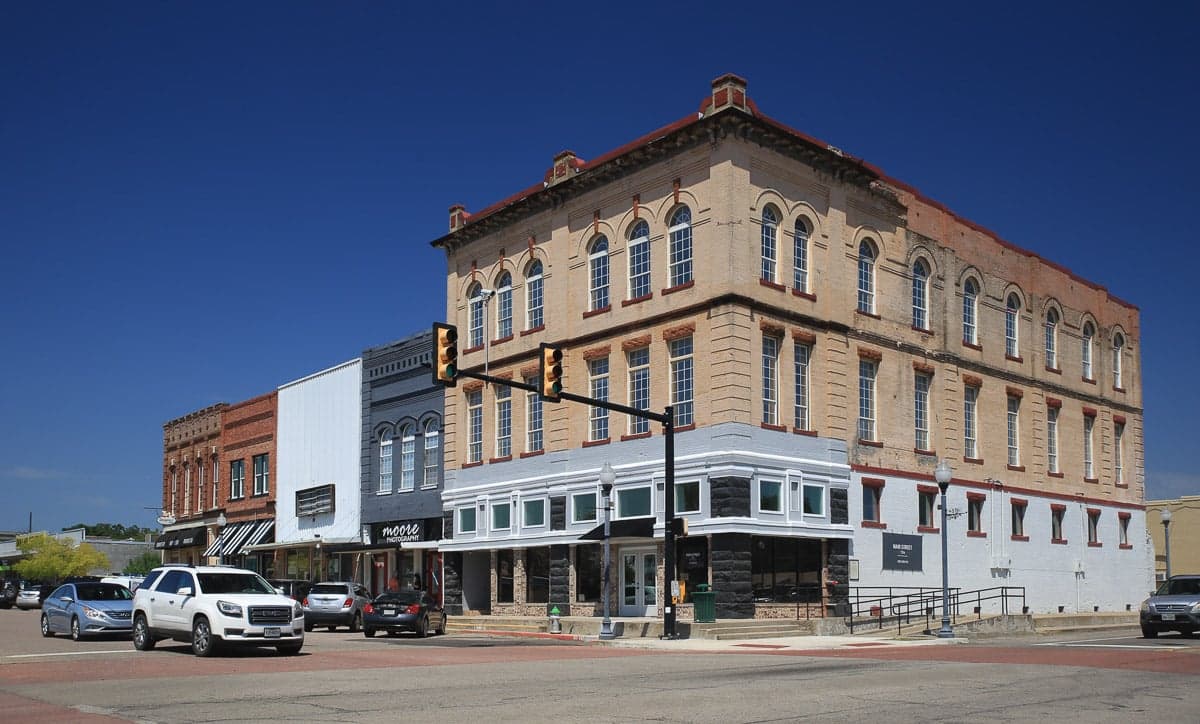
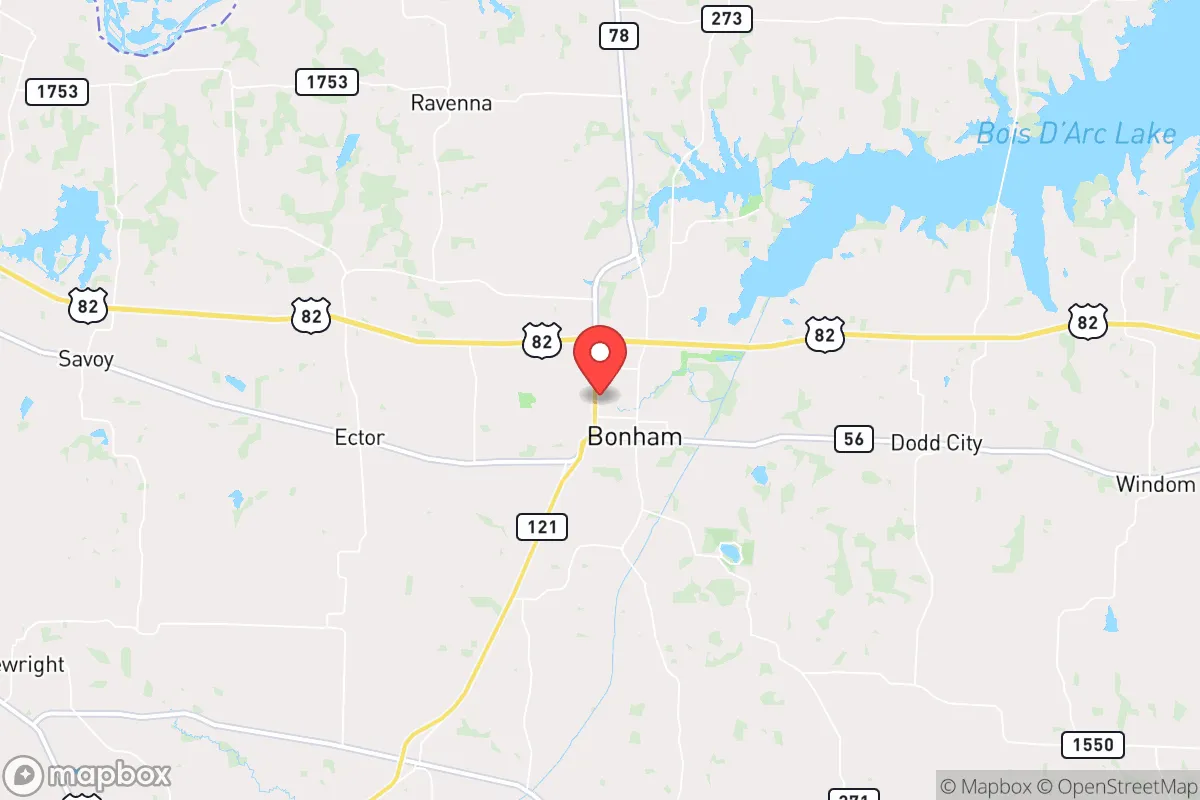
Photo: Wikipedia
Quality of Life in Bonham, TX
A high quality of life with strong walkability, manageable living costs, healthy neighborhood signals, and solid amenity access.
What does Quality of Life tell us?
Quality of Life blends cost of living, nearby amenities, socioeconomic signals, and neighborhood character. City-level scores represent the whole municipality; individual neighborhoods can differ.
What does this tell us?
Quality of Life blends cost of living, nearby amenities, socioeconomic signals, and neighborhood character. City-level scores represent the whole municipality; individual neighborhoods can differ.
Cost of Living
21% below national average
The Real Cost of Living in Bonham, TX for 2026
| Tier | Individual | Family (4) |
|---|---|---|
| Survival | $16k | $31k |
| Comfortable | $36k | $52k |
| Luxury | $96k+ | $149k+ |
| Elite (Top 5%) | $138k+ | $214k+ |
102%
The Area Signal
A metric tracking the socioeconomic signals of the area.
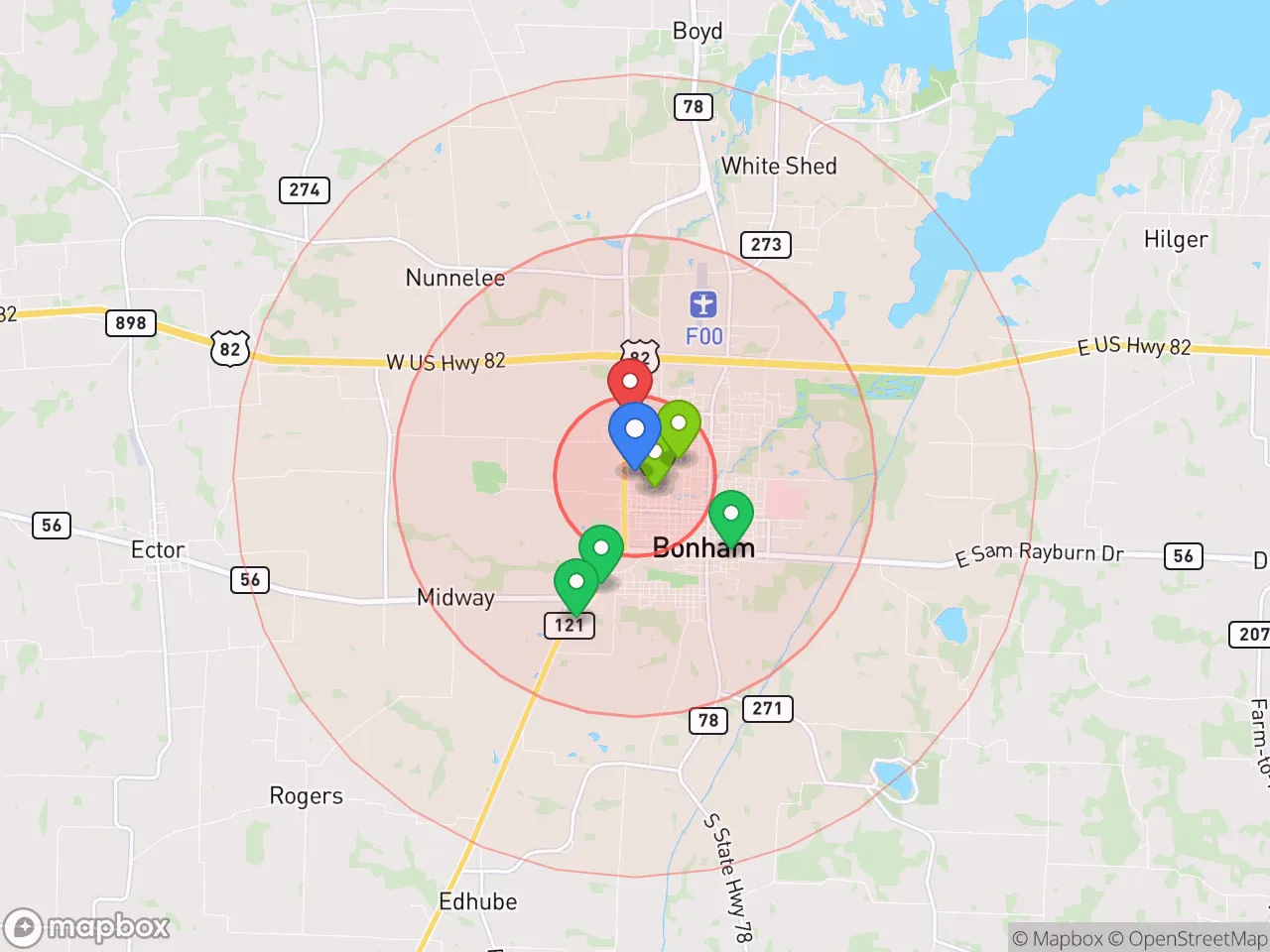
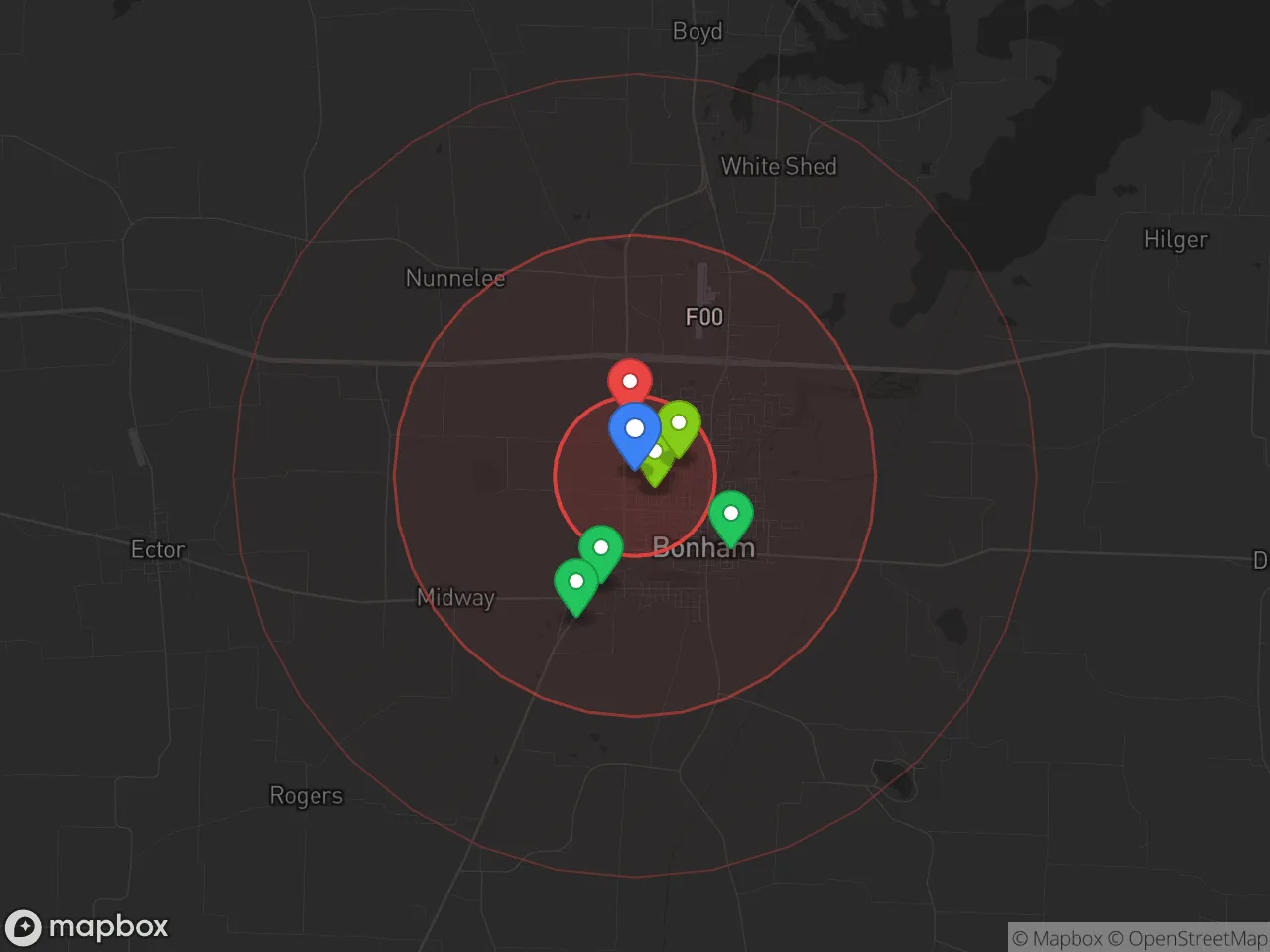
Hobbies
Explore the areaGroceries
2 within 10 miles
Gas
4 within 10 miles
Hospital
2 within 20 miles
Airport
DFW — Dallas/Fort Worth International
Post Office
USPS — Bells, TX
Critical Amenities
Quality-of-Life Analysis
Bonham, Texas, offers a notably affordable quality of life that appeals to families, retirees, and workers seeking a slower pace without sacrificing access to the Dallas-Fort Worth metroplex. With a cost of living index of 79—21% below the U.S. average—the town attracts those who prioritize financial breathing room over urban amenities. The population skews slightly older and more family-oriented, with a median age around 38, and the local economy is anchored by agriculture, manufacturing, and government services rather than high-growth tech or finance sectors.
How housing costs and everyday expenses compare to nearby cities
Bonham’s housing market is a primary draw for newcomers. The median home value sits at $183,600, roughly half the national median and significantly lower than in nearby Sherman ($240,000) or McKinney ($450,000). Median rent is $1,029, making it one of the most affordable rental markets in Fannin County. Utility and grocery costs also run below state averages, though property taxes in Texas are relatively high—around 1.8% of assessed value in Fannin County. The average commute of 26.7 minutes is slightly longer than the national average (26 minutes), reflecting the fact that many residents drive to jobs in Sherman, Denison, or even the northern DFW suburbs. For those working locally, the commute is under 15 minutes, and traffic congestion is virtually nonexistent.
What daily life is like for families and retirees in Bonham
Daily life in Bonham centers on a compact historic downtown with a county courthouse, local diners, and independent shops. The Bonham Independent School District serves roughly 1,800 students across three elementary schools, one middle school, and Bonham High School, which has a 4:1 student-teacher ratio and a graduation rate of 92%. For healthcare, residents rely on TMC Bonham Hospital, a 25-bed critical access facility, though serious cases are referred to Sherman (20 minutes north) or Plano (50 minutes south). Outdoor recreation includes Bonham State Park, a 261-acre park with a 65-acre lake for fishing, kayaking, and hiking, plus the nearby Caddo National Grassland. The town hosts an annual Fannin County Fair and a weekly farmers market from April through October. Nightlife is minimal—most social activity revolves around church, school sports, and community events like the Bonham Rodeo.
Bonham is best suited for those who value low housing costs, a tight-knit community, and proximity to nature over urban nightlife or career diversity. Retirees on fixed incomes find the affordability particularly attractive, while remote workers can leverage the low rent and quiet environment—though internet speeds average only 50 Mbps in some parts of town. Families with young children benefit from small class sizes and low crime rates (violent crime is 40% below the Texas average), but should expect limited shopping and dining options. Commuters willing to drive 30–45 minutes can access jobs in Sherman or McKinney, but those seeking high-paying professional roles or cultural amenities will likely find Bonham too isolated.

Crime in Bonham, TX
Lower crime rates than 88% of comparable U.S. locations.
Violent CrimeViolent Crime Analysis
Property CrimeProperty Crime Analysis
Crime Analysis
Bonham, Texas, reports a violent crime rate of 342.3 per 100,000 residents and a property crime rate of 1,780.9 per 100,000, placing it above national averages for both categories. While not among the most dangerous cities in the state, these figures indicate that crime is a tangible concern for residents and prospective movers. The city’s safety profile is shaped by its location in Fannin County, a largely rural area that nonetheless experiences crime patterns influenced by its proximity to the Dallas-Fort Worth metroplex.
Crime in context
Bonham’s violent crime rate of 342.3 per 100,000 is roughly 20% higher than the national average of approximately 285 per 100,000, though it remains below the rates seen in many larger Texas cities. Property crime in Bonham, at 1,780.9 per 100,000, significantly exceeds the national average of around 1,950 per 100,000 but is comparable to other small cities in the region. Aggravated assault accounts for the majority of violent incidents, while larceny-theft is the most common property crime. Compared to Fannin County as a whole, Bonham’s rates are elevated, reflecting the concentration of population and commercial activity within the city limits.
What residents experience
Residents frequently report that property crime—particularly theft from vehicles and burglaries—is the most visible safety issue in Bonham. Many locals note that unlocked cars and unsecured outbuildings are common targets. Violent crime, while less frequent, tends to be concentrated in specific areas and often involves individuals who know one another, meaning random attacks on strangers are rare. Law enforcement presence is moderate, with the Bonham Police Department and Fannin County Sheriff’s Office sharing jurisdiction. Response times in the city core are generally faster than in outlying rural areas. Community watch programs exist but are not uniformly active across all neighborhoods.
It is important to note that Bonham’s justice system operates within the broader context of Fannin County, which has not adopted the progressive prosecutorial policies seen in large, liberal-leaning metro areas. Unlike jurisdictions with elected district attorneys who prioritize decarceration and reduced sentencing, Fannin County’s approach remains more traditional. This conservative judicial philosophy means that offenders are more likely to face meaningful consequences, which can act as a deterrent and contribute to a lower risk of repeat offenses compared to areas with lenient bail and sentencing practices. For residents, this translates into a justice environment that prioritizes public safety and victim rights over offender rehabilitation at the expense of accountability.
Neighborhood-level variation in Bonham is notable. Older, established residential areas near the downtown square tend to have lower crime rates, while newer subdivisions on the outskirts and areas near major highways (such as US-82 and TX-121) see more property crime due to easier access for offenders. The area around Bonham High School and the industrial park on the city’s east side has reported a higher incidence of vehicle break-ins. Prospective residents are advised to consult local police crime maps and speak with neighbors about specific blocks, as safety can vary significantly from street to street.
* Values derived from national, state, county, city and local statistics and may differ in a specific area. Last updated: 2026-05-12T01:03:37.000Z
Narrative content on this page is AI-generated and may contain mistakes. Verify any details that matter before acting on them.
ReloMaps may earn a commission from affiliate links at no extra cost to you.

