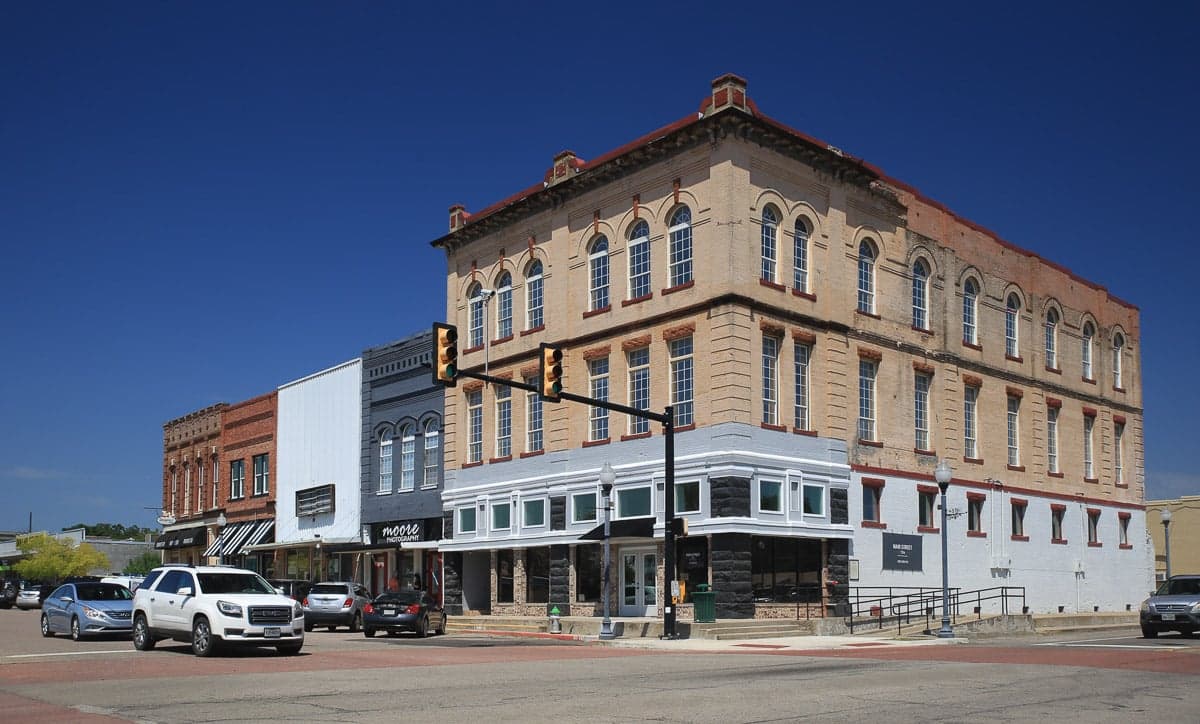
Photo: Wikipedia
Strategic Assessment of Bonham, TX
Meaningful friction. Expect exposure to either population pressure, blast zones, or natural disaster risk. Consider buying a retreat property.
What does the Strategic Assessment tell us?
Our Strategic Assessment grades tactical survivability of an area. Major population centers, military targets, fallout zones, natural disasters, and border exposure all drive risk — lower exposure means a more defensible position in a crisis.
This is heavily inspired by Joel Skousen's Strategic Relocation book. Highly recommended you checkout the book ($)What does this tell us?
Our Strategic Assessment grades tactical survivability of an area. Major population centers, military targets, fallout zones, natural disasters, and border exposure all drive risk — lower exposure means a more defensible position in a crisis.
This is heavily inspired by Joel Skousen's Strategic Relocation book. Highly recommended you checkout the book ($)Strategic Pillars

Key Distances
Regional Safe Places
Below is our recommended "safe zones" in Texas and the surrounding area based on our strategic heuristics. For most people, it's unrealistic to live in a “safe zone” full-time due to work, family or other personal reasons. They tend to be more rural. However, many of these areas are perfect for second homes and retreat properties that double as a vacation home or even a short-term rental.

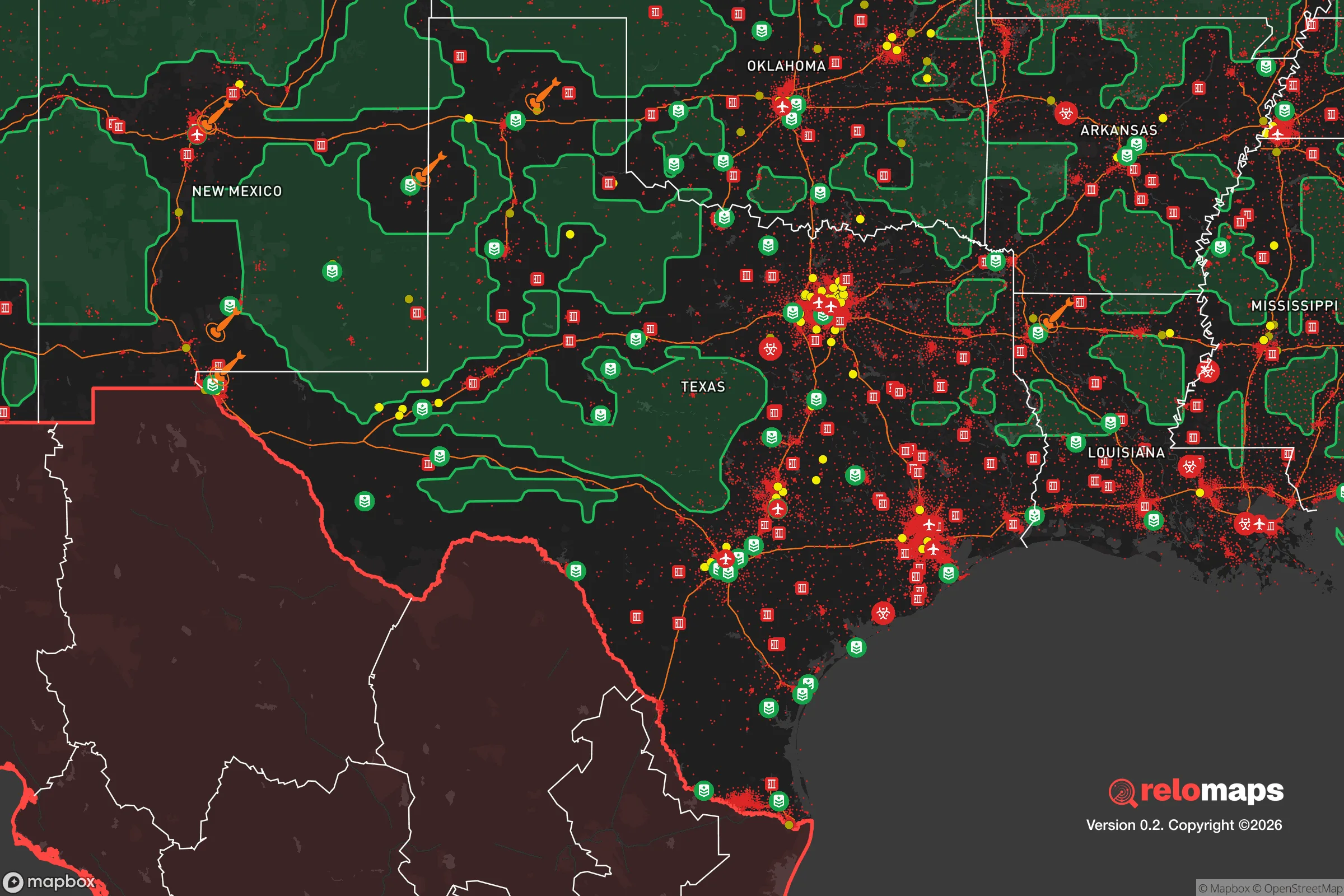


Important Note: For informational purposes only. This does not mean nothing bad ever happens in the green zones. Please use common sense. This is based on public data and modeled with AI. We tried to take a conservative approach but mistakes happen. We update this regularly as new information becomes available.
Solar Generator Recommendations
Backup power matters more here than in safer locations. We've picked three solar generators across budgets and capacity tiers — start with the budget unit if you only need a few essentials, or step up if you want to run a fridge and HVAC for days at a time.

Jackery Portable Power Station Explorer 300
Budget OptionPower on the Go: Weighing only 11 lbs, it's convenient to set up and store with book-sized foldable solar panels

BLUETTI Portable Power Station AC180
Designed for both indoor and outdoor scenarios, AC180 is highly capable as it has a robost capacity and continuous output power.

EF ECOFLOW DELTA Pro Ultra Power Station
Upgraded PickEcoFlow DELTA Pro Ultra is a whole-home energy system designed to grow with your family. Integrated with the Smart Home Panel 2, it scales to meet your evolving energy needs — keeping your home powered, intelligent, and secure through every stage of life.
We earn a commission, at no additional cost to you.
Strategic Assessment Analysis
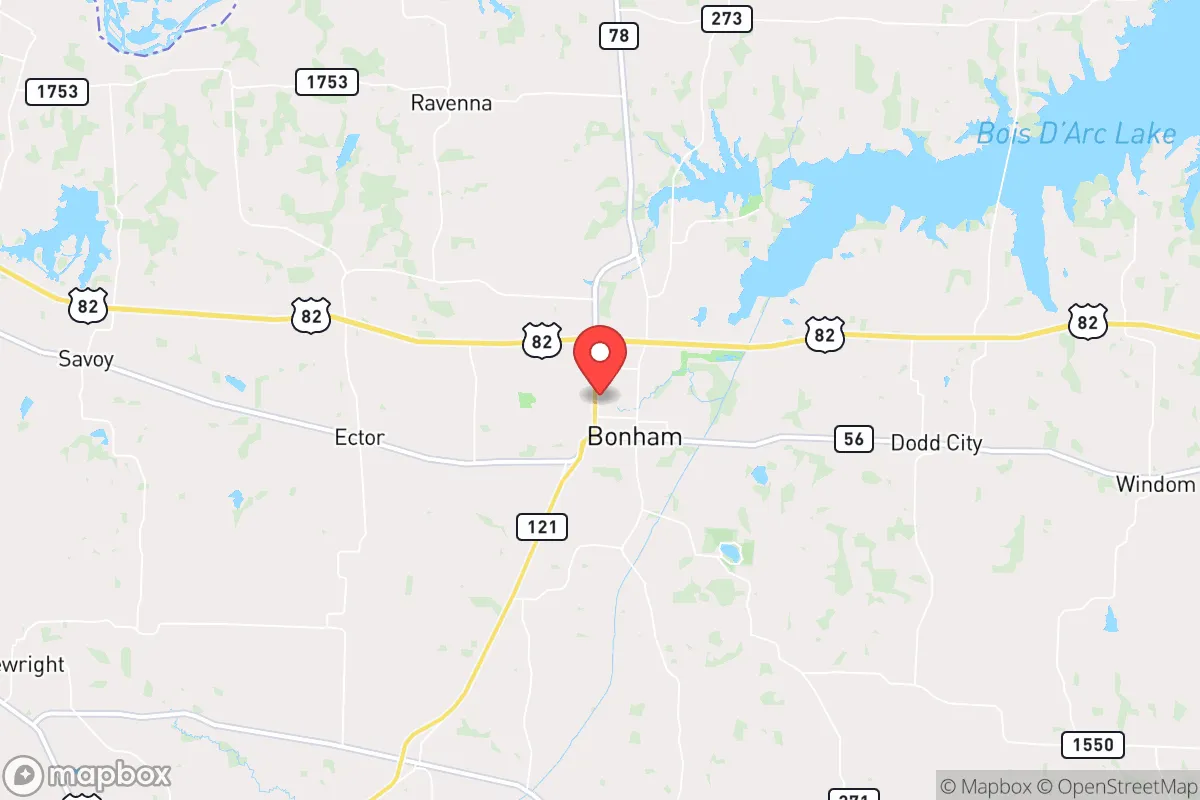
Bonham, Texas, offers a compelling strategic position for those prioritizing resilience and self-sufficiency, sitting roughly 75 miles northeast of Dallas and 15 miles south of the Oklahoma border. Its location places it outside the immediate blast and fallout zones of a major metropolitan target, yet close enough to access critical supplies and medical infrastructure if needed. The town’s population of around 10,000 provides a small-town buffer against the chaos of urban collapse, while its agricultural base and low population density create a foundation for long-term sustainability. For a relocator with a prepper mindset, Bonham represents a calculated balance—close enough to leverage urban resources, far enough to avoid the worst of a breakdown.
Geographic position and natural advantages for long-term security
Bonham sits in Fannin County, part of the Blackland Prairie region, which offers some of the most fertile soil in Texas—a critical asset for anyone serious about food independence. The area is bisected by the Red River to the north, providing a natural boundary and a reliable water source, though access is regulated by public lands and private ownership. The terrain is gently rolling, with scattered woodlots of oak and cedar that offer cover and building materials without creating impassable terrain. The climate is humid subtropical, with hot summers and mild winters, allowing for year-round gardening and livestock management. Annual rainfall averages around 40 inches, which is sufficient for rain catchment systems and reduces reliance on municipal water. The lack of major geological fault lines or hurricane-prone coastal exposure means the area is less vulnerable to natural disasters than many other parts of Texas, though tornadoes are a seasonal risk. For a relocator, the key advantage is the ability to establish a self-contained homestead with access to timber, water, and arable land within a short drive of the town center.
Risks, exposures, and proximity to fallout-relevant landmarks
The primary strategic risk for Bonham is its proximity to the Dallas-Fort Worth metroplex, a high-value target for any large-scale conflict or terrorist event. At 75 miles, Bonham sits just outside the likely thermal blast radius of a nuclear detonation in Dallas, but fallout patterns could still pose a threat depending on wind direction. The town is also within 100 miles of the Sherman-Denison area, which hosts critical infrastructure like the Perrin Air Force Base (now a civilian airport but still a potential secondary target). Interstate 30 and US Highway 82 run nearby, providing evacuation routes but also serving as potential chokepoints for refugees fleeing urban collapse. The Red River border with Oklahoma introduces a jurisdictional complication—if civil unrest spreads, crossing state lines could become a legal or logistical hurdle. On the positive side, Bonham is far from major ports, military bases, and nuclear power plants, reducing the likelihood of being caught in a primary strike. The closest nuclear facility is the Comanche Peak plant near Glen Rose, over 100 miles southwest, which is outside the immediate danger zone for a meltdown or sabotage event. For a relocator, the calculus is clear: Bonham is not remote enough to be completely safe from fallout or refugee flows, but it is far enough to buy critical hours or days for preparation and evacuation if needed.
Practical resilience for a relocator: food, water, energy, and defensibility
Bonham’s practical resilience hinges on its agricultural infrastructure and low population density. The town has a strong farming community, with local feed stores, tractor supply outlets, and a county extension office that can provide seeds, livestock, and technical knowledge. Fannin County has over 1,500 farms covering more than 400,000 acres, meaning food production is a local reality, not just a theoretical option. Water access is manageable: the Red River and its tributaries, like Bois d’Arc Creek, offer surface water, but the groundwater in the Trinity Aquifer is reliable for wells, with typical depths of 200-400 feet. Rainwater harvesting is feasible given the rainfall, and many rural properties already have cisterns or ponds. Energy independence is achievable through solar, with ample sun exposure year-round, and wood-burning stoves for heating, given the local timber supply. The town’s grid is served by the North Texas Electric Cooperative, which is more stable than urban grids but still vulnerable to cascading failures. Defensibility is moderate: the open terrain makes it hard to secure a large perimeter, but a well-chosen property with natural barriers—creeks, treelines, or elevation changes—can create a defensible position. The nearest major police and fire response is in Bonham itself, with a sheriff’s office and volunteer fire departments covering the county, but response times in rural areas can exceed 20 minutes, so self-reliance is mandatory. For a relocator, the key is to secure a property with a well, solar panels, and a garden before moving, as retrofitting after a crisis will be nearly impossible.
The overall strategic picture for Bonham is one of calculated compromise. It is not a remote bunker in the mountains, nor is it a sprawling suburban sprawl. It offers a middle ground: a small town with a working-class ethos, a conservative culture that values self-reliance, and a geography that provides natural resources without extreme isolation. The risks from urban proximity are real but manageable with proper planning—stockpiling supplies, establishing a mutual aid network with neighbors, and having a bug-out plan for a secondary location further north or west. Bonham’s greatest strength is its agricultural base and community resilience, which are harder to find in more isolated areas that lack economic activity. For a relocator who wants to be prepared for civic unrest, mass casualty events, or economic collapse, Bonham offers a viable base of operations—provided you treat it as a starting point, not a final destination. The town’s location on the edge of the Dallas sphere of influence means you can monitor urban trends and react, rather than being blindsided by events. In a world where the state of the country feels increasingly fragile, Bonham gives you a fighting chance to stay ahead of the curve.

* Values derived from national, state, county, city and local statistics and may differ in a specific area. Last updated: 2026-05-12T01:03:37.000Z
Narrative content on this page is AI-generated and may contain mistakes. Verify any details that matter before acting on them.
ReloMaps may earn a commission from affiliate links at no extra cost to you.

