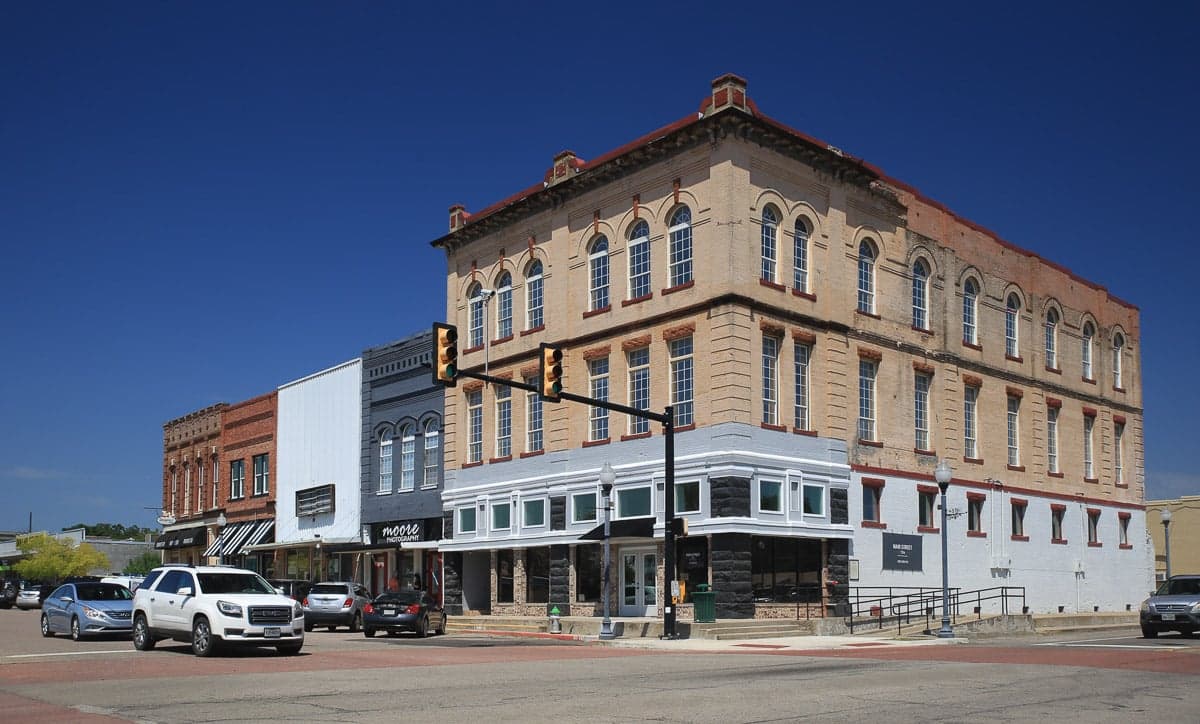
Photo: Wikipedia
Political ClimatePolitical Climate in Bonham, TX
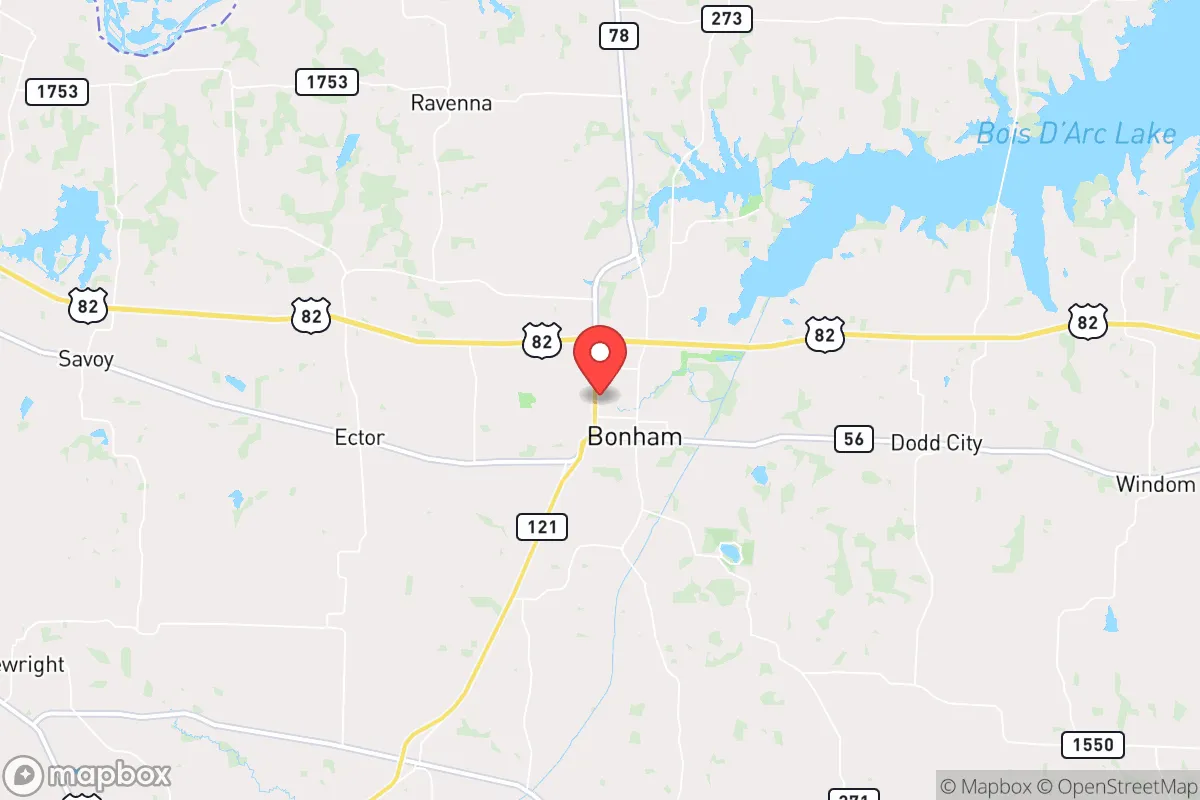
District shown is the primary district for this city’s centroid. Cities may span multiple districts.
Local Political AnalysisPolitical Analysis of Bonham, TX
Bonham, Texas, sits deep in reliably red territory, with a Cook PVI of R+16 that makes it one of the more conservative pockets in the state. That’s a solid 12 points more Republican than Texas as a whole, which sits at R+4, and it’s not just a number on a map—it reflects a community that’s held its ground culturally and politically for decades. You don’t see the same kind of drift here that you might in places like McKinney or Frisco, where transplants from out of state have started to shift the local vibe. Bonham’s still the kind of place where folks expect limited government, personal responsibility, and a healthy skepticism of anyone in Austin telling you how to live your life.
How it compares
Compared to the state average, Bonham is a stronghold of traditional values. The R+16 rating means that in a statewide race, a Republican candidate can expect to win by a comfortable margin here, while the rest of Texas—especially the booming metro areas—has gotten closer to purple over the last decade. Drive an hour south to Sherman or an hour west to McKinney, and you’ll start hearing more talk about bike lanes, zoning overlays, and diversity initiatives that sound like they came straight from a coastal playbook. Bonham hasn’t gone down that road. The county courthouse and local school board still operate with a “keep it simple” mindset, and there’s a general distrust of any policy that feels like it’s coming from a bureaucracy rather than the people who actually live here. That contrast is sharp, and it’s one reason why folks who feel squeezed by the growth and regulation in the Dallas-Fort Worth metroplex are looking at Bonham as a place to breathe.
What this means for residents
For someone living in Bonham, the political climate translates directly into daily life. You’re less likely to run into the kind of government overreach that’s become common in blue-leaning cities—no mask mandates that drag on for months, no heavy-handed business closures, no property tax hikes dressed up as “community investment.” The local leadership tends to take a hands-off approach, trusting that residents know what’s best for their own families and businesses. That said, there’s a quiet concern among long-time residents that the state’s overall shift toward R+4 could eventually trickle down. If Texas keeps trending purple, Bonham might find itself fighting harder to hold the line against state-level policies that don’t reflect local values. For now, though, the culture here is still one where the Second Amendment is a given, school choice is popular, and the idea of a county planning board telling you what color to paint your barn would get laughed out of the room.
One thing that sets Bonham apart from even some of its conservative neighbors is the strong sense of local identity. You won’t find a lot of chain stores or cookie-cutter subdivisions here—people take pride in the fact that Bonham feels like Bonham, not a watered-down version of somewhere else. That independence extends to politics: while the area votes reliably Republican, it’s not a rubber stamp for every party line. There’s a healthy skepticism of any authority, whether it’s in D.C. or Austin, and that keeps the conversation grounded in what actually works for the community. If you’re looking for a place where the government stays out of your way and the people next door share your values, Bonham is about as solid as it gets in Texas right now.

State Political ClimatePolitical Climate in Texas
State Political AnalysisPolitical Environment in the State
Texas has been a reliably Republican state for decades, with a Cook PVI of R+4, but the political landscape is far from monolithic. The dominant coalition is a mix of rural conservatives, suburban moderates, and a growing number of libertarian-leaning transplants, but the state’s trajectory over the last 10-20 years shows a slow but steady shift toward the center, driven by explosive growth in the urban corridors of Austin, Dallas-Fort Worth, Houston, and San Antonio. While the GOP still holds all statewide offices and both legislative chambers, the margins have tightened in presidential races—from a 16-point win for Romney in 2012 to a 5.5-point win for Trump in 2020—and the 2024 results are expected to be even closer, with some analysts projecting a single-digit margin. This isn’t a blue wave yet, but it’s a clear warning for conservatives who want to keep Texas red.
Urban vs. rural divide
The political map of Texas is a stark checkerboard. The big metros—Houston, Dallas, San Antonio, and especially Austin—are the engines of Democratic growth. Travis County (Austin) voted 71% for Biden in 2020, while Harris County (Houston) went 56% blue, and Dallas County hit 65%. These areas are packed with young professionals, tech workers, and minority voters who lean left on social issues and government spending. Meanwhile, the vast rural and exurban counties—places like Lubbock, Midland, and Tyler—vote 75-80% Republican. The real battleground is the suburbs: Collin County (north of Dallas) was once a GOP stronghold but went 51% for Trump in 2020, down from 57% in 2016. Fort Bend County (southwest of Houston) flipped to Biden in 2020 and has stayed blue. If you’re moving to Texas, your experience of the political climate will depend entirely on whether you’re in a red rural county, a purple suburb, or a deep-blue city center.
Policy environment
Texas’s policy environment is a mixed bag for conservatives. On the plus side, there’s no state income tax, a right-to-work law, and a regulatory climate that’s generally business-friendly. Property taxes are high (around 1.6-2.5% of assessed value), but the state has no personal or corporate income tax, which keeps overall tax burden moderate. Education policy is a flashpoint: the state has school choice via charter schools and a limited voucher program (the Texas Education Savings Account program, passed in 2023), but public school funding remains a perennial fight. Healthcare is largely unregulated compared to blue states, with no state-level mandates for employer coverage and a limited Medicaid expansion (Texas is one of 10 states that hasn’t expanded). Election laws tightened after 2020 with Senate Bill 1 (2021), which banned 24-hour and drive-through voting, added ID requirements for mail ballots, and empowered poll watchers. For a conservative, the policy environment is generally favorable, but the property tax burden and lack of meaningful school choice are real frustrations.
Trajectory & freedom
On personal liberty, Texas has been a mixed bag. Gun rights expanded significantly: in 2021, the state passed permitless carry (HB 1927), allowing adults 21+ to carry a handgun without a license. Parental rights got a boost with the 2023 law banning gender-transition procedures for minors (SB 14), and the state has a strong parental notification law for abortion (which is now effectively banned under the 2021 heartbeat law, SB 8). Medical autonomy took a hit during COVID, when Governor Abbott issued mask mandates and vaccine passport bans, but the state generally resisted lockdowns more than most. Property rights are strong, with no statewide zoning in most cities (though Houston is famously unzoned). However, taxation is a creeping concern: property taxes have risen faster than inflation, and the state’s reliance on sales and property taxes means that as home values climb, so does the tax bill. The 2023 property tax cut (SB 2) provided some relief, but it’s a temporary fix. Overall, Texas is still freer than most states, but the trend is toward more government involvement in local land use and education.
Civil unrest & political movements
Texas has seen its share of political flashpoints. The 2020 protests in Austin and Houston over George Floyd’s death were large but mostly peaceful, though Austin saw property damage and a controversial police budget cut that was later partially restored. Immigration politics are front and center: the state launched Operation Lone Star in 2021, deploying state troopers and National Guard to the border, and bused migrants to sanctuary cities like New York and Chicago. This has been popular with conservatives but has drawn lawsuits and federal pushback. Secession rhetoric flares up occasionally—the Texas Nationalist Movement is a fringe group—but it’s not a serious political force. Election integrity remains a hot topic: after 2020, the state’s GOP-led legislature passed SB 1, which Democrats called voter suppression but Republicans said was needed to restore confidence. The 2022 primaries saw record turnout, suggesting the changes didn’t suppress voting. A new resident would notice the strong presence of both conservative and progressive activism, especially in Austin, where the state capitol is a frequent site of rallies on abortion, guns, and immigration.
Projection
Over the next 5-10 years, Texas is likely to become more purple, not more red. The in-migration from California and other blue states—roughly 1,000 people per day—is bringing a mix of libertarian-leaning tech workers and progressive-minded professionals. The suburbs of Dallas, Houston, and San Antonio are the key battlegrounds: if they continue trending blue, Texas could become a swing state by 2032. The rural vote is shrinking as a share of the electorate, and the Hispanic vote—once reliably Democratic—is splitting, with some counties along the border (like Zapata and Starr) flipping to Trump in 2020. The state’s GOP is also facing internal divisions between establishment conservatives and a more populist, Trump-aligned wing, which could lead to messy primaries. For a conservative moving in now, expect a decade of close elections, more policy fights over school choice and property taxes, and a growing sense that Texas is no longer a safe bet for Republicans—but still a much better bet than California or New York.
For a new resident, the bottom line is this: Texas still offers a lower tax burden, more personal freedom, and a stronger economy than most blue states, but the political climate is shifting. If you’re moving to Lubbock or Midland, you’ll find a deeply conservative community. If you’re heading to Austin or Houston, you’ll encounter a more diverse and politically competitive environment. The key is to choose your county wisely—and to get involved in local politics if you want to keep Texas red. The state’s future depends on whether the new arrivals assimilate into the existing culture or try to change it.
* Values derived from national, state, county, city and local statistics and may differ in a specific area. Last updated: 2026-05-12T01:03:37.000Z
Narrative content on this page is AI-generated and may contain mistakes. Verify any details that matter before acting on them.
ReloMaps may earn a commission from affiliate links at no extra cost to you.

