Photo: Wikipedia
Demographics of Boston, MA
Affluence Level in Boston, MA
An upper-middle-class area. Household wealth, education levels, and homeownership run ahead of national benchmarks.
People of Boston, MA
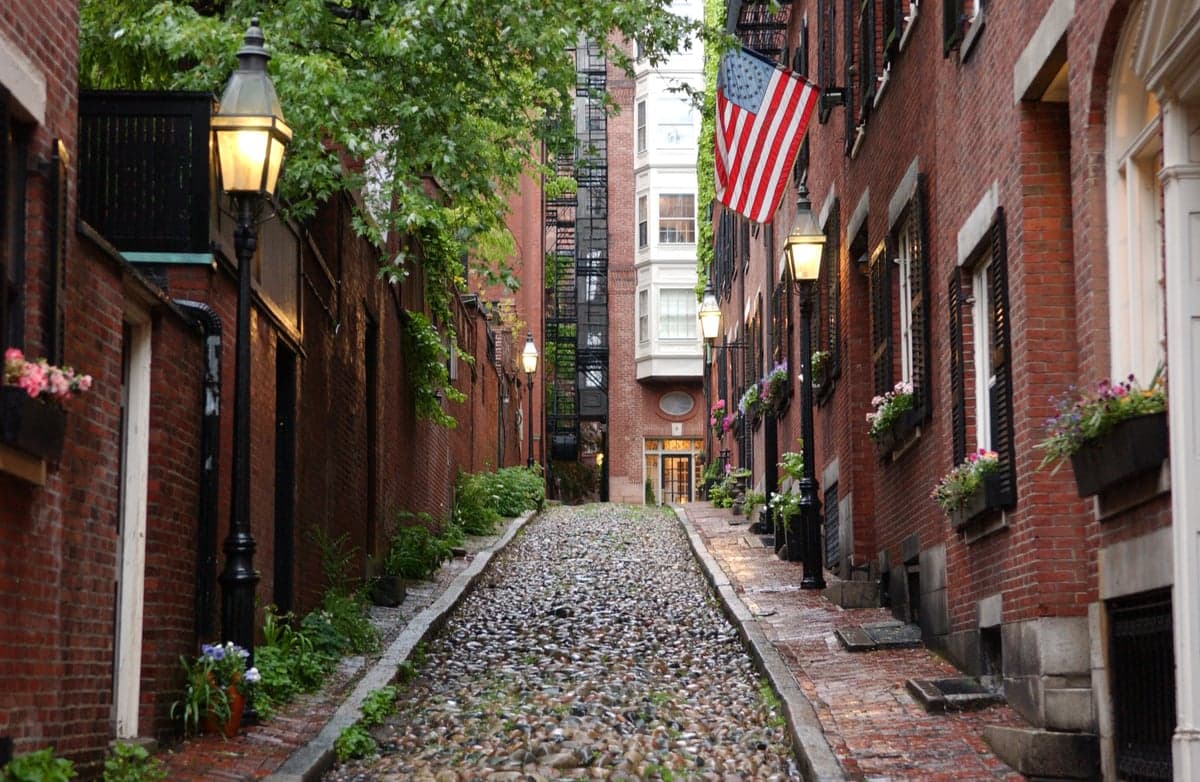
Boston’s 663,972 residents form one of the densest major cities in the United States, a place where a white plurality (44.5%) coexists with substantial Black (20.3%), Hispanic (18.9%), and East/Southeast Asian (8.0%) populations, plus a smaller Indian-subcontinent community (1.9%). The city is notably well-educated — 54.1% of adults hold a college degree — and its foreign-born share of 12.9% is lower than many coastal peers, reflecting a population shaped more by long-established ethnic enclaves and recent domestic migration than by a constant inflow of new immigrants. Boston’s character is defined by its historic neighborhoods, each with a distinct ethnic and economic identity, and by a tension between its deep-rooted, often insular communities and a growing, transient population of students and young professionals.
How the city was settled and grew
Founded in 1630 by Puritan English settlers, Boston’s early population was overwhelmingly Anglo-Protestant, drawn by religious freedom and the promise of land in the Massachusetts Bay Colony. The city’s maritime economy — shipping, fishing, and later the China trade — attracted a steady stream of English and Scottish immigrants through the 18th and early 19th centuries, who settled in the North End and Beacon Hill. The first major demographic shift came with the Great Famine (1845–1852), which drove hundreds of thousands of Irish Catholics to Boston. They clustered in the North End and South Boston, building the city’s first large ethnic enclave and transforming its religious and political landscape. By the 1880s, Southern and Eastern Europeans arrived in force: Italians settled in the North End (replacing the Irish there) and in East Boston; Eastern European Jews concentrated in Dorchester and Roxbury. These groups, along with smaller waves of Portuguese, Greeks, and Poles, created the patchwork of ethnic neighborhoods that still defines Boston’s geography. The city’s Black population, small before 1900, grew during the Great Migration (1915–1970) as African Americans moved from the South into Roxbury and Dorchester, establishing the core of what remains the city’s primary Black community.
Modern era (post-1965)
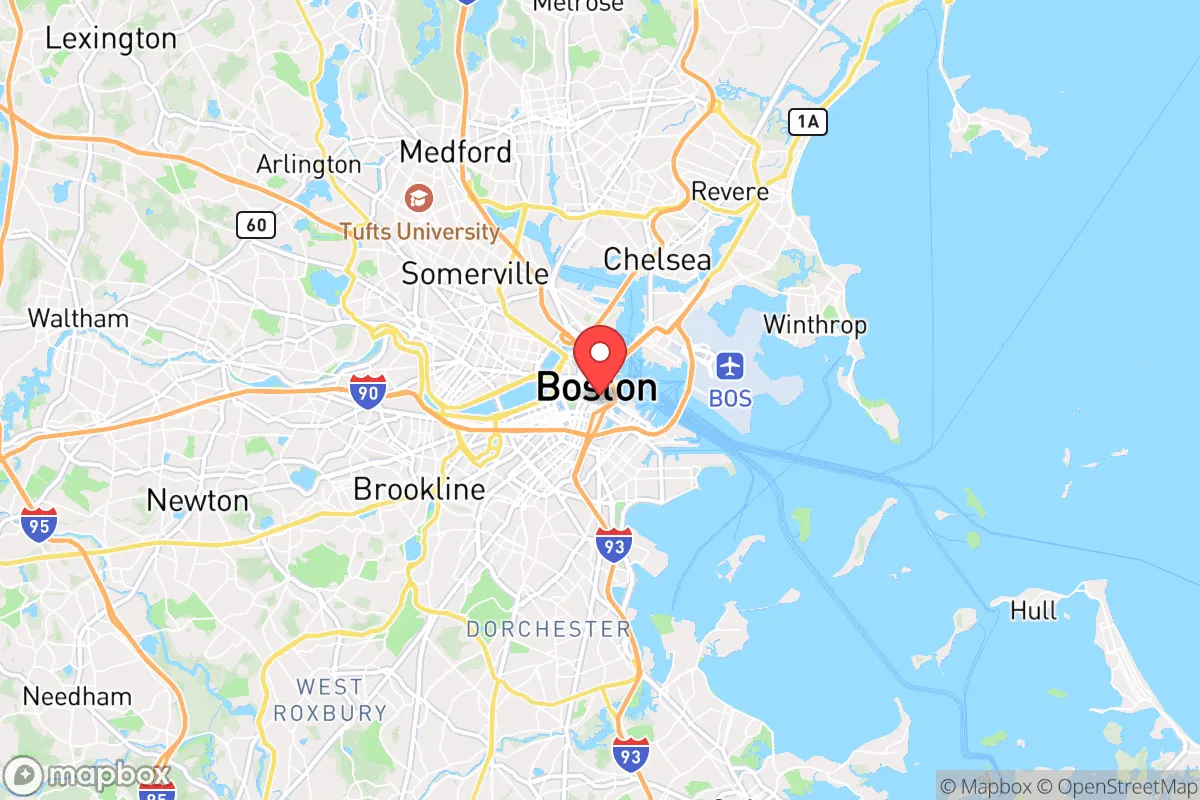
The 1965 Hart-Cellar Act ended national-origin quotas, but Boston’s foreign-born share (12.9%) remains modest compared to gateway cities like New York or Los Angeles. The most significant post-1965 immigrant wave has been from East and Southeast Asia — primarily Chinese and Vietnamese — who settled in Chinatown (downtown) and in Dorchester’s Fields Corner area, where a Vietnamese commercial corridor now anchors the community. A smaller but growing Indian-subcontinent population (1.9%) has concentrated in Allston and Brighton, near the universities, and in suburban towns like Lexington and Burlington rather than in a single Boston neighborhood. The Hispanic population (18.9%) is predominantly Puerto Rican and Dominican, with significant clusters in Roxbury, Hyde Park, and East Boston (the latter now heavily Salvadoran and Colombian). Meanwhile, the city’s white population, which was over 90% in 1950, has stabilized at 44.5% after decades of suburbanization — the “white flight” of the 1970s and 1980s that emptied neighborhoods like Charlestown and South Boston of their Irish working-class families. Those areas have since been repopulated by younger, college-educated whites drawn by the city’s tech and biotech boom, a process of gentrification that has displaced many Black and Hispanic residents from Roxbury and Dorchester to suburbs like Brockton and Randolph.
The future
Boston’s population is projected to grow slowly, driven by high-cost housing that limits in-migration. The city is becoming more polarized: affluent, college-educated whites and Asians concentrate in the downtown core, the Seaport District, and Cambridge-adjacent neighborhoods, while Black and Hispanic populations are pushed outward to the inner suburbs. The East/Southeast Asian community is growing steadily, particularly among Chinese professionals in the Back Bay and South End, but the Indian-subcontinent population remains small and suburbanizing. The Hispanic share is rising slowly, driven by higher birth rates and continued migration from Puerto Rico and Central America, but the Black share is declining as gentrification accelerates. The city’s foreign-born share is unlikely to rise dramatically, as Boston lacks the low-wage service economy that attracts large-scale immigration in other cities. Instead, the dominant demographic trend is the replacement of older, working-class ethnic populations — Irish, Italian, Black — with a younger, transient, highly educated class that views Boston as a career waypoint rather than a permanent home.
For a conservative-leaning individual or family considering relocation, Boston offers a stable, historically rooted city with strong institutions and safe, family-oriented neighborhoods like West Roxbury and Hyde Park. But the city’s political culture is overwhelmingly progressive, its cost of living is punishing, and its public schools remain deeply unequal by neighborhood. The Boston of the next decade will likely be whiter, wealthier, and more educated at its core, with its historic ethnic enclaves fading into memory — a trade-off between opportunity and community that new arrivals should weigh carefully.

* Values derived from national, state, county, city and local statistics and may differ in a specific area. Last updated: 2026-04-15T23:33:52.000Z
Narrative content on this page is AI-generated and may contain mistakes. Verify any details that matter before acting on them.
ReloMaps may earn a commission from affiliate links at no extra cost to you.

