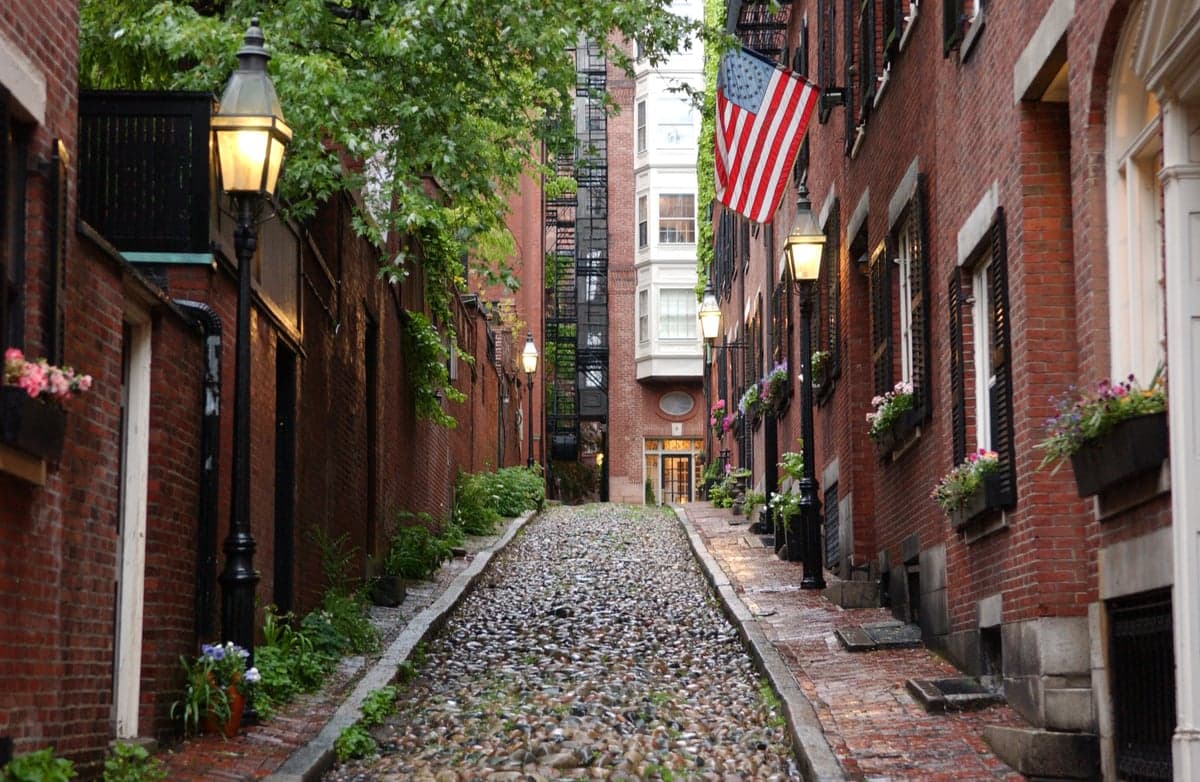
Photo: Wikipedia
Political ClimatePolitical Climate in Boston, MA
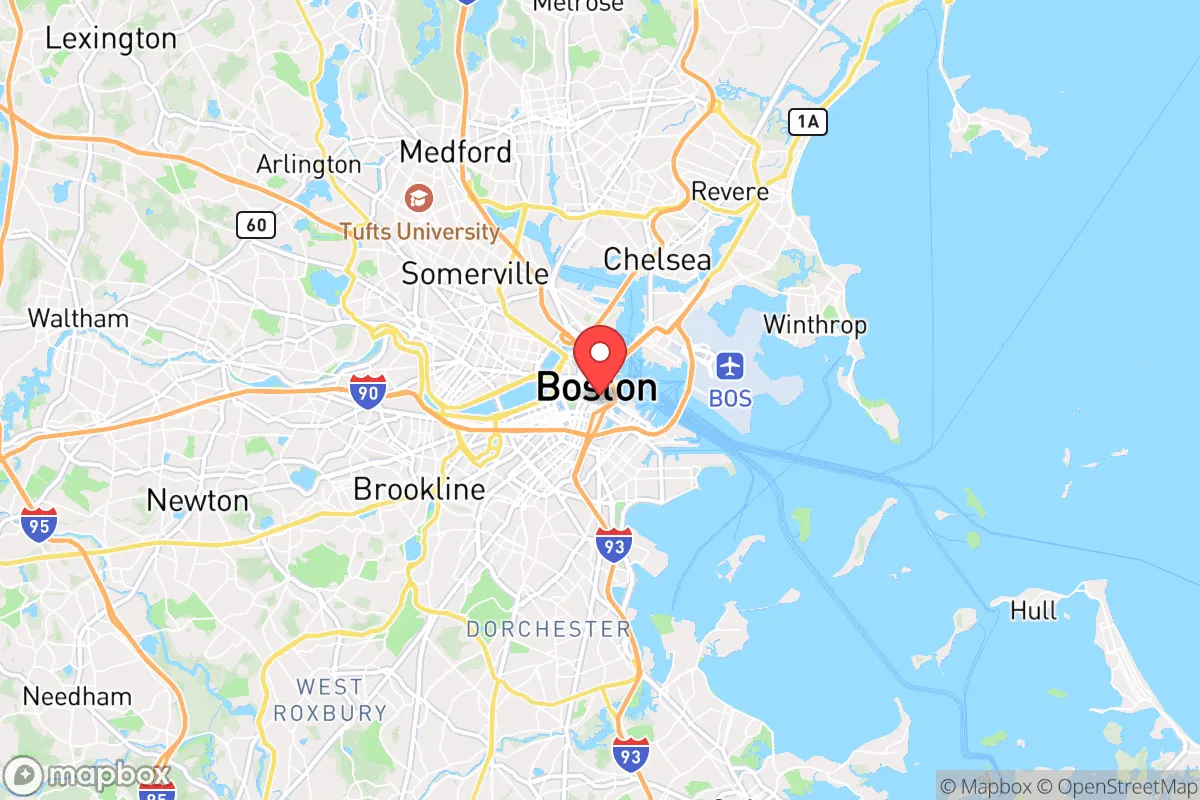
District shown is the primary district for this city’s centroid. Cities may span multiple districts.
Local Political AnalysisPolitical Analysis of Boston, MA
Look, I’ve lived in and around Boston my whole life, and I’ll tell you straight: this city has been a one-party show for decades, and it’s only getting more lopsided. The Cook PVI of D+15 tells you everything you need to know—this isn’t a purple area, it’s deep blue. And it’s not just about voting patterns; it’s about a culture that increasingly tolerates—and even celebrates—government overreach into your personal life, your business, and your kids’ education. If you’re coming from a place where people still believe in individual liberty and local control, you’re in for a shock.
How it compares
Boston is the epicenter of Massachusetts’ progressive machine, but the contrast with its own suburbs is stark. Hop in the car for 20 minutes west to towns like Needham, Wellesley, or Weston, and you’ll find communities that still vote reliably Republican in local races—places where property taxes are high but at least you get good schools and less nonsense about defunding the police. Head south to Plymouth or Marshfield, and you’ll see a more independent streak, with folks who’ll vote for a moderate Democrat for Senate but draw the line at the city’s radical social experiments. Meanwhile, Boston proper is surrounded by a ring of blue-collar suburbs like Revere and Everett that are shifting left fast, driven by new arrivals and a political machine that rewards loyalty over common sense. The city itself is a bubble: Cambridge and Somerville to the north are even further left, practically competing to see who can ban more things first.
What this means for residents
For a conservative or even a moderate, living in Boston means constantly fighting small battles. Want to send your kid to a school that focuses on reading, writing, and arithmetic instead of critical race theory? Good luck—the school committee is stacked with activists who see education as a tool for social engineering. Worried about your Second Amendment rights? Massachusetts already has some of the strictest gun laws in the country, and Boston’s city council is always looking for new ways to restrict carry permits and magazine capacities. And don’t get me started on taxes: the state income tax is a flat 5%, but the city and state keep finding new fees and surcharges—like the millionaire’s tax passed in 2022, which hit small business owners and retirees hardest. The real kicker is the housing crisis: rent control is back on the table, which sounds good until you realize it’ll just shrink the rental supply and make it even harder for young families to find a place. You’re paying top dollar for the privilege of being told how to live.
On the cultural front, Boston has a split personality. There’s still a proud, stubborn, Irish-Catholic working-class core that remembers when the city was about hard work and family, not bike lanes and drag queen story hours. But that old Boston is fading fast. The new political class is all about performative activism—banning natural gas in new buildings, pushing for “sanctuary city” policies that strain local resources, and treating any dissent as a moral failing. If you value personal freedom, you’ll find yourself constantly on the defensive. The long-term trend is clear: the state legislature is a supermajority of Democrats who rarely face a serious challenge, and the city council is even more progressive. Unless you’re willing to get involved in local politics—and I mean really involved, showing up at zoning board meetings and school committee hearings—you’re just along for the ride. And that ride is heading further left every year.

State Political ClimatePolitical Climate in Massachusetts
State Political AnalysisPolitical Environment in the State
Massachusetts has long been one of the most reliably Democratic states in the nation, but the political reality on the ground is far more nuanced than the statewide vote totals suggest. Over the past 20 years, the state has shifted from a moderate, blue-collar Democratic stronghold to a deeply progressive one, driven by the explosive growth of the Boston metro area and the academic corridor along Route 128. While the state hasn’t voted Republican for president since 1984, the margin has widened considerably — from a 23-point win for Obama in 2012 to a 33-point win for Biden in 2020 — signaling a hardening of the progressive coalition that now dominates state government.
Urban vs. rural divide
The political map of Massachusetts is a textbook case of the urban-rural chasm, but with a twist: the suburbs have largely joined the cities. Greater Boston, including Cambridge, Somerville, and Newton, is the engine of the state’s leftward tilt, routinely delivering 80-90% of the vote to Democrats. The western part of the state, including Springfield, is also reliably blue, though with more working-class, union-driven politics. The real contrast is in the central and southeastern regions. Worcester County has become a battleground — the city of Worcester itself votes Democratic, but the surrounding towns like Holden and Paxton lean conservative. The southeastern corner, including Fall River and New Bedford, has a strong Portuguese and Catholic working-class base that has trended away from Democrats in recent cycles, though not enough to flip any seats. The only reliably red areas are the small towns in the Berkshires and the Cape Cod exurbs, but their populations are too small to offset Boston’s dominance. The 2022 gubernatorial race saw Republican Geoff Diehl lose by 30 points, but he won 60% of the vote in towns like Sturbridge and Spencer — a reminder that the rural vote is still deeply conservative, just outnumbered.
Policy environment
Massachusetts has one of the most aggressive progressive policy agendas in the country, and it shows in the tax code and regulatory climate. The state income tax is a flat 5%, but a 2022 ballot question (Question 1) added a 4% surtax on income over $1 million, effectively creating a 9% top marginal rate. Property taxes are high, averaging 1.2% of home value, and the state’s estate tax kicks in at just $1 million — one of the lowest thresholds in the nation. On education, Massachusetts spends more per pupil than almost any other state, but the results are mixed: top-tier districts like Lexington and Weston are world-class, while urban districts like Lawrence and Holyoke struggle with chronic underperformance. The state’s healthcare system is heavily regulated, with near-universal coverage under Romneycare, but costs remain among the highest in the country. Election laws are among the most permissive: no-excuse mail-in voting, same-day registration, and early voting are all permanent fixtures. For a conservative, the policy environment feels like a one-party state where the only debate is how fast to move left.
Trajectory & freedom
The trajectory over the last decade has been a steady contraction of personal freedoms, particularly in the areas of gun rights, parental rights, and economic liberty. In 2014, the state passed one of the nation’s strictest assault weapons bans, and in 2022, Governor Charlie Baker signed a law banning ghost guns and expanding the state’s red flag law. The state also has a strict “safe storage” law that requires all firearms to be locked when not in use, even in the home. On parental rights, the 2022 “Parental Bill of Rights” was watered down and ultimately failed, while the state’s Department of Elementary and Secondary Education has actively promoted gender identity policies that allow students to change their names and pronouns without parental notification. In 2023, the state passed a law requiring all public schools to adopt policies that affirm a student’s gender identity, overriding local control. On medical freedom, Massachusetts was one of the first states to mandate COVID-19 vaccines for schoolchildren, though that mandate was later rescinded. Property rights have also taken a hit: the state’s rent control ban was repealed in 2023, allowing cities like Boston and Cambridge to impose rent stabilization. The overall trend is clear: the state is becoming less free, not more.
Civil unrest & political movements
Massachusetts has a long history of political activism, but the modern flashpoints are around immigration and public safety. The state is a “sanctuary state” under the 2017 “Safe Communities Act,” which limits local law enforcement cooperation with federal immigration authorities. This has been a major source of tension, particularly in gateway cities like Lynn and Chelsea, where immigrant populations have surged. In 2023, a controversial law allowed undocumented immigrants to obtain driver’s licenses, sparking a failed ballot repeal effort. On the left, activist groups like the ACLU of Massachusetts and the Massachusetts Teachers Association are powerful forces, regularly pushing for more progressive policies. On the right, the state’s conservative movement is small but organized, centered around groups like the Massachusetts Fiscal Alliance and the Gun Owners’ Action League. Election integrity has been a recurring issue: the 2020 election saw widespread use of mail-in ballots, and while no major fraud was proven, the lack of voter ID laws remains a concern for many conservatives. Protests have been relatively subdued compared to other states, but the 2020 Black Lives Matter protests in Boston were large and occasionally violent, leading to property damage in the downtown area.
Projection
Looking ahead 5-10 years, the political trajectory is almost certainly toward more progressive dominance. The state’s population is aging and shrinking in rural areas, while Boston and its suburbs continue to attract young, educated, and left-leaning transplants from around the world. The 2020 census cost Massachusetts a congressional seat, and the trend is likely to continue as the state’s high cost of living drives out middle-class families. The Republican Party in Massachusetts is in a state of near-collapse: the last Republican governor, Charlie Baker, was a moderate who often sided with Democrats, and the party has no clear successor. The state’s legislature is a Democratic supermajority that has not faced a serious challenge in decades. For a conservative moving in, the realistic expectation is that the state will continue to pass laws that expand government control over housing, healthcare, education, and personal behavior. The only countervailing force is the state’s high cost of living, which may eventually slow in-migration and create a natural ceiling on how far left the state can go.
Bottom line for a new resident: If you value low taxes, gun rights, parental control over education, and a government that stays out of your personal life, Massachusetts is likely a poor fit. The state’s political culture is deeply progressive, and the trend is accelerating. However, if you work in a high-demand field like biotech, finance, or academia, and you’re willing to trade personal freedom for professional opportunity and world-class public services, the state can work — but you’ll need to be prepared for a political environment that is increasingly hostile to conservative values. The best advice: visit the western or central towns like Sturbridge or Spencer to see if the rural lifestyle offers enough buffer from Boston’s politics, but don’t expect the state government to leave you alone anytime soon.
* Values derived from national, state, county, city and local statistics and may differ in a specific area. Last updated: 2026-04-15T23:33:52.000Z
Narrative content on this page is AI-generated and may contain mistakes. Verify any details that matter before acting on them.
ReloMaps may earn a commission from affiliate links at no extra cost to you.

