Photo: Wikipedia
Quality of Life in Boston, MA
A livable area that tracks near national norms for affordability, walkability, and neighborhood health.
What does Quality of Life tell us?
Quality of Life blends cost of living, nearby amenities, socioeconomic signals, and neighborhood character. City-level scores represent the whole municipality; individual neighborhoods can differ.
What does this tell us?
Quality of Life blends cost of living, nearby amenities, socioeconomic signals, and neighborhood character. City-level scores represent the whole municipality; individual neighborhoods can differ.
Cost of Living
109% above national average
The Real Cost of Living in Boston, MA for 2026
| Tier | Individual | Family (4) |
|---|---|---|
| Survival | $33k | $63k |
| Comfortable | $138k | $203k |
| Luxury | $171k+ | $265k+ |
| Elite (Top 5%) | $250k+ | $388k+ |
47%
The Area Signal
A metric tracking the socioeconomic signals of the area.


Hobbies
Explore the areaGroceries
4 within 10 miles
Gas
0 within 10 miles
Hospital
3 within 20 miles
Airport
BOS — Boston Logan International
Post Office
USPS — Boston, MA
Critical Amenities
Quality-of-Life Analysis
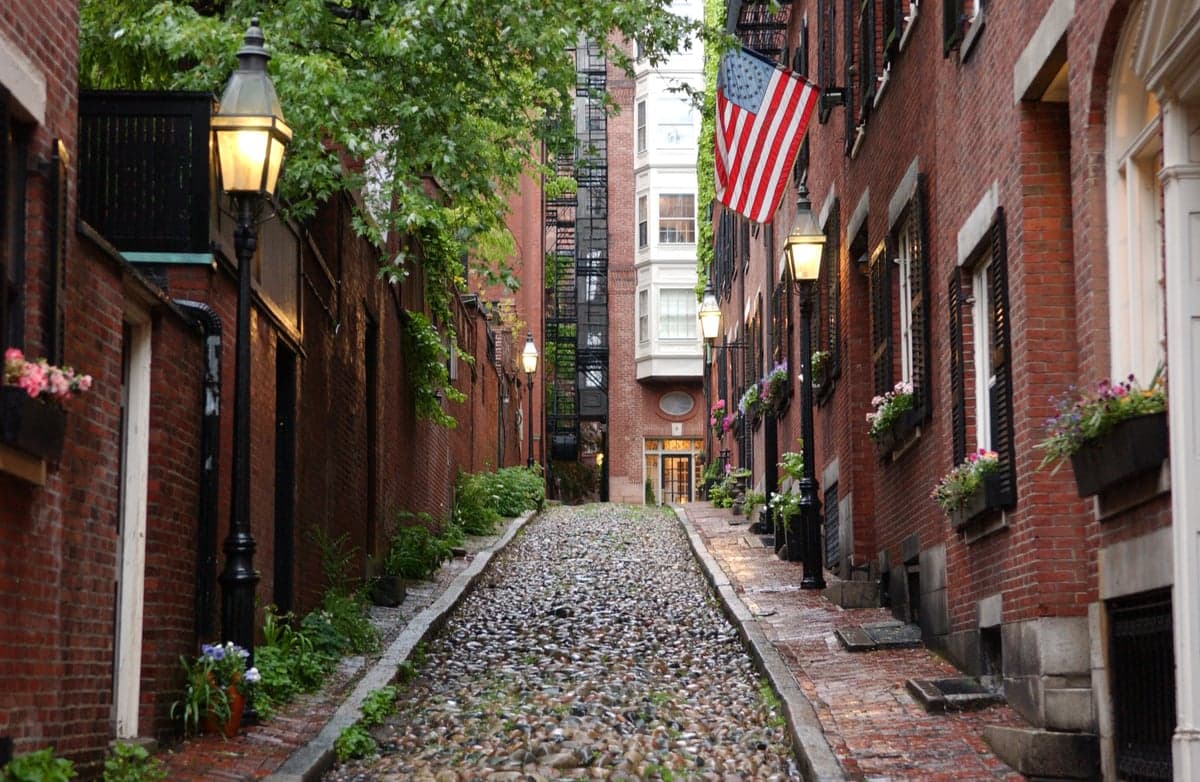
Boston, Massachusetts, is a high-cost, high-opportunity metro area where affluence is concentrated among professionals in education, healthcare, and technology. The population skews young and educated, with over 47% of adults holding a bachelor’s degree or higher, and a median age of roughly 34. The city’s dense, walkable neighborhoods and historic character attract a mix of students, early-career professionals, and established families who prioritize proximity to world-class institutions over suburban space.
Cost of living, housing affordability, and how Boston compares to nearby suburbs
Boston’s cost of living index stands at 209—more than double the U.S. average of 100—making it one of the most expensive metro areas in the country. The median home value is $710,400, and the median rent is $2,093 per month. While these figures are steep, they are notably lower than in nearby Cambridge (median home value ~$850,000) and Brookline (~$1.1 million), where proximity to Harvard and MIT drives prices higher. Compared to outer suburbs like Quincy or Framingham, Boston proper commands a premium of 20–30% for housing, though those areas offer more square footage and parking. Renters in Boston typically spend over 30% of income on housing, and first-time buyers often need a dual-income household or significant down-payment assistance to enter the market. The city’s rent control is limited to a small stock of pre-1995 units, so most tenants face market-rate increases annually.
Daily life, schools, and what makes the city’s rhythm unique
Boston’s daily rhythm is shaped by its compact geography and reliance on public transit. The average commute time is 30.2 minutes, slightly above the national average of 27 minutes, but many residents use the MBTA subway (“the T”), buses, or bike lanes to avoid driving. The city’s walkability score of 83 means errands and social outings are often done on foot. Public schools are a mixed bag: Boston Public Schools (BPS) serve about 49,000 students, with selective exam schools like Boston Latin School consistently ranking among the nation’s top public high schools, while many neighborhood schools face funding and performance gaps. Families often supplement with private or charter options. Amenities are dense: the Boston Public Library system, the Emerald Necklace park network, and over 60 museums (including the Museum of Fine Arts and the Isabella Stewart Gardner Museum) provide year-round cultural access. The city’s food scene is anchored by seafood (Union Oyster House, Neptune Oyster) and a thriving network of Italian and Asian restaurants in the North End and Chinatown. Sports culture is intense—Red Sox games at Fenway Park and Celtics games at TD Garden define seasonal social calendars.
Boston is best suited for professionals and families who value career density, cultural access, and walkability over low housing costs. The high cost of living is offset by strong wages in biotech (Vertex, Moderna), healthcare (Mass General Brigham, Boston Children’s Hospital), and higher education (Harvard, MIT, Northeastern). Empty-nesters and dual-income couples without children often find the city’s energy and convenience worth the premium. Families should weigh school district variations carefully, as neighborhood boundaries can significantly affect educational outcomes. Those seeking a quieter, car-dependent lifestyle with lower housing costs will find better value in suburbs like Medford or Newton, but for residents who thrive on urban intensity and intellectual stimulation, Boston remains a top-tier choice.

Crime in Boston, MA
Higher crime rates than 59% of comparable U.S. locations.
Violent CrimeViolent Crime Analysis
Property CrimeProperty Crime Analysis
Crime Analysis
Boston's overall crime picture is mixed: the city's violent crime rate of 573.4 per 100,000 residents is roughly 50% higher than the national average, while its property crime rate of 1,869.6 per 100,000 sits slightly below the national figure. However, these numbers must be weighed against the reality that Boston operates within a state and judicial environment that has embraced progressive criminal justice reforms, which critics argue prioritize offender rehabilitation over public safety and victim accountability. This ideological tilt has direct consequences for how crime is prosecuted and how many offenders remain on the streets.
Crime in context
Boston's violent crime rate of 573.4 per 100,000 is significantly higher than the Massachusetts state average of roughly 300 per 100,000 and the national average of about 380 per 100,000. Property crime, at 1,869.6 per 100,000, is below the national average of approximately 2,000 per 100,000 but still represents a substantial risk. The disparity between violent and property crime rates reflects a city where street-level violence—often concentrated in specific neighborhoods—remains a persistent concern. Massachusetts has been a national leader in progressive criminal justice policies, including the 2018 Criminal Justice Reform Act, which reduced mandatory minimum sentences and expanded diversion programs. While these measures aim to reduce incarceration, they have also been linked to higher recidivism rates in certain categories, as fewer offenders face meaningful consequences for repeat offenses.
What residents experience
Daily life for Boston residents involves navigating a city where property crime—particularly theft from vehicles and package theft—is a routine annoyance, but violent crime is highly concentrated. The city's progressive district attorneys, including Suffolk County DA Kevin Hayden, have implemented policies that limit cash bail and prioritize diversion for non-violent offenders. In practice, this means that individuals arrested for theft or drug offenses are often released quickly, contributing to a perception that the justice system is lenient. For victims, this can be deeply frustrating: a stolen bike or a broken car window may result in a police report but rarely leads to prosecution. Violent crime, including aggravated assault and robbery, is more likely to occur in areas with high poverty and gang activity, such as Roxbury, Dorchester, and Mattapan, where residents report feeling unsafe after dark. The city's overall clearance rate for violent crimes hovers around 30%, meaning most perpetrators are never brought to justice.
Neighborhood-level variation is stark. The Back Bay, Beacon Hill, and South Boston (Southie) have violent crime rates well below the city average, often under 200 per 100,000, while Roxbury and Mattapan can exceed 1,000 per 100,000. Property crime is more evenly distributed, with even affluent areas like the North End experiencing high rates of theft from vehicles. For prospective residents, choosing a neighborhood with a strong community policing presence and lower crime density is critical. However, the overarching judicial philosophy in Massachusetts means that even in safer areas, the risk of encountering a repeat offender who has been released without consequence is higher than in states with more traditional sentencing approaches. This systemic leniency is a key factor for anyone weighing a move to Boston.
* Values derived from national, state, county, city and local statistics and may differ in a specific area. Last updated: 2026-04-15T23:33:52.000Z
Narrative content on this page is AI-generated and may contain mistakes. Verify any details that matter before acting on them.
ReloMaps may earn a commission from affiliate links at no extra cost to you.

